

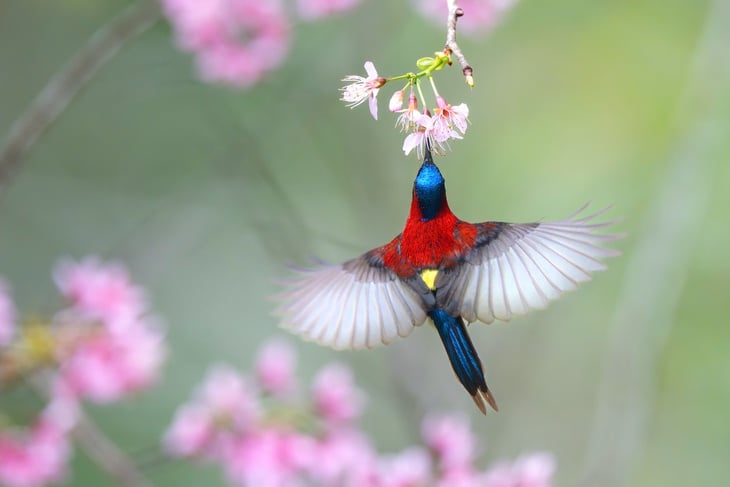
Hummingbirds among cherry blossoms at Datanla Waterfall, Da Lat
Small, vibrant, and closely associated with wildflowers, sunbirds in Asia hold a symbolic role not unlike that of hummingbirds in the Americas. But in Vietnam, many sunbird species are being hunted, traded, and used in bird competitions, raising new concerns for nature conservation.
Sunbirds and the dark side behind bird competitions.
In the eyes of many nature lovers, sunbirds are one of the most beautiful groups of birds in the Asian rainforest. They are small, agile, and have a brilliant, iridescent plumage. They are often seen among wildflowers, in orchards, at the edge of forests, or in relatively untouched habitats.
If in the Americas, hummingbirds are considered a symbol of tropical beauty and the "star" of bird-watching tours, then in Asia, sunbirds hold similar value: they are both a component of biodiversity and a representative image of a healthy ecosystem.
Ecologically, sunbirds and hummingbirds are not in the same family, but they share many similarities due to their adaptation to feeding on nectar. Ornithological literature describes sunbirds as a small group of birds, many species with brightly colored males, living primarily on nectar and insects; unlike hummingbirds which often hover while feeding, sunbirds mostly perch on branches or flower stalks to feed.
Hummingbirds are also considered an important pollinator group in the Americas, as they move between flowers carrying pollen on their bodies.
It is precisely this beauty and symbolic value that leads many countries to view the sunbird as a natural symbol. Palestine officially chose the Palestine Sunbird (Cinnyris osea) as its national bird in 2015.
In Singapore, the Crimson Sunbird (Aethopyga siparaja) has long been considered the unofficial national bird by the nature-loving community, after topping a poll organized by the Nature Society in 2002.
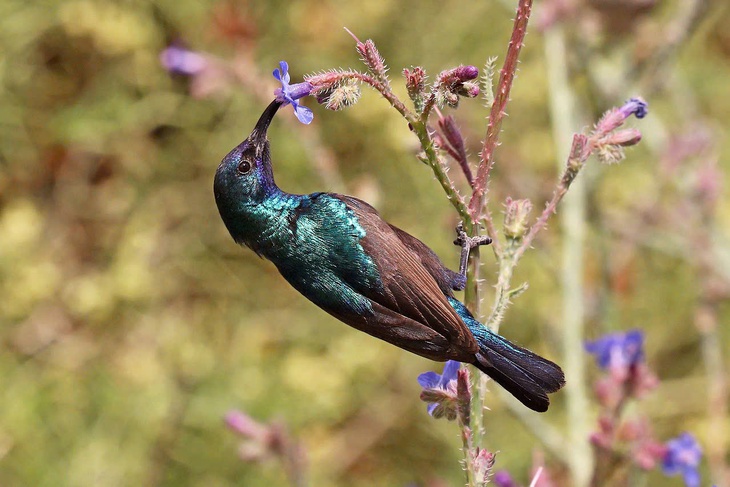
This nectar-eating bird was chosen as Palestine's national bird in 2015.
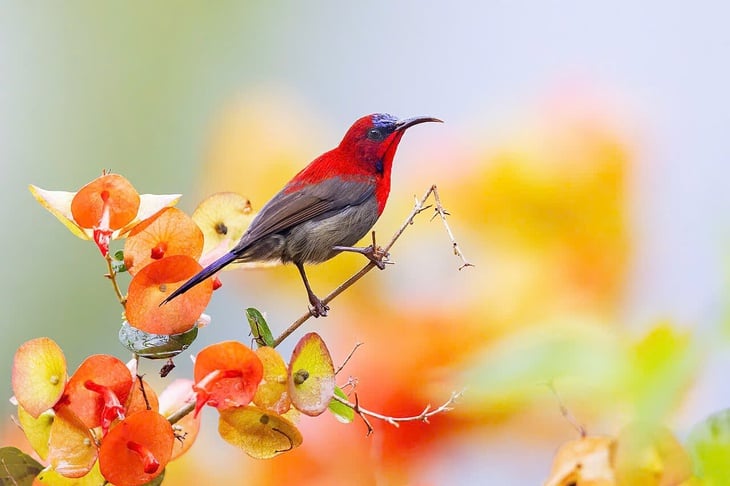
The Crimson Sunbird, a species of nectar-feeding bird, is beloved and protected in Singapore.
From that perspective, the hunting, trading, and cage confinement of sunbirds is not just a story about a few pet birds. It represents a loss of ecology, culture, and even the potential for nature tourism .
A bird, when seen in the forest, in gardens, or among native flowerbeds, can be a source of local pride. But when it is turned into a commodity, its greatest value is reduced to the cage it sits in.
The article "The increasing prevalence of sunbirds in trade in South-East Asia," published in BirdingASIA issue 44, highlighted a worrying trend: sunbirds are increasingly being kept in captivity and traded in Southeast Asia, including Vietnam.
According to the authors, in Vietnam, the number of hummingbirds kept as pets has increased since around 2015 and has become particularly popular in recent years. Internet interest in the keyword "hummingbird" has also increased sharply since 2020, while YouTube searches for this group of birds are expected to grow rapidly between 2023 and 2025.
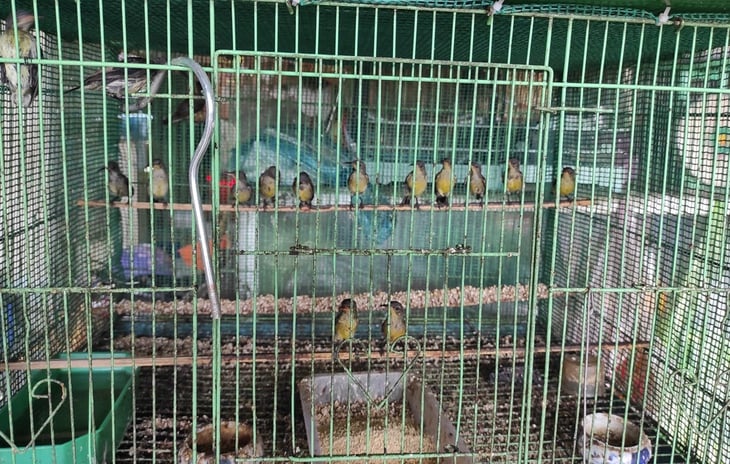
These birds, which should be free to fly in the forest, are now confined in cages.
It's noteworthy that the hobby of keeping sunbirds isn't limited to just a few birds in small cages. The article notes large enclosures containing hundreds of sunbirds. Sunbird competitions are also becoming more frequent, ranging from small-scale events with a few dozen cages to larger-scale events, especially in some southern provinces.
When the hobby becomes "competitive," with entry fees, prizes, fame, and social media support, the demand for wild birds can increase very rapidly.
This is the dangerous aspect of the pet bird market. A species that is popular today may become a target of hunting tomorrow if it attracts the attention of the bird-keeping community because of its beautiful color, unusual song, or competition potential.
For sunbirds, the allure comes from their vibrant plumage, small stature, song, and novelty compared to traditional songbird groups. But this very novelty can draw many species into the trap of hunting.


Information about the bird competition was published in a local newspaper.
Don't wait until the forest is devoid of birds to think about conservation.
In a market survey conducted in Ho Chi Minh City in October 2024 by Wildtour Company and the University of Science - Vietnam National University Ho Chi Minh City, the authors noted 10 species of sunbirds being sold. Some were crammed together, had damaged feathers, and were kept in poor conditions. These are common signs of birds captured from the wild, rather than being raised in a proper and legal manner.
When the supply relies primarily on trapping in the wild, each cage in the market can mean multiple habitats being trapped, and many individuals dying during the trapping, transport, and domestication process.
Many people often assume that sunbirds are still numerous and not endangered, so catching a few is not a big deal. This way of thinking is very dangerous. In conservation, we don't have to wait for a species to be listed in the Red Book to need protection. Many once-common species have declined rapidly due to continuous exploitation, especially as the market expands and demand increases.
For small, scattered bird species found in forests, gardens, and buffer zones, declines can occur silently before being documented scientifically.
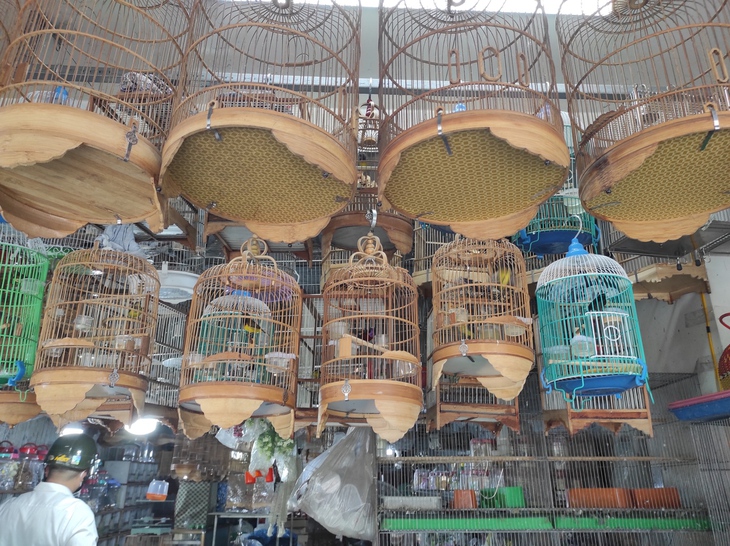
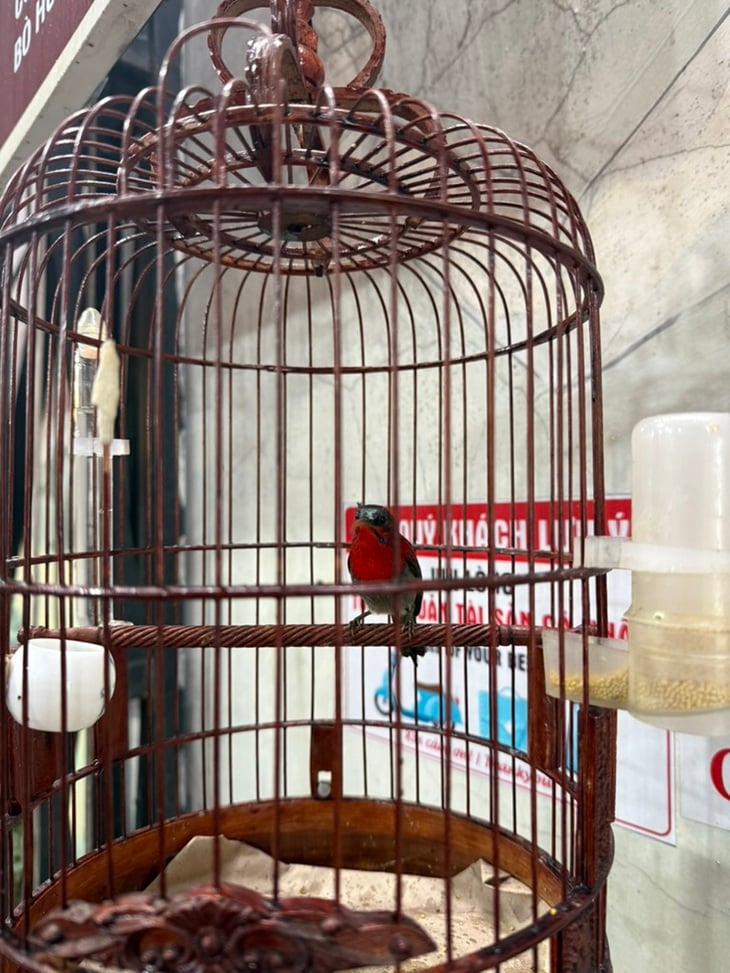
The poor birds are trapped in cages.
In southern Vietnam, some birdwatchers and guides have noticed that several previously relatively common nectar-feeding species are now becoming rarer in certain areas. While the extent of the decline cannot be definitively determined without long-term surveys, this is a serious concern. Effective conservation requires early detection of risk trends, rather than waiting until the forests are devoid of birdsong before taking action.
Social media is complicating the issue. Previously, bird trading mainly took place in markets, shops, or small groups. Now, a simple video of a bird singing, a large-scale competition, or a bird with beautiful plumage can quickly spread across Facebook, YouTube, TikTok, and other online groups. When images of caged hummingbirds are shared as a trendy hobby, it inadvertently stimulates the demand for hunting in the wild.
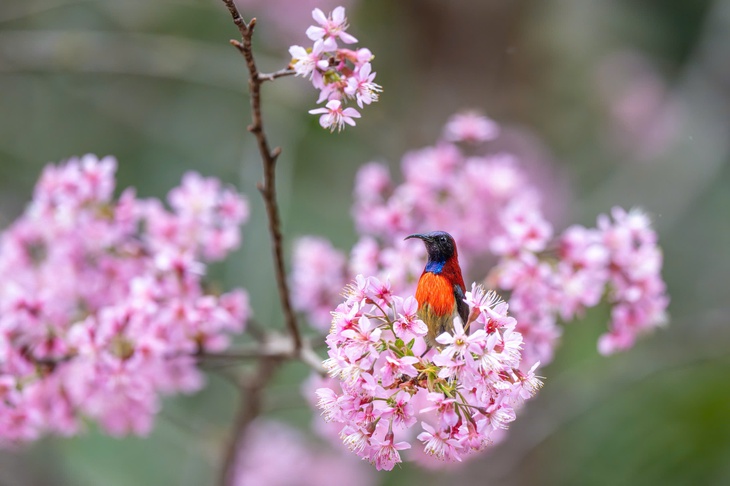
Sunbirds at Datanla Waterfall, Da Lat
The consequences extend beyond the number of birds caught. When the most beautiful, healthiest, and best-singing male birds are taken from the wild, wildlife populations lose a vital breeding source. When bird traps are regularly placed around forests, gardens, reserves, and buffer zones, many other species can also be affected.
A forest with trees but no birds, a garden with flowers still in bloom but no small birds flying by—these are signs of an impoverished ecosystem.
For nature tourism, this is also a significant loss. In many countries, small birds, endemic birds, and beautifully colored birds are important assets for developing birdwatching tourism. Tourists don't fly halfway around the world to see birds in cages; they come to see birds in their natural habitat. A brightly colored nectar-feeding bird perched on a forest flower can create long-term economic value for the local community through guides, accommodation, tourism services, nature education, and indigenous pride.
Therefore, protecting sunbirds shouldn't be seen merely as a matter of prohibition. It's a choice between two ways of dealing with nature: either taking its beauty out of the forest and confining it to a cage, or preserving it in its natural habitat so that many can admire, learn from, and benefit from it in the long term. A bird in a cage might bring joy to someone for a moment; but a healthy species in the wild can enrich both the ecosystem and the community.
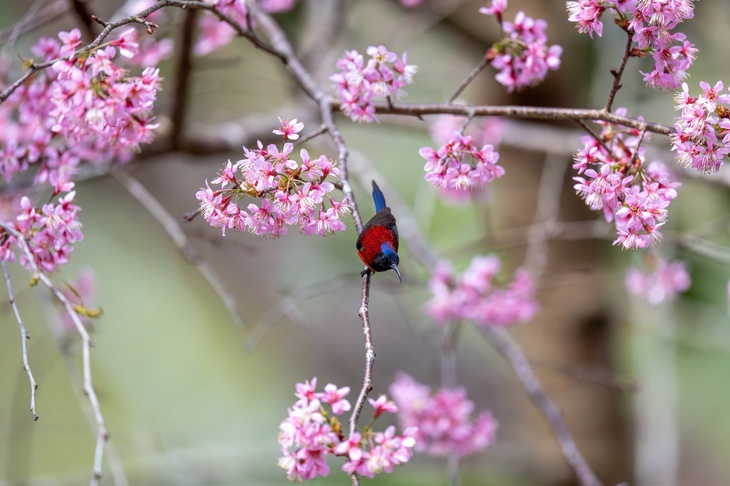
After Da Lat launched a campaign to inspect shops selling birds, bird poaching decreased sharply, and sunbirds reappeared in large numbers at Datanla Waterfall, attracting many domestic and international tourists to see and photograph them with cherry blossoms.
The immediate tasks include strengthening the monitoring of the pet bird market, both directly and online; reviewing the nectar-feeding species that are being heavily traded; reassessing the legal status of species at risk of exploitation; and conducting surveys of wild populations in areas with suitable habitats.
Simultaneously, the media needs to aim at changing the perception of bird enthusiasts: loving birds does not necessarily mean owning them, and certainly not taking wild birds from their natural habitat.
Hummingbirds may be the "hummingbird of the East," a symbol of wildflowers, healthy habitats, and Asian nature tourism. But that symbol only holds meaning when they fly freely. When their song is transferred from the forest to a cage, what is lost is not just an individual bird, but a part of the beauty of Vietnamese nature.
Source: https://tuoitre.vn/dung-de-chim-hut-mat-chi-con-trong-long-va-video-tiktok-20260524201841886.htm
![[Photo] General Secretary and President To Lam presides over the meeting to approve the draft report on the results of the second inspection by the Politburo of the Standing Committee of the Hanoi City Party Committee.](https://vphoto.vietnam.vn/thumb/1200x675/vietnam/resource/IMAGE/2026/05/26/1779789811432_a2-bnd-4430-9620-jpg.webp)











![[GALLERY] USB-C AA batteries are causing a sensation because they're so convenient for tech enthusiasts.](https://vphoto.vietnam.vn/thumb/402x226/vietnam/resource/IMAGE/2026/05/26/1779798818575_p-png.webp)


































































Comment (0)