

Contents of Prime Minister Michel Barnier's budget plan.
On October 10th, Prime Minister Michel Barnier's government presented France's 2025 budget plan, which includes drastic austerity measures aimed at reducing spending by 60.6 billion euros by 2025, equivalent to 2% of France's GDP.
This is considered necessary because last June, the European Commission initiated sanctions against France and six other EU countries, including Italy and Belgium, due to their excessive budget deficits. According to EU financial regulations, a national budget deficit cannot exceed 3% of GDP and public debt cannot exceed 60%. In France, the budget deficit, according to estimates by the Interior Ministry , is nearly 6.1% of GDP and public debt has risen to 110% (approximately 3.1 trillion euros).
Paris was supposed to submit its budget plan to Brussels before September 20th. However, following the French parliamentary elections this summer, which ended in defeat for supporters of President Emmanuel Macron, France went two months without a new cabinet – the government was finally formed only on September 22nd. In this regard, France requested a delay from the European Commission.
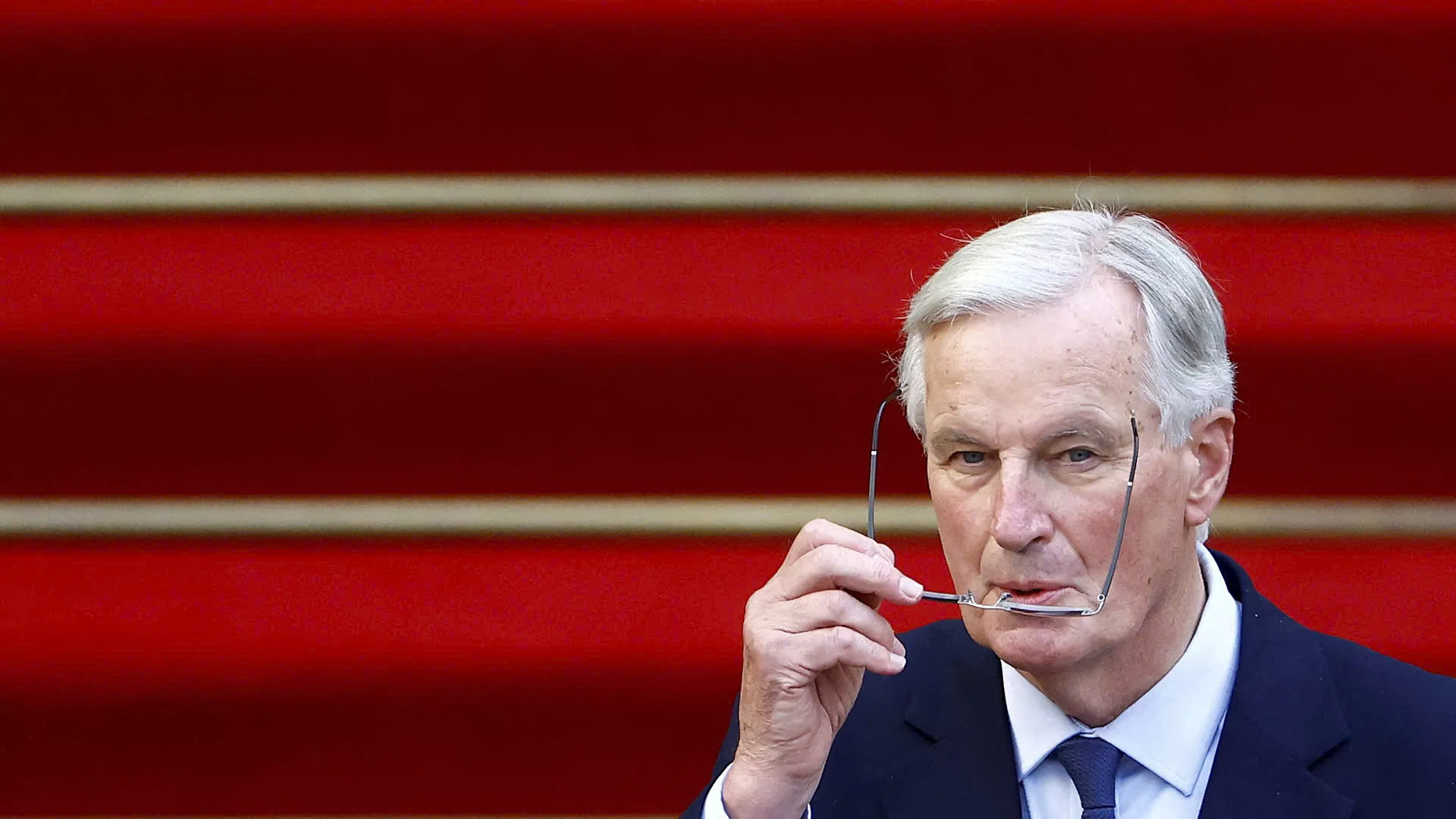
French Prime Minister Michel Barnier. Photo: Reuters
According to the plan, France will save 40 billion euros by cutting government spending and will generate an additional 20 billion euros by increasing taxes on large corporations and wealthy French citizens (a minimum of 20% for individuals earning 250,000 euros per year or couples, which is double that amount). The French government estimates that this measure will affect 65,000 people and around 440 large companies.
The French government believes these initiatives will not affect the vast majority of the middle class and will not lead to economic recession. “These tax measures will not affect the low-income, middle-income, and working classes. This is a way to eliminate any threats of taxation or austerity. There is no ambiguity in this. We will not improve the state budget situation by destroying growth,” Budget Minister Laurent Saint-Martin stated on October 10th.
However, these austerity measures could affect areas that are very sensitive to the French people. In particular, the French government has proposed a €3.8 billion reduction in healthcare costs, as well as a delay in pension increases despite rising inflation. The cabinet has also proposed reducing civil servant salaries and cutting the total expenditures of local governments by approximately €5 billion.
Budget Minister Saint-Martin explained that the gradual dismantling of social protection measures introduced during the pandemic was planned, including the so-called "tariff shield," aimed at preventing electricity price increases for the poorest segments of France.
However, austerity measures will not affect the defense sector. France's military spending next year, according to cabinet plans, could increase by 3.3 billion euros, reaching 2% of GDP. According to AFP, spending on weapons is expected to rise by 16% to 10.6 billion euros, while funding for nuclear deterrence could increase to 7 billion euros, an 8% increase compared to 2024.
According to the French government's plan, the new measures will help reduce the budget deficit to 148 billion euros – total revenue for next year will be 536 billion euros and expenses will be 684 billion euros.
Is French politics facing the risk of instability?
The budget deficit reduction proposals put forward by Prime Minister Michel Barnier's cabinet carry significant political risks. Le Monde notes that the government has faced criticism from all political forces in France, even though the uncontrollable deficit and rising public debt are directly linked to the government's inability to adequately finance social obligations.
The national budget law should be passed before the end of this year. If the French government fails to secure a majority in the divided parliament, it will have to invoke Article 49.3 of the French Constitution, which allows bills to be passed without a parliamentary vote, increasing the likelihood of a no-confidence vote in Parliament against Prime Minister Michel Barnier's government.
In fact, immediately after taking office, Prime Minister Michel Barnier faced his first fierce attack from the left. On October 8th, the government of the new Prime Minister Michel Barnier survived the first no-confidence vote in the French National Assembly, initiated by left-wing MPs.
“This is the harshest austerity plan this country has ever seen,” declared Manuel Bombard, a lawmaker from France’s far-left Invictus Party (LFI) and head of the National Assembly’s finance committee. He believes the new measures will slow economic growth and exacerbate poverty in France.
Meanwhile, National Front (RN) spokesman Jean-Philippe Tanguy called Prime Minister Michel Barnier's plan "a terrible initiative." He said: "All we see is financial injustice and no lasting improvement in the country's financial situation." The RN has opposed the Barnier administration's proposal to delay pension adjustments for six months to save 4 billion euros.
According to RBC, Pavel Timofeev, an expert at the Institute of International Economics and Foreign Relations (IMEMO) of the Russian Academy of Sciences, believes it is too early to say whether the far-right will support left-wing initiatives to oust Barnier's government. “Although the right wing is unhappy with the deficit reduction measures proposed by the government, the collapse of the cabinet of Michel Barnier, a right-wing politician, is not in their favor. It is very likely that Le Pen's RN party will continue to support Michel Barnier as a temporary solution,” he said.

This expert agrees that the new French prime minister is in an extremely difficult position: the financial measures he proposes are likely to provoke a wave of protests. “However, even if the left succeeds in mobilizing people to take to the streets, it is still difficult to say whether they will achieve their goals. We should not forget that an entire campaign was launched to oppose reforms related to raising the retirement age. However, President Macron has tried to push this initiative forward,” Timofeev noted.
According to him, the fate of Prime Minister Michel Barnier's cabinet will largely depend on whether he can explain the feasibility of austerity measures to the public and businesses, as well as build a dialogue with trade unions. As the expert noted, if the announced deficit reduction measures cannot be implemented, this will seriously affect not only Prime Minister Barnier, but also the President's supporters.
“President Macron is probably trying to use a mix of centrists and right-wingers to share the cost of these unpopular measures. In this case, Macron himself doesn’t face serious consequences, because, as it’s said, he just needs to wait until 2027, when the presidential election is scheduled. But who among the other centrist politicians will take on the leadership position will depend largely on their attitude toward the measures taken to reduce the deficit. Certainly, the French will remember this,” Timofeev warned.
Ha Anh
Source: https://www.congluan.vn/ly-do-phap-de-xuat-thue-danh-nguoi-giau-va-that-lung-buoc-bung-post316741.html































































![[Video] Sunset at Lap An Lagoon – Where the sun sets over the fishing nets](https://vphoto.vietnam.vn/thumb/1200x675/vietnam/resource/IMAGE/2026/05/31/1780192137701_beach-landscape-sea-water-nature-grass-745871-pxhere-com.jpeg)




































Comment (0)