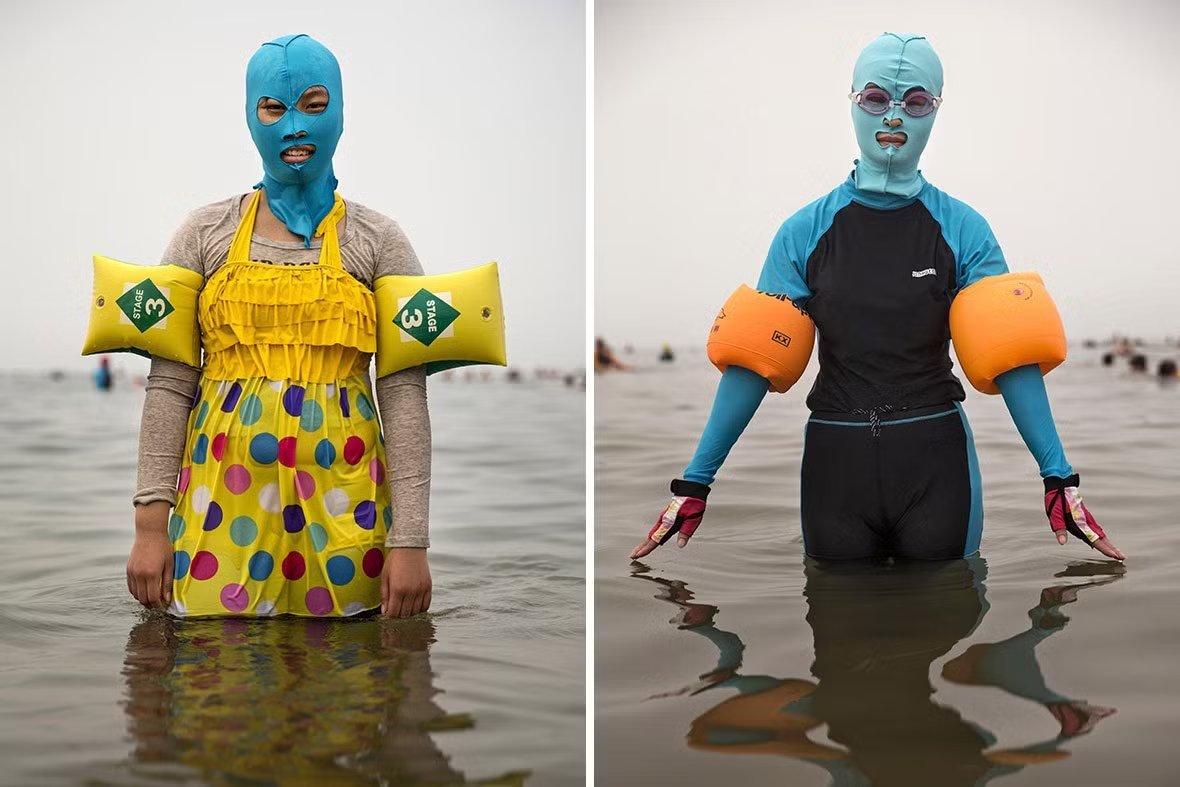
Every summer, on beaches in China, particularly in Qingdao, Shandong, it's not uncommon to see women wearing swimsuits but covering their faces with unique masks.
According to the Daily Mail, facekinis originating from China have even become one of the most sought-after items on Australian beaches.
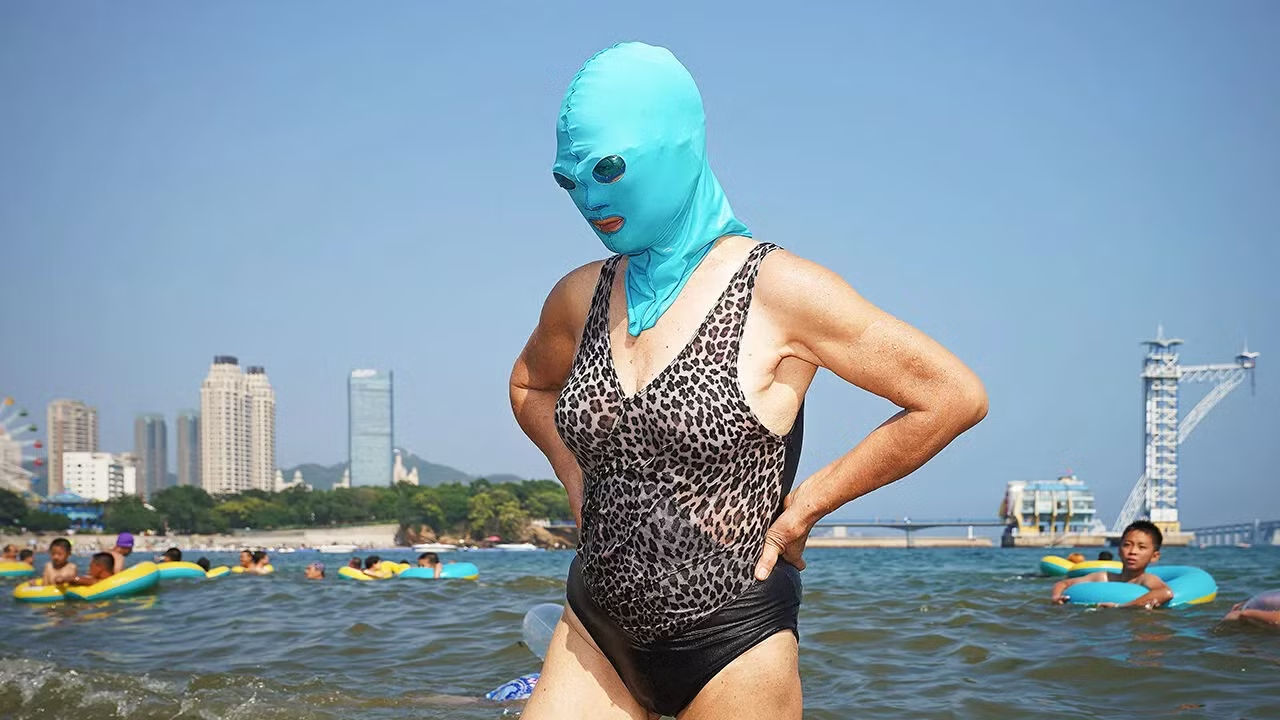
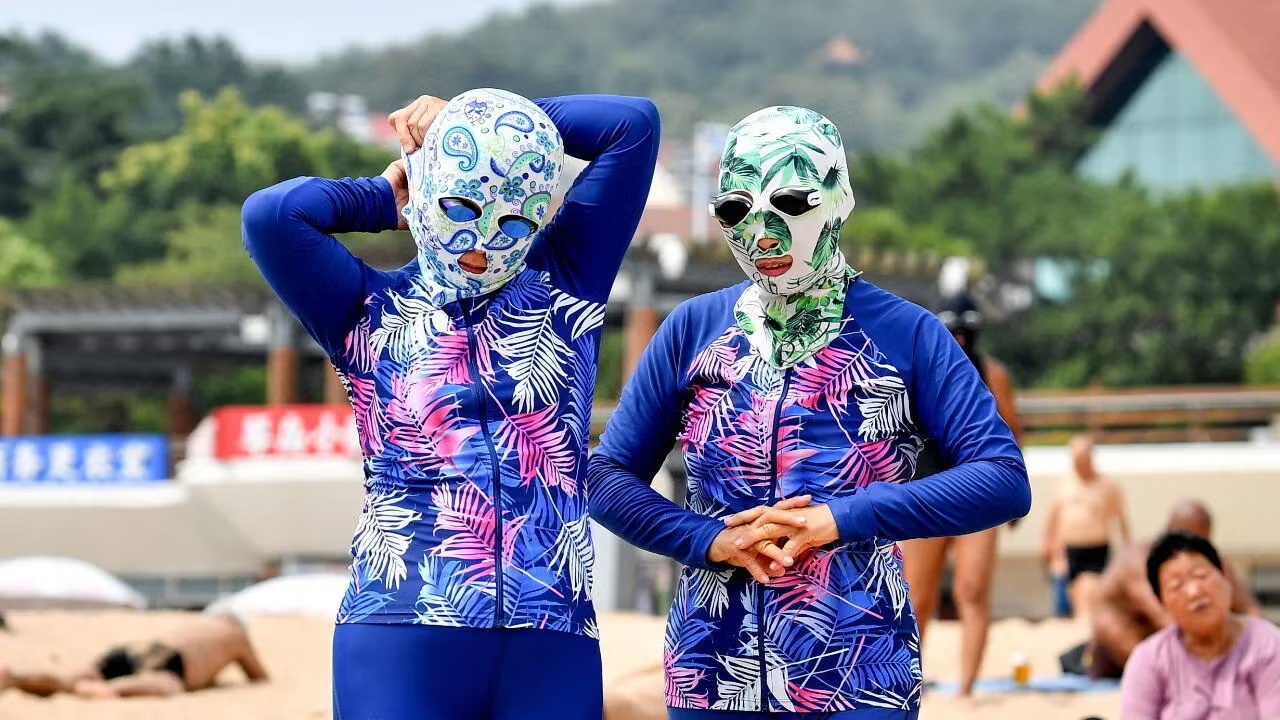
Facekinis help women protect their skin from the effects of sunlight. In addition, the design that covers the entire face helps reduce the risk of jellyfish stings or seaweed entanglement. Therefore, this product has gained widespread popularity in China.
The current version of facekini 7.0 incorporates many cultural elements such as animal protection motifs and Peking opera masks, bearing a strong Chinese influence.
The person behind this product is Ms. Zhang Shifan, a resident of Qingdao city. In 2004, she created sun protection masks for swimmers. After receiving positive feedback from her swimming-loving friends, she developed the first facekini model based on a diving helmet design and began mass production.



By 2012, the facekini began to attract attention abroad. That summer, Reuters published a series of photos of Qingdao women wearing facekinis on the beach, which sparked significant international interest online.
One of these photos was later selected by Time magazine as one of the most surprising photos of 2012.
In 2014, CR Fashion Book magazine published a summer fashion photoshoot featuring models wearing facekinis by the pool. The photoshoot continued to generate attention for this product abroad.
Although many Westerners consider a healthy, tanned complexion to be the beauty standard, the facekini – a product associated with middle-aged Chinese women on the beach – still attracts considerable attention due to its health benefits.
The Daily Mail noted that, in addition to limiting the impact of jellyfish and seaweed, the sun-protective properties of facekinis offer a unique way for outdoor enthusiasts to reduce their risk of skin diseases, including skin cancer.
A website of the Sunday Times in Australia also featured the facekini as a useful solution for protecting the body from the harsh summer sun. On the other side of the globe, the facekini also became a sensation on the beaches of Los Angeles (USA).
A content creator sold this product on a Los Angeles beach for $29.90, significantly higher than the price of just a few dozen yuan in China. Despite this, many locals were still interested in the product. According to the creator, the high price was simply to gauge American interest in the facekini. Ultimately, he gave away the product for free to those who had expressed interest in buying it.



"The Chinese are familiar with Peking opera mask designs, but for Americans, they have a unique, artistic, and practical Eastern feel. That's why they love facekinis," the content creator said.
Source: https://tienphong.vn/ly-do-phu-nu-mac-bikini-nhung-che-mat-kin-mit-post1851970.tpo
![[Image] Schools organize meetings and introduce teaching models to students admitted to grade 10.](https://vphoto.vietnam.vn/thumb/1200x675/vietnam/resource/IMAGE/2026/06/25/1782368077271_ndo_br_z7970052192242-1ec8daeb77a6eed1a4e9f58c564ddd3e-jpg.webp)
![[Image] Ho Chi Minh City: Ma Lang area, Chicken-Rice Market about to change its appearance](https://vphoto.vietnam.vn/thumb/1200x675/vietnam/resource/IMAGE/2026/06/25/1782377698627_ndo_br_m1-jpg.webp)

![[Photo] General Secretary and President To Lam receives Palestinian Ambassador Saadi Salama](https://vphoto.vietnam.vn/thumb/1200x675/vietnam/resource/IMAGE/2026/06/25/1782365384740_a1-bnd-9423-8322-jpg.webp)