

 |
Now, that sunny season is far from me. For many years, I haven't been able to bask in the golden sunlight of my hometown at the end of the year, and I feel a sense of emptiness. My mother told me that the village has changed so much. The new economic development has transformed the face of our village. Spacious houses have sprung up, and sturdy fences stretch along the winding concrete road, shaded by green bamboo, suddenly making the distance between houses and people seem even greater. I feel a pang of sadness, a longing for the old memories, even though I know that memories will forever remain in the past.
On the other end of the phone, my mother coughed softly. My heart skipped a beat. She wasn't urging me to come home. Since I left the village, and then went further away, the road home becoming longer, she had never once urged me to return, even though she was deeply saddened. I knew this, but I had to accept it. I understood that it wasn't that she didn't love or miss me, but that she knew I still had a world of dreams. She couldn't keep me forever in the peaceful confines of my hometown, living the most tranquil days of my life. Everyone has to break free from their comfort zone and fly to other, more distant places at some point.
*
It was now mid-December. The weather was dry and sunny. The trees had begun to burst with life, as if gathering all their energy for a display of color. The impatiens outside the fence were also beginning to light up. My mother loved impatiens more than any other flower, not because it was rare, but because of its vibrant colors and even blooms, looking from afar like flickering flames in the sun. In the late afternoons, my mother had a habit of brewing a pot of tea, sitting and sipping it on the wooden table and chairs on the veranda, admiring the flowers, and chatting idly.
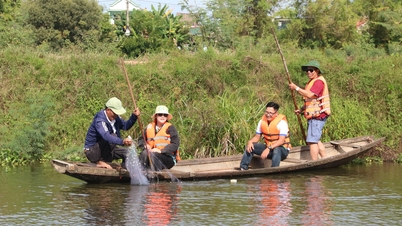
I returned home two or three days ago. My mother greeted me at the beginning of the village. She wore a conical hat, swaying in the wind, just like the day she saw me off, but her posture was different; her back was hunched, her hair was whiter. And I also noticed how much I had changed. During my few days at home, I didn't go anywhere, just stayed around my mother, weeding the yard, tilling the soil around the flowers she planted, and gathering firewood in the garden. My mother called me in, saying I wasn't used to it and would scrape my hands and feet. I smiled, feeling a pang of emotion. Because no matter where I went, I was still a child born from this land, raised in this place, day by day, until now. During my time in the countryside, my mother made me many delicious dishes. She opened a jar of fermented fish sauce that had been simmering for months, simmering it until it thickened in an earthenware pot, adding a little pepper and fragrant onions. My mother and I bobbed on a small boat out to the canal behind the house to pick water lilies. This month the water lilies weren't plump, but they were still crisp, delicious, and intensely sweet. On the afternoons leading up to Tet, sitting beside my mother on the wok behind the house, eating white rice with water lily stems and fermented fish sauce, a bowl of sour fish soup with snakehead fish, and gazing at the straw in the fields after the rice harvest… what could be better? All the worries of making a living seemed to vanish completely.
That night, my mother told me countless stories. Outside, the crescent moon shone down on the clumps of cosmos, marigolds, and chrysanthemums… I lay on the wooden platform in the front room. The incense on my father's altar smelled sweet, a white smoke swirling in the cozy atmosphere. I lay beside my mother, who sat with her knees drawn up beside me, occasionally stroking my hair. The wooden platform, with its dark, weathered wood, was where, as a child, I would climb onto it every midday for a long nap, and later, when I went to school, I would lie face down to study, spell, and practice writing… The old years flashed through my mind like a film reel. Since my father passed away, my mother's life had become much harder. Her calloused hands gently caressed my face. In the fragrant spring air, my mother's hoarse voice recounted:
- These past few years have been bad, the rice harvest has been minimal. Last year, there were heavy rains and storms, the riverbank eroded... all the flowers my mother planted were swept into the river. After the storm, my mother asked the neighbors to rebuild the embankment and replant the flowers... and now they are blooming beautifully again.
My mother chuckled after speaking. Her eyes sparkled. The eyes of a lonely woman, who had experienced much in her long life.
I sat up, looked at my mother, smoothed my neatly tied-back hair, and softly asked:
- Why don't we join the new economic wave, Mom? Growing rice now isn't enough to feed us! We grow durian and other fruit trees like other people, and we do quite well when the harvest season comes.
My mother chuckled heartily. After a moment of reflection, she looked up at my father's altar and then gazed into the distance. The village still flickered with electric lights from the houses that were awake, and the sound of sentimental music echoed from the karaoke rooms at the end of the village…
"No, my child, I want to keep the field. Keeping the field means keeping the beautiful memories of the past. I still remember the days when your father was alive, when we toiled together in this field. Your father is gone, and I'm suffering so much! Deep down, I still want to preserve the beautiful images of your father, of you, of the past…"
Hearing my mother's words, tears welled up in my eyes. Oh my God, my mother still lives for the old days, for the sweet memories of the past. Her life has been full of hardship. I hugged her from behind, trying not to let her know I was crying, but she seemed to sense the tear falling from the corner of my eye, rolling down and landing on her slender shoulder.
For all those years I was away from home, living for my own dreams, leaving my mother alone, burdened by a sky full of memories. She didn't blame me. She never blamed me for anything. Yet I feel guilty.
The late-year sun was clear and bright. Early in the morning, I stood by the embankment that my mother said had collapsed last year because of strong waves and storms that knocked down the old tree. Now, that embankment was covered in soft green grass. My mother skillfully transplanted portulaca, marigolds, and other flowers, planting them all along the path. In the morning, the flowers bloomed beautifully. The shades of green, red, purple, and yellow displayed themselves under the warm sunlight of the late monsoon season. I took a deep breath of the fresh air of my hometown. Looking at the winding river in front of my house reflecting the village's bustling new economic season, my heart blossomed. In five or ten years, my village will be different, much more developed than it is now, and of course, completely transformed compared to its past. I thought to myself: as an agricultural engineer with an excellent university degree from a prestigious foreign university, why shouldn't I contribute to my own homeland instead of venturing to a distant land?
A certain idea suddenly flashed through my mind.
*
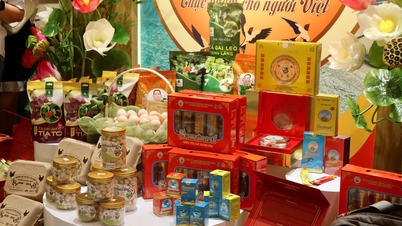
The year is ending, the sun is shining beautifully. Sardines are drying on racks along the riverbank, their white eyes gleaming in the sun. Ginger jam, mango jam… are also drying, their sugar coating glistening in the sunlight. I sit in front of my laptop, handling a few final tasks before closing out the old year, and perhaps the last tasks at the office that will become obsolete after Tet, a beautiful memory from my vibrant youth. I feel a pang of sadness, but the prospect afterward – perhaps – will be even brighter. I vaguely think so.
The late-year sun, golden like honey, clung to the moss-covered tiled roofs, scattering a shimmering layer of dust across the village lanes and alleys. Along the riverbank, sardines lay drying on bamboo racks, their white scales glistening. The salty, pungent smell of dried fish mingled in the wind, a characteristic scent of the countryside that, even with eyes closed, evoked a flood of memories. Standing amidst the pristine white of the fish, the clattering of the open drying racks, and the lively chatter of the women turning the fish on the other side of the river, my heart softened, filled with an indescribable tenderness. I suddenly realized I no longer wanted to be a traveler relentlessly searching for distant luxuries. I wanted to stop, to dedicate my life to this simple, unpretentious land, so that each morning I could breathe in the salty scent of the sea and find peace in my heart, like the sunlight slowly fading on those shimmering fish scales.
Source: https://huengaynay.vn/van-hoa-nghe-thuat/tac-gia-tac-pham/mat-nang-cuoi-nam-161729.html



































































Comment (0)