

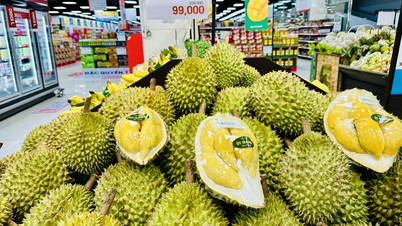
Vietnamese durian is losing significant market share in China.
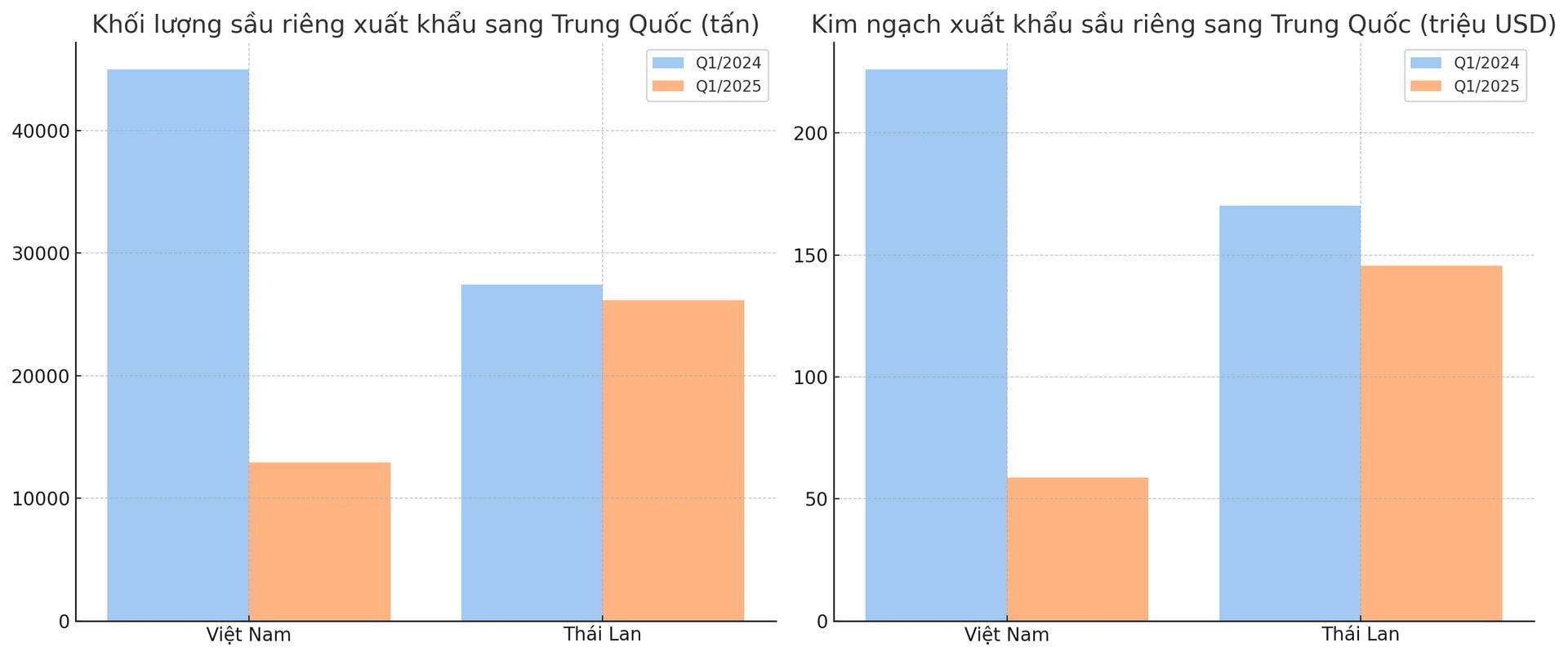
According to the latest data from China's Customs Administration, the country's durian imports in the first quarter of 2025 reached 39,459 tons, worth $208 million – a decrease of 46.5% in volume and 48.1% in value compared to the same period last year.
In particular, Vietnam – the second largest supplier – recorded a record decrease of 71.3% in volume (reaching only 12,924 tons) and 74% in value (US$58.7 million). As a result, Vietnam's market share in China plummeted from 56.4% to 28.2%. This is the first time Vietnam has lost its leading position to Thailand since officially exporting to China.
Conversely, Thailand – the biggest competitor – maintained its number one position with 26,157 tons exported, worth $145.5 million. Although also experiencing a slight decrease in volume and value, Thailand recorded a significant increase in market share, from 42.4% to 69.9%.
Besides its two main suppliers, China imports only a small amount from Malaysia and the Philippines.
Another notable factor is the decrease in the average export prices of both countries: Vietnam's price fell by 10.8% to $5,561 per ton, while Thailand's price decreased by 9.5% to $4,538 per ton.
Causes and reactions from both sides.
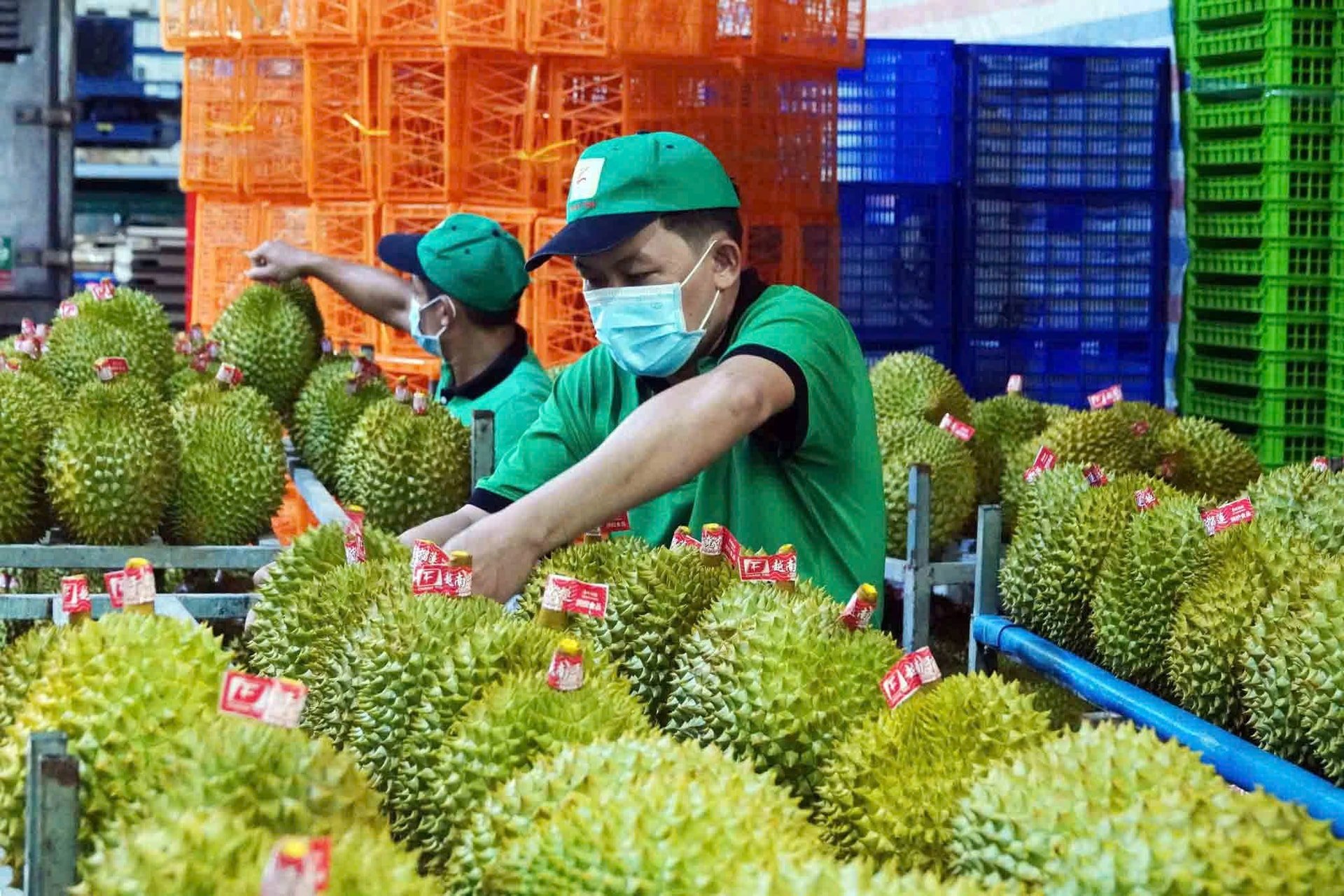
The main reason for the sharp decline is the new quality control regulations from China. From January 10, 2025, Beijing requires all shipments of Vietnamese durian to have a certificate proving that they do not contain Basic Yellow 2 (BY2) – a dye with a potential carcinogenic risk. The lengthy inspection process makes the goods susceptible to spoilage, forcing many businesses to withdraw their shipments for domestic consumption, causing significant losses for farmers.
Meanwhile, Thailand has proactively coordinated with the General Administration of Customs of China (GACC) to remove technical barriers. Border control stations have been extended to operate 24/7, and the number of BY2 testing laboratories recognized by China has increased to nine, facilitating customs clearance. Thailand has even proposed recognizing additional laboratories in Chachoengsao province.
Furthermore, Thailand is implementing large-scale trade promotion campaigns. The Ministry of Commerce collaborated with Taiyuan Lao Ge – a major social media influencer in China – to organize a livestream sales event aiming to break the record for sales reaching nearly 1 billion baht in a single day. This effort aims to increase the presence of Thai fruit on Chinese e-commerce platforms.
Vietnam holds emergency meeting and develops response strategy.
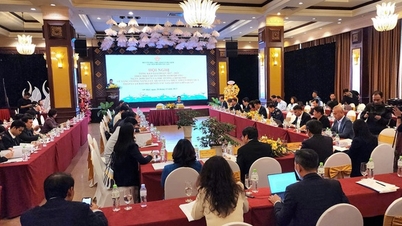
Faced with a serious decline in durian exports to China, on May 8th, Minister of Agriculture and Environment Do Duc Duy chaired an emergency meeting to propose immediate and long-term solutions for the industry.
In the short term, the Ministry will coordinate with China to remove technical barriers; accelerate the process of granting codes for growing areas, packaging facilities, and accredited laboratories serving exports. A new plant quarantine procedure will also be issued to create a clearer legal and technical basis.
In the long term, the Minister suggested improving the legal system related to agricultural exports, standardizing the production-processing-testing-packaging chain, and thereby restructuring the durian industry towards greater sustainability.
Statistics show that in 2024, Vietnam earned $3.2 billion from durian exports, with China accounting for $2.9 billion – equivalent to 91%. With import figures reaching $7 billion in 2024, China accounts for 95.4% of the total global durian demand – making it an irreplaceable market in the short term.
The decline in market share in China serves as a wake-up call for Vietnam's durian industry, which is overly dependent on a single market. While Thailand is accelerating its efforts in policy, technology, and communication to capitalize on the season, Vietnam needs to quickly strengthen its internal capabilities and long-term strategy if it does not want to lose the market share it once held.
Source: https://baodaknong.vn/mat-thi-phan-tai-trung-quoc-hoi-chuong-canh-tinh-doi-voi-nganh-sau-rieng-viet-nam-252318.html
![[Photo] Prime Minister Pham Minh Chinh presides over a meeting on private sector economic development.](/_next/image?url=https%3A%2F%2Fvphoto.vietnam.vn%2Fthumb%2F1200x675%2Fvietnam%2Fresource%2FIMAGE%2F2025%2F12%2F20%2F1766237501876_thiet-ke-chua-co-ten-40-png.webp&w=3840&q=75)




























































Comment (0)