

On the afternoon of April 27, 2026, during a meeting with the Standing Committee of the Ho Chi Minh City Party Committee, General Secretary and President To Lam set forth a strategic orientation requirement: The city must be more proactive, more resolute, and have a longer-term vision in leveraging its internal strengths, building a self-reliant and resilient economy , adapting flexibly, and ensuring strategic autonomy.
Self-reliance is key to leading sustainable, long-term development.
Accordingly, strategic autonomy is not only a task for the central government, but Ho Chi Minh City, as the engine of the economy, must also enhance its resilience with a long-term security and development vision.
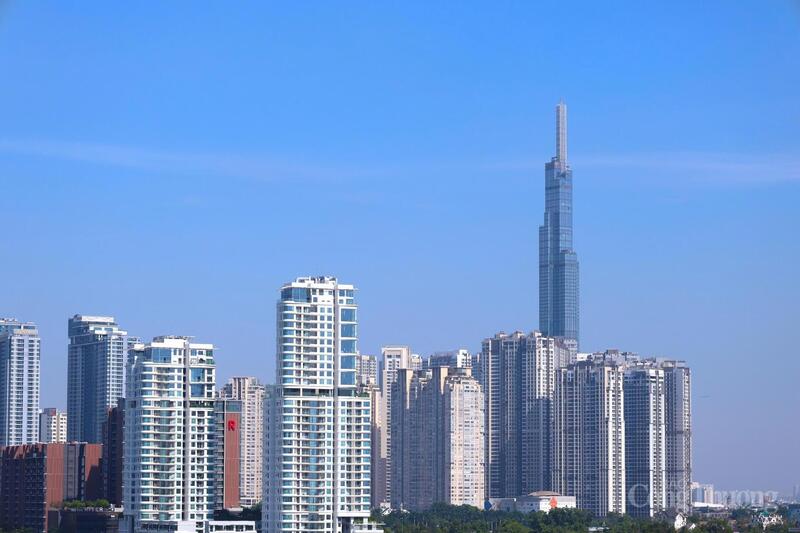
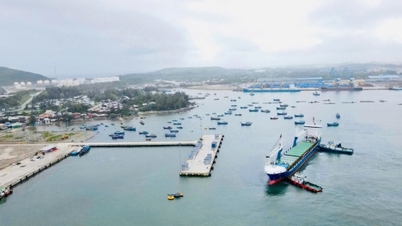
Ho Chi Minh City needs to be more proactive in regional linkages and reorganize the development space in the South, working with other localities to build a development architecture, planning vision, and common linkage strategy. Photo: Hoang Chien.
Looking at the world in its current context, the significance and importance of this requirement are clear. The world is entering a phase of trade fragmentation as global supply chains restructure according to geopolitical rather than economic efficiency. On the other hand, energy and input material prices fluctuate due to conflicts that no city can control. As the economic engine of the country, leading growth in the entire Southern region, Ho Chi Minh City cannot allow external shocks to completely dominate its development trajectory. Strategic autonomy, from this perspective, means the ability of the city to continue operating and growing well, even when external conditions are unfavorable.
Ho Chi Minh City needs to proactively develop scenarios to respond to fluctuations in oil prices, supply chain disruptions, inflationary pressures, and production costs; approaching energy security in a broad sense, not only ensuring sufficient electricity in the short term but also building a safe, flexible, sustainable energy structure with strategic reserves. This is a very specific requirement. In other words, strategic autonomy begins with very practical things: how many contingency scenarios are there for electricity shortages during the dry season? Is the supply chain for key production sectors sufficiently diversified to avoid dependence on a single market?...
Looking at the economic scale of Ho Chi Minh City reveals the significance of its leading role and autonomy in the overall development of the country. By 2025, the city is projected to achieve a growth rate of 8.3%; its economic size will reach 3.03 trillion VND, accounting for 23.5% of the national GDP. Per capita income is estimated at 8,944 USD, 1.7 times higher than the national average. Budget revenue is estimated at 746,438 billion VND, exceeding the target. Foreign direct investment (FDI) is estimated at 8.9 billion USD. The city is expected to have 59,750 newly established businesses with a total registered and additional capital of over 2 trillion VND. The city's industrial production index is estimated to increase by 8.3% (compared to 5.7% in 2024), demonstrating strong recovery and growth in the industrial sector…
Entering 2026, the city's economy grew by 8.27% in the first quarter, the highest in five years, with services playing a leading role, FDI increasing strongly, and investment showing signs of recovery, creating a foundation for accelerated growth in the following quarters. This result shows that the city's economy continues to maintain a positive recovery momentum and creates an important foundation for accelerated growth in the remaining quarters of the year.
Three pillars for realizing autonomy.
Based on the directives of General Secretary and President To Lam, three pillars can be identified that Ho Chi Minh City needs to focus on to make "strategic autonomy" a genuine capability.
First, it's about institutions.
Accordingly, the new Resolution replacing Resolution 31 and the Law on Special Cities must focus on creating breakthroughs in institutions and governance, enhancing fiscal autonomy, modern financial tools, allowing the city to retain larger resources and proactively mobilize capital; allowing the city to experiment with new institutions; strongly decentralizing and empowering the city to design policies with the unique characteristics of a megacity; and establishing a mechanism for attracting and retaining outstanding talent.
This is the foundation of all foundations. A city that is not fiscally autonomous will not have enough resources to implement policies. Ho Chi Minh City's budget allocation ratio has been maintained relative to revenue after several adjustments; but during a period when the city needs significant investment in infrastructure and a transformation of its growth model, a stronger, more specific fiscal mechanism is an indispensable leverage.
Secondly, it's about the drivers of growth .
The city needs to focus its resources on developing strategic infrastructure, digital infrastructure, and innovation infrastructure, considering these as the foundation for a new phase of development. The city's new growth model must truly be based on productivity, science and technology, innovation, digital transformation, and the quality and efficiency of resource allocation; it needs to promote the widespread application of AI in various industries and fields, creating breakthroughs in labor productivity and growth quality; and it needs to create sufficiently strong incentive mechanisms to mobilize private resources for investment in science and technology.
Ho Chi Minh City needs to be more proactive in regional linkages and reorganizing the development space in the South, actively working with localities to build a development architecture, planning vision, and common linkage strategy, with a rational division of roles and functions.
Autonomy in terms of driving force means that a city's growth is not driven by favorable external conditions, but rather by the enhancement of its endogenous capacity each year. When labor productivity increases thanks to technology, when domestic businesses climb higher in the value chain, and when universities and research institutes truly connect with industrial needs, then growth will no longer depend on oil prices or export orders.
Thirdly, it's about people and the system .
The city needs to build a team of officials and civil servants who are courageous, intelligent, ethical, and capable; who dare to think, dare to act, dare to take responsibility, and dare to innovate for the common good; and have a mechanism to promptly screen and replace those who are sluggish, evasive, afraid of responsibility, and slow down the progress of work.
The city must more thoroughly concretize the Central Government's strategic resolutions from practical experience, not stopping at action programs but creating specific development models. Along with that, central agencies, the Government, the National Assembly, and ministries and sectors must provide stronger, more substantive, and timely support for Ho Chi Minh City's development issues.
2026 marks the 50th anniversary of Ho Chi Minh City being named after President Ho Chi Minh, a special historical milestone. This is the time for Ho Chi Minh City to look back on its journey with immense pride and to look forward with strong determination commensurate with its position and the expectations of the entire nation.
Resolutions and laws must accurately reflect the stature, position, and mission of Ho Chi Minh City, focusing on creating breakthroughs in institutions and governance, enhancing fiscal autonomy, and utilizing modern financial tools to allow the city to retain larger resources and proactively mobilize capital. Simultaneously, they should allow the city to experiment with new institutions; strongly decentralize and empower the city to design policies specific to a megacity; and establish mechanisms for attracting and retaining outstanding talent. These measures will pave the way for the city's strong development in the future.
Source: https://congthuong.vn/menh-lenh-tu-chu-tu-dau-tau-kinh-te-454171.html









































































Comment (0)