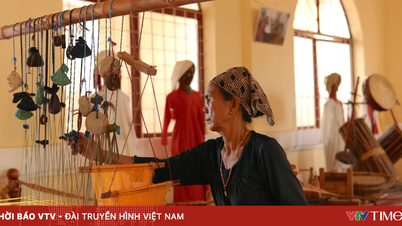
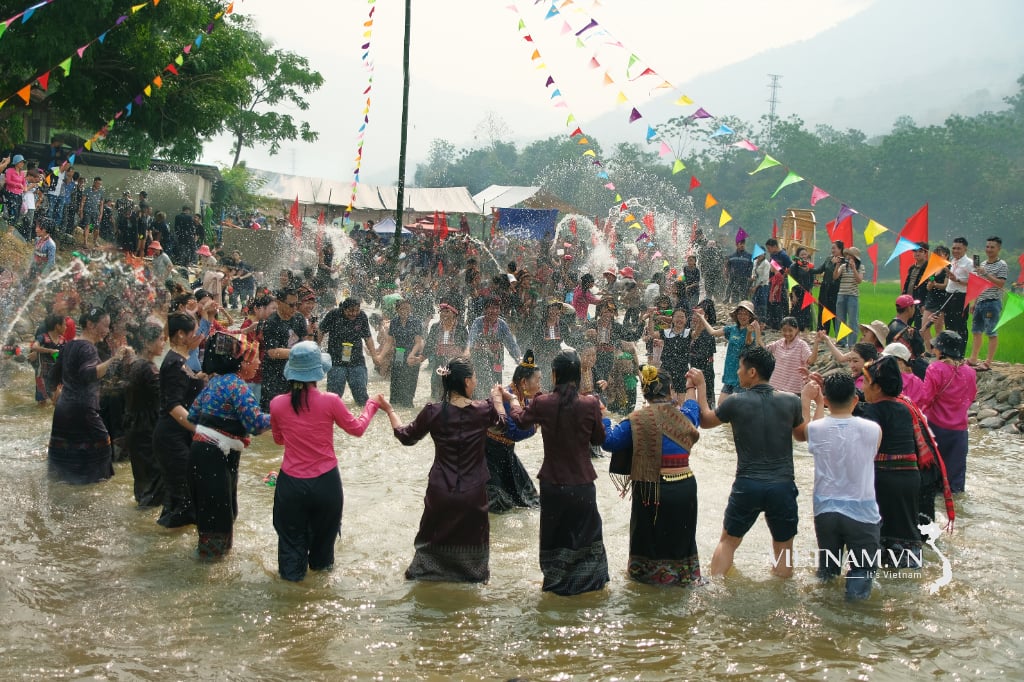
What about Northwest Vietnam, Hue , the Central Highlands...?
This year, the Michelin Guide Vietnam recognized 193 selected dining establishments in Hanoi , Ho Chi Minh City, and Da Nang. The list includes 11 restaurants awarded 1 Michelin star, 72 Bib Gourmand establishments, 110 Michelin Selected locations, and 3 Michelin Green Star restaurants. Two new names joining the 1-Michelin-star group are ONVIT in Hanoi and Upstairs in Ho Chi Minh City.
Thus, after nearly half a decade, the Michelin Guide Vietnam is now operating in three locations: Hanoi, Ho Chi Minh City, and Da Nang. These are the largest tourism and service centers in the country. However, Vietnamese cuisine is not limited to these three cities.
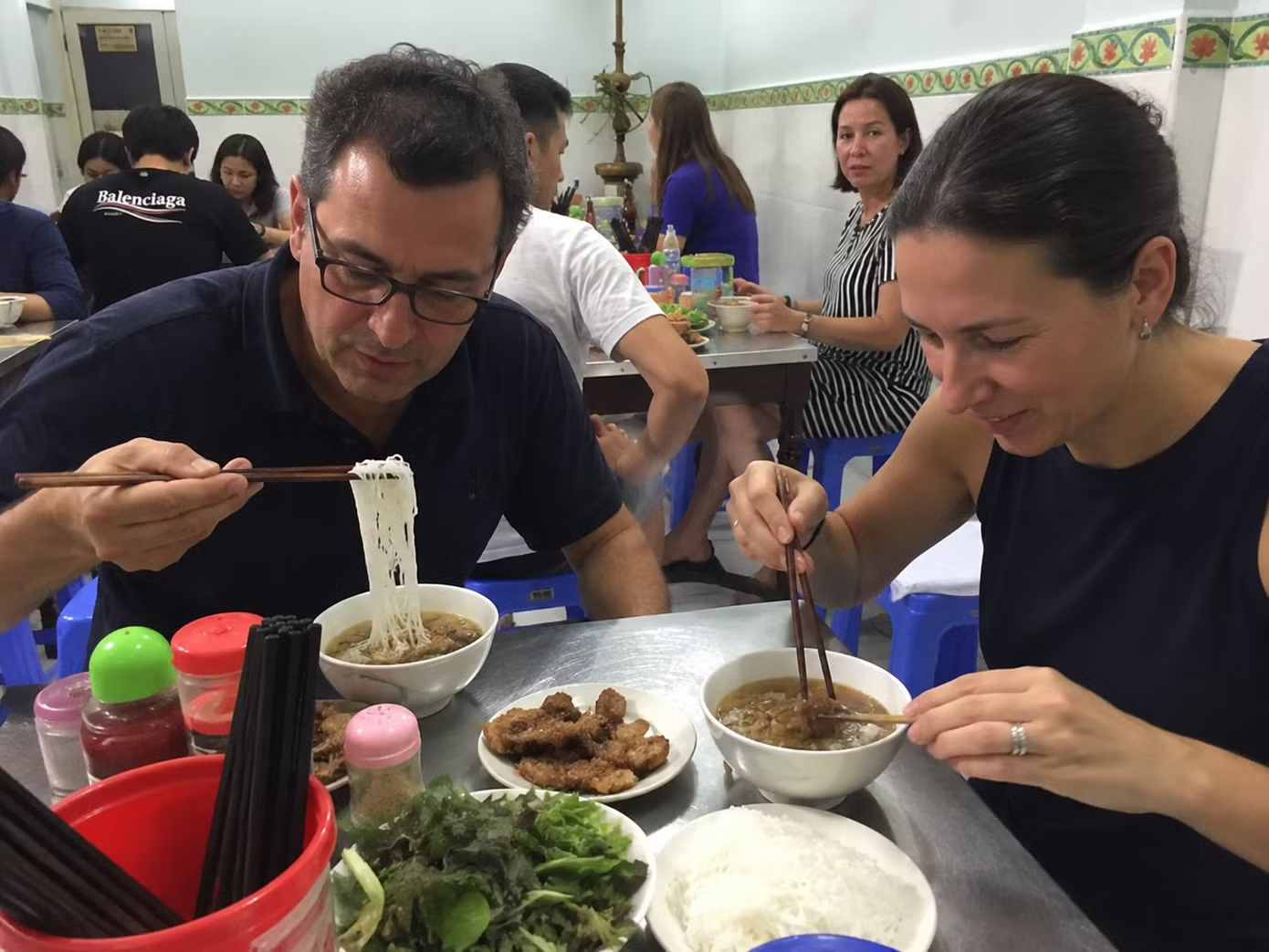
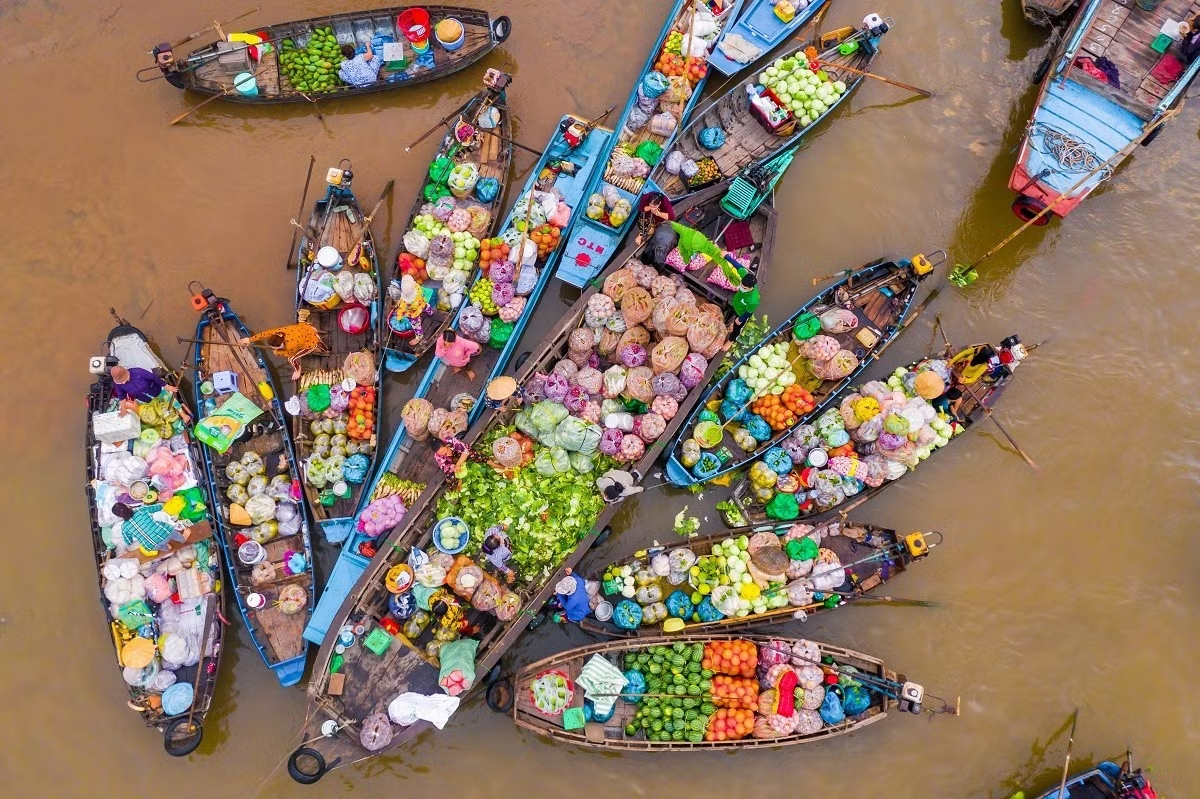
Hue boasts a vast array of royal and folk cuisine. Hoi An has a history of cultural exchange spanning hundreds of years. The Northwest region preserves the indigenous culinary knowledge of dozens of ethnic minorities that many places around the world have long lost. The Central Highlands has a treasure trove of cuisine intertwined with beliefs and community festivals spanning generations. The Mekong Delta, on the other hand, is a world of its own, a land of rivers and local produce.
Many artisans, family-run restaurants, and traditional craft villages have existed for decades, even centuries, but have never appeared in any international guidebooks.
“Michelin has its own criteria, scope of operation, and evaluation methods. The problem is that the public sometimes unconsciously equates culinary value with Michelin recognition. A restaurant awarded a star can become a destination for international tourists. A chef who receives an award can get a lot of media attention. But in reality, many other culinary values still exist outside this coverage,” commented chef Nguyen Hai Anh.
This is a paradox that Vietnam faces not only. In many countries, Michelin is often seen as a prestigious benchmark for the culinary industry. However, cultural researchers have repeatedly emphasized that the value of a cuisine cannot be measured solely by the number of stars or the number of restaurants selected.
Chef Nguyen Hai Anh stated: “Michelin is a very valuable recognition for any chef or restaurant. It helps us to be seen more on the world culinary map. But a cuisine is made up of many layers of culture. It is the memory of the community, the eating habits passed down through generations, local ingredients, and the characteristic processing techniques of each region. There are small eateries deep in the mountains, traditional villages making fish sauce, soy sauce, and traditional cakes that may never appear in Michelin. That does not diminish their value.”
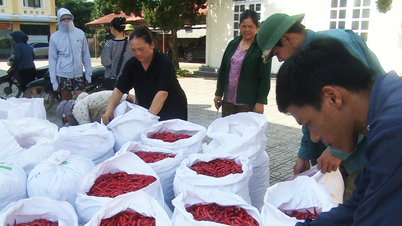
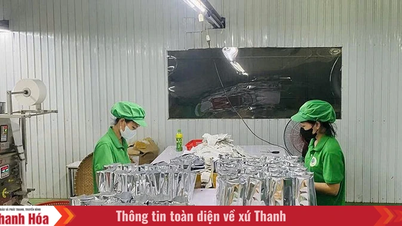
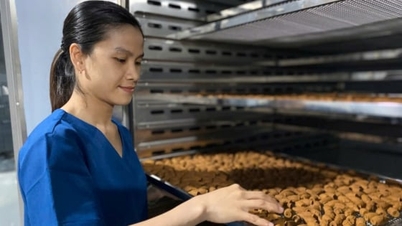
For me, Michelin is like a gateway that lets the world know more about Vietnamese cuisine. But behind that door lies a vast ecosystem. Without the farmers who grow the ingredients, without the traditional villages that preserve the cooking secrets, and without the local communities that maintain traditional flavors, there wouldn't be dishes capable of captivating international diners. That's the true foundation of Vietnamese cuisine.”
Putting Vietnamese cuisine on the world culinary map.
Michelin's influence on culinary tourism is undeniable. According to the Michelin Guide, the organization's website and digital platforms reach tens of millions of users worldwide each year who are searching for information about destinations and dining experiences. The fact that a restaurant in Hanoi, Ho Chi Minh City, or Da Nang is placed alongside renowned establishments in Paris, Tokyo, New York, or Beijing means that Vietnamese cuisine is being recognized by the same global standard of quality.
Back in 2023, after the Michelin Guide published its first list in Vietnam, many of the honored restaurants quickly became "must-visit" destinations for tourists. Gia, Tam Vi, and An An Saigon successively appeared on travel forums, food websites, and guidebooks for international visitors.
A dinner at An An Saigon or a lunch at Tam Vi is gradually becoming a cultural experience sought after by many tourists, similar to how people once went to Tokyo, Bangkok, or Singapore to discover the local Michelin-starred restaurants.
Many establishments experienced periods of full occupancy for weeks, even months, after the announcement. Restaurants that were previously only accustomed to serving local customers unexpectedly became destinations for tourists from Europe, the United States, Japan, South Korea, and Australia.
“In the context of increasingly fierce tourism competition, Michelin has, to some extent, helped Vietnam gain another gateway to reach high-spending tourists who are interested in local culture. A Michelin-awarded restaurant not only benefits the restaurant itself.”
"Behind every menu is a continuous chain of labor involving farmers, ingredient suppliers, traditional craft villages, processing units, and culinary knowledge accumulated over generations," commented culinary tourism expert Le Thanh Tung.
It's noteworthy that Michelin doesn't just celebrate fine dining. The Bib Gourmand list also features many casual eateries, street food vendors, and family-run restaurants in Vietnam, introducing them to an international audience. This creates opportunities for values familiar to Vietnamese people to be recognized as part of their cultural heritage.
"Four years ago, very few foreigners knew the stories behind a bowl of beef stew, a plate of broken rice, or duck dishes prepared in the Northern Vietnamese style."
Today, these dishes appear on international food websites, in travel guide lists, and on the itineraries of diners willing to fly halfway around the world just to experience a Michelin-recommended meal. That's also why many countries view Michelin as a tool for promoting their national image alongside traditional tourism promotion campaigns. Thailand, Singapore, South Korea, and Japan have all leveraged the Michelin effect to build their destination brands and have been very successful,” expert Le Thanh Tung analyzed.
The trend of culinary tourism is also becoming a significant growth driver for the global tourism industry. According to a report by the United Nations Tourism Organization (UN Tourism), approximately 80% of international tourists stated that culinary experiences are one of the important factors influencing their destination choices. Numerous studies by the World Food Travel Association also indicate that tourists tend to spend more on food-related activities compared to many other types of experiences.
Source: https://tienphong.vn/michelin-da-lam-gi-cho-am-thuc-viet-post1850693.tpo
![[Image] Schools organize meetings and introduce teaching models to students admitted to grade 10.](https://vphoto.vietnam.vn/thumb/1200x675/vietnam/resource/IMAGE/2026/06/25/1782368077271_ndo_br_z7970052192242-1ec8daeb77a6eed1a4e9f58c564ddd3e-jpg.webp)
![[Image] Ho Chi Minh City: Ma Lang area, Chicken-Rice Market about to change its appearance](https://vphoto.vietnam.vn/thumb/1200x675/vietnam/resource/IMAGE/2026/06/25/1782377698627_ndo_br_m1-jpg.webp)

![[Photo] General Secretary and President To Lam receives Palestinian Ambassador Saadi Salama](https://vphoto.vietnam.vn/thumb/1200x675/vietnam/resource/IMAGE/2026/06/25/1782365384740_a1-bnd-9423-8322-jpg.webp)