

New policies and guidelines
According to the Health Insurance Law of 2024, from January 1, 2025, health insurance participants who suffer from rare, serious illnesses requiring surgery or advanced medical procedures can go to a hospital other than their initially registered one and still have 100% of their medical expenses covered by health insurance without needing a referral letter as before.
And recently, the policy of waiving hospital fees has brought joy and gratitude to all segments of the population. Ms. Ma Thi Nhi, Head of Noong Phuong village, Minh Quang commune (Lam Binh district), assessed: "This is a step that clearly demonstrates the superiority of the system. In the current difficult circumstances of our country, these 'commitments' also show the efforts of the Party and the State to ensure solid social security."
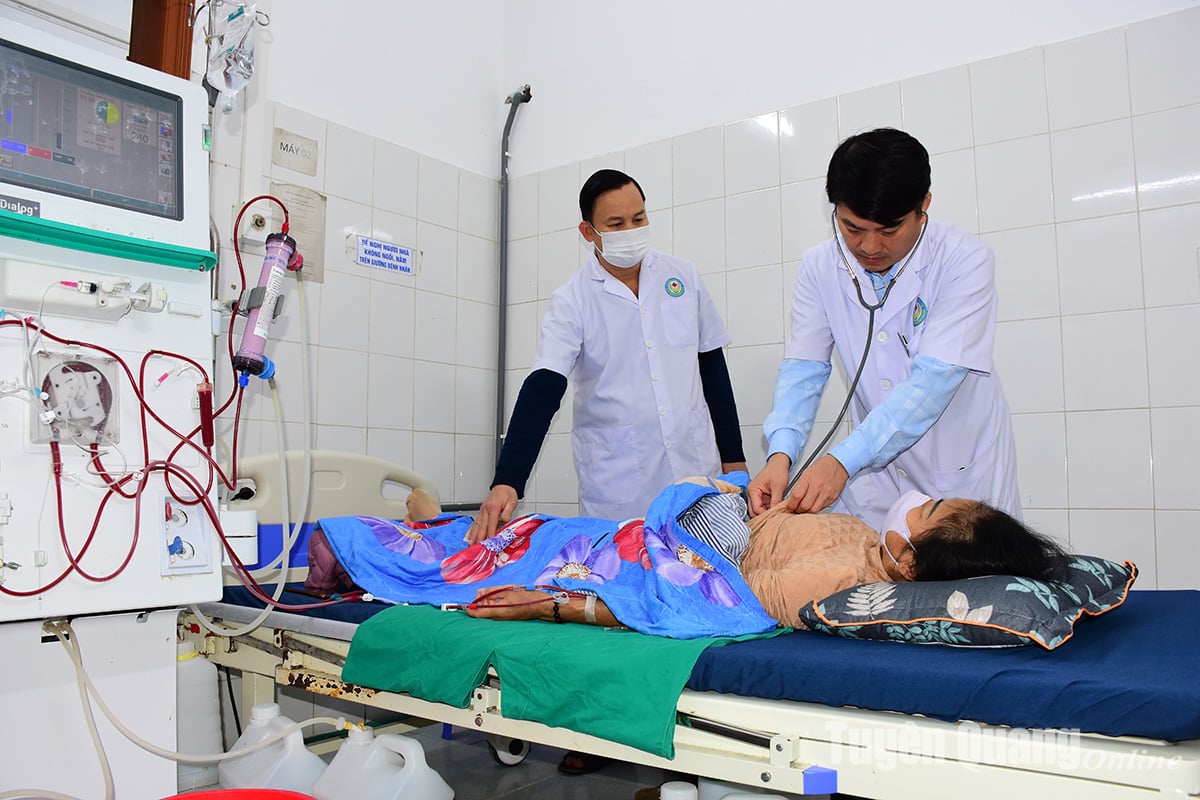
People receiving hemodialysis treatment at Chiêm Hóa District Health Center.
“I believe this is an absolutely correct and excellent policy in the current circumstances, demonstrating the determination to realize the principle of ‘leaving no one behind,’ always putting the people at the center. I have witnessed the tears of helplessness when people lacked the means to receive medical treatment, so if this policy is implemented soon, it will be wonderful,” said Dr. Ngo Cao Lam, Deputy Director of the Son Duong District Health Center.
Voices from practice
The Provincial General Hospital is the province's highest-level facility for treating severe cases. Each day, the hospital receives over 1,000 patients for examination and treatment. The Intensive Care and Toxicology Unit at the Provincial General Hospital treats over 40 critically ill patients daily. Due to the acute nature of these conditions, each patient admitted here faces a high risk of life-threatening situations. Recently, Mr. HAT (40 years old), from Vinh Quang commune (Chiem Hoa district), was transferred from a lower-level facility with severe pneumonia complicated by septic shock and severe respiratory failure.
Ms. Hoang Thi N, the patient's wife, said that due to negligence, both she and her husband, being self-employed, did not purchase health insurance. Now that her husband is hospitalized, the daily treatment costs 5 million VND, leaving her family at a loss. Therefore, Ms. N earnestly hopes that the policy of waiving hospital fees will be implemented soon to alleviate the family's financial burden.
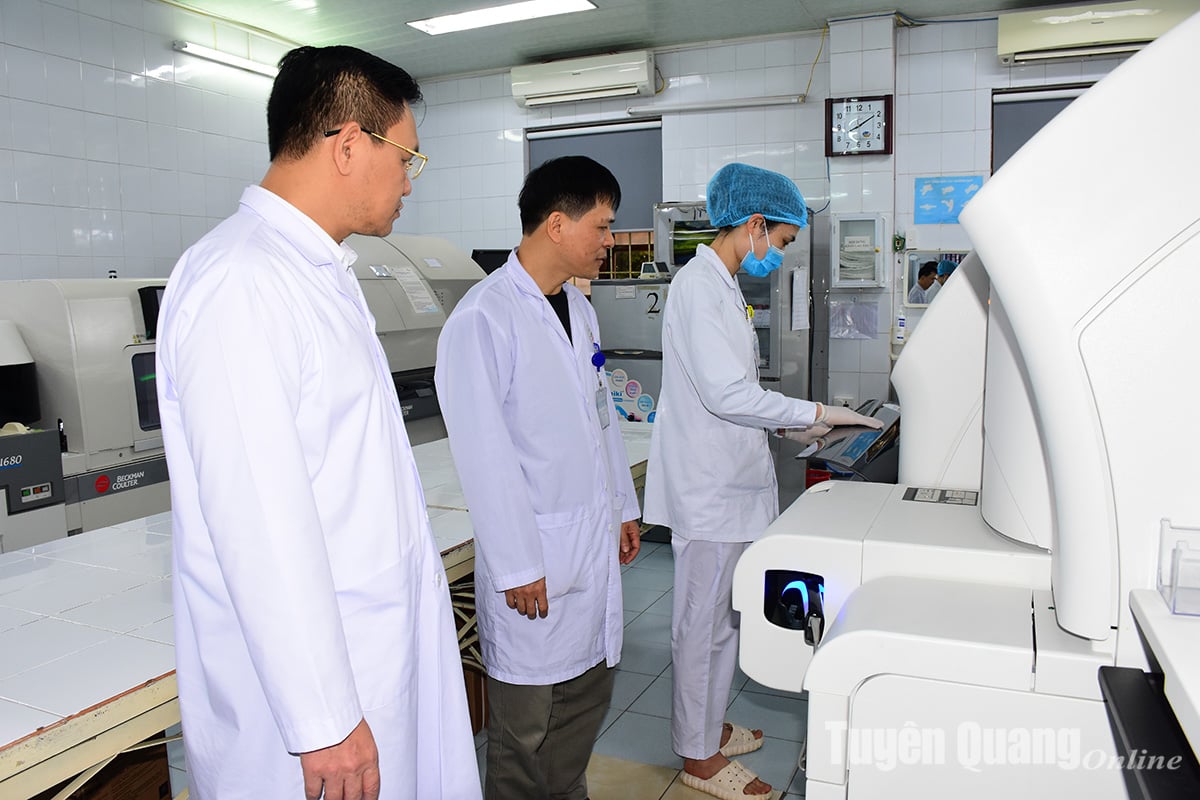
The Beckman Coulter automated immunochemical testing system is used for medical examinations and treatment at the Provincial General Hospital.
Most cancer patients only discover their disease when it has become advanced, leading to higher costs. Ms. Phan Kim Th., from Minh Xuan ward ( Tuyen Quang city), is being treated for breast cancer that has metastasized to her liver. The immunotherapy treatment costs 70 million VND per month, but this is not covered by health insurance, not to mention the costs of tests, radiation therapy, chemotherapy, hospital bed fees, and nutritional expenses. Currently, her family has had to sell their house in their hometown to afford her treatment. “I have witnessed many patients who couldn’t afford treatment being discharged, suffering pain and dying. Now that there is a policy of free hospital fees, I hope that many cancer patients will have a chance to prolong their lives,” Ms. Th. expressed.
Dr. Ha Van Linh, Director of the Chiêm Hóa District Health Center, shared: “Health is the most precious asset of every person. Therefore, when the policy of waiving hospital fees is applied, people, especially those in difficult circumstances and living in remote areas, will go for health check-ups more regularly. If each person receives a regular annual health check-up, many diseases can be detected early, treated promptly, and costs and burdens on the entire healthcare system can be reduced.”
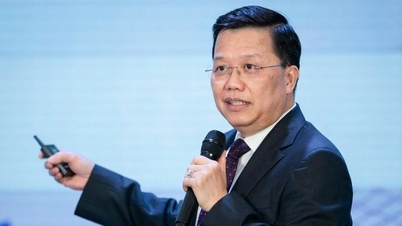
According to Dr. Nguyen Hung Dao, Director of the Provincial General Hospital, detailed guidelines are needed for implementation, and it must be carried out systematically. The important thing is that the policy must ensure consistency within the healthcare system; each hospital cannot implement it in its own way. Universal free medical care can be implemented through universal health insurance. Currently, health insurance has helped reduce the financial burden on people when seeking medical treatment. If every citizen has an insurance card, they can access healthcare services without worrying about the cost.
Dr. La Dang Tai, Deputy Director of the Department of Health, said: "This is a great policy, especially for mountainous areas and ethnic minorities, aimed at improving the quality of life for the people." Currently, although ethnic minorities in particularly difficult areas are provided with free health insurance cards by the State, there have been some changes recently. Communes that have completed the new rural development program and are no longer considered difficult areas are no longer eligible for free health insurance cards. Meanwhile, the economic lives of the people are still difficult, so without health insurance, the high cost of medical examinations and treatment makes it very hard for their families.
Universal free healthcare is a humane policy and is entirely feasible when coupled with sustainable economic development and a sound budget allocation policy. Implementing this policy will provide opportunities to improve the quality of healthcare for the people, opening up many opportunities for the development of each individual's life. Free healthcare is not just a policy, but also a commitment to a prosperous and happy future for the people.
Source: https://baotuyenquang.com.vn/mien-vien-phi-chu-truong-lon-vi-dan-211674.html





























































Comment (0)