


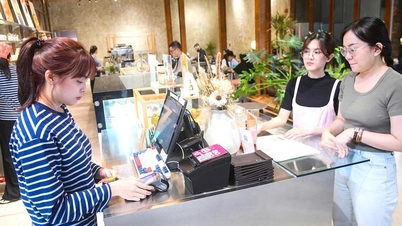
Household businesses need to familiarize themselves with accounting records, storing invoices and receipts, and preparing to use electronic invoices. (Illustrative image)
According to the General Statistics Office ( Ministry of Finance ), there are currently about 3.6 million business households nationwide under the management of tax authorities, contributing over 25,950 billion VND to the state budget. Of these, nearly 2 million households pay taxes using the lump-sum method, averaging 700,000 VND per month. From June 1, 2025, approximately 37,000 business households and individuals with annual revenue of 1 billion VND or more in certain sectors such as food and beverage, hotels, retail, passenger transport, beauty, entertainment, etc., will be required to use electronic invoices from cash registers directly connected to the tax authorities. This is a decisive step in the roadmap to gradually replace the traditional lump-sum tax method, which has been widely applied for many years. Small businesses with lower revenue must also proactively adapt to upcoming changes in tax policy to increase transparency. However, behind the opportunity for cost optimization and more efficient management, this transition also poses significant challenges for households and individual businesses. Many businesses have prepared for implementation, but there are still considerable anxieties before adoption.
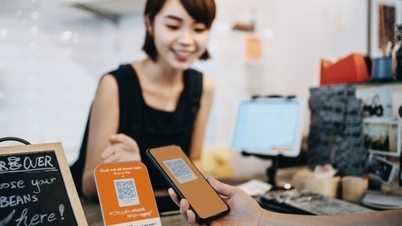
In recent days, information has been circulating on social media about some businesses refusing to accept bank transfers and only accepting cash; or accepting transfers but requiring customers to "not include any details related to goods" or "payment," with many shop owners even instructing customers to write transfer details such as "debt repayment," "happy birthday," or "wedding gift"... This is a way that small businesses believe they can "avoid taxes" because they fear that once they connect with the tax authorities and issue electronic invoices after each sale, they will have to pay higher taxes than under the previous lump-sum tax system. However, according to tax law, taxable revenue for household and individual businesses is the revenue from all sales of goods and services. Therefore, avoiding or refusing to accept transfers, making it difficult for authorities to determine revenue, does not reduce tax obligations; on the contrary, it may become a suspicious sign of revenue concealment, contrary to the Party's policy of developing cashless payments.

According to experts, the lump-sum tax system was once suitable for small businesses with limited management skills, a lack of accounting expertise, low compliance costs, and an underutilized tax system. However, this model is revealing many shortcomings such as unfairness, potential for revenue loss, a lack of transparency, and is no longer suitable in the context of the digital economy and the trend towards more structured business models. The shift from lump-sum to declaration-based taxation is an inevitable trend, helping to increase transparency and reduce revenue loss. This is because a paradox has long existed: many large businesses pay the same lump-sum tax as smaller businesses, while small traders are subject to the same tax rate.
Through advancements in taxation and related conditions, we promote formalization, making the operations of household and individual businesses more transparent and equitable compared to other economic sectors. Furthermore, without transparency in the input and output of household and individual businesses through tax declarations, phenomena related to counterfeit, fake, and smuggled goods will be difficult to prevent, as most of these goods primarily originate from household businesses. Simultaneously, increased responsibility for contributing to the state budget creates equality among economic sectors, helping household businesses to be transparent and accountable in their production and business activities.
However, the shift from a lump-sum tax to a tax based on actual revenue for household and individual businesses will create additional costs such as investment in equipment, software, purchasing electronic signatures, and maintaining accounting records according to regulations. In reality, many household businesses are run by elderly people, operating on a small scale, and have limited knowledge of policies and technology. This context requires flexibility from government agencies. Simultaneously, time should be allocated for guidance and support to help household businesses adapt, avoiding rigid imposition and overly strict penalties. In particular, procedures, accounting records, and management methods must be tailored to the capabilities, skills, and expertise of different business groups. Without appropriate policies, the risk of tax evasion or withdrawal from business will remain.
For households and individual businesses, it's important to understand that the transition from a flat-rate tax to a revenue-based tax is an inevitable and unavoidable process. Therefore, it's crucial to quickly familiarize yourself with the regulations, seek advice from specialized units, and adopt electronic invoices generated from point-of-sale systems to accurately monitor revenue. Simultaneously, familiarizing yourself with accounting records, invoice storage, and preparing for the use of electronic invoices is a vital step in adapting to this change. Refusing bank account payments will cause many business owners to lose a significant number of customers, especially given the current consumer reluctance to carry cash when shopping.
In order to realize the national development goals as set forth in the Resolution of the 13th National Party Congress and to meet the development requirements of the new era, it is necessary and urgent to innovate thinking, unify understanding and action, and implement comprehensive, breakthrough solutions to further enhance the role of the private economy, consolidate confidence, create new momentum and impetus for economic development, promote growth, and improve national competitiveness.
Hong Chuyen
Source: https://baophutho.vn/minh-bach-de-phat-trien-234415.htm





![[Photo] National Assembly Chairman Tran Thanh Man attends the policy seminar to promote Vietnam-Türkiye cooperation.](https://vphoto.vietnam.vn/thumb/1200x675/vietnam/resource/IMAGE/2026/04/16/1776351415367_vna-potal-chu-tich-quoc-hoi-tran-thanh-man-du-toa-dam-chinh-sach-thuc-day-hop-tac-viet-nam-tho-nhi-ky-8705791-jpg.webp)












































































Comment (0)