

From being accustomed only to blackboards and chalk, schools in the province have gradually applied electronic lectures, digital learning materials, and artificial intelligence (AI), bringing more dynamic and visually engaging lessons. Not only has digital transformation revolutionized teaching and learning methods, but it has also opened up opportunities to access vast knowledge, helping students in mountainous areas gradually narrow the gap with students in more privileged regions.
In the journey to narrow the educational gap between mountainous and lowland areas, digital transformation is gradually becoming a crucial "key" in many highland localities of the province such as Sa Pa ward, Si Ma Cai commune, etc., innovating teaching and learning methods.
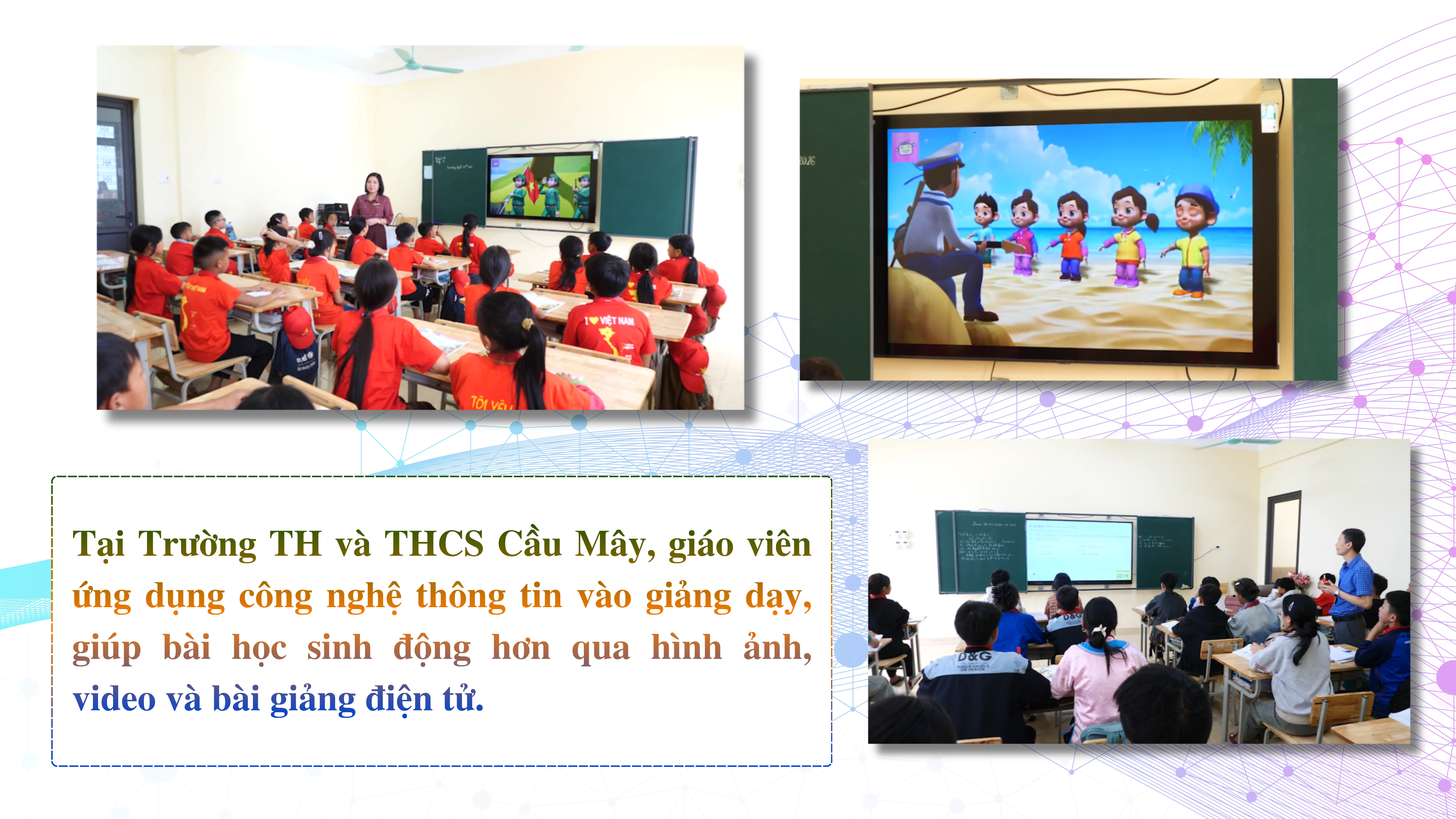
At Cau May Primary and Secondary School (Sa Pa ward), all 25 teachers have received training in using information technology in their teaching. As a result, each lesson is no longer just about textbooks but also includes vivid images and videos . On television screens and projectors, electronic lectures help students easily visualize knowledge, from distant landmarks to historical events that were previously difficult to access.
Previously, many difficult lessons were hard to grasp because I only heard the teachers explain the theory. Now, learning through a projector with images makes it much easier to understand. These lessons are always very lively.
Clearly sensing the change, Ms. Luong Thi Truyen, a Literature and History teacher at Cau May Primary and Secondary School, said: “When using electronic lessons, students are much more interested. They not only listen but also see and feel, so they understand the lesson faster and more deeply. Especially for ethnic minority students, visual images help them overcome language barriers.”

In recent times, digital transformation in education in Sa Pa ward has been implemented comprehensively. 100% of schools have applied technology in teaching and learning, with computer labs; 3 schools have classrooms using tablets; and 7 schools have smart classrooms. The remaining classrooms are equipped with smart TVs, projectors, and broadband internet. Management has also seen a significant shift as schools digitize records, create electronic student transcripts, and use digital signatures on the VGCA platform, contributing to time savings and improved operational efficiency.
Similar to Sa Pa ward, in Si Ma Cai commune, digital transformation is gradually spreading to every classroom. As a locality still facing many difficulties, the introduction of technology into teaching is not only about innovating methods but also an effort to narrow the educational gap between lowland and highland areas.
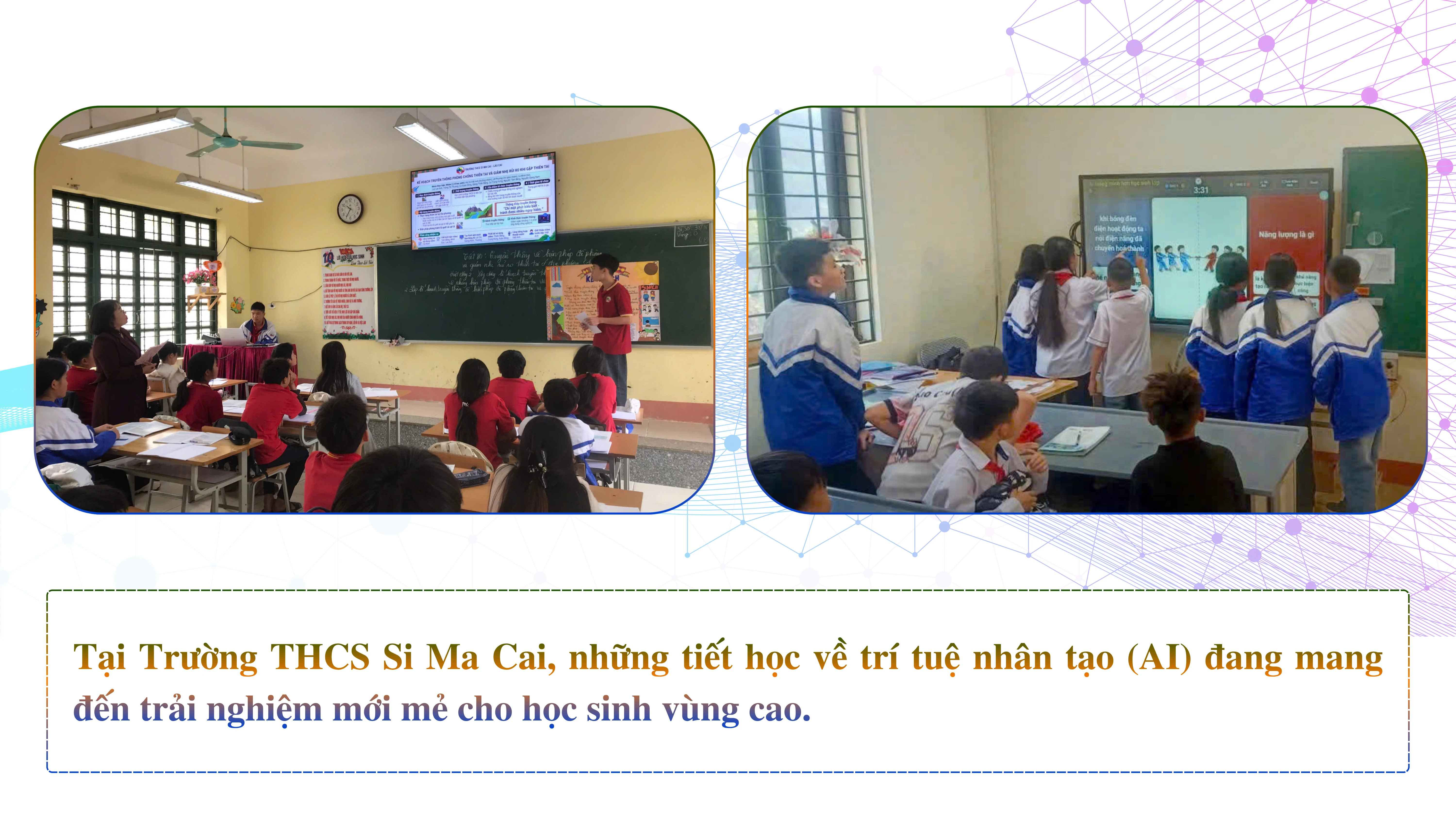
Currently, 100% of schools in the commune have implemented digital transformation. Twenty schools in the area have been equipped with televisions and projectors for teaching, gradually meeting the requirements of educational reform.
Currently, all 25 teachers at the school have received training and regularly use digital lesson plans. Digital transformation helps students in mountainous areas access a vast amount of knowledge on the Internet. Technologies such as virtual experiments and digital lessons help overcome some of the limitations in infrastructure.
Teacher Vang Van Quyn from Si Ma Cai Secondary School shared about his lessons: “On average, I conduct 15 to 20 lessons per week using digital learning materials. Since applying technology, students have become more proactive in their learning. They understand the lessons faster.”
It is evident that, whether in Sa Pa ward or Si Ma Cai commune, digital transformation is contributing to improving the quality of education. From small classrooms in remote villages, students today have the opportunity to access engaging lessons and rich sources of knowledge that were previously difficult to obtain.
Despite the many challenges, the initial results of digital transformation in education have shown the right direction. As technology continues to be invested in and disseminated, the educational gap between mountainous and more developed regions will gradually narrow, opening up a brighter future for students in the remotest parts of the country.
Source: https://baolaocai.vn/mo-co-hoi-tiep-can-tri-thuc-cho-tre-em-vung-cao-post900445.html











































![[Video] Sunset at Lap An Lagoon – Where the sun sets over the fishing nets](https://vphoto.vietnam.vn/thumb/1200x675/vietnam/resource/IMAGE/2026/05/31/1780192137701_beach-landscape-sea-water-nature-grass-745871-pxhere-com.jpeg)


























Comment (0)