

 |
| The roadmap for implementing the ASEAN Unique Enterprise Identification Number (UBIN), adopted in early 2025, will boost the digital economy in ASEAN. (Source: VNA) |
ASEAN Secretary-General, Dr. Kao Kim Hourn, has affirmed ASEAN's commitment to leading the digital transformation process, stating: “Digital connectivity has become an essential socio-economic infrastructure. The UBIN initiative reflects this vision, addressing long-standing barriers to cross-border trade and fostering trust among businesses to thrive in a seamlessly connected and competitive global economy.”
Imagine a fully digitally connected ASEAN – where businesses can trade seamlessly across borders, based on an interconnected digital infrastructure capable of real-time business identification and verification, thereby maximizing transaction facilitation. That promise will become a reality when the ASEAN Single Enterprise Identification Number (UBIN) Implementation Roadmap is adopted in early 2025.
 |
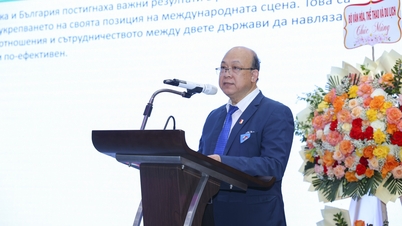
| Dr. Le Quang Lan, Director of the Market Integration Department, ASEAN Secretariat. (Source: ASEAN Secretariat) |
With UBIN, businesses of all sizes can operate with greater confidence and flexibility, thereby fully unlocking ASEAN's economic potential.
Nadhir Ashafiq, co-founder of The Lorry, emphasized the importance of building a unified business environment in ASEAN: “From the perspective of a young entrepreneur, we hope that business licensing, company formation, and harmonization of procedures across ASEAN will be easier.”
UBIN embodies that vision, paving the way for an ASEAN where trade is barrier-free and opportunities reach all businesses.
Promoting ASEAN's Digital Transformation
ASEAN recognizes the immense potential of trade enabled by digital technology . Driven by the adoption of the Bandar Seri Begawan Roadmap on Digital Transformation to accelerate ASEAN economic recovery and digital economic integration in 2021, ASEAN is gradually "leapfrogging" in the digital economic transformation process through the ASEAN Digital Economic Framework Agreement (DEFA), the first regional agreement in this field, which was launched in September 2023.
Also in 2023, with the support of the Australian Government through the Aus4ASEAN Futures Program, ASEAN began its journey to build a vision for a regionally interoperable and recognized digital enterprise identifier, prompting the 55th ASEAN Economic Ministers' Meeting (August 2023) to adopt the “Guidelines for Matching Unique Enterprise Identifiers (UBINs) in ASEAN”, and assigning the task of implementing the UBIN initiative in all member countries.
With this mission, ASEAN continues to take the next step towards the UBIN vision by developing an Implementation Roadmap, helping member states build a regionally interoperable digital enterprise identification system.
ASEAN Secretary-General, Dr. Kao Kim Hourn, emphasized ASEAN's commitment to digital transformation, stating: “Digital connectivity has become an essential socio-economic infrastructure. The UBIN initiative reflects this vision, addressing long-standing barriers to cross-border trade and fostering trust among businesses to thrive in a seamlessly connected and competitive global economy.”
ASEAN Unique Business Identification Number System
UBIN is a framework that enables ASEAN countries to connect and interlink with each other – a key element in building a reliable business identification system to support cross-border business operations. This framework comprises five core components:
Data: Ensuring accurate and secure information sharing between business registration agencies.
Technology : Building a decentralized, interoperable system that enables real-time verification and secure cross-border transactions.
Governance: Establishing a common management mechanism at the regional and national levels to operate UBIN.
Regulations: Ensure UBIN complies with the existing legal framework, including security and privacy regulations in ASEAN member countries.
Enablers: These include capacity-building programs to ensure smooth implementation and sustainable development.
An analysis by Boston Consulting Group forecasts that the economic impact of UBIN deployment is substantial, potentially reaching between US$110 billion and US$300 billion, equivalent to 10-25% of the total value added to ASEAN's digital economy.
The drivers of growth include cross-border trade value, transaction costs, and FDI inflows, promising to boost national economies and enhance regional prosperity, positioning ASEAN as a global economic powerhouse.
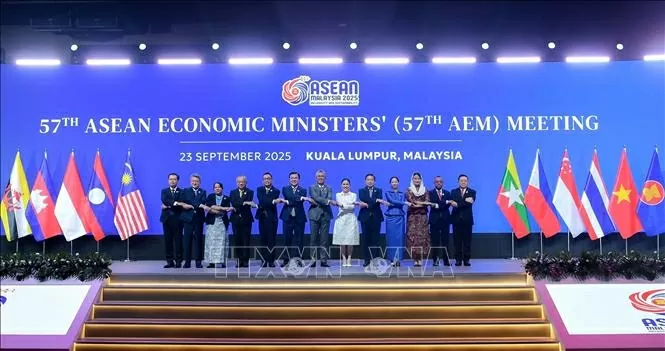 |
| The 57th ASEAN Economic Ministers' Meeting discussed many issues related to the digital economy. (Source: VNA) |
Promoting equal growth opportunities in ASEAN
Inclusive growth is central to ASEAN's regional integration vision. By removing systemic barriers and promoting equal access to opportunities, UBIN can empower businesses—especially micro, small, and medium-sized enterprises (MSMEs) and women-owned businesses—to participate in global trade, thereby driving inclusive economic growth.
MSMEs are the backbone of the ASEAN economy, accounting for 97-99% of businesses and contributing approximately 45% of ASEAN's GDP. However, only 18% of these are involved in exports, partly due to difficulties in accessing international markets: complex customs procedures, differing foreign regulations, and a lack of trust in cross-border transactions.
UBIN aims to address these challenges through application cases that simplify processes and support MSMEs in maximizing the opportunities of the region's rapidly developing digital economy.
Women-owned businesses are disproportionately affected by cumbersome administrative procedures, with a 31% higher likelihood of maintaining informal business operations due to regulatory barriers. While e-commerce opens up new opportunities, they still face significant challenges such as a lack of trust from international buyers, inconsistent regulations, and difficulties in scaling up. UBIN can contribute to addressing these issues by simplifying cross-border business formalization and compliance procedures, making it easier for women-owned businesses to enter regional and global markets.
One of UBIN's highlights is the introduction of digital business identification, aimed at enhancing trust and credibility. In ASEAN, 70% of women-owned businesses face difficulties accessing credit and finance, while the gender gap in access to financial services remains at 9%.
One of UBIN's application cases aims to bridge this gap by improving access to finance through increased business credibility, making them more likely to be recognized by financial institutions. Digitalization simplifies compliance and documentation, reducing barriers to formal financial access.
A roadmap for implementing a unified digital commerce system.
ASEAN is built on the spirit of mutual respect and shared commitment. Based on these principles, the UBIN vision is based on five core principles: Sovereignty & Inclusiveness, ensuring each member state controls data and has the right to regulate; Security & Resilience, utilizing scalable open-source technologies; Interoperability, enabling seamless information exchange; Lean design, requiring minimal investment and few regulatory changes; Focus on promoting MSMEs trade, connecting ASEAN businesses with regional and international markets.
This means that no country is left behind; each member state has the tools and flexibility to fully participate in the region's shared initiative.
The UBIN deployment roadmap comprises five key milestones: Establishing the base station – building a governance model and training stakeholders; "climbing the hill" – deploying technology by selecting technology partners and securing financing; "building momentum" – deploying priority use cases; "reaching the height" – phased deployment of advanced skill-based use cases such as electronic contracts; and "conquering the peak" – completing the deployment and making UBIN a pillar of digital trust in the region.
In the short term, ASEAN plans to implement easy-to-use features such as "Company Search" and "Data as a Service" to simplify the verification of registered business information.
These applications enable standardized lookup of business information across the region, such as company name, national business identifier, and registered address, to support businesses in quickly and easily verifying partners and enhancing trust in cross-border trade.
In the long term, UBIN will support the secure authentication of essential documents used in daily transactions, especially in cross-border trade. UBIN will become a crucial digital infrastructure for the region, enabling the secure exchange of documents such as invoices, trade licenses, customs permits, etc., ensuring they are tamper-proof and securely authenticated. This innovation will help MSMEs save significant time and costs while creating a safer business environment.
The launch of the new UBIN implementation roadmap is just the beginning, but a significant milestone for ASEAN in its journey to strengthen integration and promote regional economic growth. Through UBIN, ASEAN hopes to open up new opportunities for businesses of all sizes, aiming for a future where businesses can thrive within a truly connected ASEAN Community.
Source: https://baoquocte.vn/mo-khoa-thuong-mai-so-cua-asean-336236.html








































































































Comment (0)