|
| Green capital flows continue to expand. (Graphic by HONG ANH) |
Green credit - an inevitable trend
According to Dr. Le Duy Binh, Director of Economica Vietnam, as Vietnam aims for double-digit GDP growth for many consecutive years, the story is not just about speed, but also about the quality of growth. ESG is therefore becoming a core element in the development strategies of businesses and the economy .
In promoting green transformation, the government plays a particularly important role. With a projected medium-term public investment capital of approximately VND 8.22 trillion for the period 2026-2030, along with recurrent expenditures of approximately VND 10.06 trillion, the State is not only the policy-making body but also the "largest consumer" of the economy. "Through public procurement, capital allocation, and project selection, the government can adjust business behavior towards a greener and more responsible direction," Dr. Le Duy Binh stated.
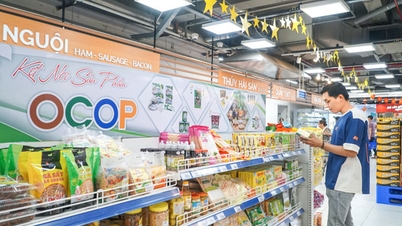
According to this expert, green consumption is emerging as a new growth driver. The size of the Vietnamese retail market is projected to reach approximately 7 trillion VND in 2025, equivalent to 269 billion USD. Notably, about 84% of Vietnamese consumers are willing to pay more for green, clean products with ESG commitments. In the export sector, standards related to emissions, traceability, environmental protection, and labor are becoming new technical barriers. This requires businesses to adapt if they want to continue participating in and expanding their position in the international supply chain.
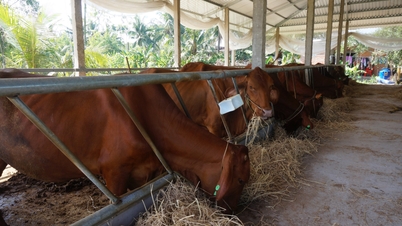
To meet this transformation requirement, there is a huge need for capital. According to Deputy Governor of the State Bank of Vietnam Nguyen Ngoc Canh, the State Bank has implemented many comprehensive solutions to promote green credit. The regulatory body has developed specific orientations and objectives for credit institutions in developing green banking, green credit, and managing environmental and social risks; issued numerous guiding documents on green credit granting activities; and implemented preferential credit mechanisms for organic agriculture , production based on circular economy models, and sustainable development projects.
Notably, the State Bank of Vietnam is submitting to the Government a draft Decree providing a 2% interest rate subsidy from the state budget for private sector enterprises, business households, and individual businesses borrowing from banks to implement green projects, circular projects, and apply ESG standards.



These efforts have yielded positive results. By the end of the first quarter of 2026, 82 credit institutions had generated green credit outstanding with a total outstanding balance of approximately 828 trillion VND. The average growth rate during the 2017-2025 period reached over 20% per year. Outstanding loans assessed for environmental and social risks reached over 5.7 million trillion VND, an increase of approximately 25 times compared to the end of 2017 and accounting for more than 30% of the total outstanding credit in the entire economy.
For commercial banks, green credit has also become a strategic focus. Ms. Vu Thi Mui, Deputy Head of Wholesale Product Policy Department at Vietcombank, said that Vietcombank has implemented the "greening" of its credit portfolio from a very early stage and has continuously increased the proportion of capital allocated to green projects.
During the period 2020-2025, Vietcombank's total green credit outstanding increased more than fourfold, making the bank one of the largest green credit institutions in the market. “In the coming time, the bank will continue to prioritize resources for national strategic infrastructure projects, key transportation projects, smart transportation, as well as renewable energy projects such as wind and solar power. These are not only areas with great growth potential but also contribute to achieving green growth goals, energy transition, and ensuring national energy security,” a Vietcombank representative emphasized.
Similarly, Agribank is implementing a 3,000 billion VND green credit program with preferential interest rates starting from 5.8%/year to support customers investing in rooftop solar power, purchasing electric vehicles, developing forestry, and many other environmentally friendly projects. In addition, Agribank is implementing a preferential credit package for clean agriculture and high-tech agriculture worth 50,000 billion VND, and is participating in many green agriculture programs and the 1 million hectare high-quality rice project in the Mekong Delta…
Improving mechanisms to unlock green capital.
Despite positive results, the development of green credit still faces challenges that need to be addressed. Mr. Pham Tuan Anh, Director of Sustainable Development at GreenFeed Vietnam, stated that businesses need a stable policy environment and streamlined administrative procedures to confidently invest. “These include specific incentives such as tax breaks, technical support, and access to green capital. We’ve heard a lot about green capital in recent years, but accessing it in practice still faces many difficulties,” Mr. Tuan Anh shared.
Meanwhile, Ms. Pham Thi Thanh Tung, Deputy Director of the Department of Credit for Economic Sectors (State Bank of Vietnam), assessed that the identification of circular projects and the application of ESG still lack consistent guidance; the green bond market and carbon market are still in the development stage; and the capacity of many credit institutions and businesses to implement green finance still needs to be further improved.
From the perspective of commercial banks, Mr. Tran Hoai Phuong, Director of Corporate Banking at HDBank, said that HDBank is currently applying ESG assessments to all corporate customers who need loans. "Through the ESG assessment process, businesses can better understand their readiness for sustainable development trends and improve their access to capital in the future," Mr. Phuong observed.



According to experts, when capital is channeled in the right direction, businesses will have more opportunities to transform their production models, enhance their competitiveness, and create a foundation for high-quality growth in the coming period.
https://nhandan.vn/mo-loi-cho-dong-von-xanh-post970102.html?gidzl=tx3uJYTd5NVThV5EA7WSSz6f_qKoTKagolIl430cJoh4fAX7F295A9V_zaTgUHejagYhHMBDvDKE8sSOTG
Source: https://huengaynay.vn/kinh-te/mo-loi-cho-dong-von-xanh-166871.html































![[Image] Ho Chi Minh City: Ma Lang area, Chicken-Rice Market about to change its appearance](https://vphoto.vietnam.vn/thumb/1200x675/vietnam/resource/IMAGE/2026/06/25/1782377698627_ndo_br_m1-jpg.webp)