

Having dedicated his youth and prime to bravely fighting to defend the Fatherland, at over 90 years old, Mr. Nguyen Dinh Huy (Tan Lam Huong commune, Thach Ha district, Ha Tinh province ) - a former prisoner of Phu Quoc prison - is writing memoirs about those years of blood and flowers, always reminding his descendants to "close the past but never forget the past."
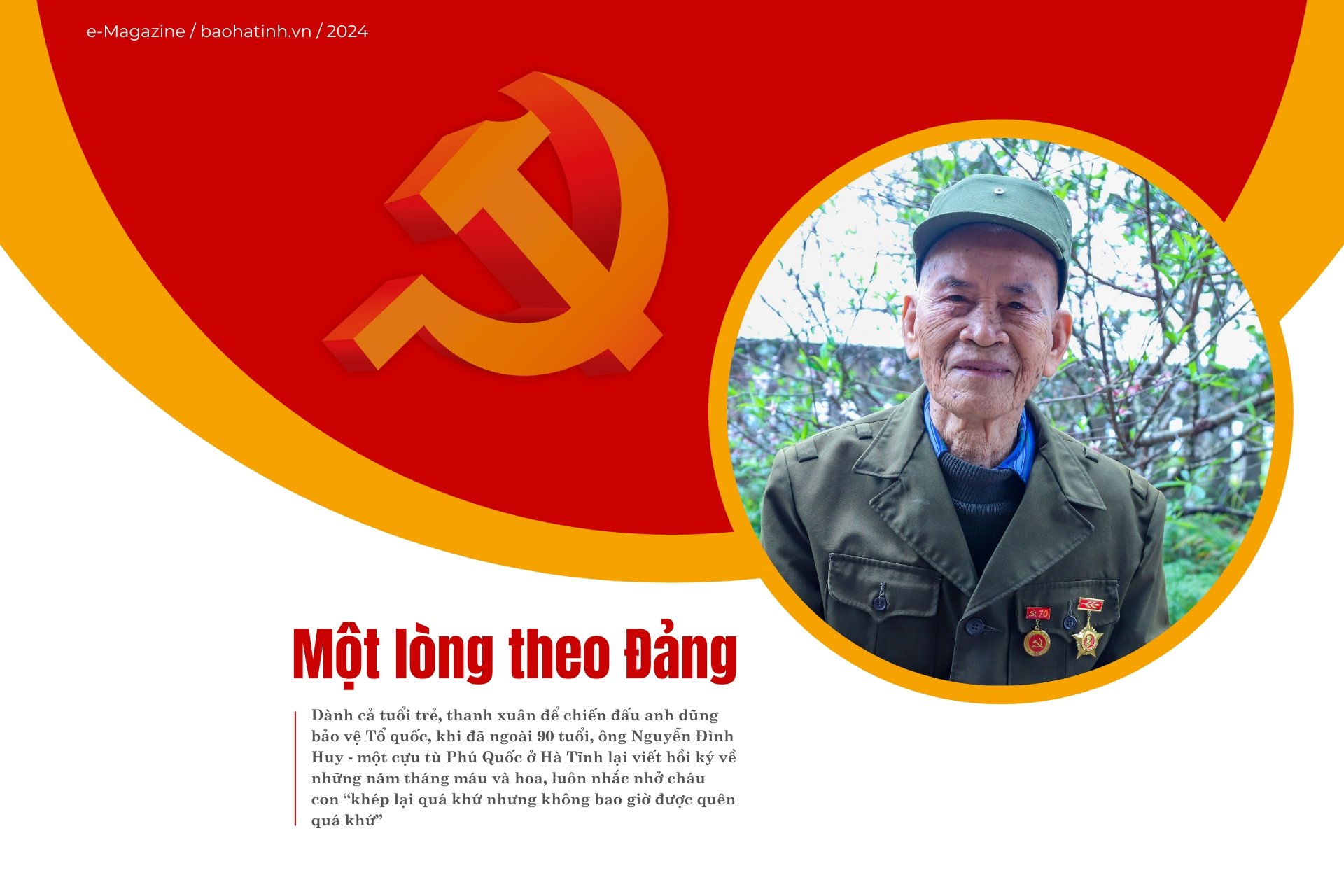
Following the village officials, we arrived at the small house of Mr. Nguyen Dinh Huy (commonly known as the late Mr. Huan - born in 1927) in Yen Trung village, Tan Lam Huong commune (Thach Ha district). With hair as white as snow, a resolute face but a very bright and warm smile, he told us about his life of revolutionary activity, the hardships and sacrifices of his generation.
Mr. Huy was born and raised in a poor family. With many children and a large, impoverished household, his father died early, and from a young age he had to work as a servant for many families in the area to earn a living. Having witnessed the 1945 famine that claimed the lives of many family members, relatives, and villagers, he was even more determined to leave and contribute to the struggle for independence and freedom for his country.
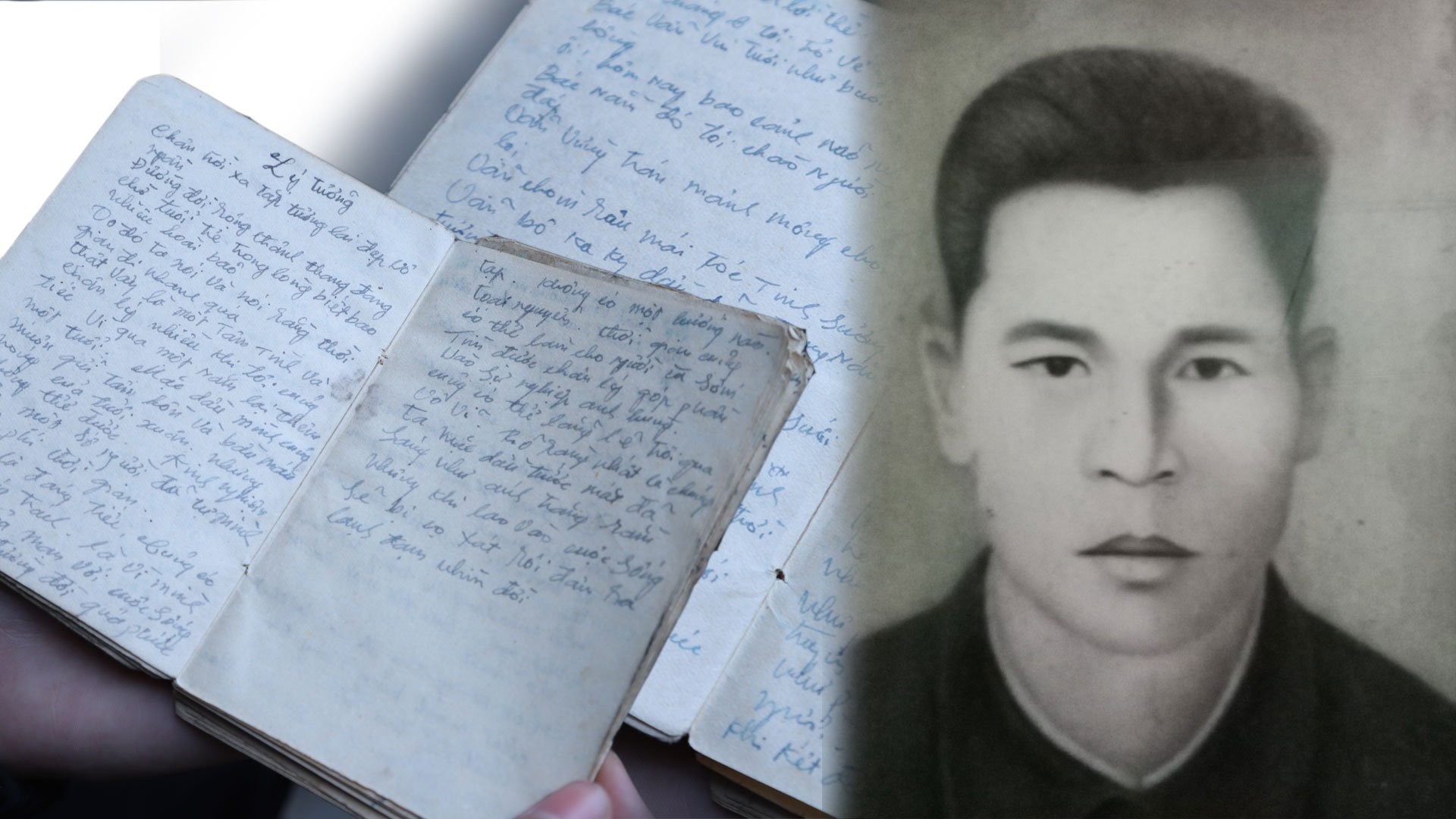
A portrait of Mr. Nguyen Dinh Huy in his youth, along with pages of memoirs recording the arduous days and life-or-death situations he and his comrades faced.
In 1950, responding to the youth enlistment movement, he enthusiastically joined the army. After two months of training, he returned to his hometown to serve in the reserve awaiting orders. At the end of 1952, he got married, but only three months after the wedding, he was transferred to the 101st Regiment (part of the 325th Division). He was then away for long periods in battles, and in 1959, his wife passed away before they could have any children together.
His unit was tasked with creating a diversion against the enemy in the Central and Upper Laos fronts to coordinate with other units in the Dien Bien Phu campaign. He and his comrades participated in many fierce battles in Lower Laos and Northeast Cambodia. After the victory at Dien Bien Phu, his unit withdrew to Quang Binh province to consolidate its regular forces and prepare to fight the Americans.
At the end of 1955, he had the honor of being admitted to the Party. “That was a significant milestone in the lives of soldiers like me on the battlefield. Joining the Party brought us pride and responsibility in every battle, every step of the march. From that moment, I vowed to follow the ideals of the Party and the beloved President Ho Chi Minh for the rest of my life,” Mr. Huy recalled.
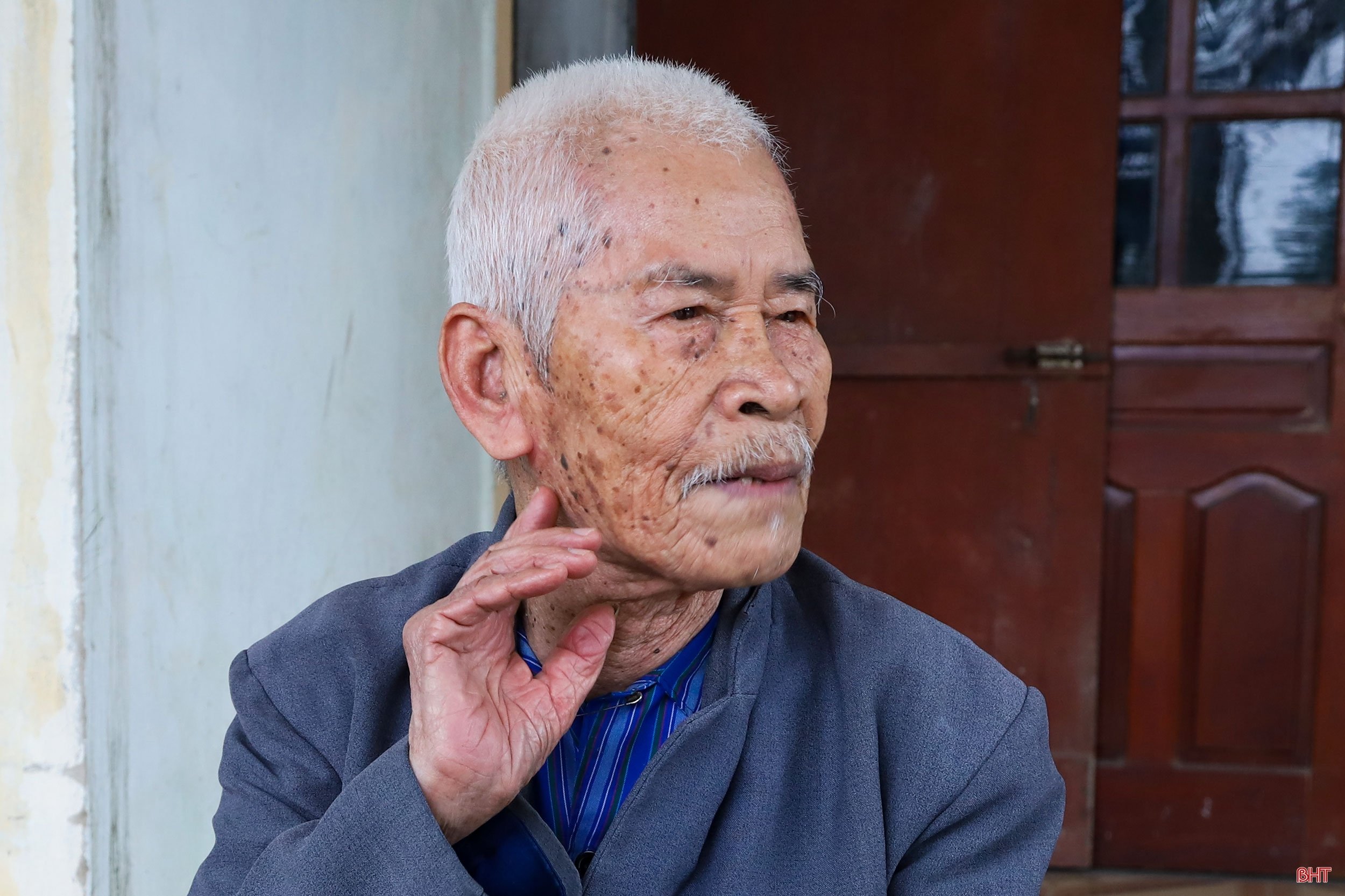
Mr. Nguyen Dinh Huy tearfully recalled his memories of the years of revolutionary activity.
In December 1962, he was granted leave and married his second wife. During one of his short leave periods, they had a son. In October 1964, when his son was one month old, Mr. Huy received orders to be transferred from his base in Quang Binh to the battlefield in the South. He and his comrades participated in many fierce battles in the provinces of Gia Lai, Kon Tum, Dak Lak , Quang Ngai, Binh Dinh, Phu Yen, and others.
In February 1967, while operating in Binh Dinh, he and a comrade were unfortunately captured by the enemy. They were taken to Pleiku prison (Gia Lai), then transferred to a cell in Saigon, and exiled to Phu Quoc prison after a month of detention on the mainland. Nearly 60 years have passed, but Mr. Huy is still deeply moved when recalling those dark, agonizing days in that "hell on earth." Phu Quoc prison was notorious for its brutal and savage torture. Mr. Huy and his comrade were repeatedly beaten, had their limbs clamped, nails driven into their knees, and were locked in tiger cages...
.
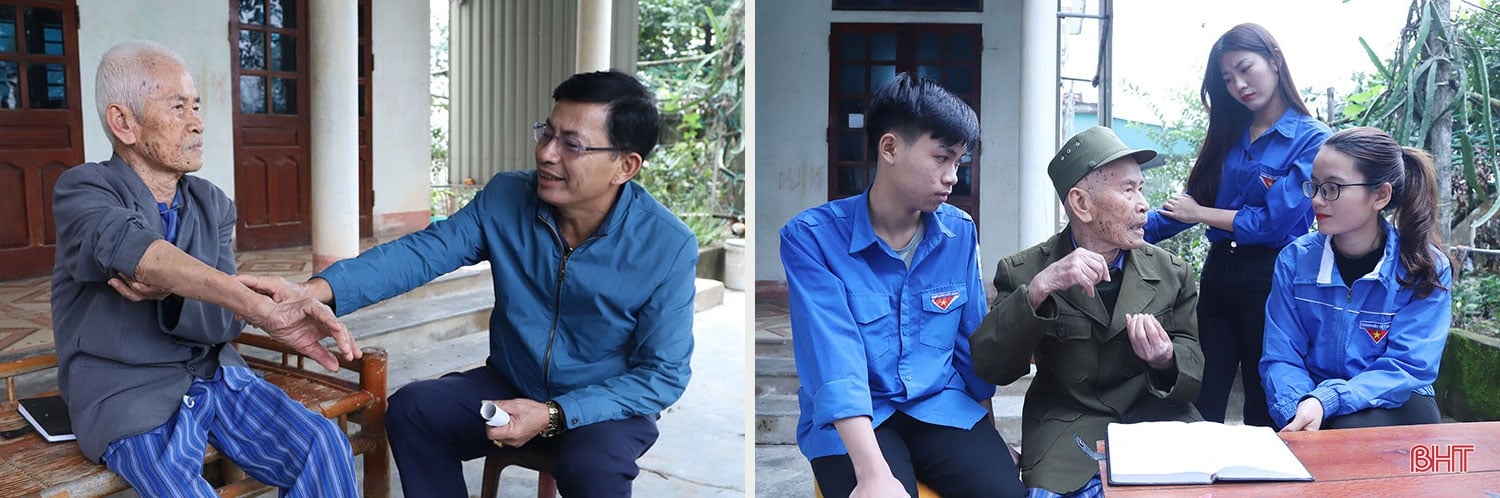
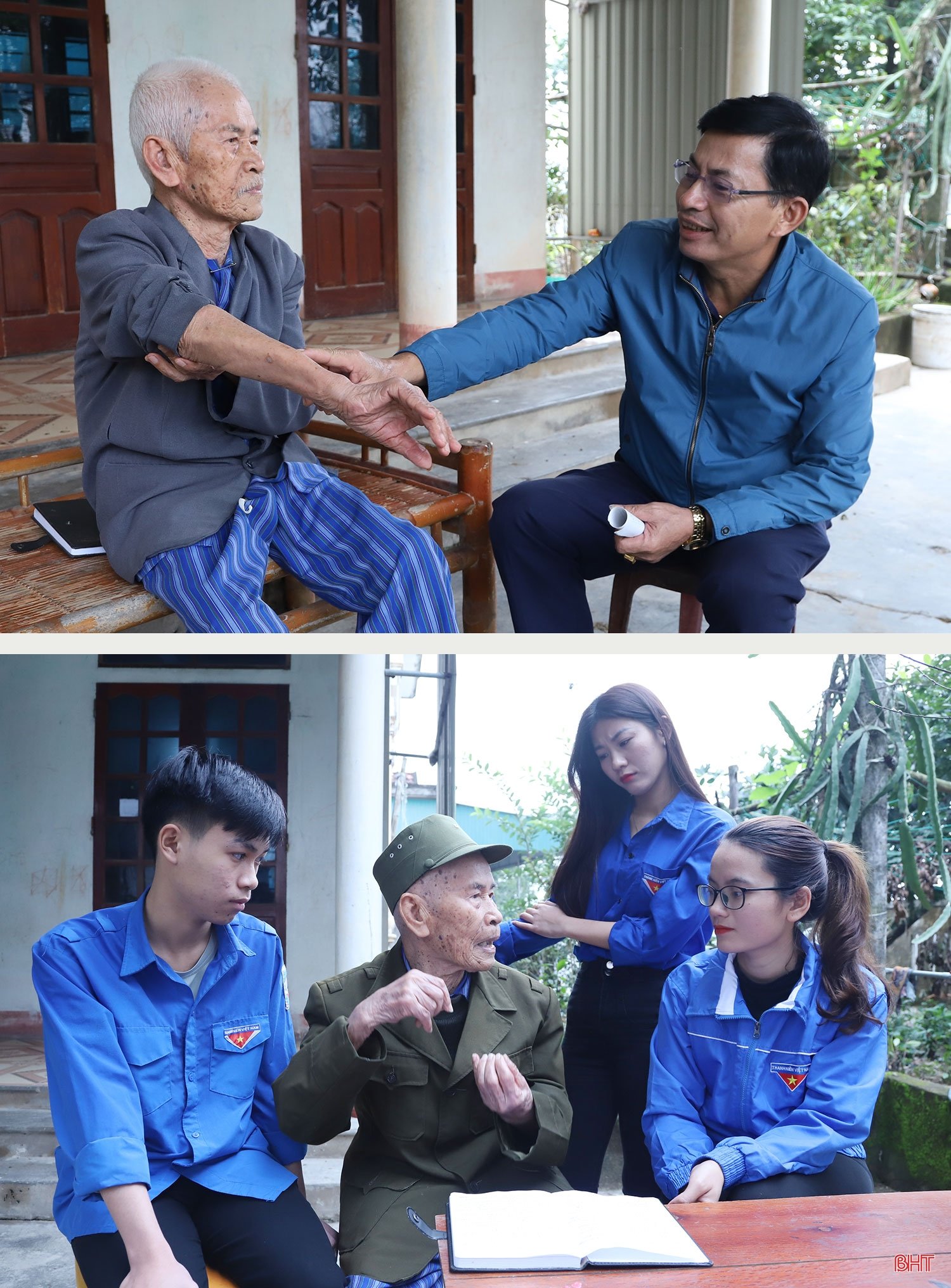
Mr. Nguyen Dinh Huy talks about the difficult days of war with officials and the younger generation of Tan Lam Huong commune (Thach Ha).
“In our camp, prisoners were given a small amount of rice each day to cook themselves. But because the water was so dirty and smelly, the rice was inedible, so I came up with the idea of roasting it to make it fragrant. When the guards discovered this, they accused me of roasting rice to stockpile food for an escape and locked me in solitary confinement for torture. They beat me for hours, causing me to repeatedly faint and regain consciousness. Both my feet were crushed, my right arm was broken, and I was covered in injuries. Afterward, they put me in a barrel and left me in the sun for three days and nights. At that time, I thought I wouldn't survive, accepting death, but my heart still ached for the country's lack of peace and the unfulfilled promise of returning to my wife and children after independence. Thanks to my comrades' hunger strike and protests, after seven days of detention and torture, they finally accepted our demands and transferred me to a concentration camp.”
The beatings left him "living a life worse than death," and even now, when he recalls them, his eyes still well up with tears. Looking at the scars still visible on his aging arms and legs, we were truly overwhelmed with emotion, mixed with deep admiration and gratitude.
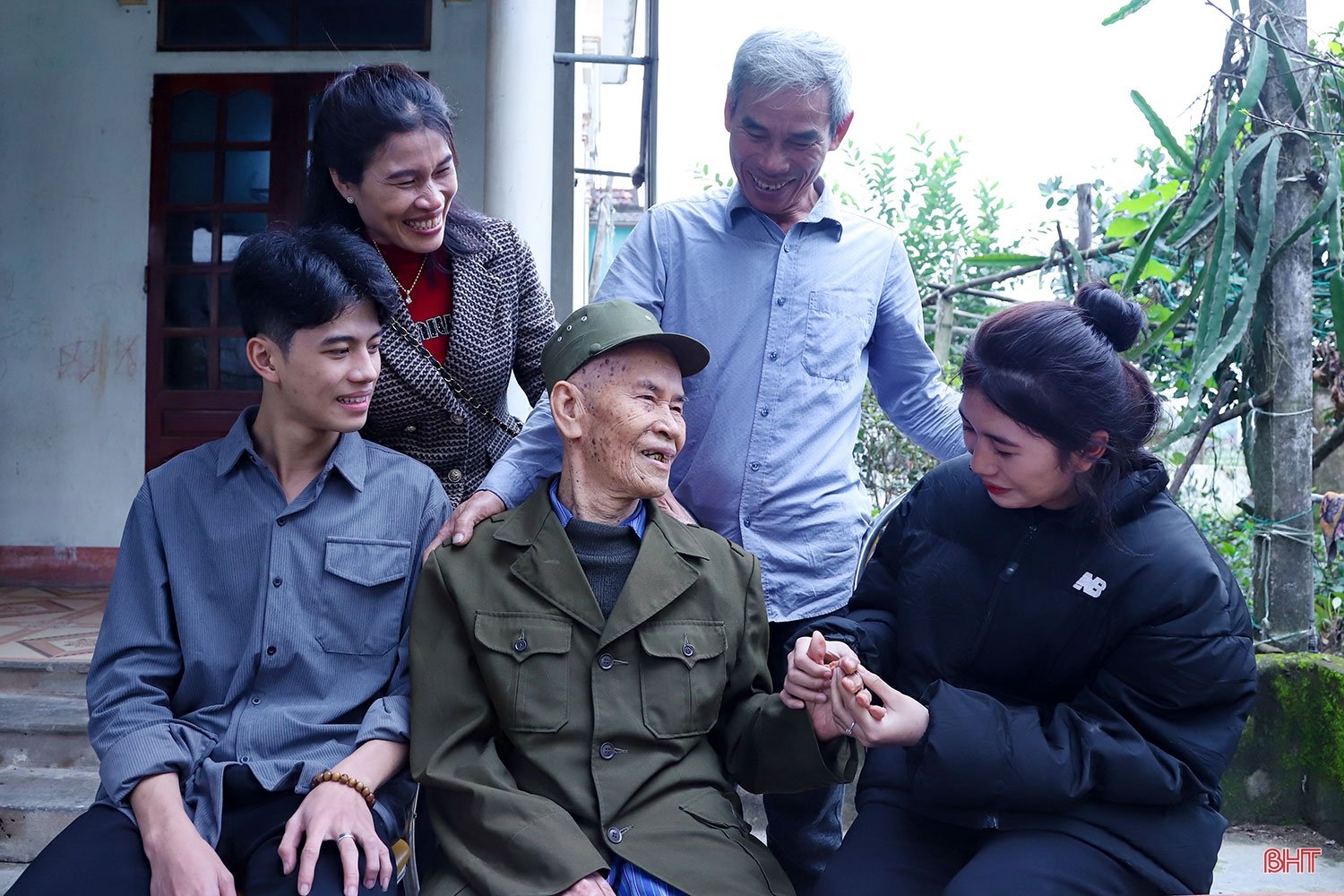
Mr. Huy is enjoying his old age surrounded by his children and grandchildren.
For over 10 years, he served in the war and was imprisoned in Phu Quoc, a period during which his family lost contact with him. However, his wife remained steadfast, believing that he would return after the war. And that love and faith were rewarded. In March 1973, after the Paris Agreement was signed, Mr. Huy and his comrades were transferred back to the North for recuperation. A year later, he was discharged and returned to his hometown. He held various positions, including working in cooperatives and as a police officer, actively participating in the movement to rebuild his homeland.
For his contributions to the revolutionary cause, he was honored with: the Anti-French Medal; the First Class Resistance Medal; 3 Southern Liberation Medals; the Veteran Badge; and numerous commendations from his unit...
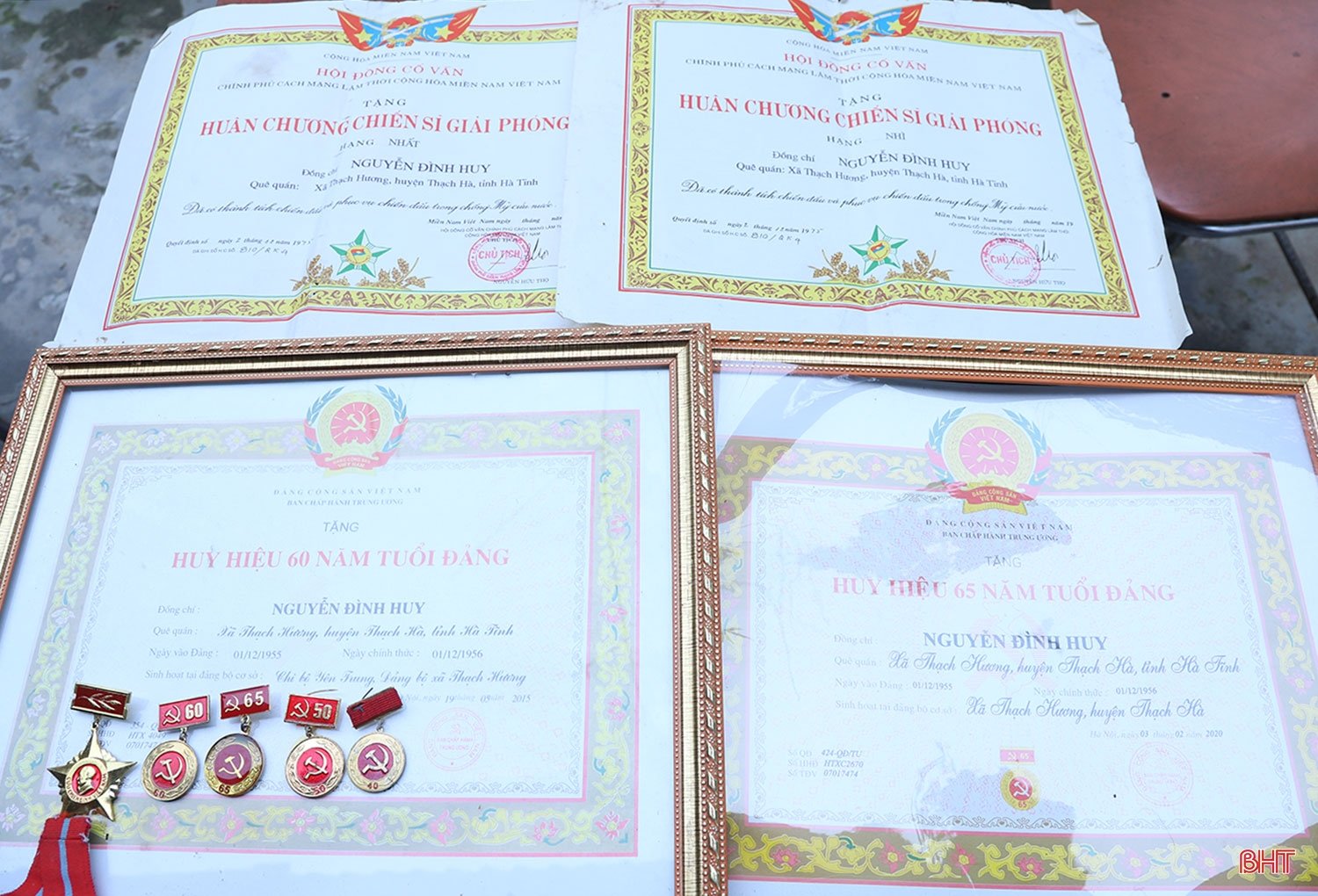
These are the prestigious titles bestowed by the Party and the State to honor Mr. Nguyen Dinh Huy's contributions.
After reuniting with his family, the couple had four more children. Even in their old age, despite retiring from social work, his reputation ensured he was still trusted by the villagers to handle village customs and rituals during festivals and holidays. The couple lived happily in their old age with five children (two sons and three daughters), eleven grandchildren, and four great-grandchildren. For many years, their family received the "Culturally Exemplary Family" award in the locality. In 2020, his wife passed away, and he lives alone in a small house, but his children and grandchildren still care for him and provide meals daily.
This year, Mr. Huy turned 97 – a rare age, yet he remains remarkably sharp and active. To help his descendants better understand his revolutionary life, the hardships and life-or-death struggles he and his comrades endured, and to educate future generations about the tradition of "remembering the source when drinking water," he has written his memoirs.
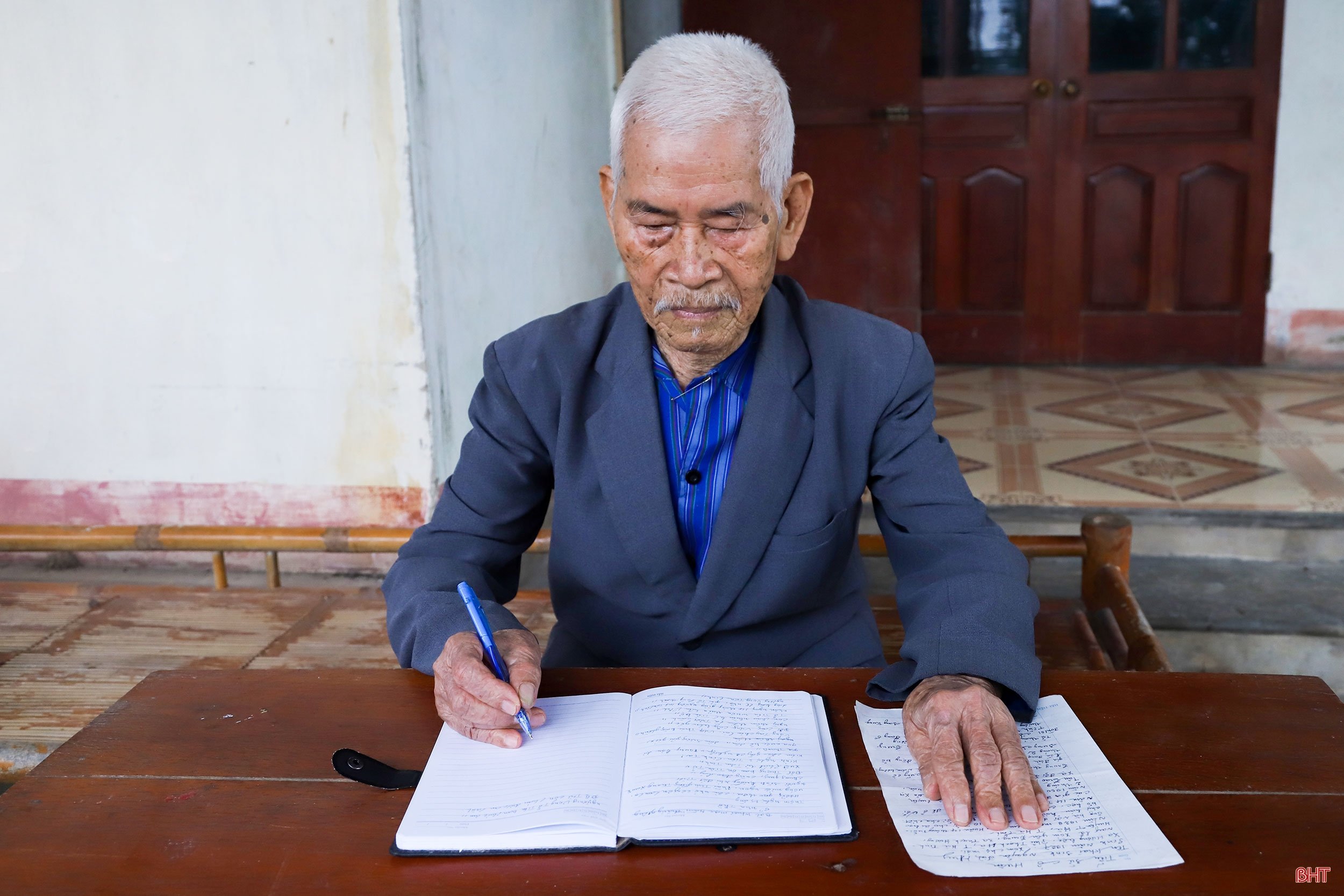
Despite being 97 years old, Mr. Huy is still very sharp-minded. He wrote memoirs about his life to preserve for his descendants the story of his arduous yet glorious life.
“This notebook must be preserved for a hundred years so that grandchildren and great-grandchildren can know a brief biography of the late Huân. There were many sweet moments, and many bitter ones too!” – the first line of the memoir is a reminder to descendants and the younger generation to preserve history for future generations. Although not long, the memoir records important historical milestones in the two wars of resistance against France and the United States; the battles, the heroic sacrifices, and the selfless dedication to a noble ideal.
Holding the memoir in her hands, Ms. Nguyen Thi Nguyet, Deputy Secretary of the Youth Union of Tan Lam Huong commune, shared: “The stories of living witnesses like Mr. Huy are always a valuable source of information for the younger generation, because without hearing them, they surely cannot imagine how much their ancestors sacrificed and contributed. This is also a motivation for us to fulfill our responsibilities and strive to contribute our youthful energy to building a more prosperous and beautiful homeland.”
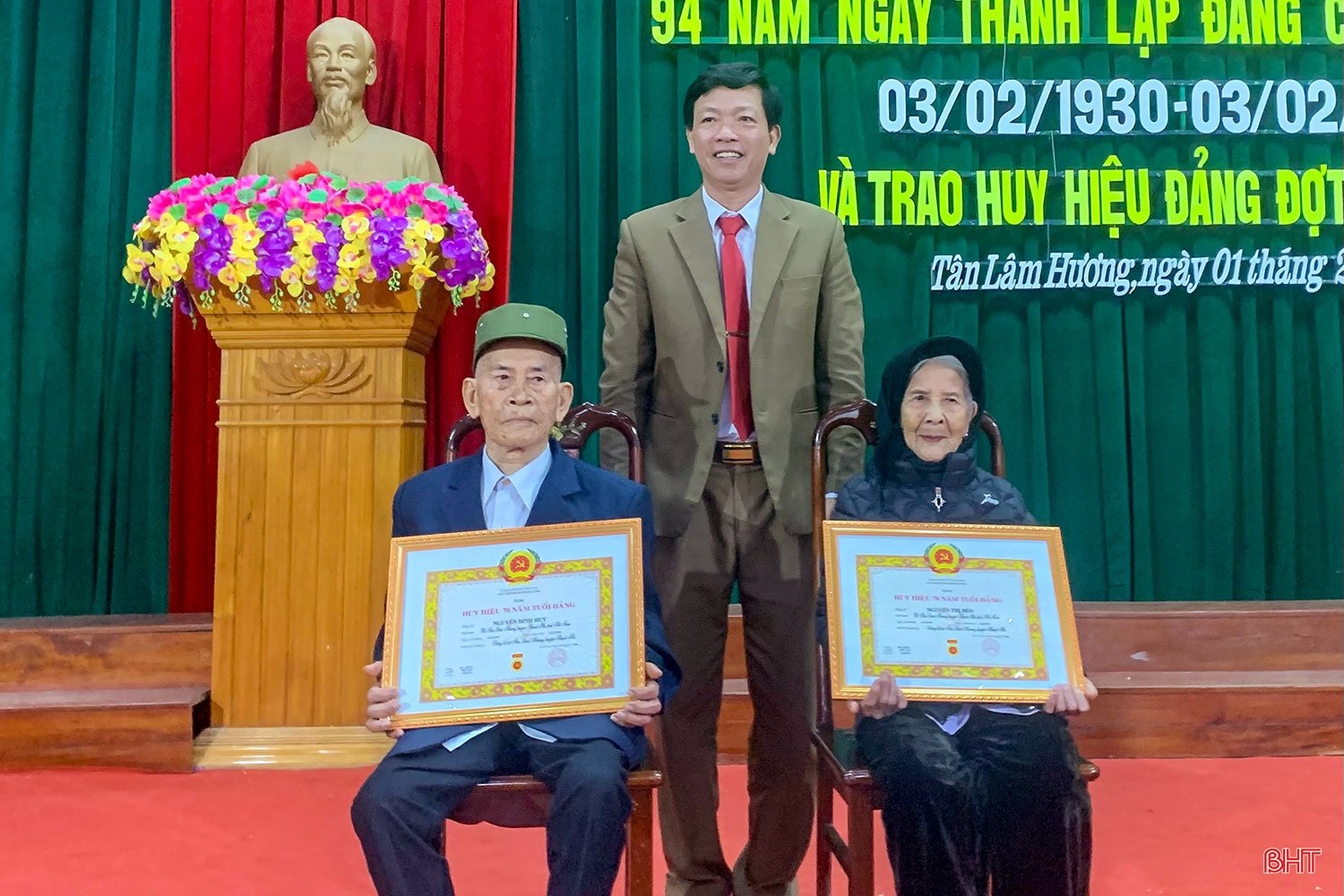
This spring, Mr. Nguyen Dinh Huy received another great honor when he was awarded the 70-year Party membership badge.
Mr. Huy mused, "I'm not writing my memoirs to relive the losses and suffering of war, because the past should be closed to move towards the future. However, I still remind my children and future generations that while we close the chapter on the past, we must absolutely never forget it, never forget the blood and bones of those who have fallen, so that we can be more responsible to our homeland and our country."
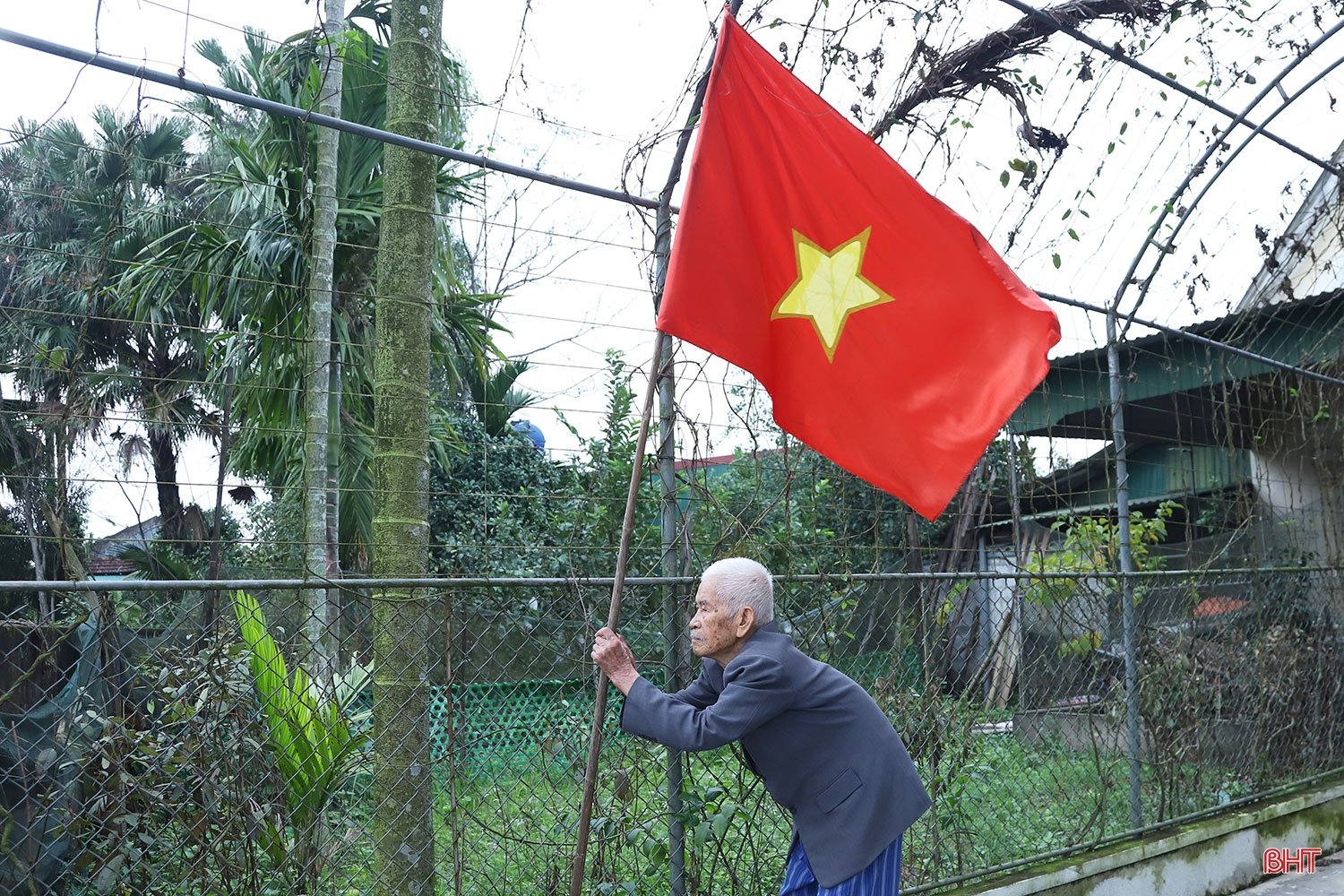
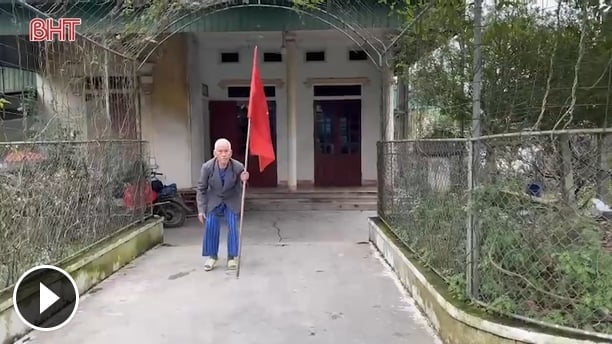
For him, the national flag was incredibly precious, because it was stained with the blood of countless loyal soldiers and Party members like himself.
In the crisp winter sunshine, Mr. Huy brought out the red flag with a yellow star and hung it in front of his gate. That image stirred a strange feeling in me. I understood how precious that flag was to him, because it was stained with the blood of countless loyal soldiers and Party members like himself. This spring, he received another great honor: the 70-year Party membership badge. And I believe that, in the joyful celebration of new springs, the people of the whole country in general, and Ha Tinh in particular, will never forget the immense sacrifices of previous generations.
Text and photos: Kieu Minh
Design: Huy Tung
6:03:02:20 24:08:30
Source
![[Image] "Journey of Hope" promotes the organ and tissue donation movement in Vietnam.](https://vphoto.vietnam.vn/thumb/1200x675/vietnam/resource/IMAGE/2026/05/20/1779294400833_1-8910-jpg.webp)
![[Photo] National Assembly Chairman Tran Thanh Man working with the Standing Committee of the National Assembly's Delegation Affairs Committee.](https://vphoto.vietnam.vn/thumb/1200x675/vietnam/resource/IMAGE/2026/05/20/1779294340023_ndo_br_1-1691-jpg.webp)
![[Photo] General Secretary and President To Lam works with the Party Committee of the Ministry of Health on the work of Vietnamese traditional medicine.](https://vphoto.vietnam.vn/thumb/1200x675/vietnam/resource/IMAGE/2026/05/20/1779294323718_a1-bnd-2978-3319-jpg.webp)




![[QUIZ] Under what circumstances was Trịnh Công Sơn's passion for music "awakened"?](https://vphoto.vietnam.vn/thumb/402x226/vietnam/resource/IMAGE/2026/05/20/1779228580019_fb_thiet-ke-chua-co-ten-5072-jpg.webp)







































Comment (0)