

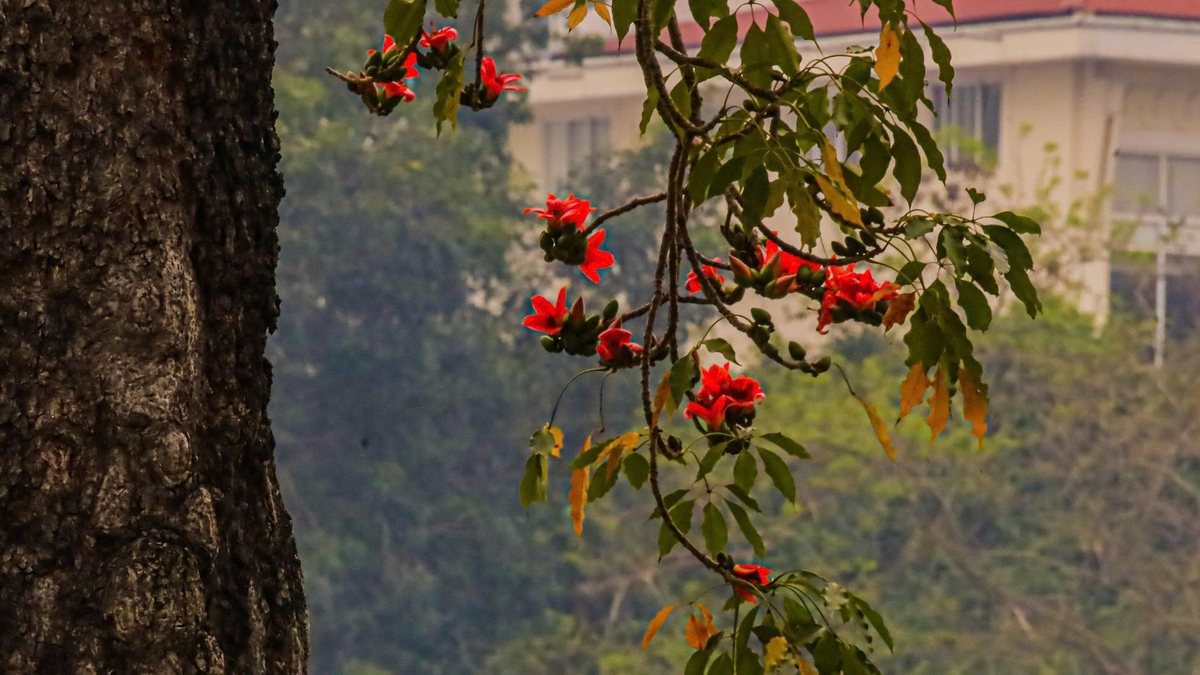
I returned to the road along the Tam Som canal in Nhon Hoi commune on a peaceful midday. The harsh March sun radiated heat, making the eyes of travelers sting. Yet, upon seeing the pink blossoms of the Omoi tree, my heart felt lighter. Under the cool shade of the trees, several children leisurely played, climbing the trees to pick the dark Omoi fruits as a way of enjoying "heaven's gift." Looking at that scene, I reminisced about the Omoi blossom seasons of the past, when I was also 9 or 10 years old. Back then, Omoi trees grew everywhere in the countryside. To see one, you just needed to step behind the house or gather your friends and run down to the familiar canal bank.
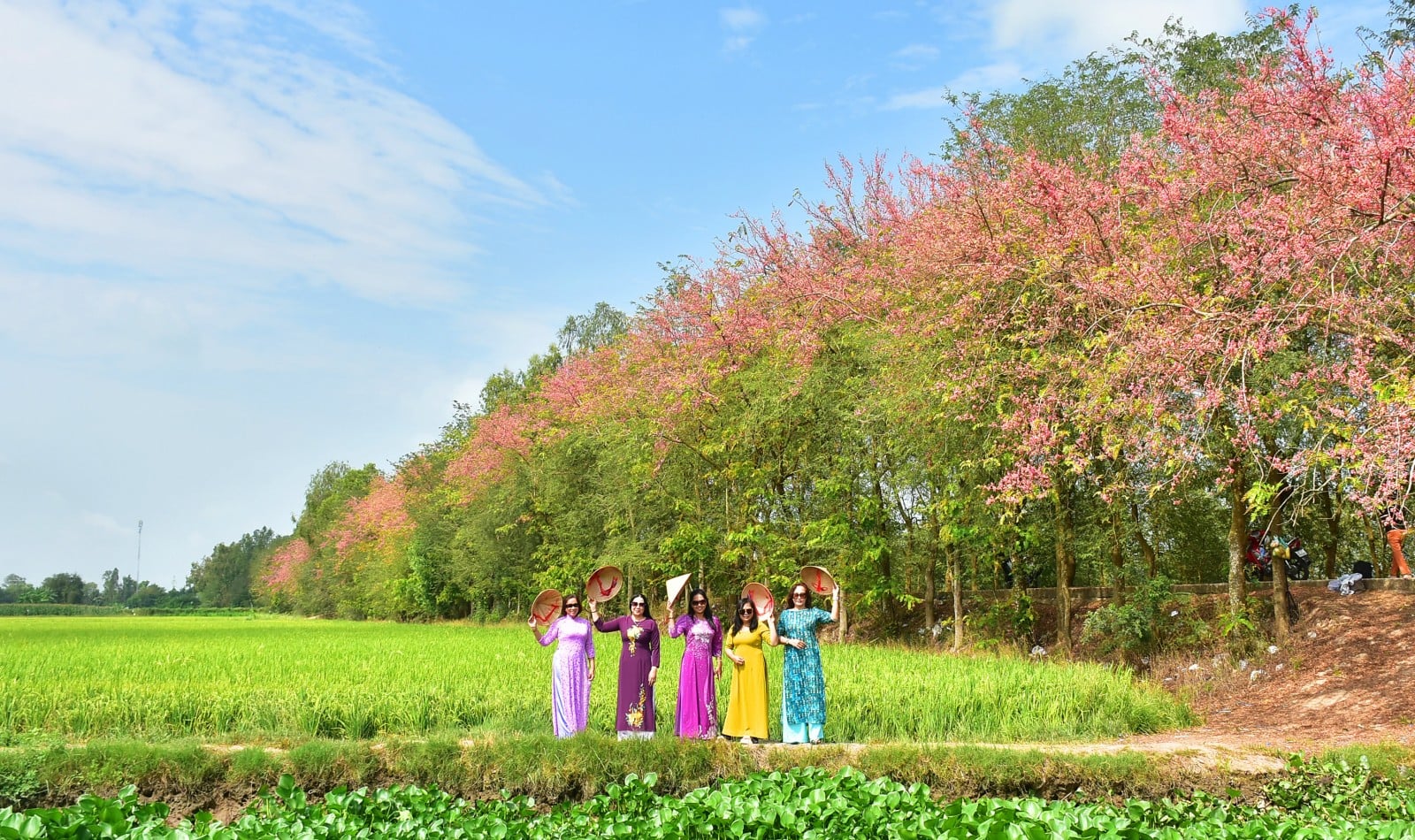
Many women wearing traditional Vietnamese dresses (áo dài) went to the rows of oleander trees along the Tam Som canal in Nhon Hoi commune to take photos. Photo: THANH TIEN
Back then, children loved the oleander blossoms because of their vibrant and cheerful appearance. On days when the oleander trees were full of blossoms, the children would gather under the old, gnarled trunks, weathered by time, to play. The girls, who usually played jump rope and hopscotch, preferred building little huts. The task of building the huts was given to the strong, sturdy boys. We would cut some tamarind branches and banana leaves to construct the huts. Some of us would climb the oleander tree and cut down large, blossoming branches to decorate the huts.
The branches of the crape myrtle tree were brought down amidst the excited gazes of the girls. Back then, I didn't notice their smiles with their missing teeth. Now, reflecting on it, I understand that the beauty of the crape myrtle tree also stirred the hearts of children. After the house was built, the children sat and talked about all sorts of childish things, from the reading lessons they had just learned in class to arguing about trivial matters.
After arguing endlessly, they decided to pick and eat the omoi fruit. This simple gift from nature was surprisingly delicious. After peeling the sides of the omoi fruit with a knife, dark black segments were revealed, emitting a distinctive aroma. Whether nature was challenging the children or not, these segments weren't easy to chew. When the flesh touched their tongues, a pungent smell assaulted their noses. A sweet, rustic sensation spread throughout their mouths. Because their teeth were still strong, the boys chewed the omoi with a loud smacking sound, like old women chewing betel nut. The girls, however, simply savored the sweetness before spitting out the seeds. After this natural treat, the whole group grinned, teasing each other and laughing loudly by the riverside at midday.
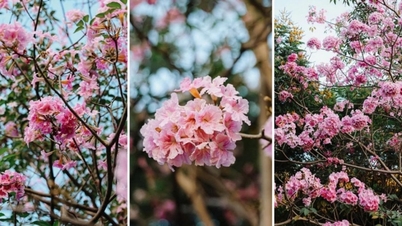
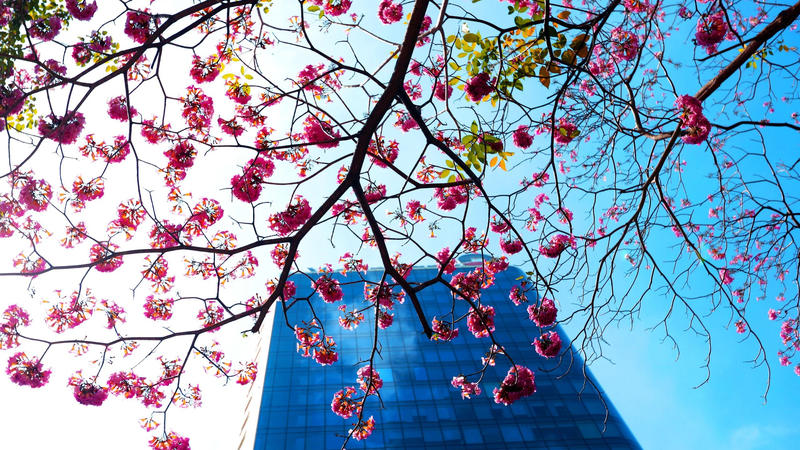
Then those laughs became memories. The Omoi waterfront also changed; no children went there to bathe in the canal at noon anymore. The old Omoi trees also disappeared, leaving a sense of regret in the hearts of those far from home. For a very long time, I didn't see the Omoi flowers bloom again. It wasn't until trips back to the upstream areas of Khanh Binh, Phu Huu, Vinh Hau, or wandering along the Vinh Te canal, that I encountered the Omoi blossoms again. Only then did I realize that I still loved the beauty of the Omoi flowers. The vibrant pink color still overwhelms people. Sometimes, nature cleverly tests us by making the Omoi bloom when the earth and sky are engulfed in heat. The villagers say that the hotter the year, the more Omoi flowers bloom. That is the vigorous vitality of this wild plant, offering the world its most beautiful things.
Despite its rustic name, the Omoi flower is often likened to the poetic name: the peach blossom of the Mekong Delta. For me, the Omoi flower is simply itself, without needing to be called by any other name. It has a simple, down-to-earth beauty, an image of the sun-drenched Mekong Delta. It's like the "March, the rice flower" in the villages of Northern Vietnam – simple, unassuming, yet breathtakingly beautiful!
I'm not alone; many people also seek out the season when the crape myrtle flowers bloom. Some take photos to capture the beauty of nature, while others reminisce about the familiar colors with all their affection. When I see little boys wandering beneath the vibrant crape myrtle blossoms, I think to myself that they will reminisce about that flowering season, at my current, somewhat awkward age.
Over time, the Omoi flower is making a comeback in the eyes of many. There, people find peace, a return to beautiful childhood memories. Above all, it reminds them of their homeland, of the Mekong Delta with its two seasons of rain and sunshine, reminding them not to forget their roots after years of rushing through life.
THANH TIEN
Source: https://baoangiang.com.vn/mua-bong-o-moi-a479616.html




































































Comment (0)