


As the winter-spring rice crop approaches harvest, people living along the Day River in Khanh Cong commune, Yen Khanh district, enter the peak season for harvesting mud crabs. Each day, some families catch up to 15-20 kg of mud crabs, earning millions of dong.
The fragrant bait attracts crabs.
Having enjoyed many delicious dishes made from mud crabs, I was curious to know how the farmers harvested them. One day in mid-May, I was fortunate enough to witness this process firsthand from the farmers in Khanh Cong commune.
From 4 a.m., I was at the riverside area along the Day River to join the locals in setting traps and catching crabs. According to the locals, the reason we have to go early, before the sun rises, is because crabs prefer cool temperatures; if we go late, they will die from the heat. Although I had to wake up early, in return, the locals taught me the most important secret of crab catching: the technique of mixing bait.
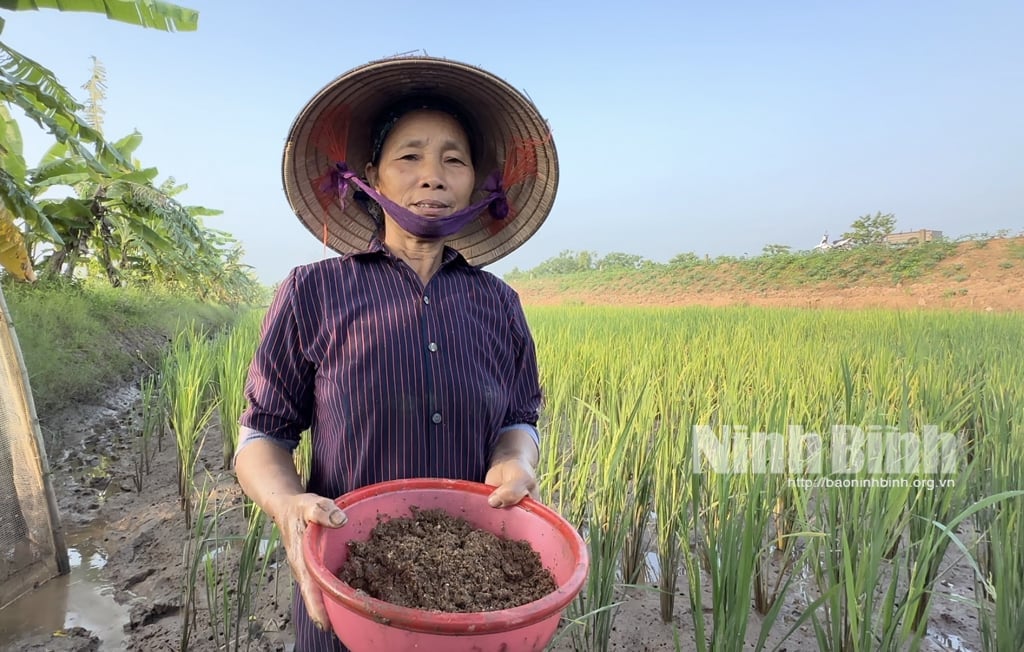
Ms. Pham Thi Soi, a resident of Hamlet 5, Khanh Cong Commune, shared: "It's not just simply fragrant roasted rice bran and finely chopped fresh fish, but also fermented rice paste – a traditional seasoning in Vietnamese cuisine . We invented this method of baiting and trapping crabs ourselves, and then passed it on to each other. Generally, it doesn't require much effort, but it's very effective. When the crabs smell the bait, they'll come out of their holes to eat it. Once they've crawled in, they can't crawl back out."
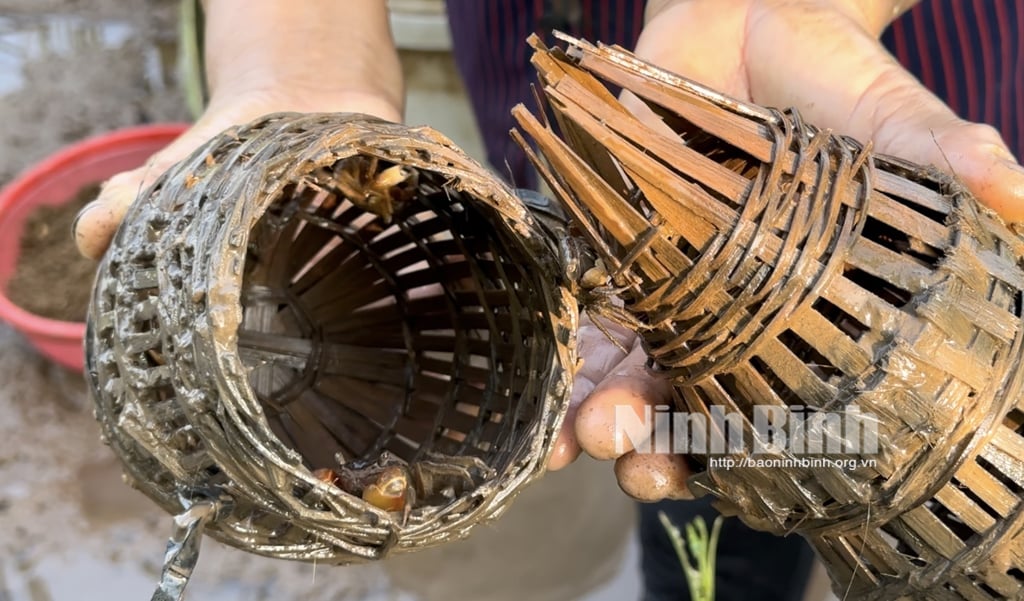
After mixing the bait, I quietly followed Mrs. Soi to empty the crab traps. As we walked, Mrs. Soi whispered: "There's a folk saying, 'as timid as a crab,' and it's true, crabs are very timid. As soon as they see a person or hear a noise, they dart into their holes to hide. That's why when collecting crabs, you have to move very quietly and avoid talking loudly." Having said that, she waded into the rice field, one hand holding a bucket, the other holding bait. The bamboo crab traps, which had been placed along the edge of the field the day before, were neatly spaced 50-70 cm apart. Now she just had to lift them, empty the crabs into the bucket, apply fresh bait, and put the traps back in their original places. Perhaps because she was so familiar with this work, her movements were quick and nimble; in just about 15-20 minutes, the plastic bucket was full of crabs. A little later, traders came to the field to weigh the crabs. They said: "Although the crabs in this area are small and not as brightly colored as those from coastal areas, they don't have a strong smell and are much sweeter, so they sell very easily."
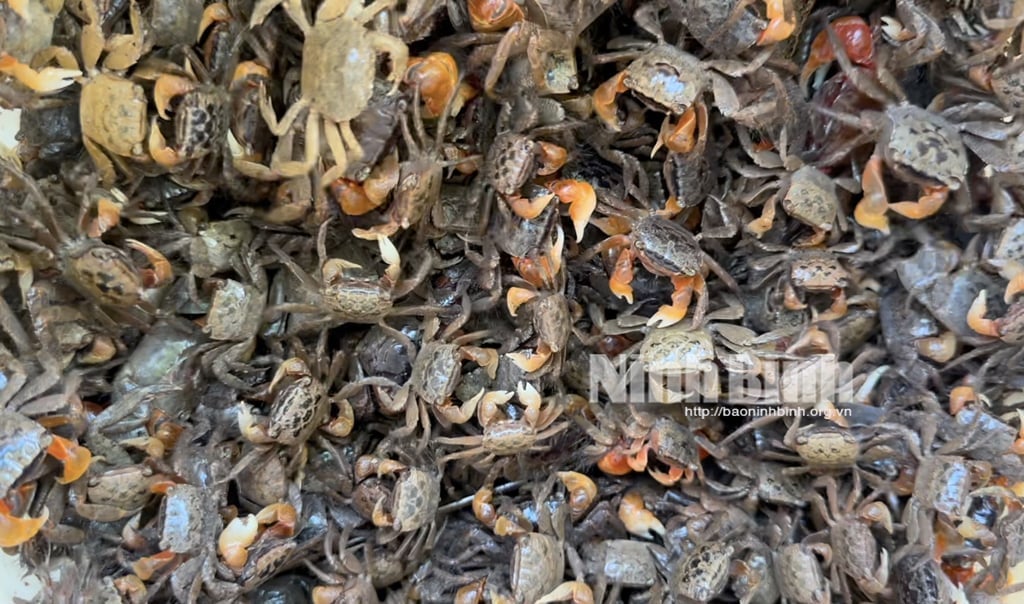
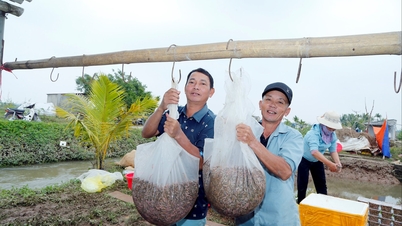
We continued our journey to the rice fields of Mrs. Pham Thi Linh's family (Hamlet 11, Khanh Cong). After more than two hours of collecting crabs, Mrs. Linh brought back a net bag full of crabs, estimated at 15 kg. According to Mrs. Linh, May and June are the months with the most crabs, and this is also when the crabs are plump and tastiest. Her family harvests crabs almost every day, only occasionally taking a day or two off. On good days, they get 15-20 kg, and on slow days, still 6-7 kg. Despite the large yield, the price of crabs remains consistently at 70-100 thousand VND/kg, because in the sweltering summer heat, there's nothing better than enjoying a bowl of crab soup with jute leaves.
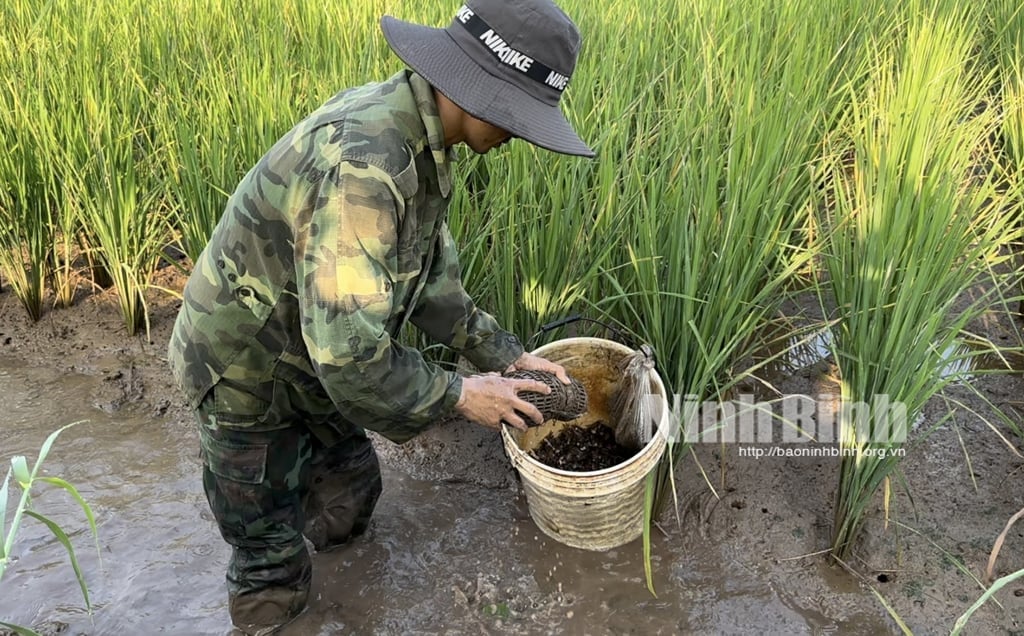
"In our commune, there are about a dozen families like mine who lease riverside land. Since switching to organic rice farming combined with harvesting mud crabs and other shellfish, our lives have become much more prosperous," said Mrs. Linh.
"Blessings from heaven" don't come by chance.
Located along the Day River, Khánh Công commune boasts a vast alluvial plain constantly enriched by sediment. Along with the mudworm (rươi), the mud crab (cáy) is another natural delicacy that nature has generously bestowed upon it. Compared to the mudworm, the harvesting season for mud crabs is longer. The mud crab harvesting season usually begins in March and ends in November each year, with the peak period from May to the end of July. Locals often refer to it as a "gift from heaven," but this "gift from heaven" doesn't come naturally. For decades, the people have meticulously nurtured the land, improved and preserved the environment so that these creatures can thrive and flourish.
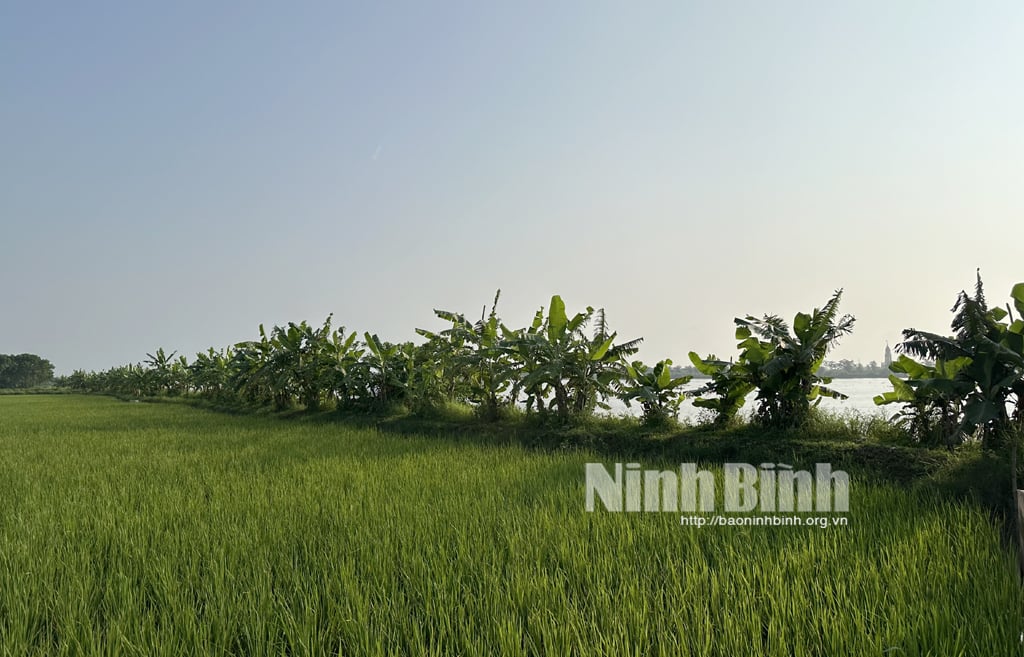
Mr. Pham Van Xuyen (Hamlet 11, Khanh Cong) shared: "My family only cultivates one rice crop per year during the winter-spring season, applying organic farming practices, saying no to pesticides and chemical fertilizers. Most farming activities are done manually. In May and June, after harvesting the rice, we plow the land, dig ditches, drain the water, and then spread compost mixed with rice husks to provide nutrients to the soil. In addition, we have to regulate the water flow to ensure continuous tidal water, preventing stagnation. After several years of persistently doing this, the mud crabs and earthworms gradually appeared and we have achieved the stable yield we have today."
Ms. Pham Thi Soi also added: "We have to eat and sleep day and night, staying close to the riverbanks, constantly monitoring the ebb and flow of the water. Whenever we feel the river water isn't clean, we have to immediately block the sluice gates to prevent pollution from flooding in, because even a moment of carelessness can cause the aquatic resources to disappear. In addition, when harvesting, if I see any crabs carrying eggs, I release them back into the wild so they can reproduce."
These shared experiences alone are enough to show how much the people here cherish nature and every inch of land. It's gratifying that they have abandoned the fragmented production mindset, transforming their inherent advantages into greater, more sustainable value. This approach is perfectly aligned with the province's orientation towards developing a multi-layered, multi-value agricultural economy , integrated with tourism.
In the future, it is necessary for specialized agencies to become more involved in supporting localities in researching, investigating, and evaluating the characteristics of the soil and water sources, clearly identifying areas with potential for further expansion of the cultivation of mud crabs and other shellfish. In addition, it is important to diversify products, build brands for local organic rice, fermented crab paste, and mud crabs, and establish tourism products to serve visitors for sightseeing and experiences. This will contribute to the socio-economic development of the locality.
Nguyen Luu
Source






















































































Comment (0)