

For the Jrai and Bahnar people in the western communes of Gia Lai province, cassava is a traditional crop that provides an important source of income. Some households have as little as 2-3 sao (approximately 0.25 hectares) of cassava, while others may have up to tens of hectares.
Most of the cassava fields are located on hillsides. The land is barren, rocky, and the roads are difficult to access. Therefore, during harvest season, taking advantage of the dry weather, the villagers often peel and slice the cassava right on the mountain before transporting it back to sell to traders. This method reduces transportation costs and allows them to sell at a higher price.
The cassava harvest season in the mountains is also an opportunity to strengthen family bonds and community spirit. Because all the work is done manually and requires a lot of labor, the villagers often help each other out.
After finishing the harvest at one house, they move on to another. The hurried meals of the cassava harvesters, eaten under the trees, consist of wild vegetable soup and a little dried fish, but are always filled with laughter. The cassava harvesting season in the mountains usually lasts about two months, from before to after the Lunar New Year.
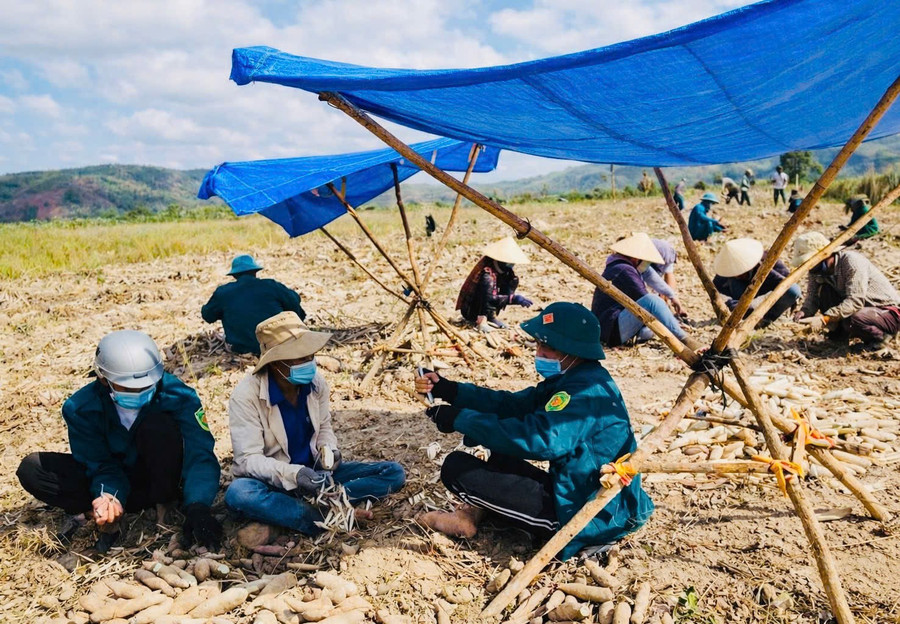
Taking advantage of the weekend, Mr. and Mrs. Siu Quyen (from Chu Bah B hamlet, Ia Rbol commune) brought their children to the foot of Chu Bah mountain to harvest 4 acres of cassava. Three other families from the same hamlet also joined them to help.
Mr. Quyen shared: “The price of fresh cassava is currently only 2,400 VND/kg (30% starch content), while dried cassava costs up to 5,000 VND/kg. Therefore, I decided to sell dried cassava. Our house is about 7 km from the farm, so my wife and I stay on the farm to easily look after and dry the cassava.”
Over the past few days, Siu Luk and his wife (from Tul hamlet, Ia Tul commune) have been busy harvesting their family's 5 acres of cassava. Their over 3-year-old son happily plays nearby, dispelling any fatigue for the young couple. Their cassava harvest is supported by their parents and older brother's family.
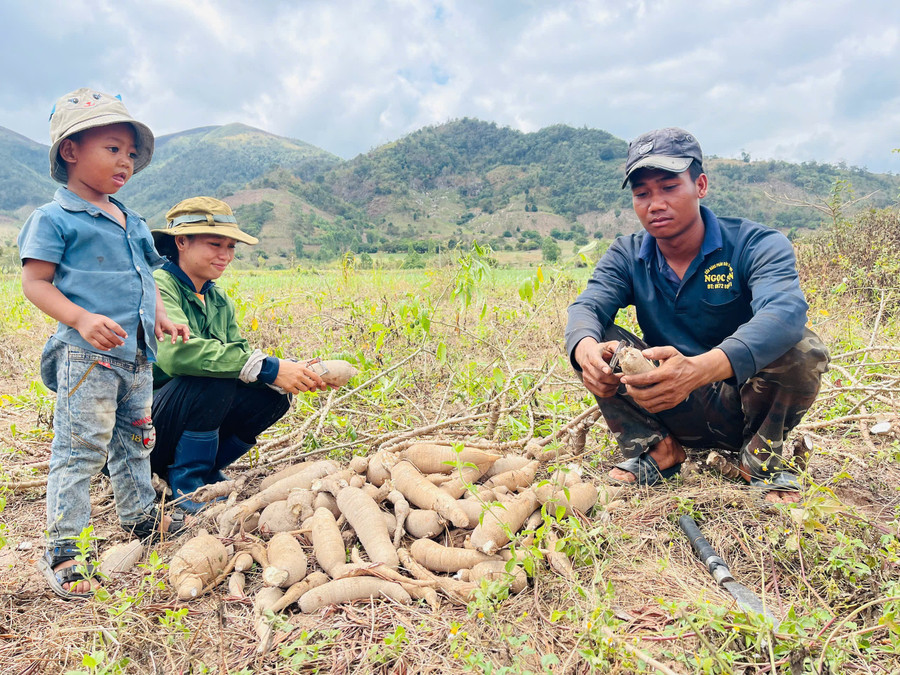
"Thanks to the income from cassava, we have money to save for our children's education, buy household items, and prepare for the next crop," said Luk.
In Pờ Tó commune, the cassava harvest season begins before the Lunar New Year. Ms. Đinh Su (from village 5), while quickly peeling cassava, happily shared: “My family’s 5 sao (approximately 0.5 hectares) of cassava fields are expected to yield about 11 tons of fresh cassava, which will be about 8 tons after drying. After deducting expenses, my family will make a profit of about 25 million VND.”
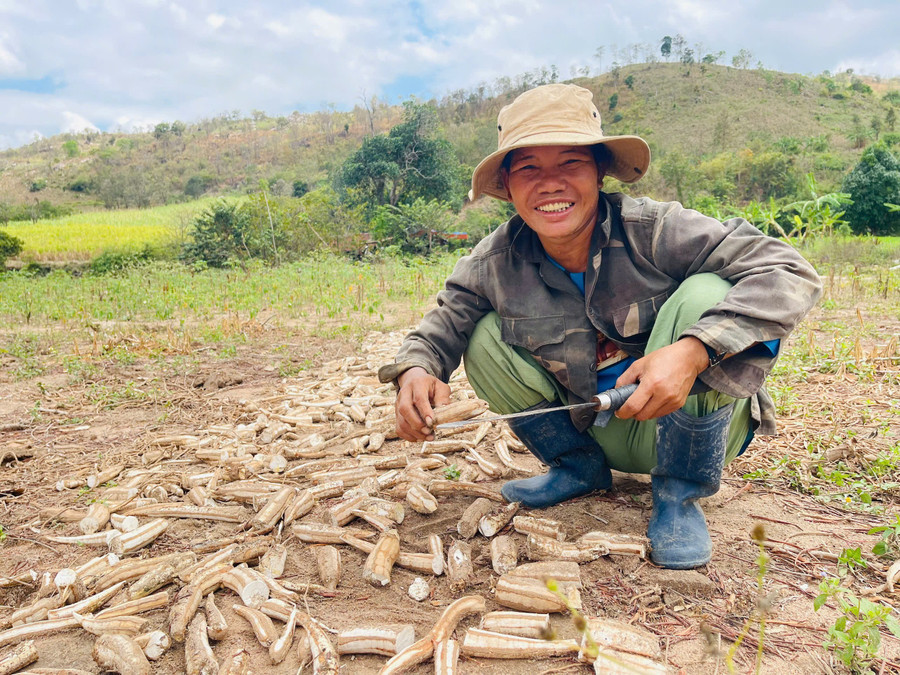
Pờ Tó commune currently has over 1,000 hectares of cassava, of which about one-third is located on the mountains. Mr. Tran Dinh Duc - Deputy Head of the Economic Department of Pờ Tó commune - said: The area of cassava cultivated on the mountain slopes and around the foothills depends entirely on rainwater and receives little investment in care, so the yield is not high.
However, due to the complex terrain and arid land, it is difficult to switch to other crops. The locals grow cassava and choose to sell it dried to make a profit. The cassava harvest season in the mountains has also become a distinctive feature of the agricultural practices of the local ethnic minority communities.
Source: https://baogialai.com.vn/mua-thu-hoach-mi-tren-nui-post581174.html














































































Comment (0)