Although the number of cases has decreased compared to the same period last year, authorities warn that scams are becoming increasingly sophisticated, especially during the summer tourist season, when demand for airline tickets, hotels, and resort services is high.
These are the "traps" set by the demand for summer tourism.
Cyberspace is becoming a breeding ground for various types of crime, with increasingly sophisticated, organized, and transnational methods.
According to statistics from the Cyber Security and High-Tech Crime Prevention Department, in 2025, approximately 4,200 cases of online fraud will be detected, causing losses of nearly 5,000 billion VND, a decrease of about 30% compared to 2024 (in 2024, more than 6,000 cases were detected, causing losses of more than 12,000 billion VND). In the first quarter of 2026 alone, more than 700 cases were detected, causing losses of over 600 billion VND.
Authorities have initiated investigations into 340 cases involving 212 defendants for acts of fraud and misappropriation of property, using computer networks, telecommunications networks, and electronic means to commit acts of property misappropriation.
However, according to authorities, the decrease in cases does not necessarily mean a corresponding decrease in the risk of crime. Recently, the situation of online fraud has continued to be very complex, with perpetrators forming organized, transnational networks, using artificial intelligence (AI), image and voice forgery (deepfake) technology, and social media platforms to reach victims on a large scale.
These individuals frequently research and exploit social events to develop scenarios for approaching people in order to defraud them and steal their property.
As the 2026 summer travel season approaches, the demand for travel, relaxation, and entertainment is increasing sharply, creating opportunities for scammers to deploy new schemes.
According to a warning from the Cyber Security and High-Tech Crime Prevention Department, one of the most common scams today is impersonating reputable hotels, resorts, or travel companies to promote attractive promotional programs.
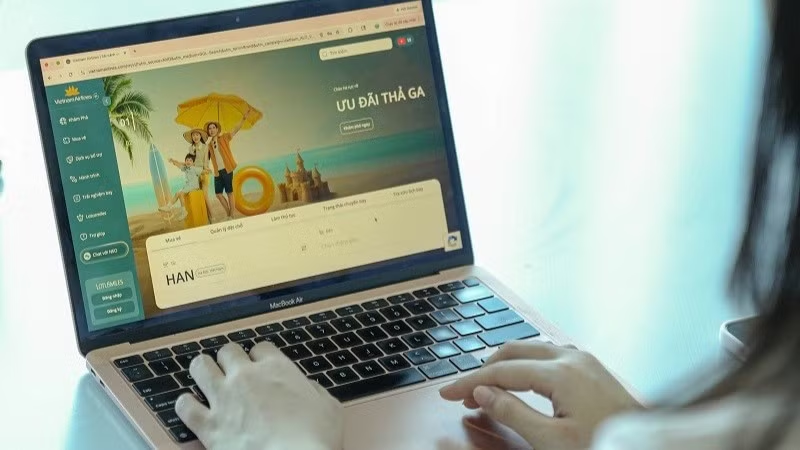
The perpetrators create websites, fan pages, or social media accounts with professional images, posting information about luxury resorts, cheap tours, or limited-time promotions to create a desire to quickly finalize a deal. After the customer transfers the deposit, the perpetrators may cut off contact or continue to give various excuses to request more money from the victim.
In addition, there is the practice of impersonating ticket agents or airline employees to advertise cheap tickets or limited-quantity promotional tickets. In many cases, victims only discover they have been scammed close to the departure date or at the airport, only to find out that the tickets were never issued or were completely fake.
Another tactic noted by the Cyber Security and High-Tech Crime Prevention Department is impersonating customer service representatives of airlines or travel companies. The perpetrators call to inform victims of flight cancellations, schedule changes, or refund requests, then ask them to install an application, provide OTP codes, or bank account information to steal their money.
Losing money isn't the biggest consequence.
According to authorities, the worrying thing is that many people still think the biggest damage from online fraud is the loss of money. In reality, the consequences can be much longer-lasting and more serious, when personal information is leaked or online accounts are compromised.


Online fraud organizations today always use readily available personal data of citizens from various sources on the internet to choose the appropriate approach scenario.
During the approach, the perpetrators try every means to gather more personal information, from contact identities to habits, interests, and relationships with friends and family.
Beyond financial losses, the exposure of personal information or the loss of control over online accounts can lead to serious, long-lasting, and difficult-to-remedy consequences.
First, people can be victims of identity theft, where people use their personal information, photos from identification documents, or compromised accounts to register bank accounts, e-wallets, telecommunication subscriptions, or conduct illegal transactions in the victim's name.
Furthermore, stolen personal data is often bought and sold within cybercrime networks. This leaves victims constantly targeted by calls, messages, or new scams that are increasingly sophisticated.

Another risk is having control of important accounts such as email, social media, bank accounts, or online work platforms compromised. Once these accounts are controlled, the perpetrator can continue to scam relatives, friends, and partners, or exploit sensitive information for criminal purposes.
Users also risk privacy violations when images, videos, or personal communications are disseminated, edited, or used for threats or blackmail. Particularly with the development of AI technology, perpetrators can use images, voices, or videos collected on social media to create deepfakes. These fabricated contents can be used to deceive relatives, partners, or to facilitate defamation and blackmail.
According to regulators, the risk extends beyond the individual. When data is leaked, information about the victim's family, colleagues, or workplace can also be exploited to expand the scope of the attack.
Build your own "resistance" in cyberspace.
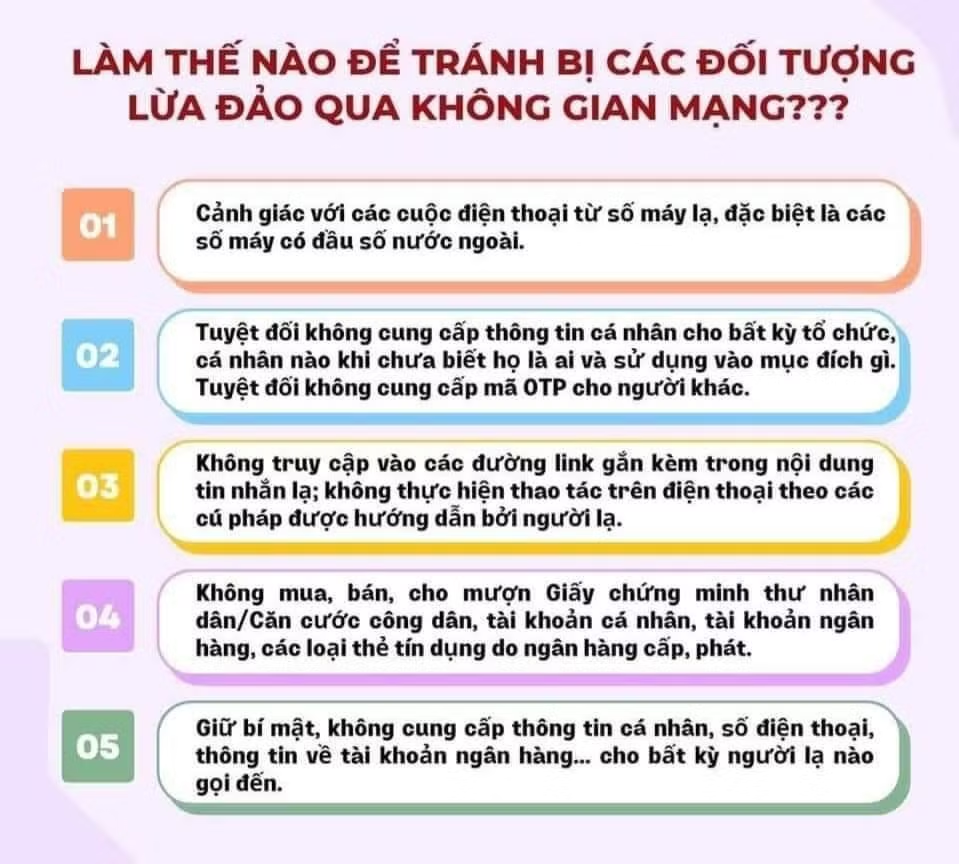
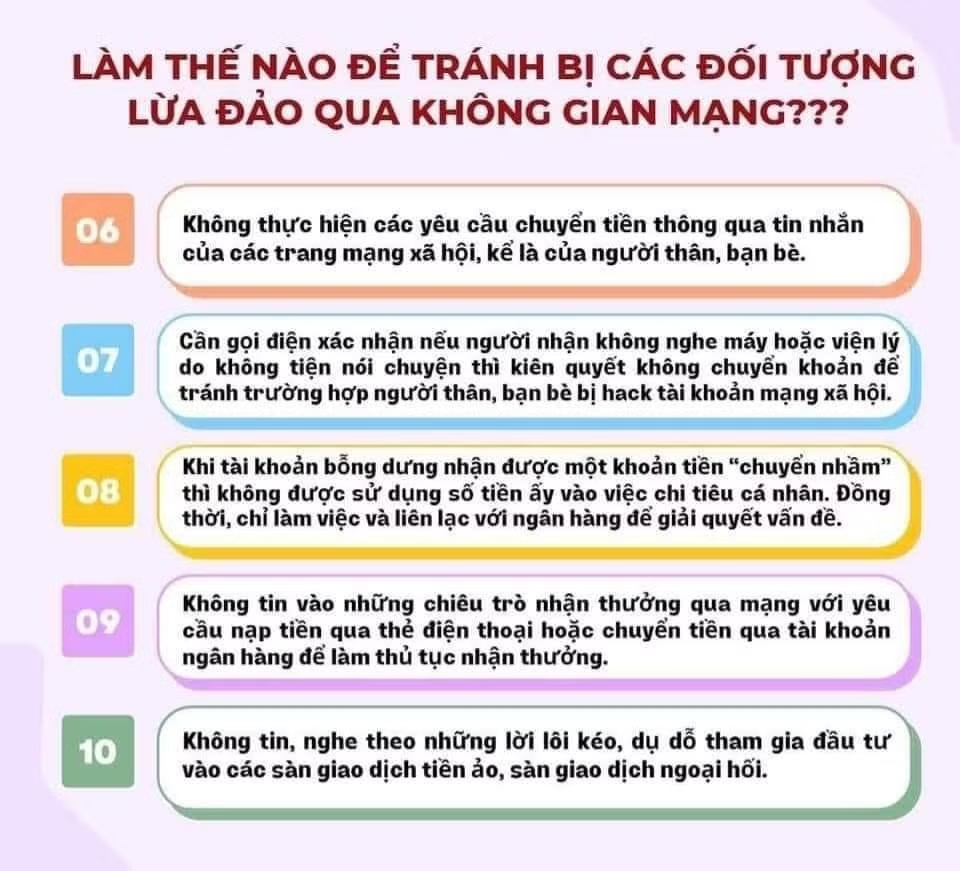
In light of the above situation, the Cyber Security and High-Tech Crime Prevention Department recommends that each user proactively equip themselves with digital security skills and develop the habit of verifying information before conducting transactions.
Therefore, people should only conduct transactions on the official websites, applications, or fan pages of reputable airlines, hotels, travel businesses, banks, and service providers. Before making a payment, carefully check the website domain name, contact information, and the transparency of the social media account.
For transactions such as hotel bookings, airline ticket purchases, or online payments, users need to search for and cross-check information from multiple sources before transferring money. Unusual promotions, prices significantly lower than market rates, or urgent payment requests should always be viewed with caution.
In addition, limiting the public sharing of personal information on social media is also crucial. Data such as phone numbers, addresses, identification documents, travel itineraries, and financial information can all be exploited by criminals to create targeted scams.
According to Mr. Dinh Van Tuan, Deputy General Director of Vietnam Airlines, in the context of increasingly popular digital services, user caution plays a particularly important role.
"People should prioritize using the official websites, apps, and customer service channels of airlines when searching for information or booking services. They should not readily trust calls, messages, or notifications requesting money transfers, personal information, OTP codes, or the installation of unfamiliar applications. They should also always check and verify information through official channels before making any transactions," Mr. Tuan shared.



For Vietnam Airlines, passengers can check flight information and book tickets through the airline's official website, mobile app, or publicly announced customer service channels. Customer caution is the first line of defense against online scams.
In the context of rapid digital transformation, a safe trip begins not only with packing or booking flights but also with the ability to identify risks in the digital environment. As scams become increasingly sophisticated, vigilance and the habit of verifying information remain the most effective "shields" to protect assets and personal data.
Source: https://nhandan.vn/muc-tieu-khong-chi-la-tien-post970942.html

![[Photo] General Secretary and President To Lam receives Palestinian Ambassador Saadi Salama](https://vphoto.vietnam.vn/thumb/1200x675/vietnam/resource/IMAGE/2026/06/25/1782365384740_a1-bnd-9423-8322-jpg.webp)
![[Image] Schools organize meetings and introduce teaching models to students admitted to grade 10.](https://vphoto.vietnam.vn/thumb/1200x675/vietnam/resource/IMAGE/2026/06/25/1782368077271_ndo_br_z7970052192242-1ec8daeb77a6eed1a4e9f58c564ddd3e-jpg.webp)

![[Image] Ho Chi Minh City: Ma Lang area, Chicken-Rice Market about to change its appearance](https://vphoto.vietnam.vn/thumb/1200x675/vietnam/resource/IMAGE/2026/06/25/1782377698627_ndo_br_m1-jpg.webp)