

 |
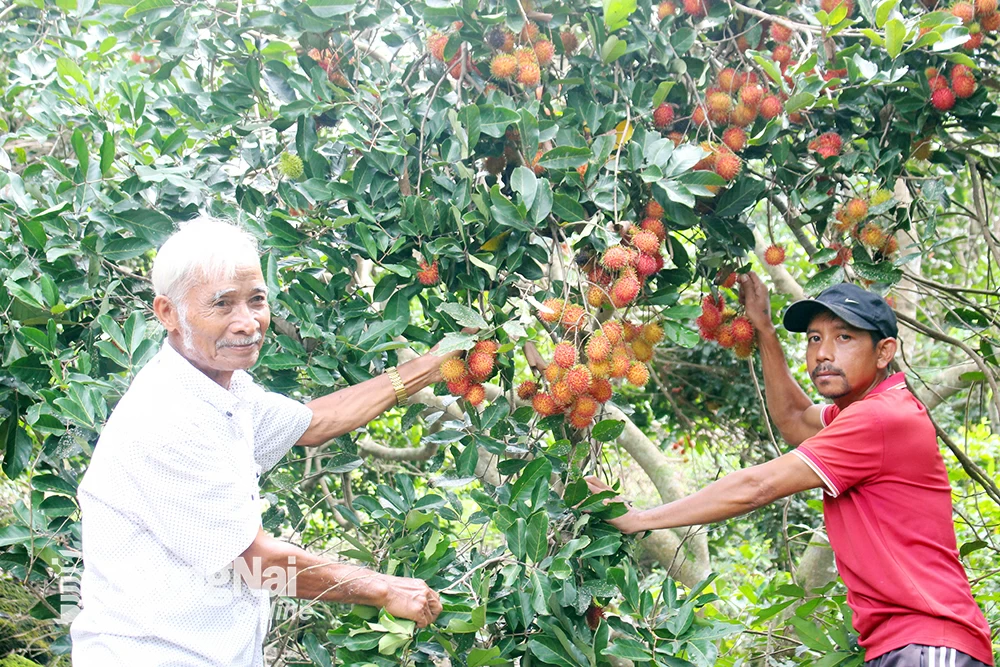
| Besides corn, rice, and other crops, the Chơro people in Bình Hòa hamlet grow many famous delicious vegetables from the Long Khánh and Xuân Lộc regions. Photo: Đ.Phú |
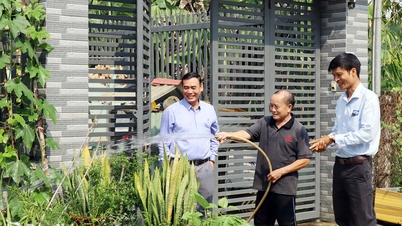
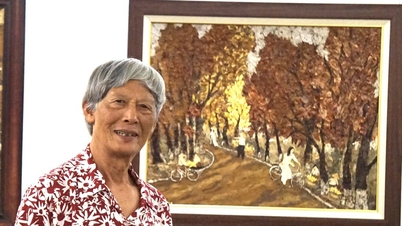
Elder Hung Van Xung (75 years old, of the Choro ethnic group) was very happy to lead us around the fields and tell us stories of the past and present.
Gathering together to establish a new village.
In 1960, when the Chơro people, led by village elder Hùng Văn Xứng, migrated from Lý Lịch (now Phú Lý commune) and Hàng Gòn (now Hàng Gòn ward) to Bình Hòa hamlet, Xuân Phú commune, to establish a village, the area was just dense forest with a few scattered huts inhabited by the S'tiêng, Hoa, and Kinh ethnic groups. During the process of cohabitation, the S'tiêng households gradually moved back to the former Bình Phước province to live.
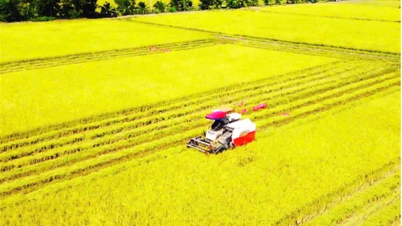
| Xuan Phu commune still has a large area of land where rice is grown 2-3 times a year. In Binh Hoa hamlet, in particular, due to the lack of an irrigation system, the Chơro people still maintain the practice of dry sowing during the June-September crop season. |
Elder Xung recounted that he was only 15 years old at the time. Thanks to the fertile land, his parents grew plenty of corn, rice, and potatoes, so he always had enough to eat. From the initial few dozen Chơro households, smaller groups of Chơro people, scattered in many places deep in the forest, heard about the virtuous village elder Văn Hưng (who passed away in 2005) and joined the village in ever-increasing numbers (from 40 households initially, to nearly 200 households after a few years).
After 1975, the Bình Hòa old forest was free from the sounds of bombs and artillery. By then, old Xung had a family, was mature in his household and village affairs, and was diligent, so he was loved, mentored, and trained by village elder Văn Hưng, who would later entrust him with the position of village elder.
"In 2000, due to old age and infirmity, village elder Van Hung organized a village meeting and sought the opinion of the local authorities to hand over the position of village elder of the Choro resettlement area, Binh Hoa hamlet, to me," said elder Xung.
With a cool breeze blowing across the fields, old Xung stopped his motorbike beside the rice and corn fields of hamlets 7A and 7B and recounted how, with only rudimentary farming tools like machetes, hoes, sickles, and saws, the Chơro people and other ethnic groups in the hamlet, over the years, cultivated upland fields and low-lying paddy fields. After the land became accustomed to rice, corn, potatoes, and various crops, the Chơro people began to learn from the Kinh and Hoa people to plant coffee, pepper, and rambutan in the highlands, while in the lowlands they created embankments, deep ditches, dug ponds and wells to store water, and cultivated two rice crops and one corn crop. At the same time, they also learned to combine farming with raising buffaloes, cows, goats, chickens, and ducks…
“Our Chơro people have settled down and cultivated their land stably since 1960. Therefore, traditional Chơro cultural practices such as the new rice harvest ceremony and the playing of gongs and drums are still preserved among the elderly and the younger generation,” said Elder Xứng, then continued to take us to visit the gardens and fields of the Chơro people in the Cây Me rice paddies.
Mr. VONG CHONG HUE, Deputy Head of Binh Hoa Hamlet, Xuan Phu Commune, Dong Nai Province, said that the Choro ethnic people and other ethnic groups in the hamlet live in great unity and learn from each other in economic activities, especially in introducing new high-yield, market-preferred crop varieties into cultivation.
Dried sown rice specialty
To produce rice grains with the distinctive flavor of the local soil, the Chơro people in Bình Hòa hamlet still maintain the unique practice of dry sowing. Therefore, the rice produced by the Chơro people still retains the flavor of the upland rice from the time when the village was founded.
Binh Hoa hamlet has a natural area of over 1,600 hectares, of which over 100 hectares are used for rice cultivation. The rice sowing technique of farmers in the hamlet in general, and the Chơro people in the resettlement area in particular, is unique compared to other hamlets in the commune: dry sowing instead of wet sowing.
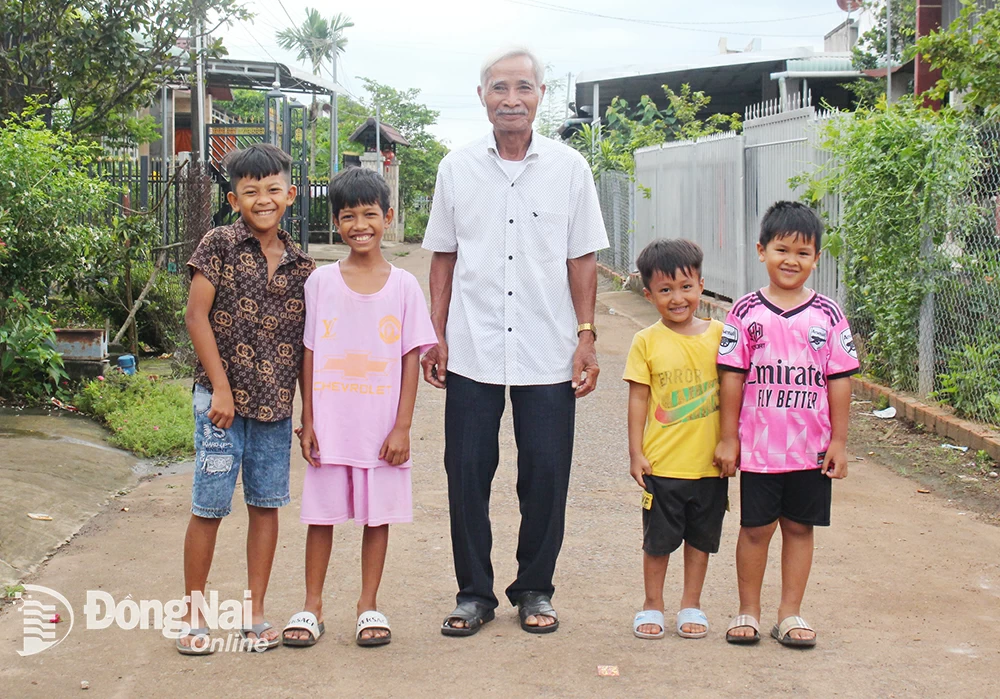 |
| Elder Hung Van Xung with the children of Choro village. |
To better understand the dry sowing technique, which seemed to have been forgotten in the digital age, village elder Hung Van Xung introduced us to farmer Tho Thanh (Chơro ethnic group, residing in Hamlet 10) who was busy checking for pests and diseases in his family's 5 sao (approximately 0.5 hectares) of rice.
Mr. Tho Thanh explained that dry sowing is a method of directly planting seeds on plowed land in dry fields. The rice seeds will germinate after rain or irrigation. The water used in dry sowing rice cultivation is mainly rainwater throughout the rice's growth cycle. With dry sowing techniques, the Chơro people only supplement irrigation during periods without rain, and during the stages when the rice plant needs the most water, such as tillering, heading, and milk-filling.
According to Mr. Tho Thanh, the reason the Chơro people chose the traditional dry sowing technique for their upland rice fields decades ago is because the fields lacked an irrigation system, and the rice paddies only had a thin layer of topsoil on a rocky base. Therefore, to proactively sow seeds and avoid delays in the planting season, the Chơro people chose the dry sowing method to anticipate the rains. Although they faced disadvantages in natural conditions, the rice grains from the dry-sown crop always had the delicious, sticky flavor of upland rice.
"The dry-seeding technique of the Chơro people in the hamlet dates back several decades to when they first settled this land. They also grow short-day rice varieties like other regions, but thanks to absorbing dew, soil moisture, and rainwater, the rice grains have a distinctive flavor of upland rice," Mr. Thổ Thành explained.
Besides their specialty rice, sown in June and harvested in September, the Chơro people of Bình Hòa hamlet also cultivate many delicious and sweet fruits famous in the Long Khánh and Xuân Lộc regions, such as rambutan, jackfruit, durian, and mangosteen. Thanks to their dedication to the land, their love of labor, and their solidarity and mutual support, over 450 Chơro households in Bình Hòa hamlet, under the leadership of village elder Xứng, are prosperous and live in spacious houses. The Chơro people here are proud to have joined forces with other ethnic groups such as the Kinh, Hoa, Nùng, and the local authorities to successfully build new rural areas in 2013, advanced new rural areas in 2017, and model new rural areas in 2022.
“After the merger of Xuan Phu commune and Lang Minh commune of the former Xuan Loc district into the new Xuan Phu commune, the elder hopes that the Chơro people in the village will preserve the existing good things and not hesitate to innovate their thinking in economic activities to keep pace with the new things when the former Binh Phuoc and Dong Nai provinces become one,” - village elder HUNG VAN XUNG confided.
Doan Phu
Source: https://baodongnai.com.vn/xa-hoi/202507/muot-xanh-lang-choro-o-ap-binh-hoa-7f9201d/

![[Photo] General Secretary and President To Lam meets with National Assembly delegates from ethnic minorities.](https://vphoto.vietnam.vn/thumb/1200x675/vietnam/resource/IMAGE/2026/04/20/1776696701056_a1-bnd-8331-3342-jpg.webp)
![[Image] National Assembly discusses the implementation of the socio-economic development plan.](https://vphoto.vietnam.vn/thumb/1200x675/vietnam/resource/IMAGE/2026/04/20/1776696707422_ndo_br_img-20260420-185419-jpg.webp)















































































Comment (0)