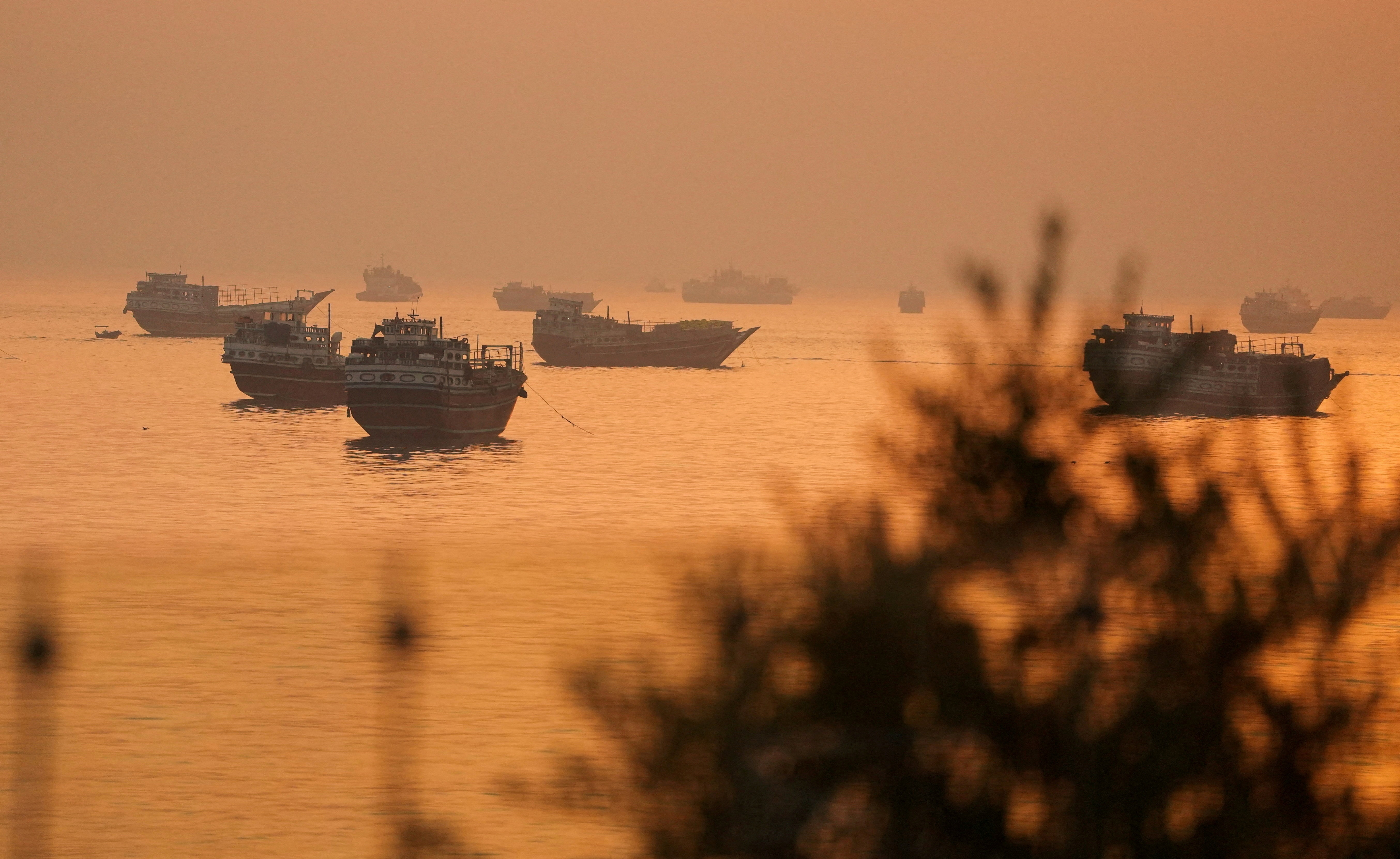
The U.S. military has monitored dozens of secret oil transfers between ships at sea to maintain the flow of energy from the Gulf to international markets. This operation uses drones, unmanned boats, and helicopters to guide oil tankers to transfer points where they meet waiting supertankers.
It is noteworthy that the method employed by Washington is precisely the same technique of transshipment of oil at sea that Iran has long used to circumvent international sanctions.
Was the downed Apache also involved?
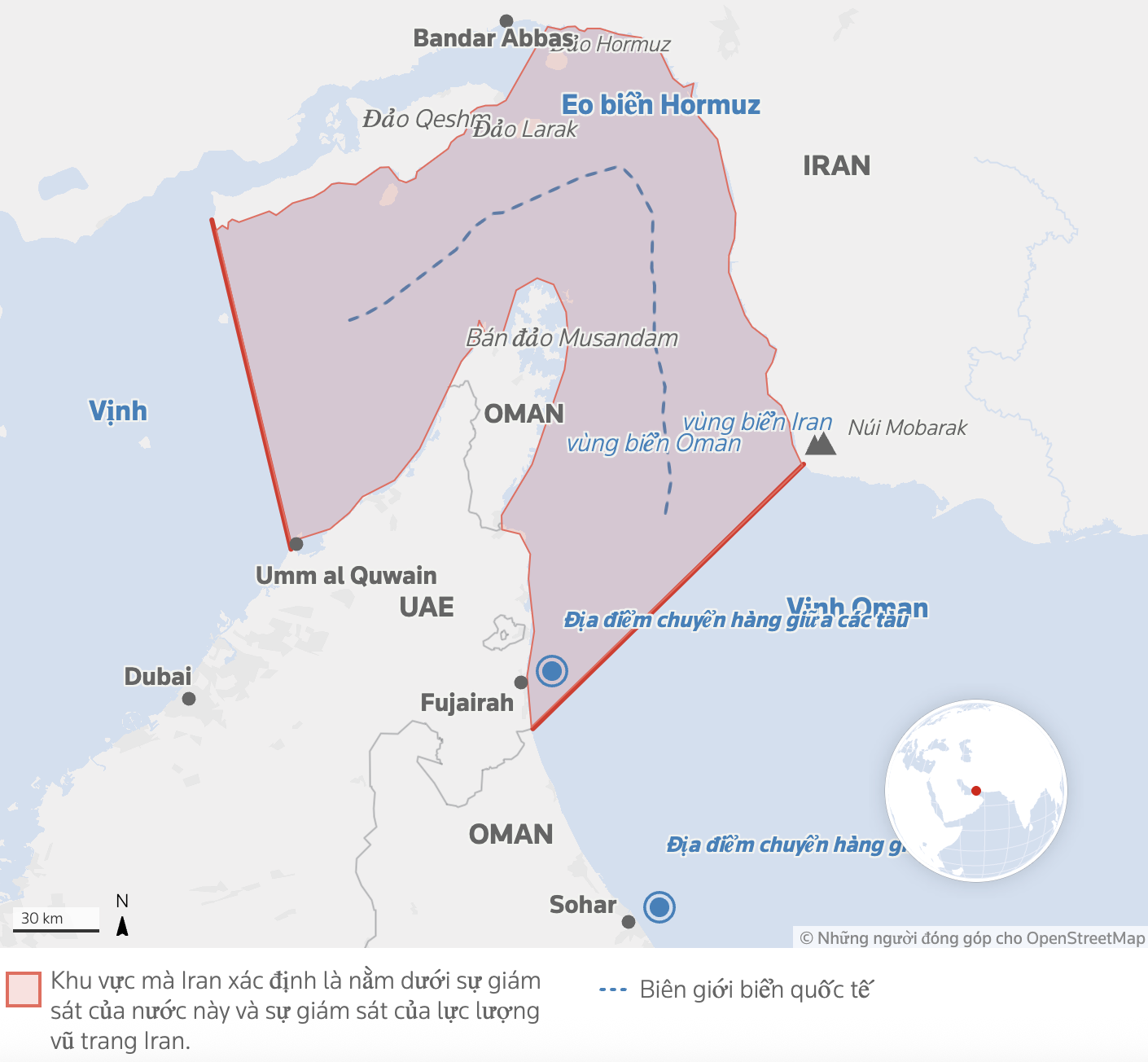
According to 11 sources familiar with the operation, the activity took place at two main locations: off the coast of Fujairah in the United Arab Emirates (UAE) and near the port of Sohar in Oman.
Shipping data and satellite imagery analyzed by Reuters show the operation began in early May and involved at least 116 ships.
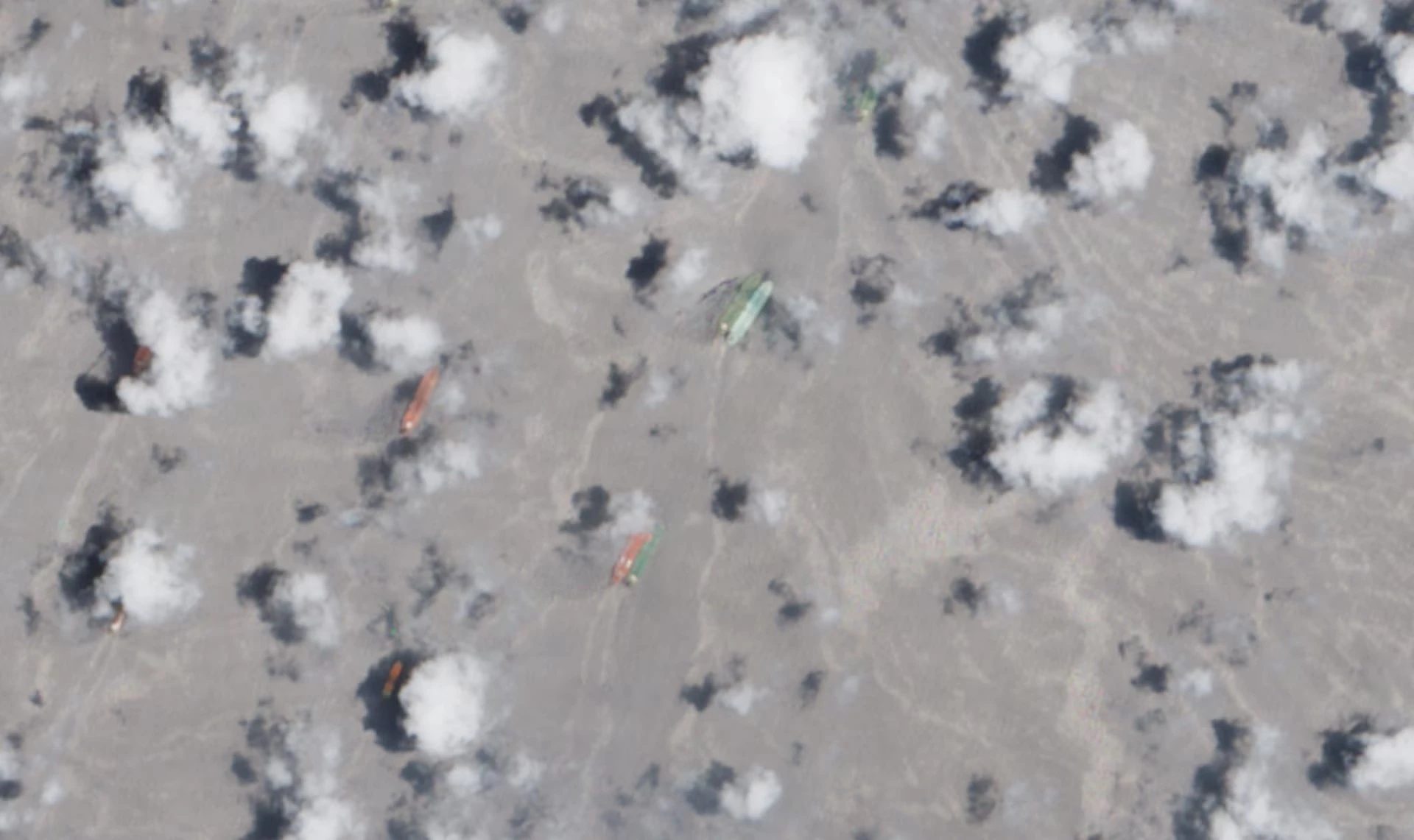
On the morning of June 16th, satellite imagery showed 12 pairs of ships anchored side-by-side in the Gulf of Oman to carry out oil transfer operations, including 8 pairs off Sohar and 4 pairs near Fujairah. Prior to that, on June 11th, activity peaked with 17 pairs of ships simultaneously transferring oil in these two areas.
A U.S. Apache helicopter shot down by Iran on June 9 – an event that led to retaliatory airstrikes by Washington – also participated in the operation, according to four sources, including a former U.S. official familiar with the incident.
Satellite imagery analyzed by Reuters shows six pairs of oil tankers clustered in a small area near the port of Sohar on the very day the Apache was shot down.
In response to a Reuters inquiry, a U.S. defense official confirmed that forces under the U.S. Central Command (CENTCOM) are not directly involved in offshore oil transshipment operations. Washington said the two Apache crew members were rescued by an unmanned boat after the plane was shot down.
The scale of the oil transfer operation between ships, the methods of operation, and the role of the Apache helicopters had never been disclosed before.
The two oil transit sites are located in the Gulf of Oman, near the exit of the Strait of Hormuz and adjacent to the area recently controlled by Iran's Persian Straits Administration.
This agency was established by Tehran to monitor maritime activity in Hormuz. Ships that do not comply with Iranian requirements risk becoming targets of drones or missiles belonging to the Iranian Islamic Revolutionary Guard Corps (IRGC).
During the US-led operation, the port of Fujairah was repeatedly subjected to shelling from the Iranian side.
Over the weekend, according to the British maritime risk management firm Vanguard, an "unidentified object" struck an oil tanker off the coast of Oman. The entire crew was safe, but the ship suffered a partial leak of its cargo. Vanguard did not confirm whether the vessel was involved in oil transshipment operations.
This week, President Trump announced that the Strait of Hormuz would be reopened as part of a peace agreement with Iran, although the full details have yet to be released.
How secret networks work
According to eight sources, including a private security contractor involved in the operation, the entire operation was under tight control by the U.S. military.
Oil tankers must gather at a designated meeting point before approaching the Strait of Hormuz. Then, each ship is coordinated to depart at staggered intervals to maintain a distance of 3-4 km.
Four sources said the ships had switched off their transponders and reduced their lights to a minimum to avoid detection.
A network of sea-based checkpoints allows the U.S. military to continuously monitor the movements of each ship.

"The Americans are clearly watching you all the time," one source commented.
After crossing the strait and leaving the area controlled by Iran, the smaller oil tankers will approach the large supertankers (VLCCs) waiting to carry out the transfer.
Each oil transfer lasts between 24 and 40 hours. Afterwards, the smaller vessels return to the strait to pick up the next shipment, while the larger tankers continue their journey to international customers.
This operation is only possible because some shipping companies are still willing to send ships through the strait despite the risks posed by Iran's blockade.
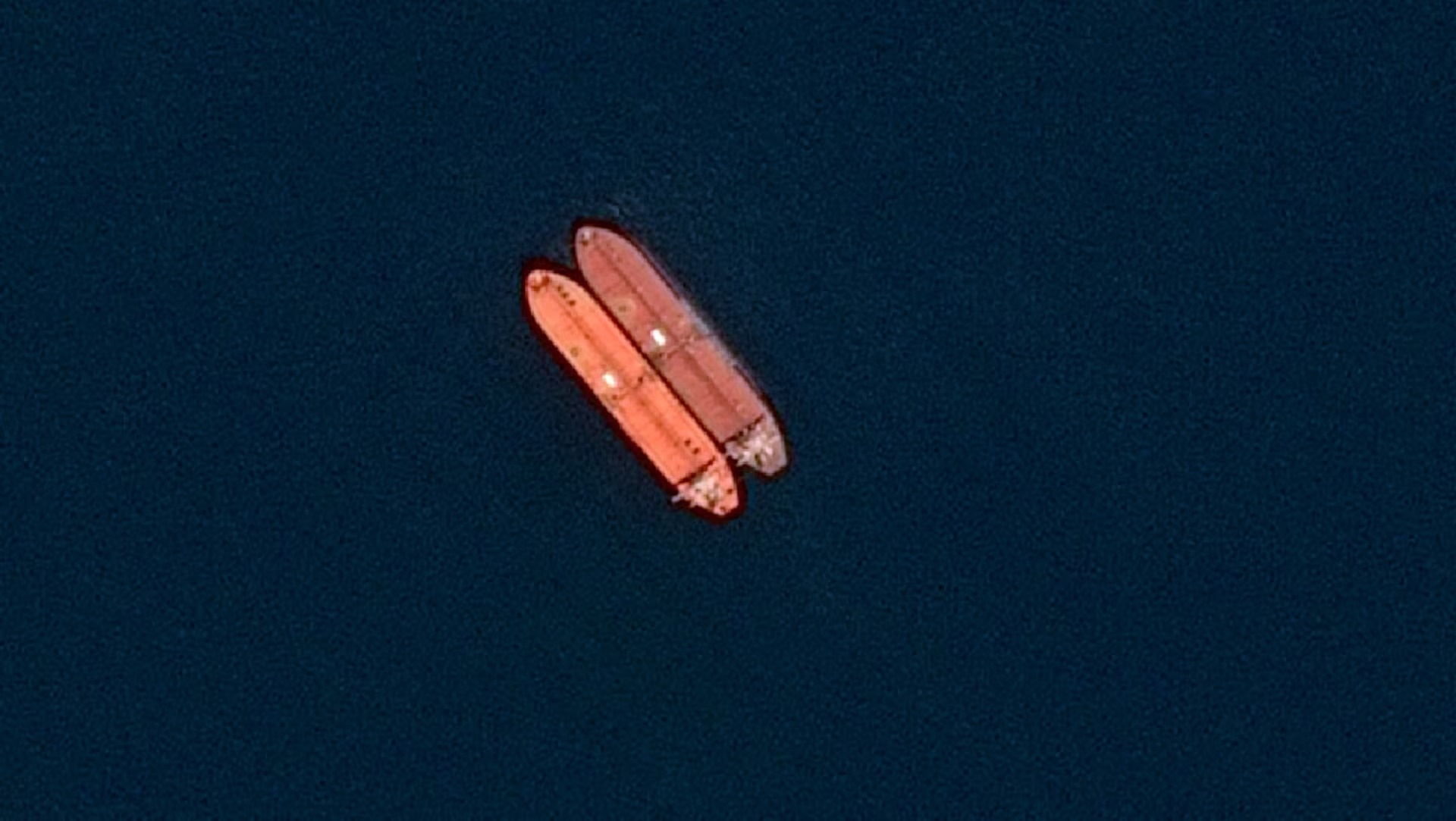  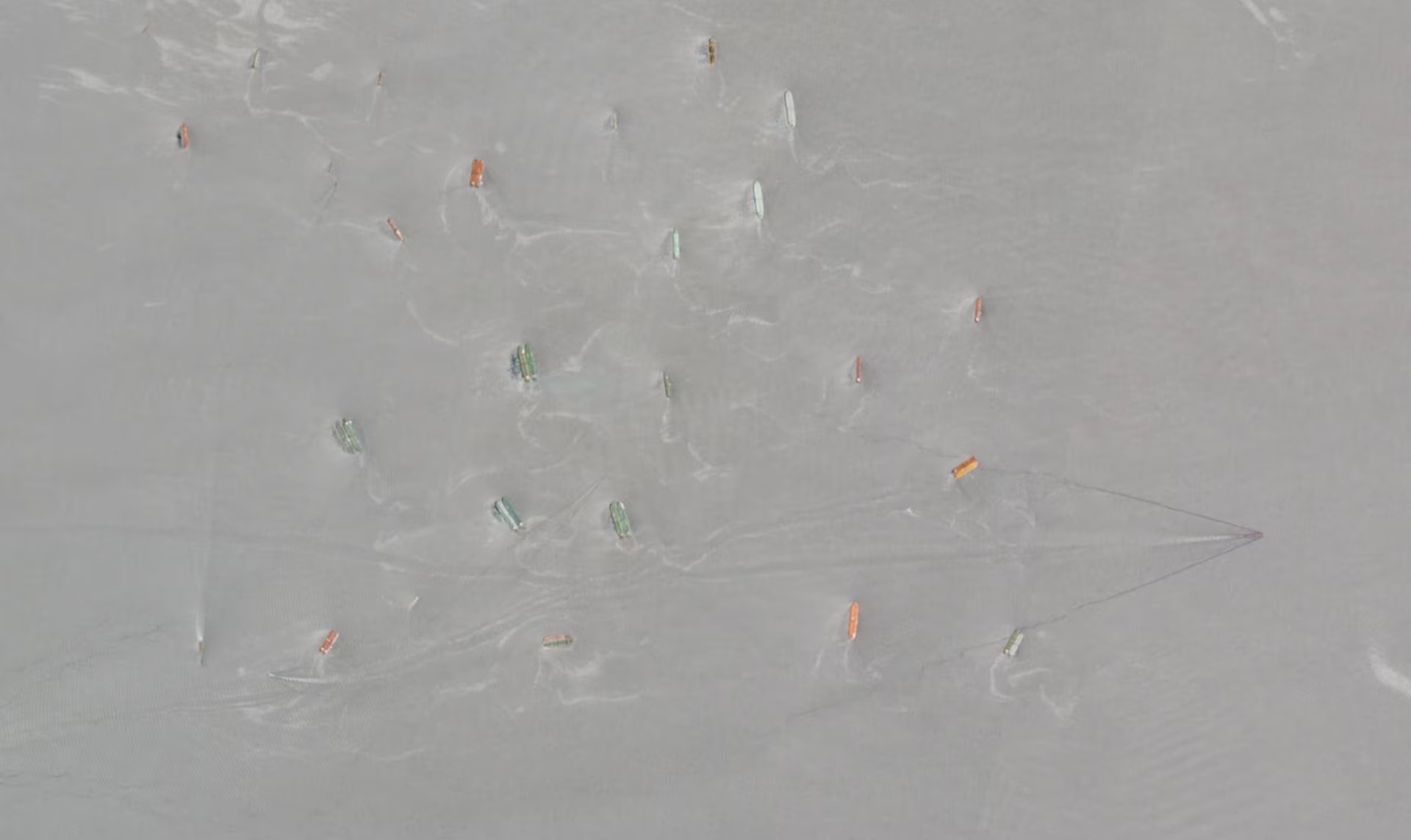 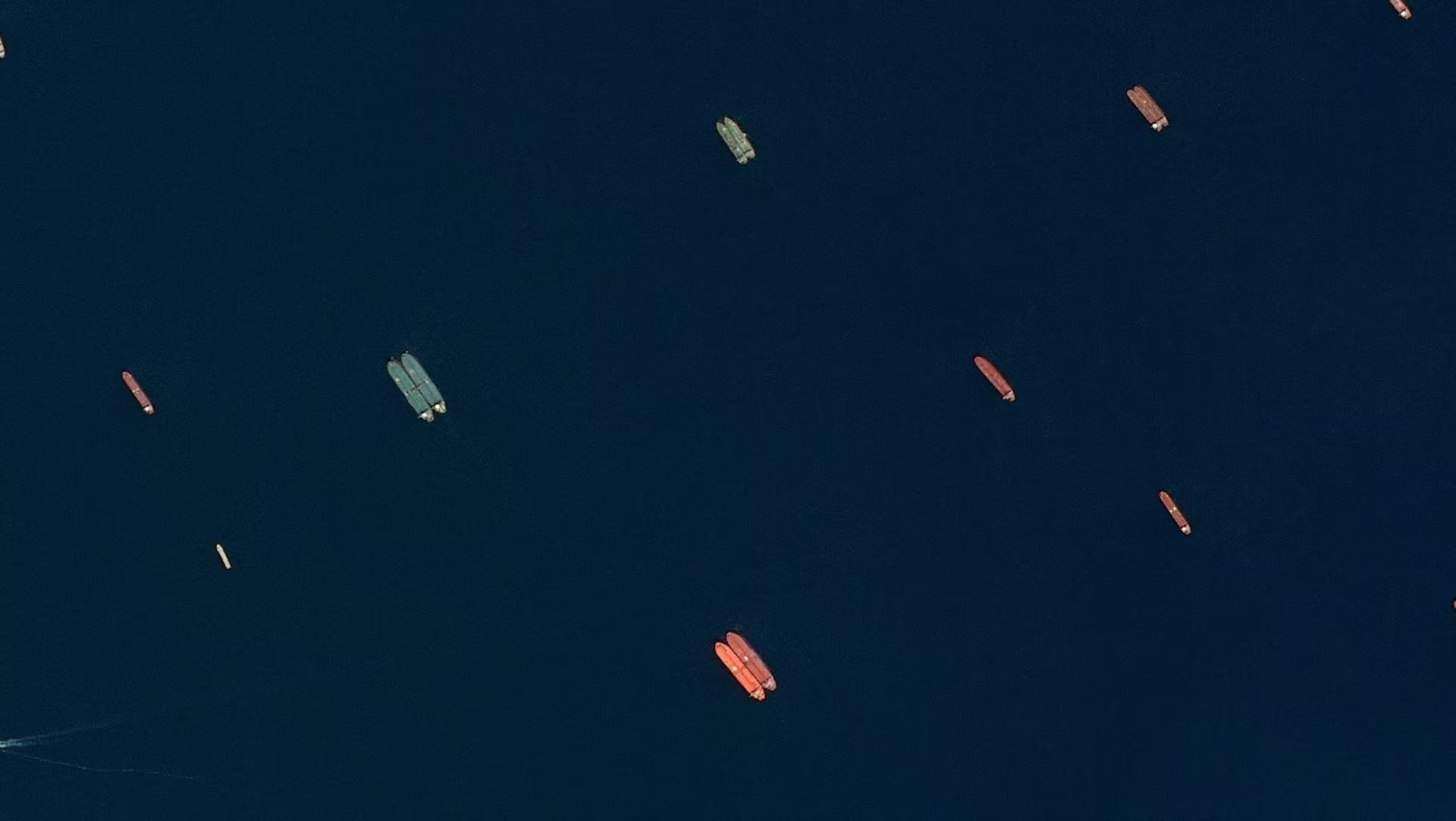 |
Satellite imagery shows two ships side-by-side at sea, off the coast of Fujairah (UAE) in June. Photo: Reuters. |
However, risks are always present.
"No one knows when Iran might decide to use drones or armed boats to prevent ships from continuing to pass through the strait," said Noam Raydan, a maritime risk expert at the Washington Institute.
The technique of transferring oil from ship to ship has long been used by Iran to conceal the origin of its exported oil and circumvent sanctions. Typically, Tehran operates only one pair of ships at a time to avoid detection, and because pre-war export volumes were relatively limited.
Conversely, the US-led campaign was deployed on a much larger scale, allowing oil-producing countries in the Gulf to continue exporting crude oil, condensate, and petroleum products to international markets with better protection against the risk of retaliation from Iran.
Reuters analyzed more than a dozen satellite images taken between May 2 and June 11, documenting a series of oil transfers between ships belonging to state-owned Gulf fleets and international tankers receiving the oil.
Based on this data, the news agency estimates that at least 90 million barrels of crude oil and petroleum products have been transported through the offshore transshipment network since the beginning of May.
Even so, this figure is still significantly lower than the average of about 20 million barrels of oil passing through the Strait of Hormuz per day before the war.
Michael Froman, president of the Council on Foreign Relations (CFR), ironically remarked that as the old rules weaken, Washington is now learning the very methods that China, Russia, North Korea, and Iran used to circumvent U.S. and UN sanctions.
He referred to ships transiting the strait with their navigation systems switched off – something President Trump himself had mentioned after the Apache helicopter was shot down.
New risks for the shipping industry.
Six sources familiar with the operation said the U.S. supported participating ships through aerial surveillance, compliance checks, and journey tracking, rather than direct escort by warships.
On the receiving side, international shipping companies play a leading role. One of them is Greece's Dynacom Tankers Management. Founder George Procopiou recently hinted that the company is exploring innovative ways to continue transporting oil through the Hormuz despite the conflict.
"Freedom of navigation is essential, and no one has the right to impose fees or any burdens on it," he said at a maritime conference in Athens in early June.
 |
 Vietnam encourages US businesses to expand investment in high technology.On the morning of June 26th, at the Government Headquarters, Deputy Prime Minister Ho Quoc Dung received Mr. Jeff Place, Supply Chain Director of Coherent Group (USA). During the meeting, the Deputy Prime Minister affirmed that Vietnam encourages US businesses to expand investment, especially in high-tech, innovation, and semiconductor industries.  Encourage U.S. businesses to expand investment in high-tech sectors.Deputy Prime Minister Ho Quoc Dung said that Vietnam welcomes US businesses to continue expanding their operations in Vietnam, especially in high-tech industries and sectors with high added value.  Vietnam and the United States strengthen cooperation in addressing the consequences of war.VTV.vn - On June 22, General Secretary and President To Lam received Acting Secretary of the US Navy Hung Cao. |
However, shipping experts warn that the new system also creates many risks.
Because ships turn off their navigation equipment and do not report their routes according to standard procedures, the risk of collisions at sea increases significantly, especially when many ships travel at night with their signal lights off and at speeds that do not allow for flexible maneuvering.
According to sources, all vessels wishing to participate in the system must undergo a rigorous compliance check before being granted transit time slots. This process includes providing complete navigation data, information about the vessel's true owner, cargo records, and consent to oil quality inspections.
Once approved, the ships must maintain continuous communication with the U.S. Navy's Maritime Cooperation and Guidance office in Bahrain throughout their voyage.
Shipping data shows that the United Arab Emirates contributes the majority of the oil involved in this transit network. Six sources indicated that ADNOC – the UAE's national oil and gas company – is one of the most active participants.
Kuwait Petroleum Transport Company also played a significant role. On June 6 alone, approximately 2.3 million barrels of oil were transferred from one of its vessels to another off the coast of Sohar.
While it helped maintain oil supply during the crisis, many experts believe this is only a temporary solution. "I don't see any long-term solution in this story," commented expert Noam Raydan.
"This is just a temporary measure for exceptional circumstances," he said.
Source: https://znews.vn/my-dung-lai-chieu-cu-cua-iran-post1660447.html