

The sun blazes down all spring.
Many people in Southern Vietnam say the heat has significantly affected their spring outings and Tet celebrations because they spend a lot of time indoors trying to escape the sun. Ms. Tran Thuy Ha, a resident of Binh Phuoc province, shared that her hometown is one of the hottest areas in Southern Vietnam, but it's been a long time since she's seen such intense heat during Tet as this year. It was already scorching hot by just after 9 am, and the heat intensified, reaching 36-37 degrees Celsius and lasting until nearly 5 pm before finally subsiding. In the evening, even after the sun had set, the weather remained stifling and uncomfortably hot and dry.
"Because we have young children at home, and the sun is so intense, visiting and wishing relatives a happy New Year is limited. I myself suffer from sinusitis, so I have frequent headaches even though I've limited my time outdoors. If the sun is this strong even during the first few days of the Lunar New Year, then it will surely be even more severe in March and April," Ms. Ha worried.
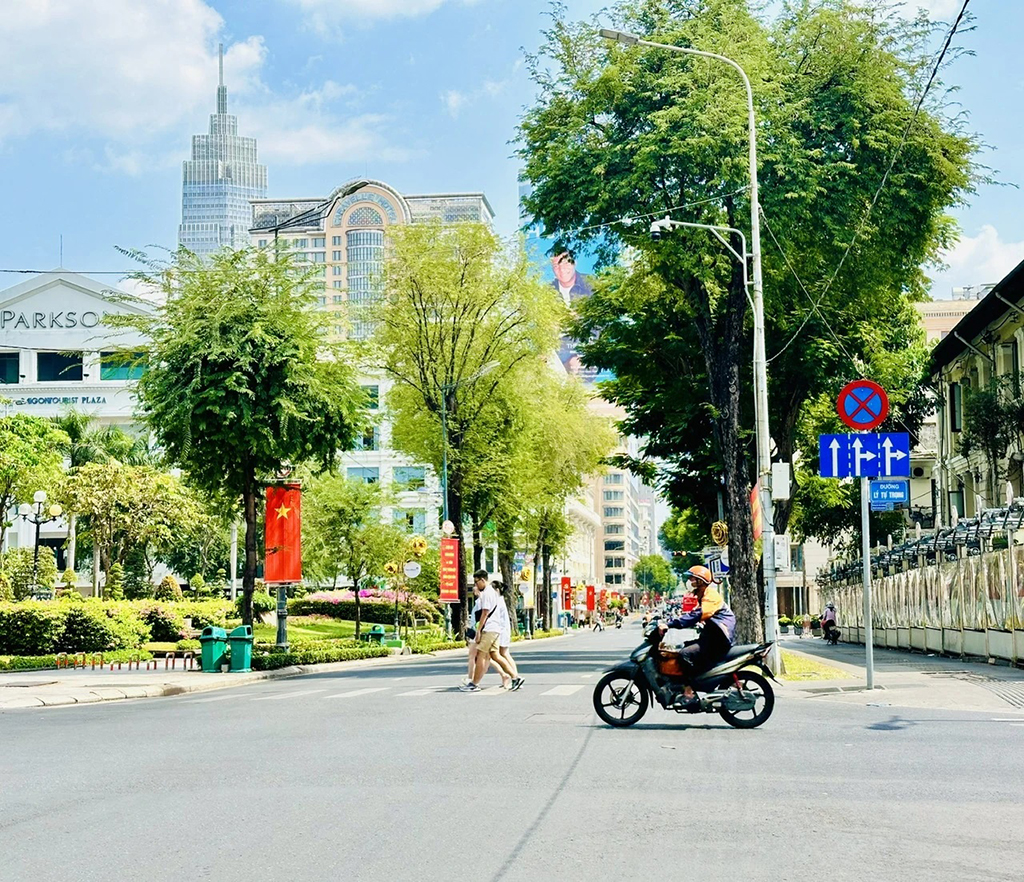
Due to the intense heat, people in Ho Chi Minh City are limiting their time outdoors.
Mr. Nguyen Thanh Trung, from Dong Nai , said: After spending three days celebrating the Lunar New Year in his hometown under the scorching heat, he returned to Ho Chi Minh City to prepare for work on the 6th. On the morning of the 4th, he arranged to meet friends for coffee in the city center and take photos of the Nguyen Hue flower street. However, after the first coffee of the year, everyone agreed to "go home," canceling the photoshoot because of the intense heat. All appointments and gatherings were postponed to the evening. "I remember it was just after 9 a.m., but the sun was blazing down, and the weather forecast on my phone showed 33 degrees Celsius. Perhaps because of the heat, the city streets have been even more deserted in recent days," Mr. Trung said.
Many people in the western provinces also commented that this year's Tet holiday was the hottest in recent years. The heat started in early January and lasted throughout the Tet holiday, accompanied by strong winds.
Thousands of people braved the scorching sun, waiting until midday to enter the temple to pray for peace on the day of the Jade Emperor's festival.
According to a survey by Thanh Nien newspaper , in the first days of the new year, the roads in Ho Chi Minh City were relatively clear because most people had returned to their hometowns or gone on spring trips, but this was also partly due to many people limiting their outings because of the intense heat. In the city center, from 10 am to 3 pm, there were only a few foreign tourists and delivery drivers rushing to make a living. In the evening, taking advantage of the cooler weather, many people flocked to the city center to visit and take photos at Nguyen Hue flower street, the book fair, etc.
The hot weather will come earlier and be more intense due to El Nino.
Typically, during the annual dry season, hot low-pressure systems from India and Myanmar move eastward and affect Vietnam. The first heat waves affect the South, followed by the central and northern provinces. This year, due to the combined effect of the El Niño phenomenon, the heatwave is even more intense.
According to the Southern Vietnam Regional Meteorological and Hydrological Station, on February 15th (the 6th day of the Lunar New Year), the highest temperature at Tan Son Nhat Airport reached 36 degrees Celsius and the lowest humidity was only 35%. In recent days, the highest temperatures in Ho Chi Minh City have generally ranged from 35 to 36 degrees Celsius. Areas experiencing intense heat include districts and counties such as: Districts 1, 3, 4, Tan Binh, Tan Phu, Phu Nhuan, Binh Tan, Hoc Mon, District 12, Cu Chi, District 7, and Thu Duc City…
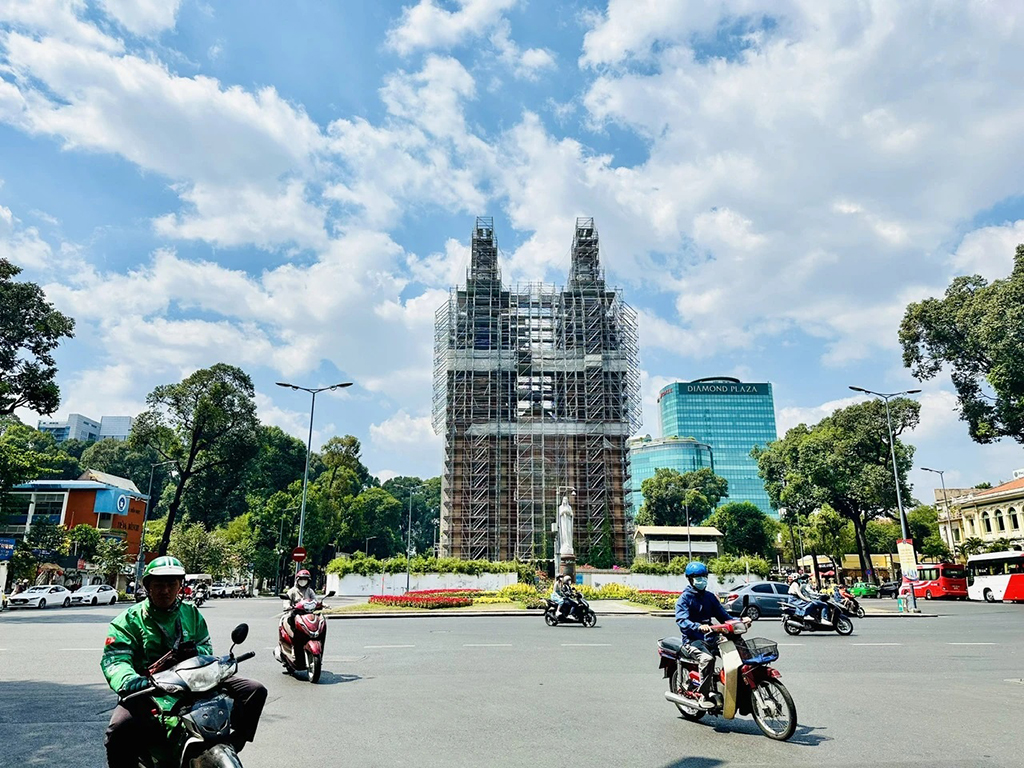
The heatwave is expected to continue until almost the end of next week instead of ending on February 18th.
Currently, Southern Vietnam is experiencing the most intense heatwave since the beginning of the dry season. The highest temperature recorded reached 38 degrees Celsius on February 15th in Bien Hoa (Dong Nai). Meanwhile, temperatures in the eastern provinces ranged from 35-37 degrees Celsius, and in the western provinces from 35-36 degrees Celsius. In initial heatwave reports, the Southern Vietnam Regional Meteorological and Hydrological Station predicted the heatwave could last until February 18th (the 9th day of the Lunar New Year); however, the latest update yesterday afternoon indicated that the heatwave will continue for another 5 days, approximately until February 23rd-24th. In the eastern provinces, temperatures will generally range from 35-38 degrees Celsius, while in the western provinces, temperatures will generally be around 35 degrees Celsius. Thus, this heatwave could last for more than 10 days, with temperatures in Dong Nai potentially reaching 38 degrees Celsius on February 20th.
In 2023, the first intense heatwave exceeding 37 degrees Celsius occurred on April 8th, with the highest temperatures recorded in So Sao (Binh Duong) at 37.5 degrees Celsius, Bien Hoa (Dong Nai) at 37.4 degrees Celsius, and Dong Phu (Binh Phuoc) at 37.2 degrees Celsius. Thus, it can be seen that this year's heatwave arrived more than a month earlier than last year, and the highest temperatures of the first heatwave were 0.5-0.6 degrees Celsius higher.
Quick overview at 12 PM on February 18th: Weather forecast
Compared to strong El Nino years like 2015-2016 and 2019-2020, the hot weather in 2023-2024 arrived earlier than the multi-year average. Specifically, in February of 2016 and 2020, the highest temperature in Southern Vietnam was 37 degrees Celsius, also in Bien Hoa.
The National Center for Hydro-Meteorological Forecasting reports that in January and early February, several localized heatwaves occurred in the southeastern region. Additionally, over the past two months, many areas have recorded daily absolute high temperatures exceeding historical records for the same period. The El Niño phenomenon is expected to persist until March, but from April to May 2024, it is projected to weaken rapidly and gradually transition to a neutral state. In the northwestern part of Northern Vietnam and the central region, heatwaves are likely to arrive earlier and be more frequent than the multi-year average. From March to May 2024, the average temperature nationwide is expected to be approximately 0.5-1.5°C higher than the multi-year average.
Responding to Thanh Nien newspaper , meteorological experts said that the highest temperature recorded during the 2023 hot season was 38.7 degrees Celsius in early May. With the current trend of increasing heatwaves, this year's dry season will see many more intense heatwaves, with the highest temperatures potentially reaching around 39-40 degrees Celsius in the East and 37-38 degrees Celsius in the West. April is also the peak of the hot season in Southern Vietnam, so the heat will be very intense. There will be many widespread heatwaves with temperatures commonly reaching 35-38 degrees Celsius.
Health protection and fire prevention are necessary.
Due to the heatwave and low humidity, there is a risk of explosions and fires in residential areas due to increased electricity demand. Many people traveling to and returning to Ho Chi Minh City in the coming days should pay special attention to their health. Those traveling from the North to Ho Chi Minh City and other Southern provinces should be particularly aware of the significant temperature differences that can easily lead to heatstroke. The heat can also cause dehydration, exhaustion, and heatstroke from prolonged exposure to high temperatures.
High saltwater intrusion, late rains.
In January 2024, saltwater intrusion in the Mekong Delta was higher than the multi-year average, with the 4g/l salinity boundary extending 55-60 km in the Vam Co River, 35-45 km in the Mekong Delta estuary, and 25-30 km in the Cai Lon River.
The Central Highlands and Southern regions experienced generally low rainfall from March 2024, with total rainfall in April being 20-40 mm lower than the multi-year average. In May, total rainfall was 15-30% lower than the multi-year average for the same period.
Source link




![[Image] National Assembly discusses the implementation of the socio-economic development plan.](https://vphoto.vietnam.vn/thumb/1200x675/vietnam/resource/IMAGE/2026/04/20/1776696707422_ndo_br_img-20260420-185419-jpg.webp)
![[Photo] General Secretary and President To Lam meets with National Assembly delegates from ethnic minorities.](https://vphoto.vietnam.vn/thumb/1200x675/vietnam/resource/IMAGE/2026/04/20/1776696701056_a1-bnd-8331-3342-jpg.webp)































































































Comment (0)