


Currently, the province has over 22,000 hectares of rice-growing land, mainly distributed across all communes, wards, and special zones. In Binh Lieu commune, the rice-growing area is projected to reach over 876 hectares in 2025, a decrease of 13.3 hectares compared to the beginning of 2020. Although the locality has a relatively large rice-growing area, the infrastructure serving production is still lacking in uniformity, the application of science and technology in production is not yet truly effective; and climate change is having an increasingly evident impact. In this context, the Provincial People's Council's issuance of Resolution 60/2025/NQ-HĐND is considered a necessary and timely solution, creating a legal framework and important financial basis for localities and people to overcome the "bottlenecks" in rice production, increase productivity, and sustainably enhance the value of rice.
Resolution 60/2025/NQ-HĐND is based on Article 15 of Government Decree No. 112/2024/NĐ-CP, which details regulations on rice cultivation land. State budget funds supporting rice production are allocated to the budgets of communes, wards, and special zones according to the approved rice cultivation land area. Of this, no less than 40% of the state budget funds are used to support people in carrying out the following activities: using legally sourced rice varieties for production; applying production processes, technical advancements, and technologies to production; building demonstration models; organizing training, workshops, and linking production and product consumption.
In addition, the Resolution also stipulates funding support for activities related to improving and enhancing the quality of rice-growing land; assessing the physical and chemical properties and constructing agricultural and soil maps of specialized rice-growing areas every 5 years; repairing, maintaining, and servicing agricultural and rural infrastructure within the managed area; and supporting the purchase of ownership rights for rice varieties protected by the Ministry of Agriculture and Environment and suitable for mass production in the province, but not exceeding 1 billion VND per variety.
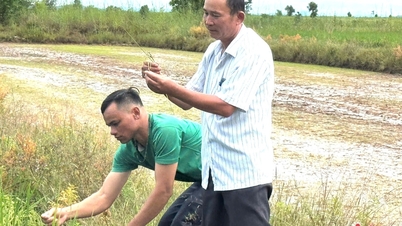
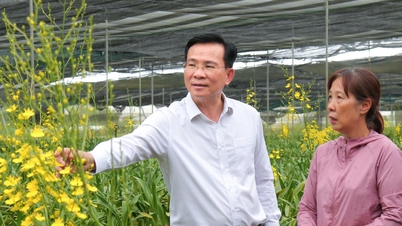
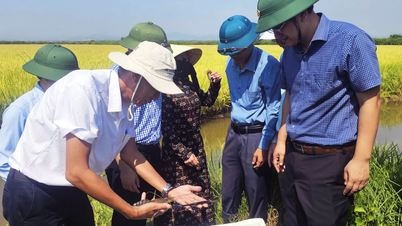
According to Ms. Trinh Thi Van, Chairwoman of the Board of Directors of Quang Ninh Seed Company, one of the practical benefits of the Resolution is encouraging localities to build demonstration models of new rice varieties with high yield and good quality. This is an important prerequisite for gradually eliminating low-quality varieties and expanding the cultivation area of key rice varieties with high economic value. These models are not only a highlight in terms of technology but also create a ripple effect, helping people learn and replicate effective practices. The Resolution was issued in a timely manner and has a significant impact on the province's agricultural production. Through the deployment of these resources, localities and people using rice-growing land have the opportunity to apply advanced techniques to mass production of new rice varieties with higher yield, better quality, and greater safety.

Resolution 60/2025/NQ-HĐND not only provides financial support but also focuses on technology transfer, human resource training, and building an ecosystem to support sustainable agricultural production. From the Resolution to action, the synchronized involvement of all levels, sectors, and people is a key factor in ensuring the long-term effectiveness of the policy. Mr. Tran Van Thuc, Head of the Provincial Crop Production and Plant Protection Sub-Department (Department of Agriculture and Environment), said: To help people access the policy early, increase rice production efficiency, protect the soil, and develop sustainable livelihoods, the unit assigned as the advisory agency will coordinate with the Department of Finance and relevant agencies to develop inter-sectoral guidelines to support localities, especially rice producers in the province, in applying and implementing the policy synchronously, correctly, and realistically. This will contribute to improving rice productivity and quality and promoting sustainable agricultural development in the province.
Resolution 60/2025/NQ-HĐND is an effective agricultural policy "lever," creating motivation for people to engage in agricultural production, while simultaneously increasing the value of rice production, ensuring food security, and developing the agricultural economy in a modern, efficient, and sustainable direction, aiming for an average value of cultivated land exceeding 150 million VND/ha by 2030.
Source: https://baoquangninh.vn/dam-bao-nen-tang-cho-phat-trien-nong-nghiep-ben-vung-3370528.html
![[Photo] General Secretary and President To Lam presides over a meeting on assessing national development resources.](https://vphoto.vietnam.vn/thumb/1200x675/vietnam/resource/IMAGE/2026/05/20/1779253785852_a1-bnd-2943-8519-jpg.webp)

























































Comment (0)