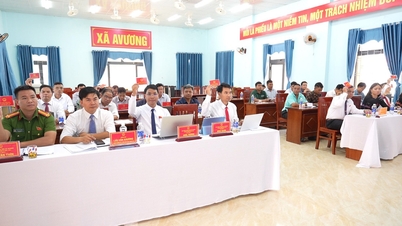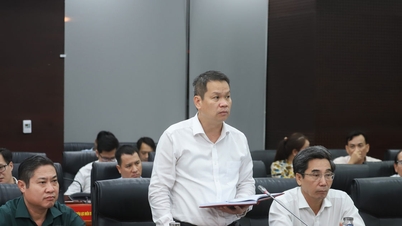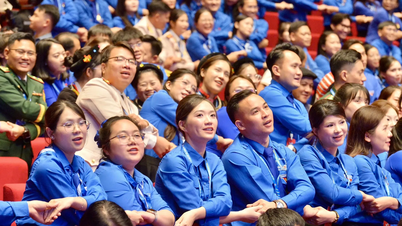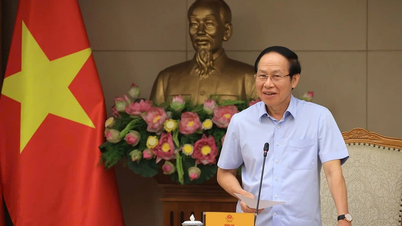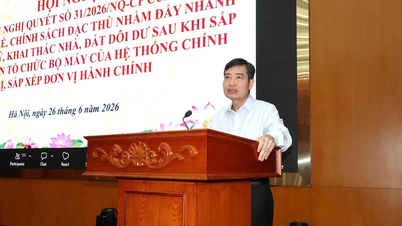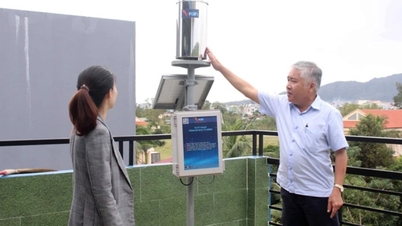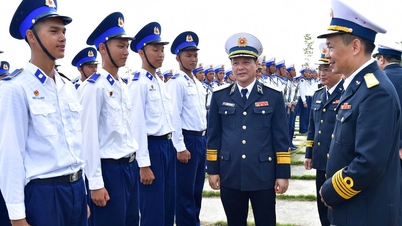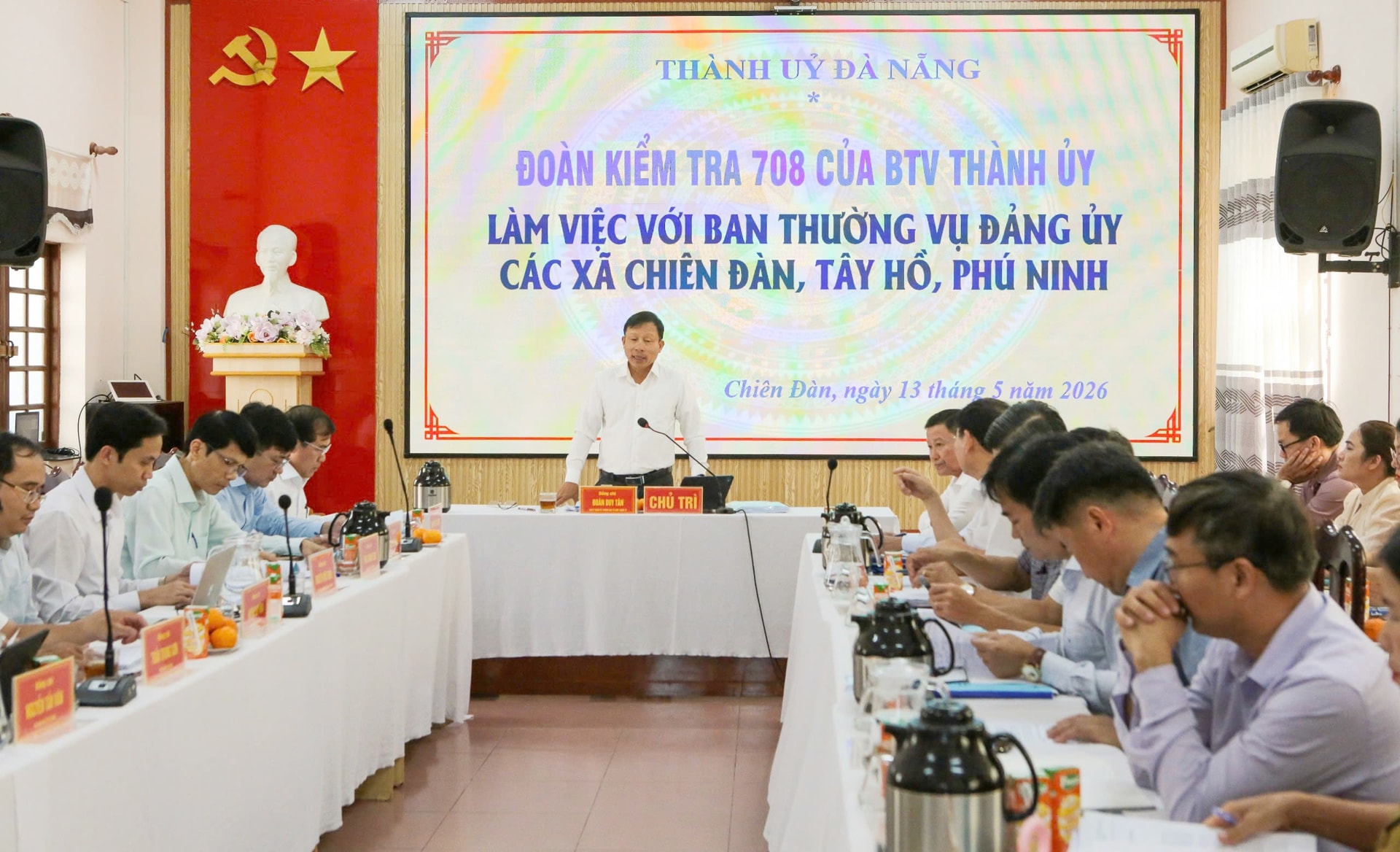
Sharing from practical experience at the grassroots level.
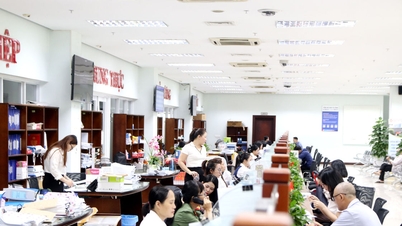
Sharing the outstanding results in concretizing the Party's Resolution on personnel work in the past period, according to the Standing Committee of the Party Committee of Ngu Hanh Son ward, the work of evaluating cadres has been carried out seriously, ensuring regulations and gradually becoming systematic. This is an important basis for the Standing Committee of the ward's Party Committee to build plans for training, fostering, and assigning local cadres.
Notably, the ward boldly appointed and promoted young cadres with good moral character and competence to key positions, prioritizing the appointment of female leaders and managers. After being appointed, these cadres have effectively fulfilled their roles and demonstrated their leadership and management capabilities through concrete results.
According to Ms. Le Thi Thanh Duyen, Permanent Deputy Secretary of the Party Committee of Ngu Hanh Son Ward, the ward has 101 leading and managerial cadres assigned to work in affiliated agencies, units, and organizations, in accordance with their abilities, qualifications, strengths, and experience, meeting the requirements for job titles and positions.
Of these, 57.4% have postgraduate qualifications; 100% have at least intermediate-level political theory qualifications; 50.5% are female and 22.8% are young (under 42 years old). This result shows that the selection, placement, and utilization of personnel are receiving increasing attention and emphasis.
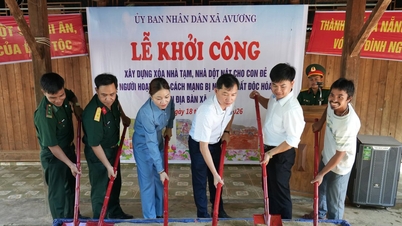
Upon the establishment of the new commune-level administration, the Party Committee of Dai Loc commune promptly conducted a comprehensive review and assessment to rearrange personnel according to the principle of "the right person for the right job, leveraging strengths and ensuring continuity."
According to Mr. Nguyen Hao, Secretary of the Party Committee of Dai Loc commune, the commune's Party Committee has reassigned and transferred six civil servants between the Party-mass organizations and the government sector to match their work capacity and experience.


Simultaneously, 11 civil servants and public employees were reassigned and appointed to leadership and management positions in specialized departments. The placement of personnel closely followed actual capabilities, professional qualifications, and practical experience, avoiding overlap or gaps in the performance of official duties.
"The right people must be assigned to the right positions and closely monitored. The commune Party Committee has concretized a set of criteria for monthly and quarterly evaluation and ranking, linked to specific outputs, and uses the satisfaction of the people as a measure of the quality of cadres," Mr. Hao said.
Resolution No. 14-NQ/TU sets the goal that by 2030, 100% of cadres will meet the standards in politics, ideology, and ethics; 100% of cadres will have a university degree or higher, meeting the professional and technical standards for their job positions; and 100% of cadres will master digital skills and apply technology in management and administration. It also aims to ensure that 100% of wards and communes appoint Party committee secretaries, commune-level People's Committee chairmen, and heads of Party committee inspection committees who are not local residents, as stipulated by the Central Government. Furthermore, it aims to ensure the proportion of young, female, and ethnic minority cadres in Party committees, Party committee standing committees, and People's Councils meets the regulations of the Central Government and the city. In areas with ethnic minority populations, there must be ethnic minority leaders in accordance with the population structure.
Strengthening the staff working at the commune level.
After nearly a year of implementing the two-tiered local government model, based on the regulations of competent authorities regarding the functions, tasks, and organizational structure of ward, commune, and special zone agencies (collectively referred to as the grassroots level), Party committees, Party organizations, and governments at all levels have focused on effectively implementing the work of assigning and arranging grassroots-level cadres.
Based on an assessment of the current situation and aiming to create strong and comprehensive changes in the work of building grassroots cadres in the new phase, the City Party Committee issued Resolution No. 14-NQ/TU, clearly stating the objective: To build a grassroots cadre of Da Nang city that is politically, ideologically, and ethically sound, with high professional qualifications, advanced management capabilities, and innovative thinking; capable of quickly adapting to digital transformation and administrative reform; and fully capable of effectively performing functions and tasks in a two-tiered local government model that is close to the people, serves the people, and meets the requirements of rapid and sustainable development of the city in the new phase.
Within the seven key task groups and solutions, the city will continue to review and reorganize its organizational structure and job positions towards a streamlined, effective, and efficient operation; improve job descriptions; assign the right person to the right job; and overcome overlapping and inconsistent task assignments.
Notably, the city is implementing a policy of strengthening the deployment of city-level officials to work in communes, especially mountainous communes with difficult conditions, for training and testing. Alternatively, they are rotating between communes in appropriate forms; ensuring the right person is in the right job, in line with the downsizing plan; and prioritizing support for remote and disadvantaged areas to balance administrative capacity and improve the quality of public services.



To concretize Resolution No. 14-NQ/TU, Plan No. 90 of the Standing Committee of the City Party Committee outlines 7 groups of key tasks and solutions and 31 specific tasks. According to the Head of the City Party Committee's Organization Department, Doan Duy Tan, 21 tasks need to be focused on and implemented immediately in 2026 and subsequent years.
The focus is on issues related to the implementation of resolutions; reviewing organizational structures and personnel; developing a competency framework for officials; reviewing and developing personnel plans; implementing training and professional development programs; building mechanisms and policies to support grassroots officials; promoting digital transformation; and improving the database of officials, civil servants, and public employees.
The tasks and solutions were developed to ensure synergy between Party building, government building, administrative reform, digital transformation, and improving the quality of cadres, civil servants, and public employees at the grassroots level, and were assigned to 7 agencies and units to lead the implementation.
Source: https://baodanang.vn/nang-chat-luong-doi-ngu-can-bo-co-so-3340629.html
![[Photo] "Hanoi Lotus Festival" honors the lotus flower that has been associated with Vietnam for thousands of years.](https://vphoto.vietnam.vn/thumb/1200x675/vietnam/resource/IMAGE/2026/06/27/1782516943048_sen-ha-noi-2026-minh-duy-1-jpg.webp)