

Establishing a value chain for pepper
In recent years, pepper plants dying due to disease, along with the overuse of chemical fertilizers and pesticides, have led to a decline in production efficiency. Faced with this reality, some cooperatives in Western Gia Lai have proactively changed their farming methods, moving towards cleaner and more sustainable production models.
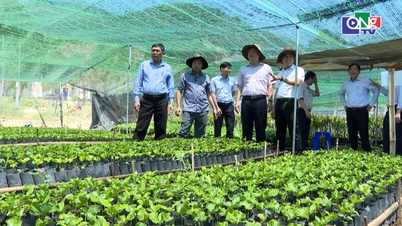
The Hai Yang Organic Pepper Cooperative (Mang Yang commune) is one of the pioneering units. Formed from a group of households with a shared vision in 2016, the cooperative has now developed into a production linkage model connected with businesses that purchase and export.
According to Mr. Nguyen Dinh Duy, Chairman of the Board of Directors and Director of the Cooperative, the shift to organic production is primarily about changing mindsets, from traditional methods to farming in harmony with nature. Members limit the use of inorganic fertilizers and chemical pesticides, instead using organic and biological fertilizers during cultivation and harvesting.
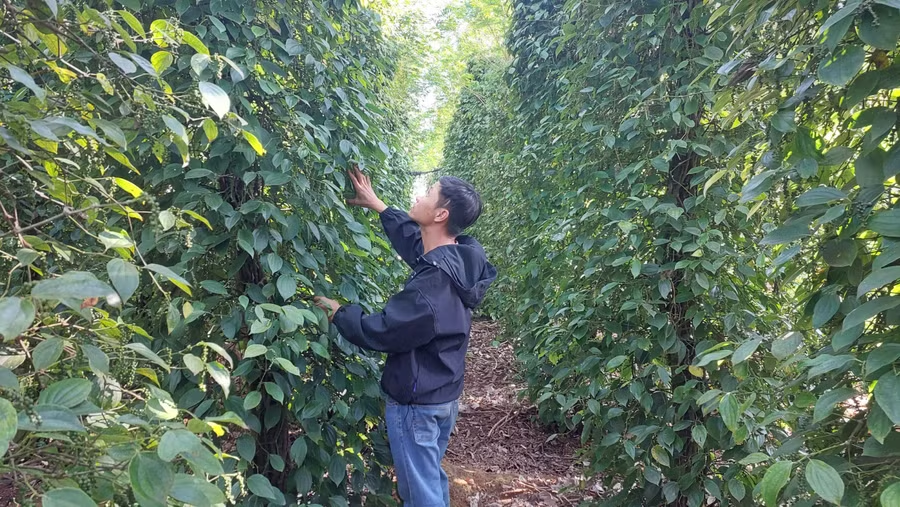
Currently, the cooperative has 15 members producing pepper in various localities such as Mang Yang, Dak Somei, Chu Pah, Lo Pang, and Kon Chieng. Of these, about 8 hectares of pepper plantations have been certified as meeting US and European organic standards. Each year, the cooperative supplies over 70 tons of organic pepper to export businesses.
According to Mr. Nguyen Dinh Duy, linking with purchasing businesses helps ensure stable consumption of organic pepper at prices higher than the market rate, thus alleviating farmers' worries about sales. This also serves as an impetus to expand the model and encourage farmers to switch to organic production.
"The reality shows a clear difference in value: while at many times the price of regular pepper on the market is only 30,000-40,000 VND/kg, organic pepper is still purchased at over 90,000 VND/kg, bringing outstanding economic efficiency," Mr. Duy cited as an example.
Not only Hai Yang, but many cooperatives in Gia Lai province are also effectively leveraging linkages with processing and exporting businesses to increase the value of pepper.
For example, the Nam Yang Agricultural and Service Cooperative (Kon Gang commune) has developed organic red pepper, black pepper, and white pepper products that have achieved national 5-star OCOP certification and are exported to many international markets. Similarly, the Linh Nham Agricultural and Service Cooperative (Mang Yang commune) is also promoting organic production, focusing on quality control and traceability.
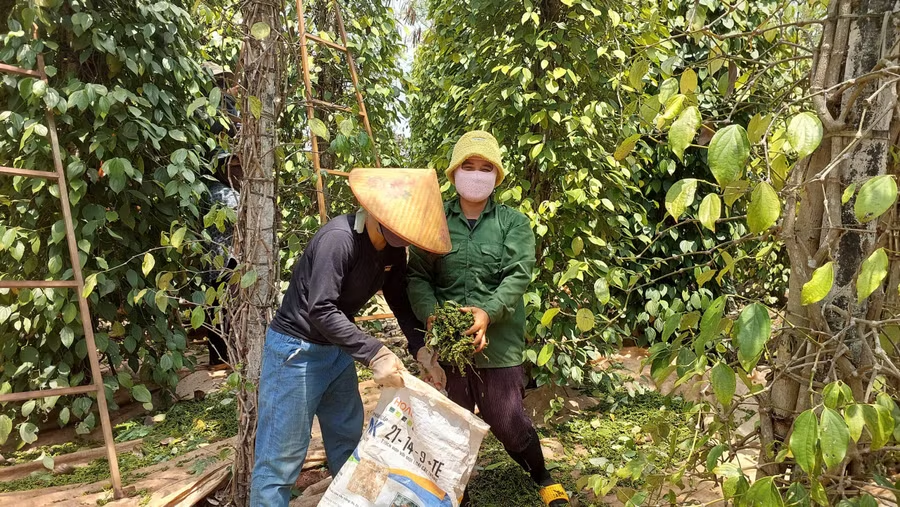
The common feature of these models is the application of a rigorous production process, gradually eliminating chemical fertilizers and pesticides, replacing them with organic fertilizers and biological preparations. As a result, the product not only improves in quality but also reduces the sale of raw products, contributing to building the Gia Lai pepper brand in domestic and international markets.
Shaping the path towards sustainable development.
As one of the pioneers in organic pepper cultivation in Hai Yang, Mr. Cao Hoang Vu (Hamlet 3, Mang Yang Commune) started with 4,000 pepper plants in 2016. Initially, due to a lack of technical knowledge, cultivation faced many difficulties. Thanks to applying the correct procedures, his pepper garden has developed steadily, and his products have been continuously exported by businesses for nearly 7 years.
This is not only a result of the transformation of farming practices but also demonstrates the clear effectiveness of organic production linked to consumption.
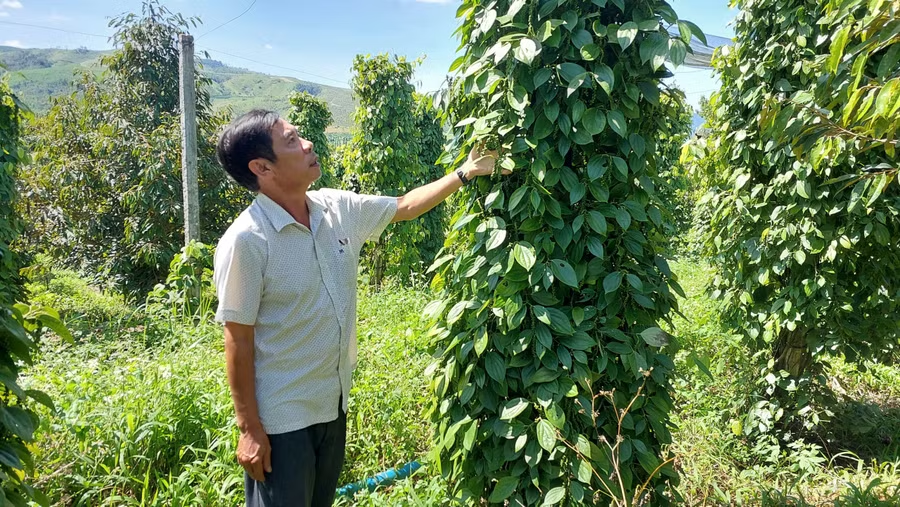
According to the Department of Agriculture and Environment, the province currently has approximately 8,400 hectares of pepper plantations, with an annual production of over 27,600 tons. The area is mainly concentrated in key regions such as Chu Puh, Kon Gang, Mang Yang, Ia Grai, Chu Se, and Bo Ngoong, with popular varieties like Vinh Linh, Phu Quoc, and Loc Ninh. In recent years, farmers have gradually shifted towards production focused on improving quality, emphasizing organic farming, and sustainable development.
Notably, there are now 3 pepper growing areas licensed for export to the Chinese market, with a total area of approximately 30.8 hectares. This is an important step in standardizing production and expanding the consumer market.
Dr. Nguyen Quang Ngoc, Director of the Pepper Research and Development Center (Western Highlands Agricultural and Forestry Science and Technology Institute), stated: The trend in pepper cultivation in the Central Highlands is gradually shifting towards natural farming practices that adapt to climate change. Linking farmers, cooperatives, and businesses helps ensure products meet standards, have clear traceability, reduce input costs, and increase value per unit area.
According to him, this is the right direction to meet current market demands, as consumers are increasingly concerned about the quality, safety, and sustainability of products.
To develop the pepper industry in the long term, Gia Lai's Department of Agriculture is prioritizing the development of varieties suitable to market demand, encouraging intercropping, innovating production linkages, and promoting the application of science and technology.
In addition, emphasis is placed on the use of biological products, the development of certified pepper cultivation, the establishment of geographical indications, and the creation of planting area codes. Simultaneously, the use of disease-free varieties suitable for the soil conditions of each region is considered a key factor in ensuring efficiency and sustainability in production.
Source: https://baogialai.com.vn/nang-tam-gia-tri-ho-tieu-gia-lai-post586161.html










































































Comment (0)