


In 2025, despite facing numerous difficulties and challenges due to climate change and extreme natural disasters, the whole country planted approximately 285,000 hectares of concentrated forests (reaching 109.5% of the plan) and 108 million scattered trees, making a significant contribution to environmental protection, maintaining a stable forest cover rate of 42.03%, and providing raw timber for the wood processing industry. Processed timber production reached 32.8 million cubic meters; the export value of timber and forest products exceeded 18 billion USD, making a significant contribution to the export value of agriculture, forestry, and fisheries nationwide.
After 5 years of implementing the "Planting One Billion Trees" project for the period 2021-2025, the whole country has planted more than 1.439 billion trees, exceeding the set target by 43.9%, including: planting 573.9 million scattered trees (comprising 87.5 million urban trees and 486.4 million scattered rural trees); and planting more than 865 million trees in concentrated forests, equivalent to 429,125 hectares of forest (including 36,745 hectares of protection and special-use forests and 392,380 hectares of newly planted production forests).
After 5 years of implementing the "Planting One Billion Trees" project for the period 2021-2025, the whole country has planted more than 1.439 billion trees, exceeding the set target by 43.9%, including: planting 573.9 million scattered trees (comprising 87.5 million urban trees and 486.4 million scattered rural trees); and planting more than 865 million trees in concentrated forests, equivalent to 429,125 hectares of forest (including 36,745 hectares of protection and special-use forests and 392,380 hectares of newly planted production forests).
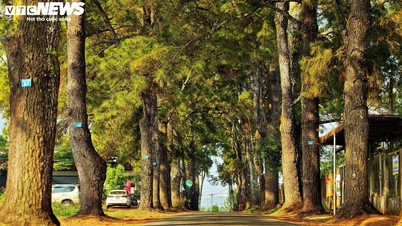
In addition to native and rare tree species planted in special-use forests, many woody and perennial trees are selected by localities for planting in protective forests to enhance the protection of headwaters, protect soil, conserve water, combat desertification, and protect the ecological environment; planting production forests to provide large timber, fruit trees, multi-purpose non-timber forest products, and urban green trees planted on sidewalks, streets, parks, flower gardens, squares; in the grounds of offices, schools, hospitals, factories, enterprises, industrial zones, export processing zones, religious buildings, home gardens, and other public works in urban and rural areas, creating beautiful landscapes, providing shade for recreation and environmental protection, contributing to the construction of new rural areas, and improving public health.
The project to plant one billion trees is considered to have made a very important contribution to global efforts to address climate change and restore nature, and has practically contributed to fulfilling Vietnam's international commitments on environment and climate in recent years.
In the context of complex climate change, with natural disasters and extreme weather events occurring frequently, tree planting and reforestation are becoming increasingly important, contributing to disaster mitigation and environmental protection.
In practical response to this year's "Tree Planting Festival in memory of President Ho Chi Minh," all levels, sectors, localities, and units need to strengthen propaganda and education work, raising awareness of the role, significance, and value of forests and green trees for socio-economic development, environmental protection, adaptation to climate change, and improving the quality of life for the people.
All levels, sectors, and localities should organize the "Tree Planting Festival" in a practical, effective, economical, and safe manner, avoiding formality; selecting appropriate times, locations, and tree species suitable to the ecological conditions, seasons, and cultural characteristics of each region and locality; prioritizing scattered tree planting in residential areas, schools, hospitals, industrial zones, urban areas, roads, riverbanks, canals, etc., to create landscapes, contribute to reducing pollution, and build green living spaces.
At the same time, units should clearly assign responsibilities for managing, caring for, and protecting trees after planting, encouraging the participation of organizations, schools, businesses, armed forces, and the community in caring for and protecting trees after planting; it is necessary to effectively mobilize and integrate social resources, public investment capital, and other legitimate programs and projects in planting and protecting forests.
Alongside tree planting and reforestation, it is essential to effectively protect and prevent forest fires. This includes promoting the application of information technology, digital technology , and artificial intelligence in forest management and protection; reviewing and supplementing forest fire prevention and control plans to align with reality; deploying personnel, equipment, and logistics ready to handle forest fires according to the "four on-the-spot" principle; and strengthening inter-agency coordination to promptly detect, prevent, and strictly punish violations of forestry laws.
Source: https://nhandan.vn/net-dep-van-hoa-tet-trong-cay-post943775.html
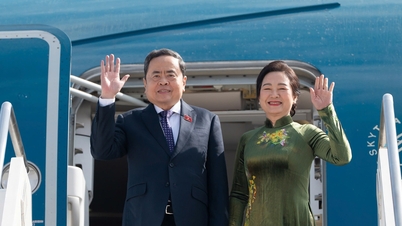
![[Photo] National Assembly Chairman Tran Thanh Man concludes official visit to Italy, departs for IPU-152](https://vphoto.vietnam.vn/thumb/1200x675/vietnam/resource/IMAGE/2026/04/15/1776253436109_vna-potal-chu-tich-quoc-hoi-ket-thuc-tham-chinh-thuc-italy-len-duong-du-ipu-152-tai-tho-nhi-ky-8702876-7969-jpg.webp)
![[Photo] Capturing each moment at the "People We Meet" photography exhibition.](https://vphoto.vietnam.vn/thumb/1200x675/vietnam/resource/IMAGE/2026/04/15/1776245695648_1-8944-jpg.webp)
![[Image] Current status of the land area of over 5.5 hectares that Ho Chi Minh City is considering reclaiming.](https://vphoto.vietnam.vn/thumb/1200x675/vietnam/resource/IMAGE/2026/04/15/1776245690095_1-3102-8409-jpg.webp)
![[Photo] General Secretary and President To Lam and General Secretary and President Xi Jinping meet with youth from both countries.](https://vphoto.vietnam.vn/thumb/1200x675/vietnam/resource/IMAGE/2026/04/15/1776245687540_vna-potal-tong-bi-thu-chu-tich-nuoc-to-lam-va-tong-bi-thu-chu-tich-nuoc-tap-can-binh-gap-go-thanh-nien-hai-nuoc-8702371-jpg.webp)
![[Image] Overview of the Tam Trinh-Giai Phong connecting road section after land clearance is completed.](https://vphoto.vietnam.vn/thumb/1200x675/vietnam/resource/IMAGE/2026/04/15/1776245679644_ndo_br_dji-0195-jpg.webp)
![[Photo] General Secretary and President To Lam and his wife, along with General Secretary and President Xi Jinping and his wife, attending a tea party.](https://vphoto.vietnam.vn/thumb/1200x675/vietnam/resource/IMAGE/2026/04/15/1776245678527_vna-potal-tong-bi-thu-chu-tich-nuoc-to-lam-va-phu-nhan-cung-tong-bi-thu-chu-tich-nuoc-tap-can-binh-va-phu-nhan-du-tiec-tra-8702812-9829-jpg.webp)







![[Photo] Mrs. Ngo Phuong Ly meets and exchanges views with Mrs. Peng Li Yuan](https://vphoto.vietnam.vn/thumb/402x226/vietnam/resource/IMAGE/2026/04/16/1776277858080_phu-nhan-1-jpg.webp)

![[Photo] National Assembly Chairman Tran Thanh Man attends the opening session of IPU-152](https://vphoto.vietnam.vn/thumb/402x226/vietnam/resource/IMAGE/2026/04/16/1776277863731_ctqh5-jpg.webp)













































Comment (0)