

4 groups facing difficulties
Speaking at the recent forum "Dual Transformation - A Driving Force for Economic Growth: Perspectives from Policy to Practice," Mr. Truong Van Cam, Vice President and General Secretary of the Vietnam Textile and Garment Association, stated that the textile and garment industry is facing four major challenges: a lack of unified standards for green transformation; uneven awareness among businesses, especially small enterprises; limitations in digital and green energy human resources; and administrative obstacles, ranging from investment licensing and environmental impact assessment to fire safety.
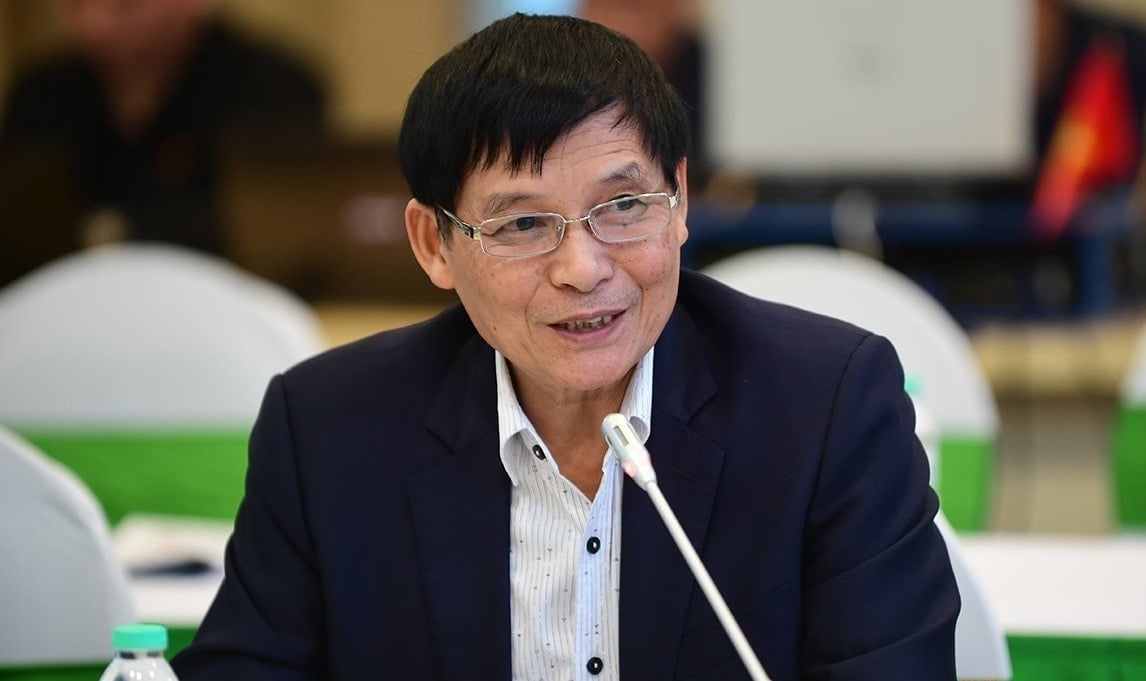
Mr. Truong Van Cam, Vice Chairman and General Secretary of the Vietnam Textile and Garment Association, stated that dual transformation is the inevitable path for the textile and garment industry. Photo: Minh Anh.
Currently, the textile and garment industry achieves export turnover of approximately 45-46 billion USD per year, with products present in more than 130 countries and territories. Over 90% of export turnover is concentrated in demanding markets such as the US, EU, Japan, South Korea, and China – places that are tightening requirements for green standards and supply chain digitalization. “If businesses do not undergo digital transformation and do not green their operations, they will be excluded from the global supply chain. Therefore, the dual transformation – ‘simultaneously digitizing processes and greening production’ – is no longer an option, but an inevitable path for the textile and garment industry,” Mr. Cam affirmed.
In reality, some large enterprises such as TNG, May 10, and Viet Tien have pioneered the application of technology in production management, emission measurement, energy management, and labor productivity optimization. Many businesses are gradually forming a "green factory - digital management" model. However, the majority of small and medium-sized enterprises in the industry still face many obstacles related to finance, human resources, standards, and administrative procedures.
Green finance and ESG standards are the biggest bottlenecks.
Sharing further insights from a business perspective, Ms. Pham Bich Hong, Deputy General Director of May 10 Corporation, stated that even for a large enterprise with a strong tradition and brand, the dual transformation process remains full of challenges.
According to Ms. Hong, the biggest challenge currently is green capital and credit. Investing in renewable energy, wastewater treatment, or circular systems requires significant costs, while green credit packages are difficult to access, lack specific guidance, and have unclear loan conditions.
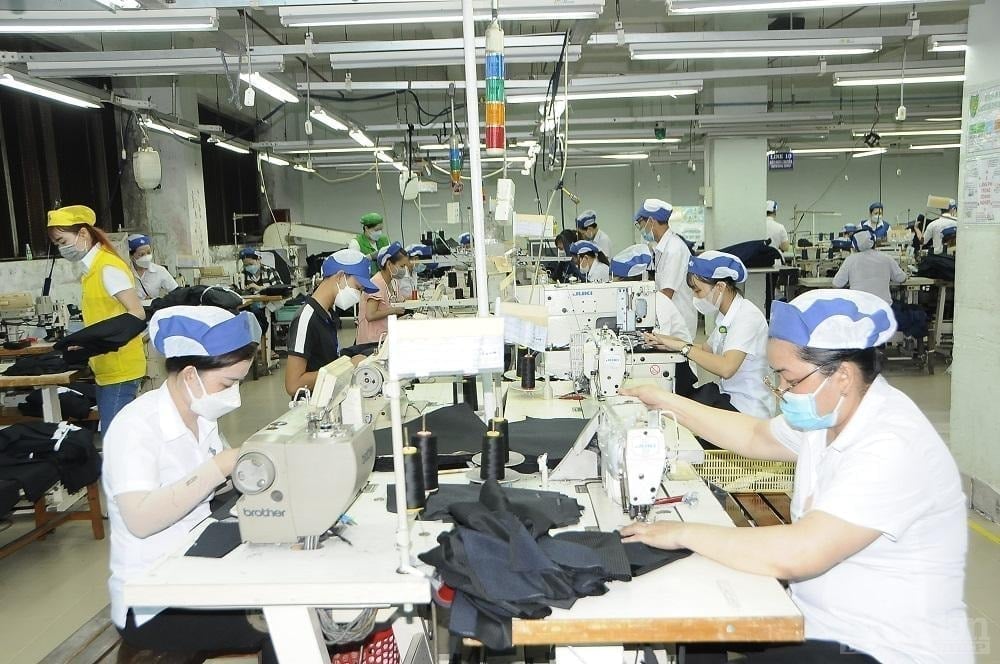
The textile and garment industry is aiming to increase the proportion of domestically sourced materials from approximately 40% to 60% to minimize issues related to origin of goods and optimize production costs. Photo: Minh Quang.
Furthermore, businesses must comply with various ESG criteria from international clients, leading to high compliance costs. Vietnam currently lacks a unified national ESG standard, resulting in inconsistencies and difficulties in evaluating the effectiveness of the transition.
Beyond financial and regulatory issues, Ms. Hong shared that human resources are also a major bottleneck in the transformation process. The pace of digitalization and greening is outpacing the capacity to train personnel, leading to a serious shortage of technology engineers, clean energy engineers, data experts, and those knowledgeable in ESG management. This prevents many businesses, even those with strong potential, from scaling up their transformation or effectively operating new systems.
Improving institutions and dual-purpose human resource training.
Given this reality, Mr. Truong Van Cam suggested that the State should soon finalize a national set of standards on green transition and ESG, providing a unified basis for businesses to implement. At the same time, administrative procedures, especially those related to investment and the environment, need to be simplified to reduce costs and time for businesses.
In addition, Mr. Cam also emphasized the role of training digital and green human resources, suggesting that universities and research institutes expand training programs for textile dyeing technology engineers, energy management, and ESG engineering to create a workforce that meets new requirements.
From a practical perspective, Ms. Pham Bich Hong proposed four key groups of solutions. First, it is necessary to build a green finance mechanism and preferential credit packages to support businesses investing in energy-saving technologies, reducing emissions, and circular production.
Secondly, institutionalize and standardize national ESG standards, harmonizing them with international standards to reduce compliance costs and enhance competitiveness. Thirdly, invest in developing industry data infrastructure, enabling businesses to manage, monitor, and share data transparently; while encouraging large businesses to share technology and expertise with smaller businesses.
Finally, Ms. Hong emphasized that training high-quality human resources is a key factor, requiring coordination between the State, businesses, and educational institutions to form "dual human capital" - possessing both digital skills and a green mindset.
A synchronized support mechanism is needed.
More broadly, the challenges facing the textile and garment industry are also common problems in many other sectors such as footwear, wood processing, electronics, agriculture , and logistics. These industries are all under pressure from requirements to reduce emissions, ensure supply chain transparency, and ensure product traceability.
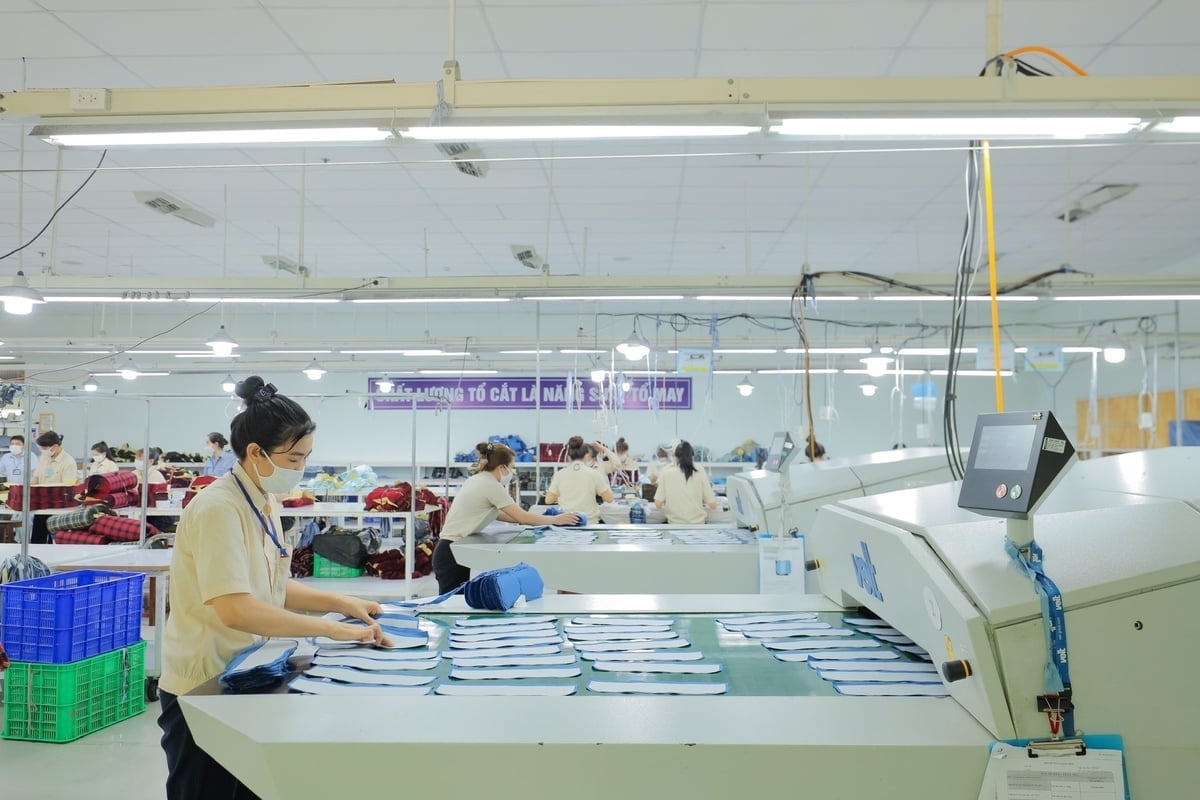
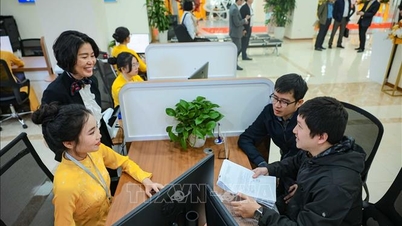
Administrative procedures, especially those related to investment and the environment, need to be simplified to reduce costs and time for garment businesses. Photo: Minh Khang.
However, a lack of investment capital, standardized criteria, human resources, and strategic awareness remain major obstacles. According to experts, overcoming these challenges requires a close coordination mechanism between the Government, businesses, and academic institutions, in which: the Government plays a guiding role and issues policies; large businesses lead, share data and technology; and academic institutions undertake training, research, and knowledge transfer.
"Only when policies are closely linked to practice, and businesses are supported with capital, standards, and human resources, will the dual transformation truly become a sustainable growth engine for the economy," Mr. Truong Van Cam affirmed.
In reality, Vietnam's textile and garment industry is on the verge of a significant transformation. However, to succeed in the long term, businesses need to be supported by green financial policies, transparent mechanisms, national ESG standards, and specialized human resource training programs. When the two processes of digitalization and greening are implemented simultaneously, the textile and garment industry will not only maintain its strategic export position but also become a model for the dual transformation towards sustainable development of the entire Vietnamese economy.
Source: https://nongnghiepmoitruong.vn/nganh-det-may-chiu-ap-luc-lon-trong-chuyen-doi-kep-d782045.html
![[Photo] Prime Minister Pham Minh Chinh presides over a meeting on private sector economic development.](/_next/image?url=https%3A%2F%2Fvphoto.vietnam.vn%2Fthumb%2F1200x675%2Fvietnam%2Fresource%2FIMAGE%2F2025%2F12%2F20%2F1766237501876_thiet-ke-chua-co-ten-40-png.webp&w=3840&q=75)

![[Photo] Prime Minister Pham Minh Chinh presides over the conference announcing the establishment of the International Finance Centre in Vietnam.](/_next/image?url=https%3A%2F%2Fvphoto.vietnam.vn%2Fthumb%2F1200x675%2Fvietnam%2Fresource%2FIMAGE%2F2025%2F12%2F21%2F1766309817714_ndo_br_dsc-3400-jpg.webp&w=3840&q=75)












































































Comment (0)