

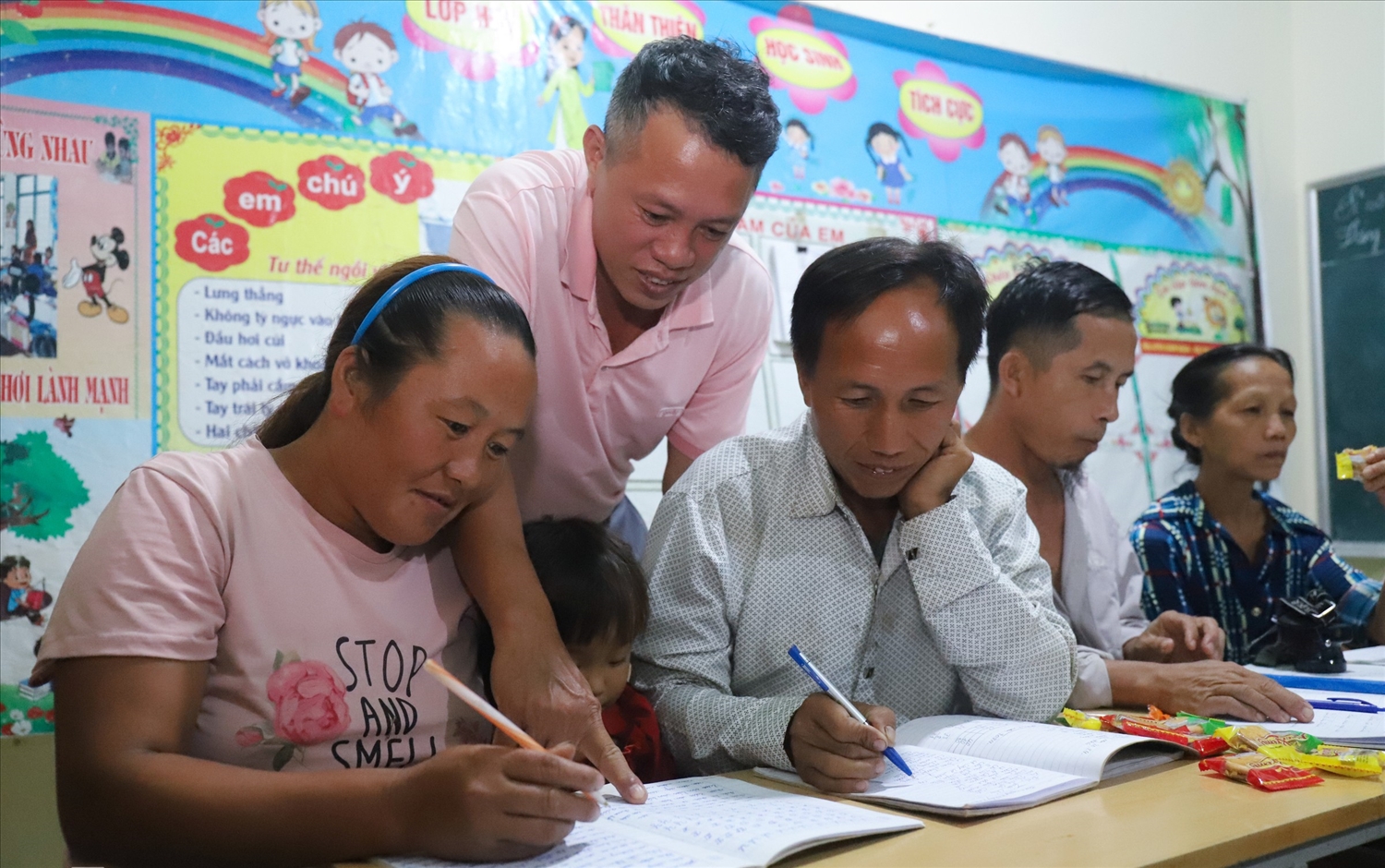
Difficulties and shortcomings
The ethnic minority and mountainous regions of Nghe An province account for 83% of the province's total area. The vast and remote terrain, coupled with a high poverty rate and limited awareness among some residents, contributes to the continued prevalence of illiteracy and relapses into illiteracy within the province. Notably, the scattered illiteracy population in remote villages poses significant challenges in organizing literacy programs.
Poverty, backwardness, and limited awareness make it very difficult to mobilize students to attend and maintain regular attendance at literacy classes. Part of the reason is that the majority of students are women, all of working age and unable to attend classes regularly. Furthermore, during the farming season, many people often work far from home and their villages; not to mention that some, due to their age, feel hesitant or embarrassed to attend classes…
In addition to the reasons mentioned above, the effectiveness of literacy programs is not high, the results are not sustainable, and the phenomenon of relapse into illiteracy continues and is increasing. The number of people attending literacy classes is still very small compared to the number of illiterate people. The infrastructure for teaching and learning in some mountainous communes is still difficult and inadequate.
Meanwhile, a specific difficulty has also significantly impacted literacy efforts. That is, the mountainous districts have vast areas, difficult transportation, and ethnic minority communities live scattered along border villages with unstable housing, making it challenging to survey the number of illiterate people in order to open classes, encourage attendance, and manage these classes. Furthermore, coordination with agencies, organizations, and associations in literacy work has sometimes been inconsistent and lacking in certain areas.
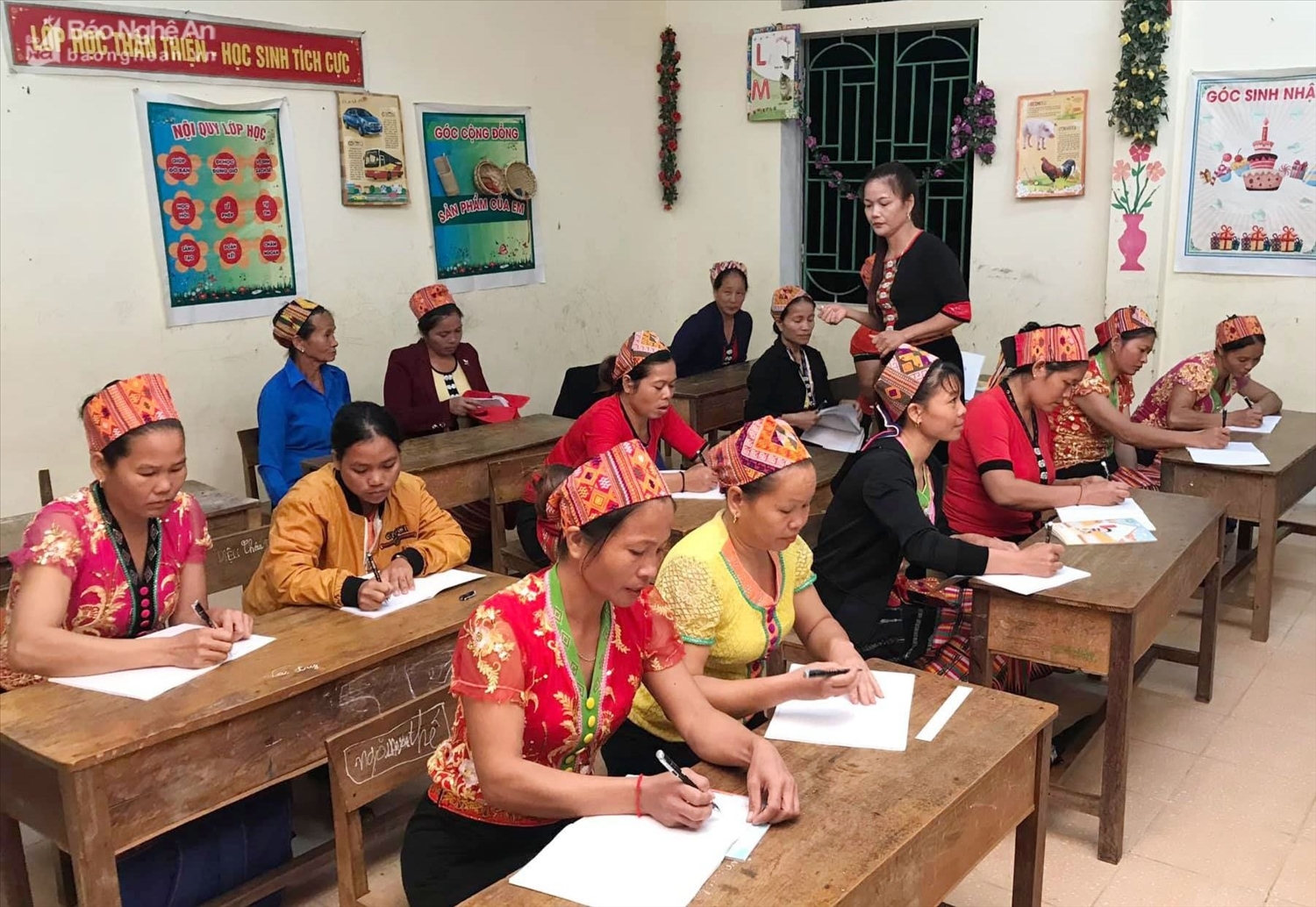
The aforementioned difficulties, limitations, and shortcomings are making literacy eradication efforts in the ethnic minority areas of Nghe An province extremely challenging. As long as illiteracy persists, many negative consequences and impacts remain on all aspects of socio -economic life. Illiteracy prevents a segment of the population from fully understanding the policies and guidelines of the Party and the State. Lack of literacy also hinders people from acquiring new scientific and technical knowledge, leading to low labor productivity, low crop yields, and low livestock productivity, thus perpetuating poverty.
The goal is to eradicate illiteracy and raise the general level of education.
Over the years, organizing and maintaining literacy classes in ethnic minority areas has always been an important task, aiming to raise the intellectual level of the population, alleviate poverty, and develop culture and society. In particular, since the implementation of Content No. 2 on Literacy Eradication for Ethnic Minority People under Sub-project 1, Project 5, of the National Target Program for Socio-Economic Development of Ethnic Minority and Mountainous Areas giai đoạn 2021-2025 (National Target Program 1719), literacy eradication efforts have been significantly intensified.
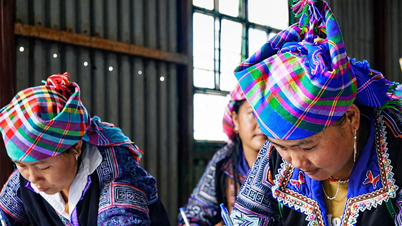
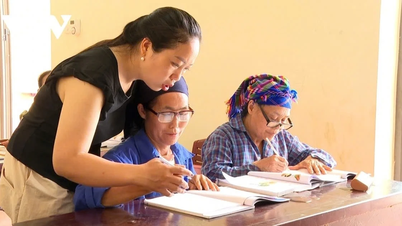
Ms. Lo Thi Hoa (born in 1969) from Huu Khuong commune, Tuong Duong district, said: "Due to difficult family circumstances and the lack of opportunities to go to school after getting married, I was illiterate. Initially, learning the alphabet, spelling, and writing was very difficult. Thanks to the guidance of the teachers, I and many other women in the class have learned to read and write. Now, I can watch TV and read books and newspapers."
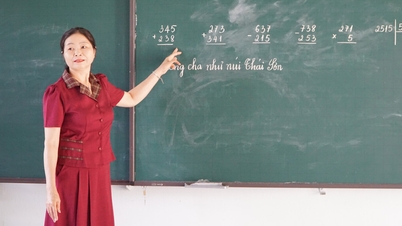
During the classes, in addition to literacy education, teachers also incorporated the dissemination of the Party's guidelines and the State's policies and laws, focusing on topics such as: not possessing or using drugs, weapons, or explosives illegally; issues of national border sovereignty , free migration and relocation; marriage and family; how to care for health, maintain environmental hygiene, prevent and control diseases, and effective farming and livestock techniques... Thanks to this, not only was a comfortable atmosphere created, but it also helped people change their mindset and practices in life for the goal of poverty reduction.
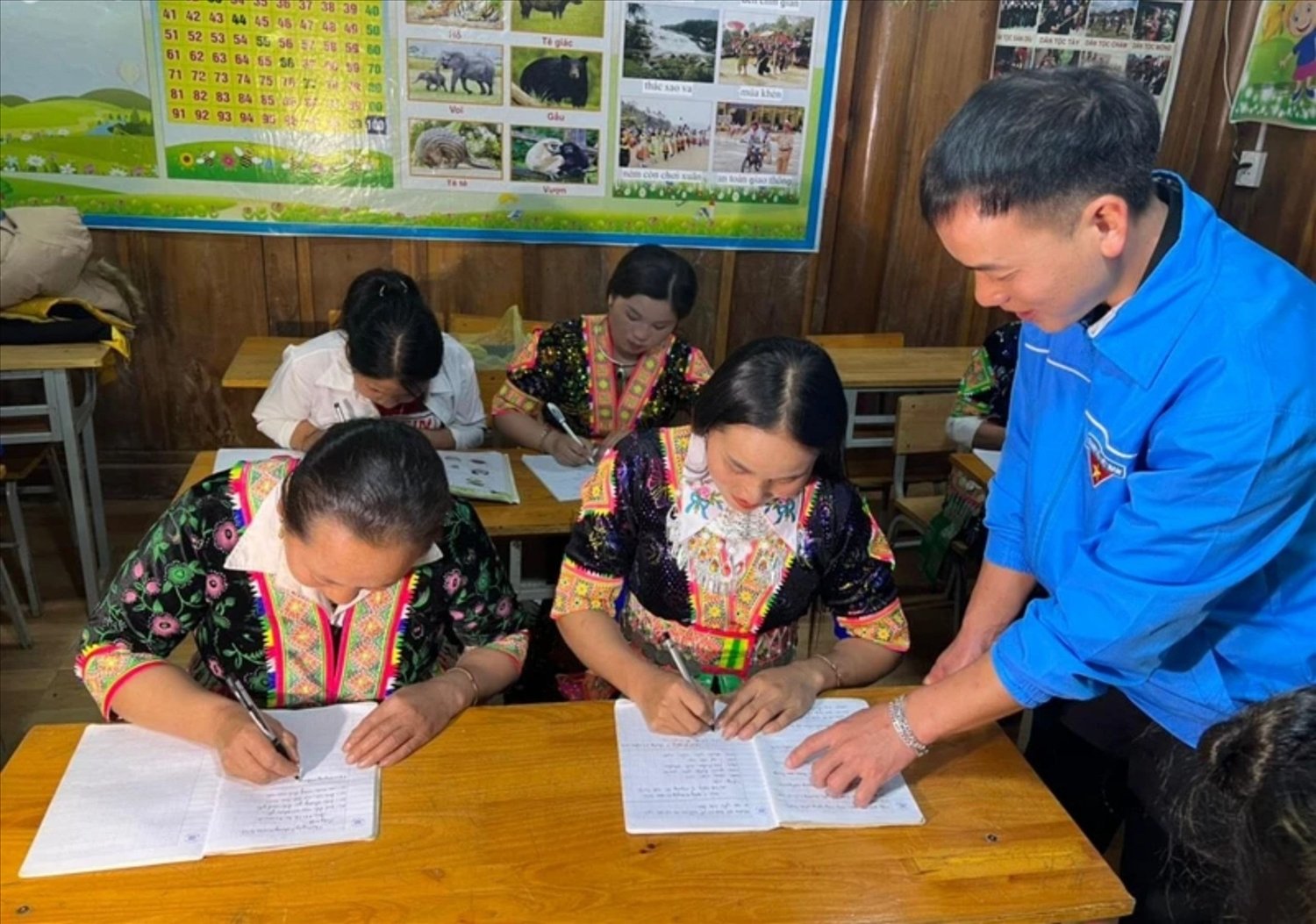
Vice Chairman of Tuong Duong District People's Committee, Lo Thanh Nhat, further shared: Implementing National Target Program 1719, the district has intensified its literacy eradication efforts. Notably, during the opening of literacy classes, the district skillfully disseminated information and encouraged people to access knowledge about livestock farming and production skills, thereby raising the intellectual level, awareness, and actions of each individual.
To further facilitate literacy eradication efforts, the People's Council of Nghe An province issued Resolution No. 10/2023/NQ-HĐND, dated July 7, 2023, on stipulating certain contents and expenditure levels for implementing literacy eradication and universal education under the project "Building a Learning Society in the period 2021 - 2030".
Accordingly, the province supports people participating in literacy programs, with a maximum expenditure of 1.8 million VND per person per program. Local authorities also provide additional support for nighttime lighting, purchasing notebooks to track learning progress, and assisting teachers with purchasing stationery, conducting awareness campaigns, and mobilizing illiterate and re-illiterate individuals to attend literacy classes. At the same time, the Provincial People's Council has stipulated a support allowance for those working in literacy programs, payable for 12 months per year.
Thanks to these efforts, in 2022, Nghe An was recognized as having achieved Level 2 literacy eradication standards; achieved universal preschool education for 5-year-old children; achieved Level 3 universal education standards; and achieved Level 1 universal lower secondary education standards.
Mr. Nguyen Manh Ha, Head of the Political and Ideological Education Department - Continuing Education Department of Nghe An Department of Education and Training, shared: In 2024, the province aims to increase the percentage of people aged 15-60 who meet the literacy standard at level 2 to 99.35% (minimum 90%).
Therefore, in the coming period, the Education sector will continue to coordinate with relevant units to conduct surveys and continue to open literacy classes to raise the intellectual level of ethnic minorities in the highland border villages of Nghe An province.
Happiness-centered education: A trend driving positive change in schools.
![[Image] First Congress of the Vietnam Science and Technology Trade Union](/_next/image?url=https%3A%2F%2Fvphoto.vietnam.vn%2Fthumb%2F1200x675%2Fvietnam%2Fresource%2FIMAGE%2F2025%2F12%2F24%2F1766552551054_ndo_tr_img-1801-jpg.webp&w=3840&q=75)
![[Image] First UAV flight test in medical transport](/_next/image?url=https%3A%2F%2Fvphoto.vietnam.vn%2Fthumb%2F1200x675%2Fvietnam%2Fresource%2FIMAGE%2F2025%2F12%2F24%2F1766560655977_thunghiembay-3551-jpg.webp&w=3840&q=75)


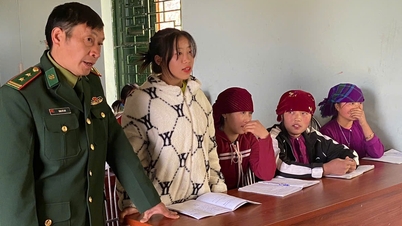













































































Comment (0)