

In Phuc Loi commune, digital skills training courses are regularly organized at village cultural centers, creating opportunities for people to access technology in a familiar and easily understandable environment. Notably, to date, about 80% of people of working age in the area use smartphones; over 80% have level 2 electronic identity verification accounts. This is an important foundation for effectively deploying digital services at the grassroots level.

From using smartphones and installing apps to conducting online transactions, people are gradually becoming familiar with and proactively applying technology to their lives. Beyond simply accessing technology, digital technology is progressively changing people's habits and transaction patterns. Many buying, selling, and payment activities are now conducted through digital platforms, saving time and costs and enhancing transparency in transactions.
Mr. Phung Van Tuan, from Van village, shared: "Previously, we were hesitant to embrace technology. But since having the 'digital natives' directly guide us, everything has become much easier to understand. They are the bridge that helps people like us access digital technology in a convenient and practical way."
According to the plan for 2026, Lao Cai province will pilot the model in approximately 40 communes and wards, with the goal of building a force of about 1,200 "digital community members," with at least 3 people in each village directly supporting the people. This is identified as the core force, playing the role of an "extended arm" of the government in promoting digital transformation from the grassroots level.

To ensure effective implementation, localities have proactively reviewed and selected reputable individuals with a sense of responsibility and the ability to access technology to participate in the model. Simultaneously, they have organized training courses to equip this workforce with the necessary knowledge and skills before officially deploying them.
Mr. Sung A Hanh, head of Pang Cang village, Van Chan commune, said: "We believe that 'digital villagers' are not only people who know technology but also people who are close to the people and understand them. When they perform their role well, they will become an effective bridge between the government and the people in the digital transformation process."
The highlight of the "Digital Citizen" model is that it doesn't emphasize complex technical elements, focusing instead on practical content that meets the real needs of the people. Content such as using online public services, cashless payments, information retrieval, and promoting local products on digital platforms are implemented concretely and are easily accessible.
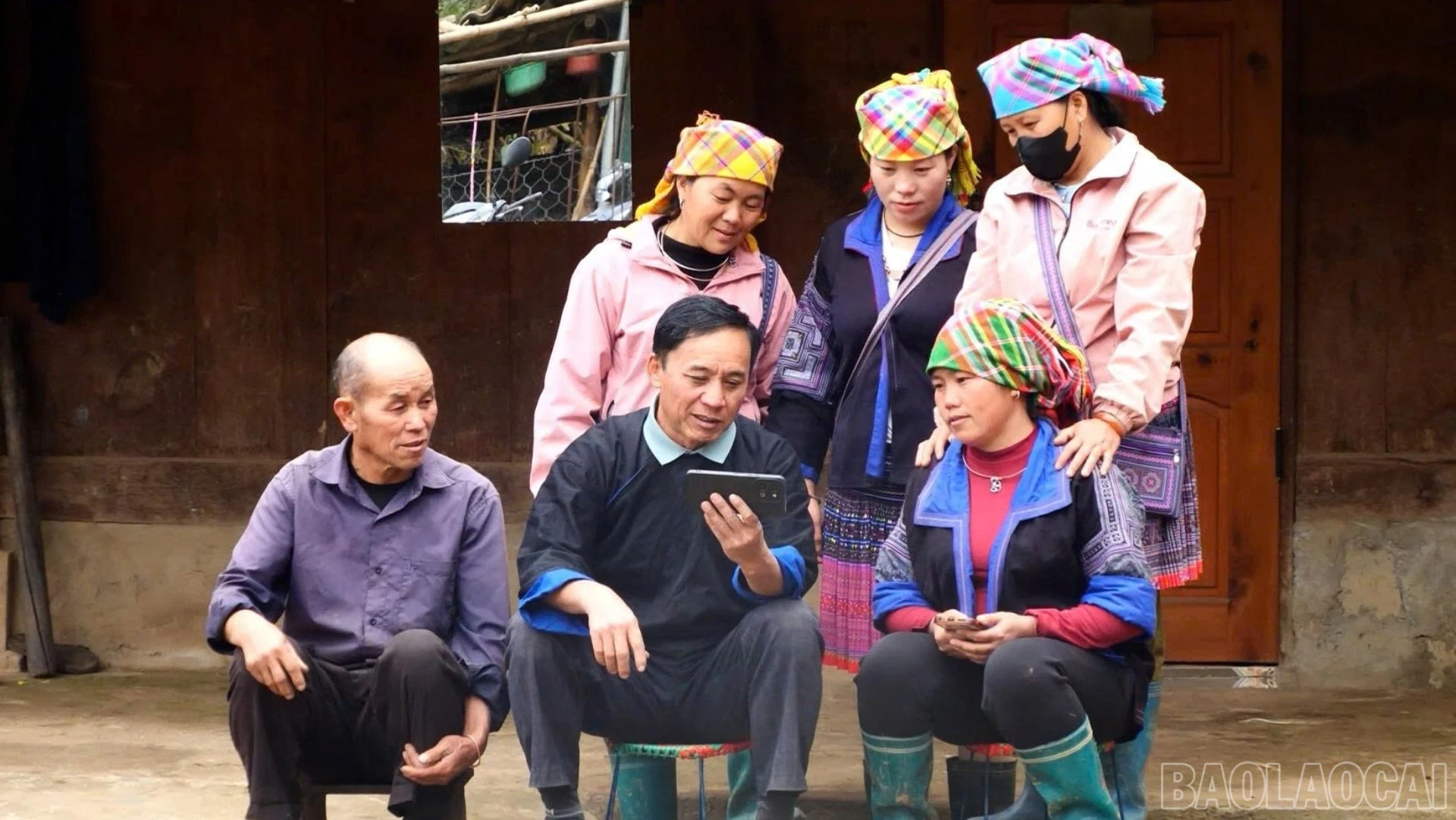
With the involvement of "digital natives" as a bridge, the gap between technology and the people is gradually narrowed; people are no longer hesitant but proactively learn, apply, and share, thereby gradually forming a habit of using technology in daily life and improving their quality of life.
Based on initial results, many localities have clearly demonstrated their determination to implement the "Digital Citizen" model effectively and practically, linking it to socio -economic development and administrative reform at the grassroots level. Building a core force will not only serve immediate needs but also create a long-term foundation for the formation of a digital government.
Mr. Nguyen Duy Khiem, Chairman of the People's Committee of Yen Binh commune, emphasized: "We recognize that 'digital villagers' are a very important force in the digital transformation process in the locality. With this force acting as a bridge, policies and guidelines on digital transformation will reach the people faster and more easily. This will contribute to improving the efficiency of management and administration at the local level, aiming towards successfully building a 'digital village' and a 'digital commune' model in the locality."
With a systematic and practical approach, the "Digital Citizen" model in Lao Cai is gradually proving its effectiveness, thereby contributing to the formation of a sustainable digital transformation foundation at the grassroots level. When each citizen becomes a "digital citizen," actively participating in the digital environment, the goal of building a digital government and a digital society will gradually become a reality.
Source: https://baolaocai.vn/nguoi-ban-so-cau-noi-chuyen-doi-so-o-co-so-post899444.html






































































































Comment (0)