

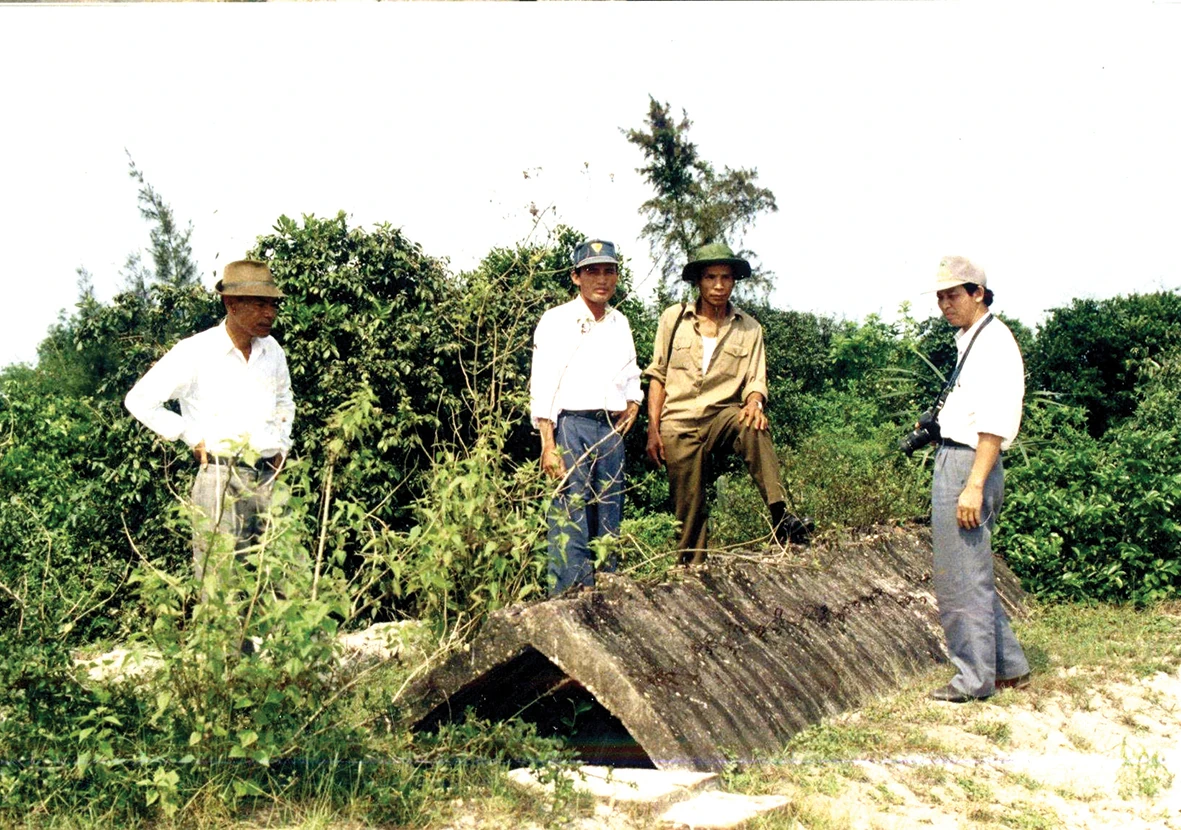
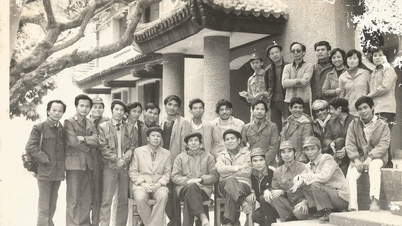
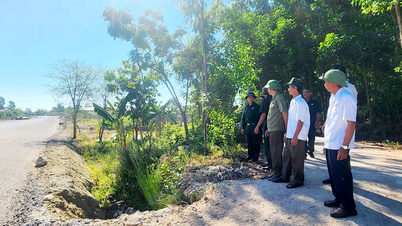
Veterans of the 320B Division visit their old battlefield - Photo: Archival.
Memories of a bygone era
During the 1972-1973 war, the Eastern Front was tasked with defending the outer perimeter of the eastern part of Quang Tri Citadel, where the main forces of the 64th Regiment, 48th Regiment, 320B Division, combined with local troops and militia forces to form a "steel shield" blocking the enemy's advance.
Colonel, Associate Professor, Doctor Tran Ngoc Long, former Deputy Director of the Vietnam Military History Institute, stated: Although it was a coordinating front, the Eastern Front became the main battlefield in the 81-day and 81-night Quang Tri Citadel campaign and continued afterwards when our main forces withdrew from the citadel.
The Eastern Front launched deep penetration attacks against enemy forces, aiming to wear down and destroy enemy troops, and prevent the expansion of the 147th, 158th, and 369th Marine Brigades; the 20th Tank Regiment, along with maximum support from the modern US-puppet navy and air force, which landed from Cua Viet and advanced from My Chanh.
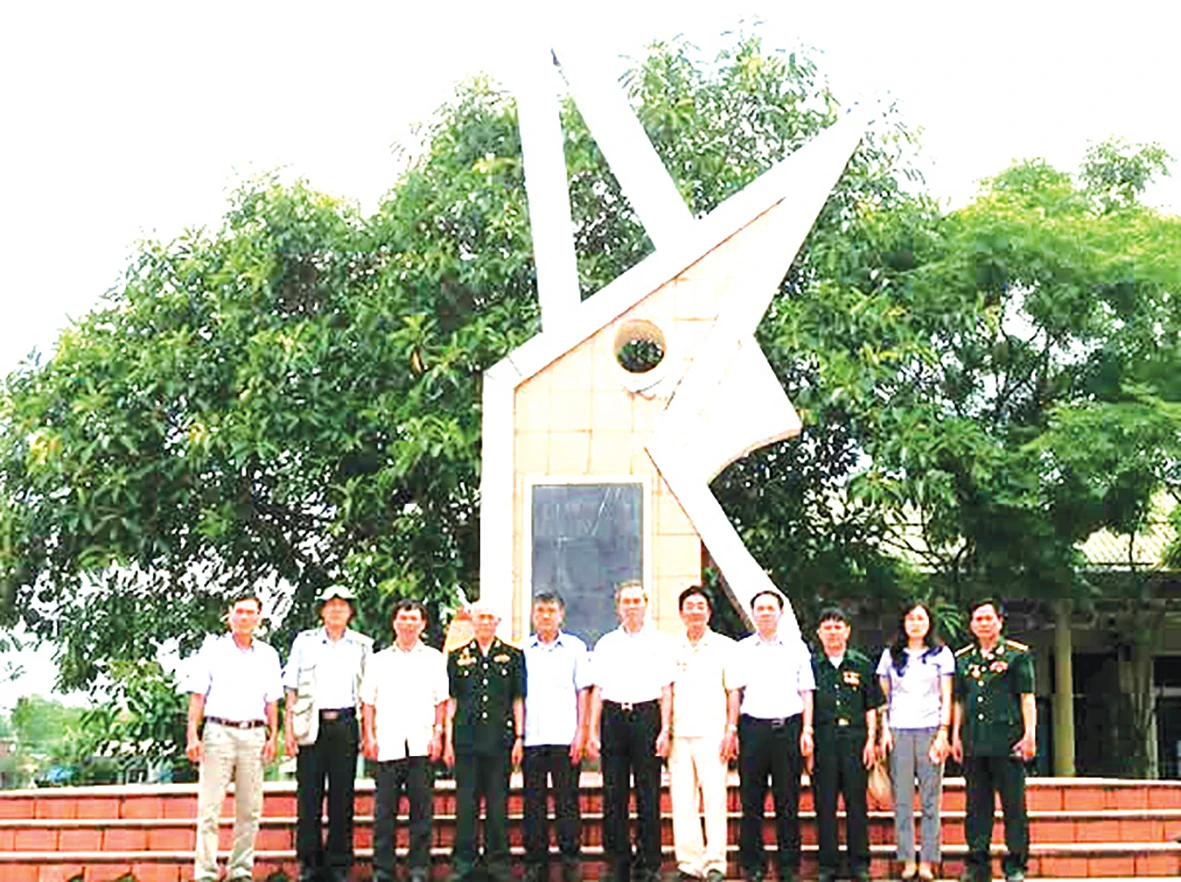
Journalist Dao Duy Muoi (second from the left) at Long Quang Checkpoint in 2019 - Photo: Archival.
Journalist Dao Duy Muoi enlisted in May 1971, having just graduated from 10th grade and received a decision to study at Hanoi Medical University. After training, in June 1972, recruit Dao Duy Muoi and his comrades marched south as part of Company 7, Battalion 8, Regiment 64, Division 320B. After two months of marching along the Ho Chi Minh Trail, in August 1972, the unit occupied the Eastern Front, joining the people of Trieu Phong in confronting the US-backed forces attempting to retake Quang Tri.
Journalist Dao Duy Muoi recalled: “On the Eastern Front at that time, enemy bombs and bullets rained down incessantly, so there were almost no trees left, only sand and more sand. We ate and slept on the sand day and night, holding our ground and fighting the enemy. The peak of revolutionary heroism and the ferocity of the war was in Trieu Trach commune.”
When mentioning Trieu Trach, one must talk about Long Quang Outpost. In 1972, amidst the dense sand dunes riddled with bomb craters, strangely enough, a tree with three branches still stood proudly in the middle of the white sand dunes. Soldiers and locals called it the Three-Branch Tree. The image of the Three-Branch Tree became a symbol of the strong and miraculous vitality of the land and people here...
From July 1972 to January 1973, fierce battles took place on Ba Chạc Hill between the South Vietnamese Marine Corps and the 64th and 48th Regiments of the 320B Division, as well as local troops from the province and districts, and militia and guerrilla forces from Triệu Trạch commune. Our forces eliminated thousands of enemy soldiers, dozens of tanks and armored vehicles, and many other war materials.
In Trieu Trach, journalist Dao Duy Muoi revisited Ba Chac Hill and Long Quang Outpost. Mentioning Long Quang Outpost, journalist Dao Duy Muoi recalled Mr. Phan Tu Ky, the Trieu Trach commune militia commander from 1972-1975. At Long Quang Outpost, under Mr. Ky's skillful command, the Trieu Trach militia and guerrilla forces organized 84 battles, including 17 joint combat operations with main army units, firmly defending Long Quang Outpost and the Eastern Front.
The Long Quang National Special Historical Monument, inaugurated on April 24, 2022, stands strong and proudly against the blue sky. Nearby, the Trieu Trach Martyrs' Cemetery has been upgraded and is more spacious thanks to the contributions of veterans of the 320B Division who fought on the Eastern Front and in the Quang Tri battlefield, following the call of journalist Dao Duy Muoi. The Long Quang National Special Historical Site is a tribute from the living to their fallen comrades, becoming an immortal witness to a time of war and fire, daily observing the harmony and peace of the land, and the transformation of the homeland on the path of renewal, integration, and development. |
Journey of Gratitude
During his visits back to the old battlefields, the first person journalist and former soldier of the Citadel, Dao Duy Muoi, frequently met was Mr. Ky. “I remember on the morning of January 28, 1973, when the fighting on the Eastern Front had temporarily ceased, my unit and I emerged from the bunker at Long Quang Bau Ban outpost and saw a man carrying an AK rifle, his face tanned, but most striking were his eyes—bright, deep, and resolute. That was Mr. Phan Tu Ky,” journalist Dao Duy Muoi recalled his first meeting with Mr. Ky.
Later, when they reunited, the two men reminisced about the wartime years. They understood that on the Eastern Front, throughout the South Cua Viet area or the Long Quang outpost, the seamless coordination between the main army, local troops, and guerrilla militia was the miraculous strength that led to victory. In the midst of war, revolutionary heroism and the sacred camaraderie were etched into every place name and village name in Quang Tri.
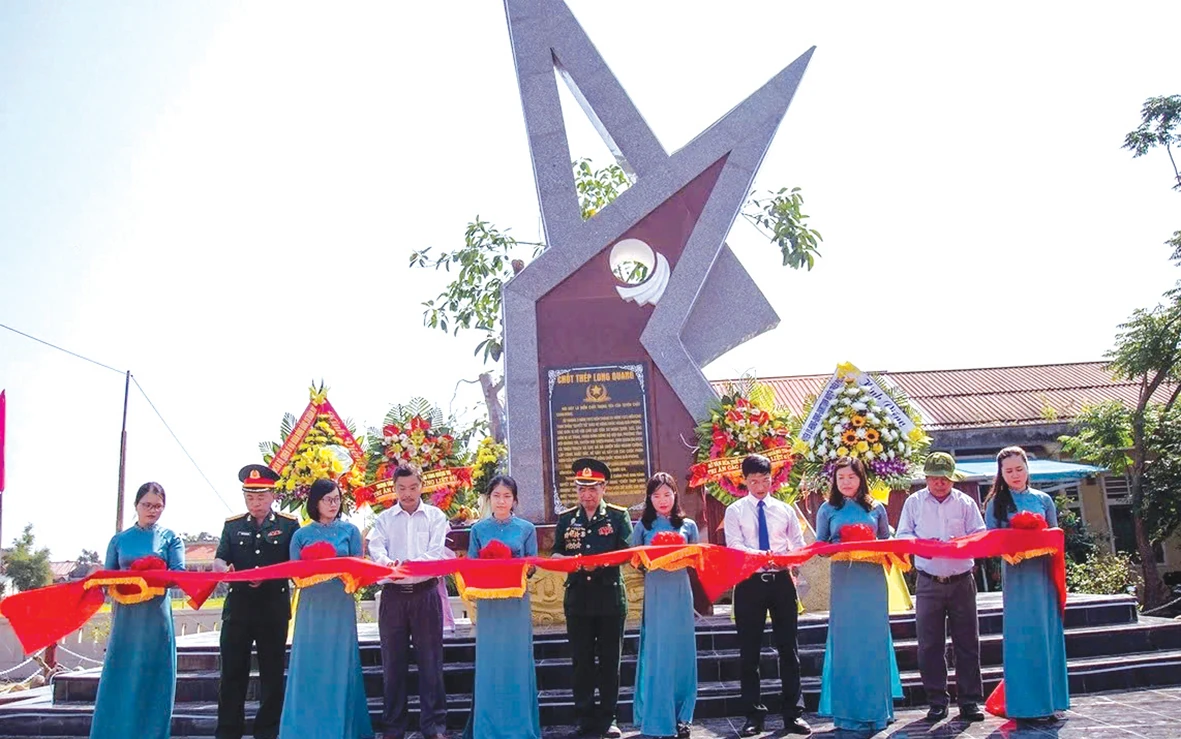
Inauguration ceremony of the special national historical site "Long Quang Steel Fortress" - Photo: Archival.
On subsequent visits to Trieu Trach commune and the Eastern Front, Long Quang outpost, journalist Dao Duy Muoi never met Phan Tu Ky again. The "barefoot, iron-willed" guerrilla fighter of yesteryear had passed away, joining his comrades and ancestors... leaving an unfillable void in the heart of journalist Dao Duy Muoi.
In 1977, journalist Dao Duy Muoi returned to his old battlefield for the first time, visiting Trieu Trach commune and Long Quang outpost, where he had once lived, fought, and been cared for and protected by the people. From here, his journey of gratitude began.
In 2019, journalist Dao Duy Muoi decided to launch an appeal to philanthropists, comrades, fellow soldiers, and people nationwide to contribute funds to repair the Long Quang Post, a special national historical site, and the Trieu Trach Martyrs' Cemetery, the resting place of nearly 1,000 soldiers who fought on the Eastern Front, making it more dignified and worthy of its historical significance.
“Upon returning from Quang Tri, I shared my idea with Colonel Hoang Diep, former Battalion Commander of Battalion 8, Regiment 64, Division 320B, and my direct superior at Long Quang Outpost. Colonel Hoang Diep was moved and said: 'Muoi, go ahead and launch a fundraising campaign to upgrade the historical site of Long Quang Outpost, to make it worthy of the blood and sacrifices our comrades made here,'” journalist Dao Duy Muoi recalled.
Ngo Thanh Long
Source: https://baoquangtri.vn/nguoi-ve-chot-thep-long-quang-196379.htm














![[Photo] Reception to welcome General Secretary and President To Lam and his wife on their State visit to the Philippines](https://vphoto.vietnam.vn/thumb/1200x675/vietnam/resource/IMAGE/2026/06/01/1780295488620_vna-potal-chieu-dai-chao-mung-tong-bi-thu-chu-tich-nuoc-to-lam-va-phu-nhan-tham-cap-nha-nuoc-toi-philippines-8798060-7855-jpg.webp)







































Comment (0)