

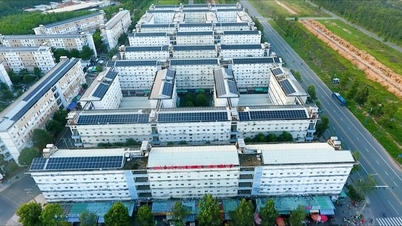
Meanwhile, the demand for affordable housing is growing. This raises a thought-provoking question: Does home ownership necessarily equate to secure housing? And is it time to recognize rental housing as a crucial pillar in urban welfare and development policies?
In reality, there are still quite a few obstacles related to the development of rental housing. First, most people still think about buying a house. Many still believe that rent is a lost expense. Second, developing housing for sale is always much more attractive than renting, which is often described as "investing a large sum and receiving small returns." Low profit margins, long payback periods, and numerous risks in the operation process make most businesses hesitant to enter this segment.
However, viewing social housing for rent solely from a business perspective overlooks the broader significance of this policy. A city struggles to maintain competitiveness if its workforce, which generates value for the economy , cannot access suitable housing or must dedicate a large portion of their income to housing costs. As housing prices increasingly exceed the affordability of the majority, rental housing is no longer simply an option in the real estate market but has become a requirement of urban development policy.
If a sufficiently large rental housing fund is not established soon, urban areas will continue to face the problem of spontaneous lodging, pressure on social infrastructure, difficulties in attracting and retaining labor, and thus affect the quality of long-term growth.
From that perspective, developing rental housing not only addresses immediate housing needs but also represents an investment in the future of the city and the economy.
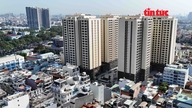
To develop rental housing in a meaningful way, a change in policy mindset is needed first. While social housing for sale helps people gradually build assets, rental housing should be defined as a component of social welfare infrastructure, similar to schools, hospitals, or public transportation. This type of infrastructure contributes to ensuring quality of life, maintaining human resources, and enhancing the competitiveness of urban areas.
Based on this understanding, the State needs to play a leading role in establishing a fund for long-term rental housing. Besides encouraging businesses to invest, it is necessary to consider allocating a portion of the budget and public land to develop rental housing projects in industrial parks, high-tech zones, satellite cities, and areas with a high concentration of workers.
For the private sector, it is necessary to develop an attractive incentive package for rental housing projects, including access to clean land, exemption from land use fees, support for land clearance, long-term preferential credit with stable interest rates, and appropriate tax exemptions and reductions. The goal is to narrow the investment efficiency gap between housing for sale and housing for rent.
Another important solution is to establish a risk-sharing mechanism between the State and businesses. Agencies, trade unions, or businesses with a large workforce could sign long-term lease contracts for a portion of their rental housing fund to provide accommodation for workers. This would both ensure high occupancy rates and create a stable demand for the project.
Furthermore, Hanoi could consider piloting the establishment of a Rental Housing Development Fund to create land reserves, invest in construction, or contribute capital to businesses developing long-term rental housing projects. If operated effectively, this could serve as a model for many other localities.
Alongside investment solutions, it is necessary to gradually build a more professional, transparent, and stable rental market. Tenants need to have their rights protected through long-term contracts, appropriate rental price management mechanisms, and consistent operational quality.

Home ownership remains a legitimate aspiration. But in the new context, it is more important that all citizens have access to housing that suits their economic circumstances. And to achieve that goal, rental housing needs to be properly positioned in the national housing development strategy: an essential pillar of social security, contributing to building more sustainable and inclusive cities.
Source: https://hanoimoi.vn/nha-o-cho-thue-tru-cot-an-sinh-1158909.html






















































![[Video] Sunset at Lap An Lagoon – Where the sun sets over the fishing nets](https://vphoto.vietnam.vn/thumb/1200x675/vietnam/resource/IMAGE/2026/05/31/1780192137701_beach-landscape-sea-water-nature-grass-745871-pxhere-com.jpeg)




































Comment (0)