

Russia's recent approval of a revised nuclear doctrine, which lowers the nuclear strike threshold and expands the scope of countries and military alliances subject to deterrence, has provoked diverse reactions from various nations.
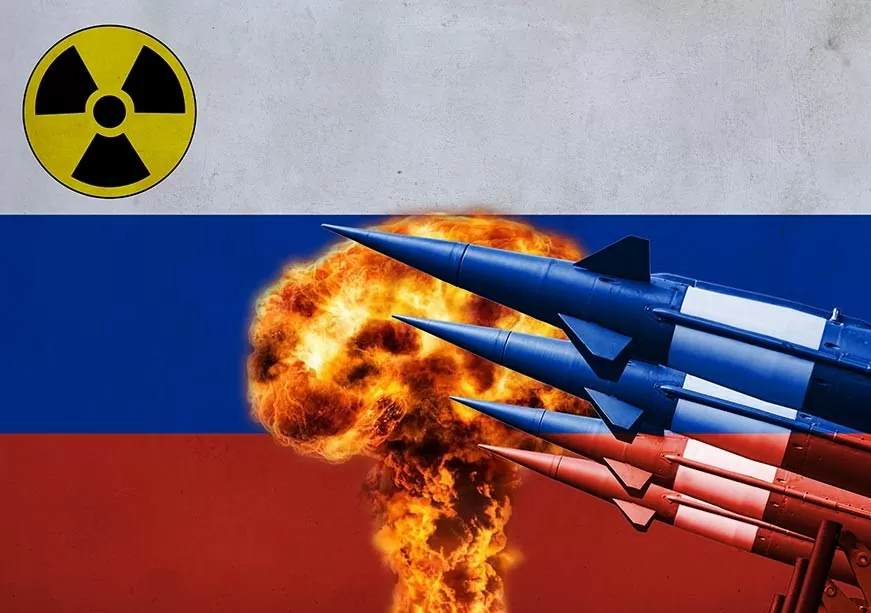 |
| Russia's revised nuclear doctrine has provoked mixed reactions internationally. (Source: Getty Images) |
According to Sputnik news agency, on November 20, Japanese Chief Cabinet Secretary Hayashi Yoshimasa said that Tokyo is closely monitoring trends in Russia amid changes in its nuclear doctrine, noting that it is worrying that "Russia had previously hinted at the use of nuclear weapons in connection with the Ukraine conflict."
Mr. Hayashi stated: "Japan is the only country that has suffered from nuclear weapons and believes there should be no threat from such weapons, much less their use."
According to Japanese officials, Tokyo has conveyed this position to Moscow at every opportunity, has also called for it along with the international community, and "intends to continue to do so."
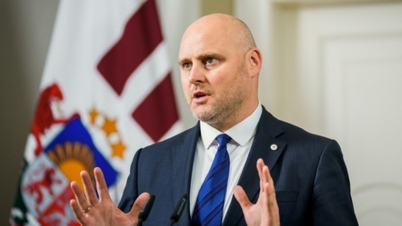
Meanwhile, in an interview with France 2 television channel on the same day, French Foreign Minister Jean-Noel Barrot emphasized that Russian President Vladimir Putin's decision to lower the nuclear strike threshold was merely "words" and "does not threaten us."
The United States and the European Union (EU) have also reacted to Russia's new nuclear doctrine.
On the Chinese side, the country called on all parties to remain "calm and restrained" following Moscow's move and to cooperate through dialogue to reduce tensions and strategic risks.
According to AFP , Chinese Foreign Ministry spokesman Lin Jian said that Beijing's position remains to encourage all parties to de-escalate the situation and resolve the Ukraine crisis through political means, while affirming that the Northeast Asian nation will continue to play a constructive role in the matter.
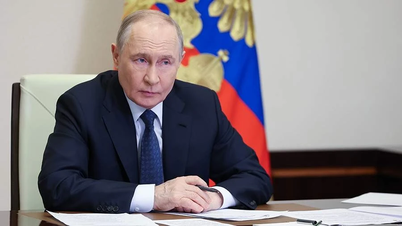
On November 19, Russian President Vladimir Putin signed a decree approving the State Policy Platform in the Field of Nuclear Deterrence, the country's updated nuclear doctrine. The fundamental principle of the doctrine considers the use of nuclear weapons as a last resort to protect national sovereignty .
The emergence of new military threats and risks has prompted Russia to clarify the conditions for the use of nuclear weapons. Specifically, the revised doctrine expands the scope of states and military alliances subject to nuclear deterrence, as well as the list of military threats that this deterrence is directed towards.
Furthermore, the document states that Russia will now consider any attack by a non-nuclear state supported by a nuclear power as a joint attack.
Moscow also reserves the right to consider a nuclear response to a conventional weapons attack threatening its sovereignty, large-scale attacks by enemy aircraft, missiles and drones on Russian territory, violations of Russian borders, and attacks on its ally Belarus.
Regarding this doctrine, on the same day, November 19th, Kremlin spokesman Dmitry Peskov stated that it is a very important document that "requires in-depth analysis both domestically and perhaps abroad."
Source: https://baoquocte.vn/nga-tung-hoc-thuyet-hat-nhan-nhat-ban-canh-giac-phap-noi-chang-doa-duoc-chung-toi-294435.html





































![[Video] Sunset at Lap An Lagoon – Where the sun sets over the fishing nets](https://vphoto.vietnam.vn/thumb/1200x675/vietnam/resource/IMAGE/2026/05/31/1780192137701_beach-landscape-sea-water-nature-grass-745871-pxhere-com.jpeg)





























Comment (0)