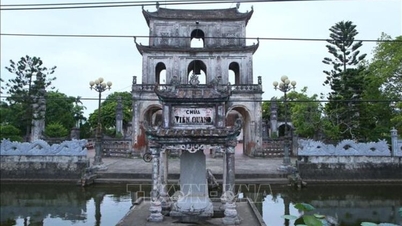
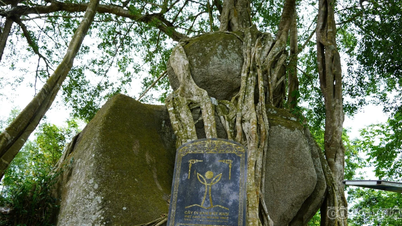
Thanh Hoa City boasts numerous unique historical and cultural relics and traditional festivals that have been preserved and promoted by its people for generations. In recent years, thanks to attention paid to the restoration, preservation, and promotion of the value of these relics, many spiritual destinations in the city have increasingly affirmed their appeal to tourists, especially during the New Year.
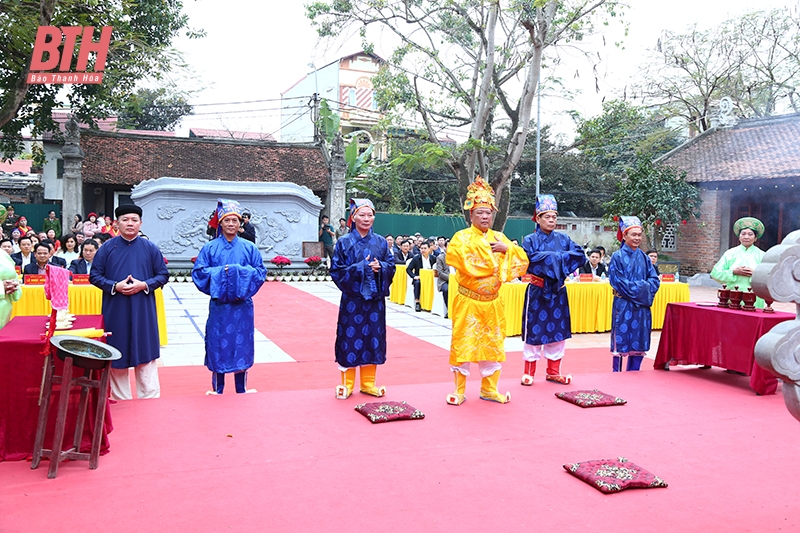
Bao An Pagoda in Dai Ly village, Thieu Van commune, is a popular tourist destination. According to historical records, the pagoda was built during the Ly Dynasty. In 1886, during the Ba Dinh Uprising, the pagoda became a gathering place for patriotic writers who responded to the Can Vuong (Support the King) decree, resulting in the destruction of many parts of the pagoda by the French. It was restored in 1905 and again in 2001 with the addition of three front halls and three rear halls. In 2005, Bao An Pagoda was recognized as a provincial-level historical and cultural relic.


Venerable Thich Ban Tue, abbot of Bao An Pagoda, said: During holidays and festivals, the pagoda attracts a large number of locals and tourists who come to worship and admire the scenery. To promote and preserve the historical and cultural values of the pagoda, every year on the 10th day of the first lunar month, Thieu Van commune cooperates with the Thanh Hoa City Buddhist Association to organize a festival with traditional rituals and cultural activities, aiming to pray for a year of favorable weather and peaceful lives for the people.
The Ancestral Temple of the Later Le Dynasty, located in Dong Ve ward, has long been a popular destination for locals and tourists seeking to pay homage and express gratitude to their ancestors. According to various documents, the history of the Later Le Dynasty's Ancestral Temple dates back to 1805, when King Gia Long moved it from Thang Long to Bo Ve (now Dong Ve ward, Thanh Hoa City) to worship the emperors and empresses of the Le Dynasty. The Ancestral Temple consists of a ceremonial gate, courtyard, front hall, and rear hall. Over its centuries of existence, the temple has undergone numerous renovations. Since being recognized as a National Historical, Cultural, and Architectural Monument in 1995, the State has allocated significant resources to its restoration and preservation, resulting in its current appearance.
Every year, to commemorate the contributions of the Later Le Dynasty kings and to educate the younger generation about the nation's historical traditions, Thanh Hoa City organizes the Later Le Dynasty Royal Temple Festival at the beginning of spring. The festival features many traditional rituals such as: offering sacrifices at the temple, offering incense to show respect and gratitude to King Le Thai To, the revered emperors, empresses, princes, and court officials of the Later Le Dynasty who made great contributions to the country and its people. The festival includes many lively activities such as wrestling, card games, chess, martial arts, and a procession of the words "Peace and Prosperity Under Heaven"... The Later Le Dynasty Royal Temple always attracts a large number of people and tourists to visit and pay their respects.
In addition, over the years, Thanh Hoa City has prioritized resources for the restoration and preservation of many historical sites in the area. This has not only contributed to preserving and promoting the value of cultural heritage and serving the religious and spiritual needs of the people, but also helped create spiritual tourism destinations in the city, attracting many tourists to visit and worship.


Text and photos: Nguyen Dat
Source: https://baothanhhoa.vn/tp-thanh-hoa-nhieu-diem-den-nbsp-tam-linh-hut-khach-241810.htm
![[Image] National conference summarizing one year of operation of the overall organizational model of the political system, the three-tiered government model.](https://vphoto.vietnam.vn/thumb/1200x675/vietnam/resource/IMAGE/2026/07/01/1782882811691_ndo_br_1-jpg.webp)