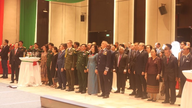
A historic highlight of this conference is the announcement of the Hanoi Capital City Master Plan with a vision extending to 100 years. The conference will serve as a direct bridge between the city government and the investment community, business associations, and diplomatic agencies.
It is expected that at the meeting, many investment policy decisions and investment registration certificates will be directly awarded. Memorandums of Understanding (MOUs) between Hanoi and international organizations and major enterprises will also be signed, affirming investors' confidence in the new institutional system.
In fact, to achieve double-digit growth in 2026, Hanoi has identified a total social investment capital of 730 trillion VND that needs to be mobilized. This capital will be mobilized from various sources including the state budget, foreign direct investment (FDI), and private investment, with the goal of transforming Hanoi into a smart, green, and modern city.
According to projections, the total social development investment capital needed by the capital city for the period 2026-2030 is approximately 3.4 million billion VND. Of this, about 2.6 million billion VND will need to be mobilized from the private sector. Development investment capital from the state budget is expected to be only 715 trillion VND.

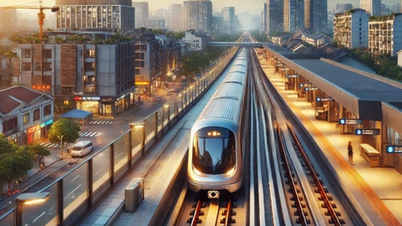
On June 15, 2026, the Hanoi People's Council officially approved a Resolution stipulating the attraction of strategic investors in the capital city. Accordingly, Hanoi prioritizes attracting non-budgetary capital into 17 key sectors requiring very large investment capital: urban railways, high technology, urban development (social housing projects for rent, smart ecological urban areas, urban space development north of the Red River), green economy and environment (wastewater treatment projects, renewable energy, etc.).
Experts assess that Hanoi is undergoing a significant shift in its investment attraction strategy. Instead of rolling out the red carpet for every project, the capital city prioritizes capital in core technologies, large-scale infrastructure, green urban development, and service industries to create sustainable growth momentum for the new phase.
Hanoi's investment attraction strategy has undergone a fundamental change. The city is committed to attracting selective investments, adhering closely to Resolution No. 50-NQ/TW of the Politburo. Priority projects must meet the following criteria: high technology, environmental protection, contribution to national defense and security, and ensuring social welfare for the people.
To match the stringent requirements, Hanoi has also introduced unprecedentedly attractive incentive packages. Strategic investors will benefit from policies that exempt or reduce land and water surface lease fees depending on specific priority sectors as stipulated in the 2026 Capital City Law. Notably, Hanoi allows investors to choose to apply the highest level of incentive if the project simultaneously meets multiple different incentive conditions.
Furthermore, Hanoi also supports the private sector in five key industries (cultural industry, healthcare, education and training, logistics, and high-tech agriculture) to create breakthroughs in the capital's development. Investment projects in these fields, when meeting specific criteria (progress, technology transfer, commitment to social contribution), will enjoy the highest preferential mechanisms regarding taxes, land rent, and administrative procedures according to the Law on the Capital City.

Source: https://daidoanket.vn/nhieu-dot-pha-trong-thu-hut-dau-tu.html
![[Image] Ho Chi Minh City: Ma Lang area, Chicken-Rice Market about to change its appearance](https://vphoto.vietnam.vn/thumb/1200x675/vietnam/resource/IMAGE/2026/06/25/1782377698627_ndo_br_m1-jpg.webp)
![[Image] Schools organize meetings and introduce teaching models to students admitted to grade 10.](https://vphoto.vietnam.vn/thumb/1200x675/vietnam/resource/IMAGE/2026/06/25/1782368077271_ndo_br_z7970052192242-1ec8daeb77a6eed1a4e9f58c564ddd3e-jpg.webp)

![[Photo] General Secretary and President To Lam receives Palestinian Ambassador Saadi Salama](https://vphoto.vietnam.vn/thumb/1200x675/vietnam/resource/IMAGE/2026/06/25/1782365384740_a1-bnd-9423-8322-jpg.webp)