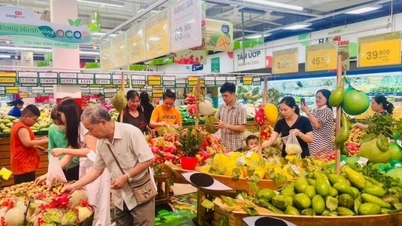
In Vietnam, the rapid development of various forms of community sports in recent years also shows a similar trend: sports are being promoted by social needs. This also forms the basis for the formation of a market and opens up opportunities for the sports economy .
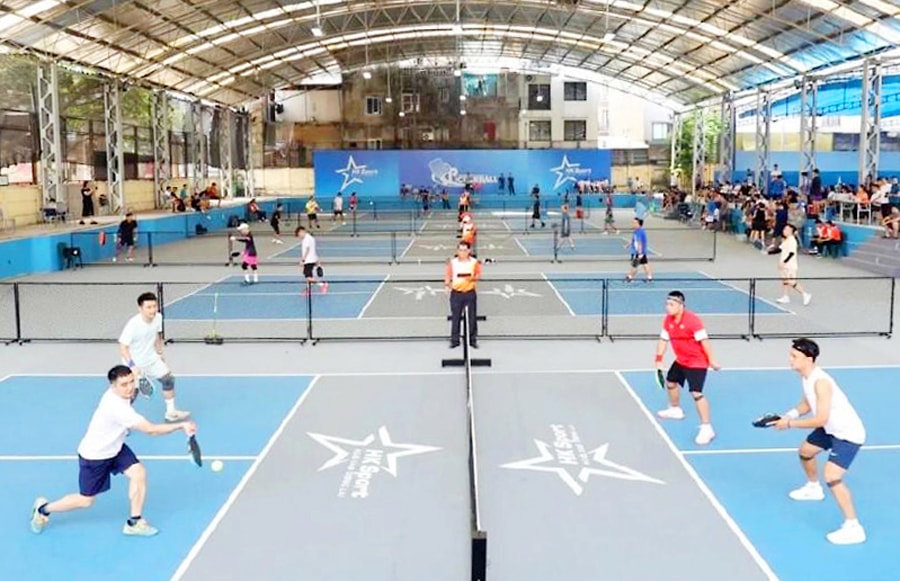
A new rhythm of movement driven by societal needs.
From approximately 15 million players worldwide in 2020, padel has surpassed 35 million players by 2025 and is present in over 130 countries and territories. Similar trends are clearly emerging in Vietnam. Alongside traditional sports, many physical activities stemming from the need for health training, social interaction, and entertainment are rapidly developing, especially in large cities.
Pickleball is a prime example. According to the “State of Play in Asia 2025” report, conducted by UPA Asia in collaboration with market research firm YouGov and involving over 14,000 people across 12 Asian markets, Vietnam leads the region in pickleball awareness. Approximately 37% of those surveyed stated they had played the sport at least once.
The rapidly increasing number of players has led to the emergence of more and more tournaments. In 2026, Hanoi and Da Nang were chosen to host the stages of the PPA Tour Asia – the region's leading professional pickleball tournament system. Many athletes who started in tennis, such as Ly Hoang Nam, Trinh Linh Giang, and Phuc Huynh, quickly made their mark on international pickleball tournaments.
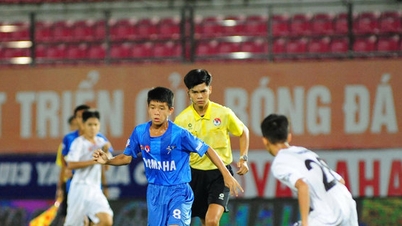
This trend isn't limited to pickleball. Seven-a-side football, which originated from the community's need to play the game, has now developed into a nationwide league system.



Speaking at the recent launch ceremony for the 13th season, Deputy Director of the Vietnam Sports Department (Ministry of Culture, Sports and Tourism) Nguyen Hong Minh assessed this as a typical model of sports socialization. He also acknowledged that 7-a-side football has formed its own ecosystem, from rules of play and tournament organization to media coverage and the player transfer market.
In many localities, community running events, cycling competitions, and outdoor sports activities are continuously increasing in number, attracting thousands of participants and gradually becoming annual events. According to statistics from the Vietnamese sports sector, by 2025, the percentage of people regularly participating in physical exercise and sports will reach 38.2% of the population, equivalent to nearly 40 million people. This figure shows that the demand for participation in sports activities in the community has expanded significantly compared to the past.
The economic value is not commensurate.
According to a report published at the Vietnam Sports Economic Forum 2026, Vietnam's sports economy currently accounts for only about 0.3% of its Gross Domestic Product (GDP), equivalent to $1-1.5 billion. This figure is considered modest compared to a population of over 100 million people, in the context of rising average incomes, urbanization, and a growing middle class. In other words, Vietnam has a large base of sports participants, but the economic value generated from this system is still not commensurate.
In many rapidly developing grassroots sports, market elements have begun to take shape. 7-a-side football is a prime example of the commercialization potential of grassroots sports. After more than a decade, the Vietnam 7-a-side Football Championship (VPL) has evolved from a community playground into a chain of activities that generate economic value, from brand sponsorship and venue exploitation to tournament organization services and digital media.
A similar trend is unfolding with pickleball, running, golf, and padel. According to Metric.vn, in the first six months of 2025, Vietnamese consumers spent 510.6 billion VND on pickleball-related products. It is projected that spending on pickleball will continue to increase in 2026, along with the expansion of clubs, coaches, tournaments, and related services.
This chain of demand not only generates consumer revenue but is also gradually forming a market structure for sports. VTVcab General Director Bui Huy Nam believes that a more systematic approach to sports economics is needed; otherwise, Vietnam may miss out on a great opportunity in this field.



From an international perspective, Cho Heon Jae, Chairman of the Korea Sports Promotion Foundation and former Vice Minister of Culture, Sports and Tourism of South Korea, believes that Vietnam has many favorable conditions for developing its sports economy thanks to its young population, expanding consumer market, and increasing interest in sports.
However, there is still a gap between potential and reality. Sports infrastructure is not yet synchronized, there is a shortage of management personnel, and mechanisms to attract investment are not yet attractive... Nevertheless, what is happening with pickleball, 7-a-side football, running, and community sports models shows a clear trend: When the need for exercise becomes a social need, sports not only create health and mental value, but also form a market, create jobs, and attract investment. This is the foundation for the development of the sports economy in the coming period.
Source: https://hanoimoi.vn/nhieu-du-dia-phat-trien-kinh-te-the-thao-1159439.html