

The Ho Chi Minh City Real Estate Association (HoREA) has issued a document regarding the State Bank of Vietnam's (SBV) affirmation that it does not restrict the rights of organizations and individuals to purchase housing under construction in Circular No. 22/2023/TT-NHNN (amending and supplementing some articles of Circular No. 41/2016/TT-NHNN).
Many misunderstandings still remain.
Accordingly, HoREA believes that although Circular 22 has initially helped reassure buyers of off-plan properties, its "legal obstacles" still remain.
Specifically: Point a, Clause 11, Article 2 of Circular 41/2016/TT-NHNN (amended and supplemented by Clause 1, Article 1 of Circular 22/2023/TT-NHNN) only stipulates that it applies to commercial housing that has been "completed for handover," i.e., commercial housing that is "ready-made," but does not include cases of borrowing credit to purchase commercial housing that is "not yet completed for handover," i.e., commercial housing that is "under construction."
According to HoREA, the concept of "completed houses ready for handover" cannot be interpreted to include "houses under construction" that commercial banks would accept as collateral for loans to purchase those houses.
Furthermore, the State Bank of Vietnam's announcement confirms that "Circular 41/2016/TT-NHNN, which regulates the capital adequacy ratio of commercial banks and branches of the State Bank of Vietnam, is not a document guiding the credit granting operations of credit institutions."
However, in reality, Circular 41 (amended and supplemented by Clause 1, Article 1 of Circular 22/2023/TT-NHNN) contains legal provisions unrelated to "regulations on capital adequacy ratios of commercial banks and branches of the State Bank of Vietnam," but rather related to "credit granting operations of credit institutions."
Specifically, Clause 11 of Article 2 stipulates "loans secured by real estate for individuals to purchase houses that meet the conditions," similar to the regulations in the State Bank of Vietnam's circulars "guiding credit granting operations of credit institutions."
" The Association believes that if Circular 41 only stipulates 'the capital adequacy ratio of commercial banks and branches of the State Bank of Vietnam,' then there is no need for legal regulations specifying 'the conditions' for 'mortgage loans secured by real estate for individuals to purchase houses' in Clause 11, Article 2, because there are already circulars from the State Bank of Vietnam guiding credit granting operations of credit institutions ," the HoREA document stated.
Furthermore, according to HoREA, the recent document "Some information related to regulations on capital adequacy ratios for banks and branches of foreign banks" issued by the State Bank of Vietnam is not a "legal normative document" like circulars, and therefore only has value in providing information.
Meanwhile, banks and branches of foreign banks must base their credit granting operations on the Law on Credit Institutions and Circulars of the State Bank of Vietnam.
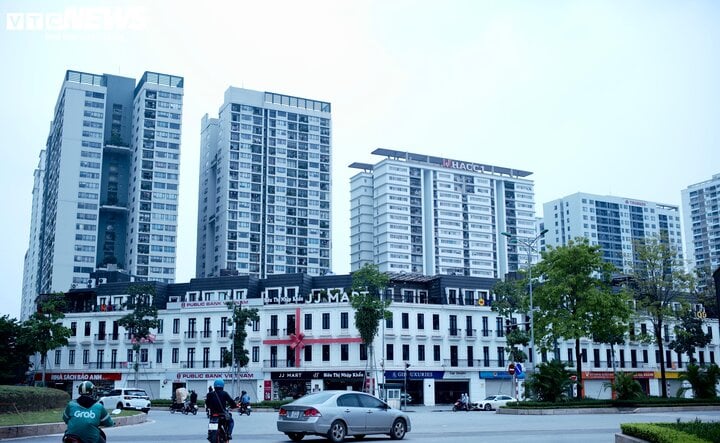
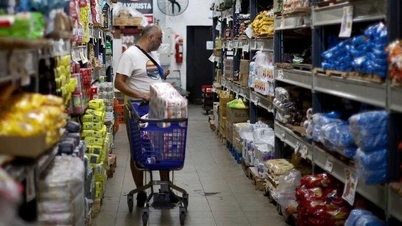
Mortgage loans secured by properties under construction are facing difficulties. (Illustrative image: Cong Hieu)
The circular needs to be amended and supplemented clearly.
In light of the above difficulties, HoREA believes that before Circular No. 22/2023/TT-NHNN takes effect on July 1, 2024, it needs to be amended and supplemented soon to support the real estate market in its recovery and development process in a transparent, safe, healthy, and sustainable manner. At the same time, it should create conditions for credit institutions to approve loans for individuals to purchase "commercial housing under construction" secured (mortgaged) by the house itself.
Many other experts also agree that the State Bank of Vietnam needs to amend the circular to ensure clear and transparent legal basis, instead of merely announcing information and responding to public opinion.
Dr. Le Dang Doanh, former Director of the Central Institute for Economic Management Research, believes that borrowing and lending should comply with credit laws, and the State Bank of Vietnam should provide clear written guidelines. Before the circular is issued, these guidelines should be released so that relevant parties can provide feedback, thus avoiding misunderstandings and unnecessary debates.
Associate Professor Dr. Dinh Trong Thinh stated that not prohibiting loans for purchasing houses under construction is necessary. However, since the State Bank of Vietnam has not yet issued a legally binding document on this matter, commercial banks need to improve their appraisal and self-appraisal capabilities to make informed decisions.
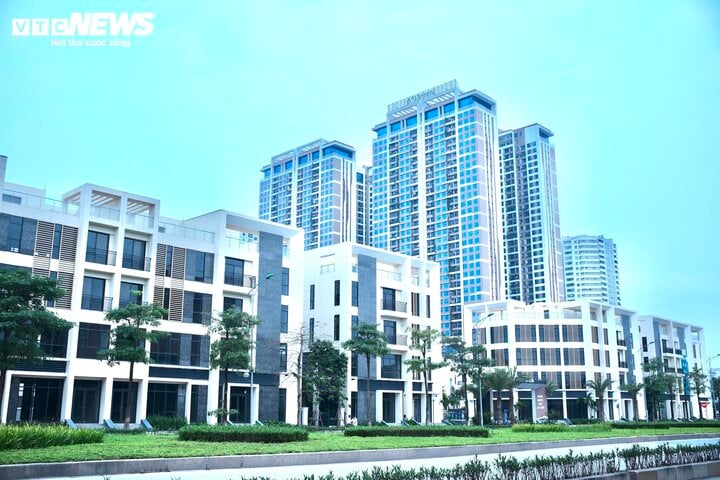
Experts suggest that the circular on loans for purchasing houses under construction needs clarification. (Illustrative image)
Another economic expert analyzed: " Credit institutions usually comply with decrees and circulars issued by the State Bank of Vietnam with clear legal value. If Circular 22 does not clarify the concepts, it will cause misunderstanding, confusion, and doubt among businesses and individuals, while credit institutions will be hesitant, and may even be reluctant to lend."
If the State Bank of Vietnam has not prohibited lending for future home purchases, then it should take action to legalize this to ease difficulties for all parties after the circular comes into effect ."
Representatives from many real estate businesses also expressed confusion regarding the new regulations. The leader of a Hanoi- based company stated: “If the State Bank of Vietnam doesn’t clearly define these regulations, we have no legal basis to conduct transactions with banks. In the current context of limited access to credit, amending and clarifying the circular to protect businesses is essential.”
In a recent statement, the State Bank of Vietnam affirmed that the new regulations do not restrict the rights of buyers of future-built housing and are not contrary to existing regulations.
"The condition that the house is completed according to the house sale contract only applies to home mortgage loans (which are subject to a lower risk weighting compared to other real estate-secured receivables)."
In cases where organizations or individuals need to build or purchase housing under construction and mortgage this housing under construction, it will fall under the category of loans secured by real estate as stipulated in Clause 10, Article 2 of Circular 41 and the corresponding risk coefficient will be applied as stipulated in Clause 10, Article 9 of Circular 41.
Specifically, organizations and individuals wishing to purchase a house and secure (mortgage) this future-built house will apply a risk weighting of 30-120% depending on the loan-to-value ratio (LTV), calculated as the ratio of the loan balance to the value of the collateral. In cases where the LTV ratio is unavailable, the risk weighting will be 150%.
Cong Hieu
Source

![[Photo] National Assembly Chairman Tran Thanh Man working with the Standing Committee of the National Assembly's Ethnic Council](https://vphoto.vietnam.vn/thumb/1200x675/vietnam/resource/IMAGE/2026/05/21/1779337435930_ndo_br_1-jpg.webp)



![[Image] "Journey of Hope" promotes the organ and tissue donation movement in Vietnam.](https://vphoto.vietnam.vn/thumb/1200x675/vietnam/resource/IMAGE/2026/05/20/1779294400833_1-8910-jpg.webp)























































































Comment (0)