

Numerous pressures exist in the management of monetary policy.
In the early months of 2026, the global economic and financial landscape continued to be complex. Geopolitical tensions, particularly escalating military conflicts in the Middle East, exerted significant pressure on international commodity and financial markets. Brent crude oil prices maintained an upward trend, raising the risk of renewed inflation in many major economies. In response to this, major central banks around the world, such as the Fed, ECB, and BOE, maintained cautious policies and kept interest rates unchanged in their early-year meetings. Some central banks, such as those in Australia, Ireland, and the Philippines, even raised interest rates in the first four months of 2026.
Meanwhile, the market is also anticipating a potential interest rate hike by the Bank of Japan in June to control inflation. The US dollar has strengthened significantly again amid increased demand for safe-haven assets, putting pressure on exchange rates, interest rates, and the domestic money market. According to assessments, the risk of cost-push inflation from external sources is creating significant challenges for the State Bank of Vietnam's monetary policy management, given the high degree of openness of the Vietnamese economy .
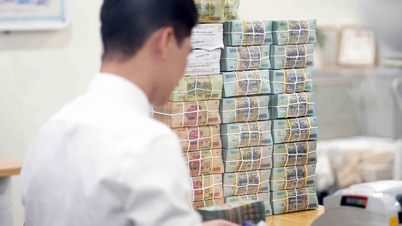
Domestically, to support businesses and boost economic growth, the Government and the State Bank of Vietnam continue to steadfastly pursue the goal of reducing lending interest rates. However, maintaining low interest rates is facing significant pressure as credit growth is outpacing deposit growth. Statistics show that outstanding credit has now exceeded 19 trillion VND, while deposits are only around 18 trillion VND. This has put many commercial banks under localized liquidity pressure, forcing them to increase deposit interest rates to attract funds. At times, the actual interest rate for large deposits or long-term deposits has been pushed up to 8-9% per year.
 |
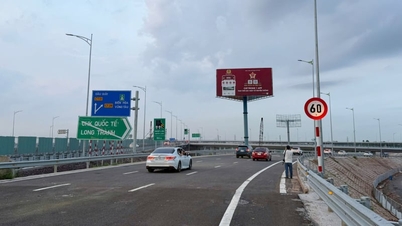
| There are many pressures on managing monetary policy. |
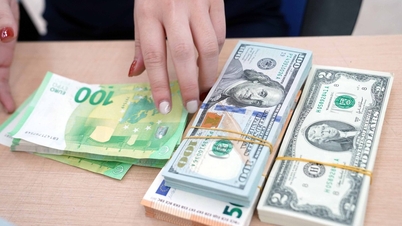
Analysts suggest that if deposit interest rates rise freely, the cost of capital will increase, pushing lending interest rates up and creating difficulties for businesses and the economy. Furthermore, if VND interest rates fall too sharply, the interest rate differential between VND and USD could narrow, potentially leading individuals and businesses to increase their holdings of USD, putting pressure on the exchange rate and capital flows.
Against this backdrop, Mr. Pham Chi Quang, Director of the Monetary Policy Department of the State Bank of Vietnam, stated that many synchronized solutions have been implemented to support liquidity and create conditions for reducing lending interest rates. According to the Director of the Monetary Policy Department, interest rates are one of the important components that make up the operating costs of businesses. Reducing lending interest rates will contribute to improving the competitiveness of businesses as well as the entire economy.
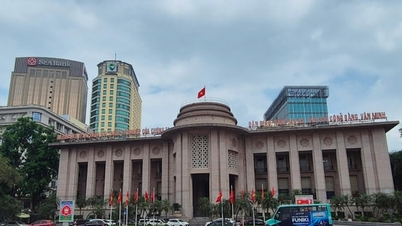
Therefore, from 2023 to the present, the State Bank of Vietnam (SBV) has continued to maintain the same policy interest rates to facilitate credit institutions' access to capital from the SBV at low cost to support the economy. From the beginning of 2026 to the present, when interest rates in the market showed signs of overheating, the SBV has implemented many measures to support liquidity through open market operations and other policy tools.
Specifically, the State Bank of Vietnam (SBV) injected a large amount of money to support system liquidity through open market operations, extending loan terms to two months instead of just one or two weeks previously. In addition, the SBV also implemented foreign exchange swaps to provide additional VND-denominated liquidity support to credit institutions. Thanks to these measures, system liquidity was absolutely secure, interbank interest rates cooled down, and this positive impact spread to the retail market.
At the same time, the State Bank of Vietnam (SBV) continuously issued documents to rectify capital mobilization activities and required credit institutions to stabilize interest rates. Specifically, in Circular No. 2342/NHNN-CSTT, the SBV requested credit institutions and branches of foreign banks to implement solutions to stabilize market interest rates, contributing to maintaining monetary stability.
Subsequently, on April 9, 2026, the State Bank of Vietnam (SBV) held a meeting with commercial banks to agree on the implementation of a policy to reduce interest rates to support businesses and individuals. At the meeting, the SBV requested banks to reduce deposit interest rates for new transactions with maturities of 6 months or more; and simultaneously reduce listed deposit interest rates and lending interest rates to increase access to capital for the economy.
Following the meeting, many commercial banks proactively implemented interest rate reductions. In April 2026, market interest rates continuously trended downwards. By April 20, 2026, the average deposit interest rate for new transactions was 6.01%/year, a decrease of 0.21%/year compared to the previous period; the average lending interest rate for new transactions was 8.38%/year, a decrease of 0.44%/year.
However, in recent days, there have been isolated cases of some credit institutions not strictly adhering to the State Bank of Vietnam's directives and adjusting interest rates upwards again. The reason is believed to stem from the fact that credit growth is outpacing deposit growth, forcing some banks to intensify deposit mobilization to ensure liquidity.
In response to market developments, to strengthen market discipline and decisively implement the policy of reducing interest rates to support economic growth, the State Bank of Vietnam (SBV) issued Official Letter No. 3972/NHNN-CSTT dated May 14, 2026, directing SBV branches in various regions (SBV Regional Branches) to inspect commercial bank branches in their areas regarding the implementation of the SBV Governor's directive on reducing interest rates. Most recently, on May 21, 2026, the SBV further issued Official Letter No. 4190/NHNN-CSTT directing SBV Regional Branches to hold meetings with commercial bank branches in their areas to require and ensure that commercial bank branches strictly implement the SBV Governor's directive in Notice No. 117/TB-NHNN dated April 10, 2026, on reducing interest rates. Simultaneously, the State Bank of Vietnam (SBV) directed regional SBV branches to focus on strengthening inspections of commercial banks' interest rate reductions and strictly handle any violations. Currently, regional SBV branches are reviewing banks with deposit and lending interest rates higher than the general average to conduct specialized inspections. At the same time, the SBV inspectorate in each region is also required to implement interest rate inspections as part of its 2026 inspection plan to strengthen supervision of the policy of reducing interest rates across the entire system.
This move by the regulatory authority once again affirms its determination to crack down on the "quiet" increase in interest rates at some commercial banks recently and aims to stabilize market interest rates to support businesses and individuals.
However, according to experts, objectively speaking, in the context of complex and unpredictable global economic and geopolitical developments, and with a highly open economy like Vietnam's, the State Bank of Vietnam is facing an extremely challenging task in managing monetary policy.
Creating more capital space and reducing liquidity pressure on banks.
Besides administrative measures and enhanced market inspections, the State Bank of Vietnam (SBV) is also simultaneously implementing various technical solutions to support liquidity and create more capital space for the banking system. Notably, Circular 08/2026, effective from May 15, 2026, has adjusted some regulations related to the calculation of the capital adequacy ratio and the loan-to-deposit ratio (LDR).
Besides administrative measures and enhanced market inspections, the State Bank of Vietnam (SBV) has also implemented numerous technical solutions to support liquidity and create more capital space for the banking system. Notably, Circular 08/2026, effective from May 15, 2026, allows credit institutions to include 20% of the State Treasury's time deposit balance in the total deposit component when calculating the LDR (loan-to-deposit ratio), instead of having to completely eliminate it as previously planned.
According to analysts, Circular 08 is considered a significant liquidity support measure for the banking system, especially for state-owned banks. Allowing the inclusion of 20% of the State Treasury's time deposits in the deposit component when calculating the LDR ratio gives banks more room for credit growth without needing to aggressively raise capital at high interest rates as before, thereby contributing to reducing pressure on deposit interest rate competition and supporting the stability of interest rates in the market.
Assessing the impact of this policy, MBS believes that the new regulations will significantly increase lending capacity for state-owned banks, while reducing short-term liquidity pressure. SSI Research also believes that state-owned commercial banks will benefit more significantly due to their unique characteristic of holding a large portion of State Treasury deposits. According to SSI Research, the impact at the system-wide level is not too large, equivalent to about 0.6% of outstanding credit, but for state-owned banks, the support could be equivalent to about 1.4-2% of outstanding credit.
According to analysts' calculations, with a loan-to-deposit ratio ceiling of 85%, adding a portion of the State Treasury's time deposits to the LDR denominator could create additional lending capacity of up to tens of trillions of dong, thereby supporting improved liquidity and promoting capital flows into the economy.
These measures demonstrate that the State Bank of Vietnam (SBV) is pursuing the goal of stabilizing interest rates not only through administrative measures but also by flexibly combining operational tools and providing liquidity support to the banking system. In the coming period, the SBV stated that it will continue to closely monitor the developments in deposit and lending interest rates in the market and of each credit institution, and the publication of lending interest rates on the websites of credit institutions to implement timely policies and measures to ensure that credit institutions strictly comply with the directive to reduce interest rates. At the same time, the SBV will implement appropriate monetary policy solutions, be ready to support liquidity for the credit institution system; strengthen inspection, examination, and supervision of the implementation of interest rate reduction by credit institutions in accordance with the policies and directives of the Government, the Prime Minister, and the SBV; and promptly detect and strictly handle violations by credit institutions.
From a business perspective, Mr. Nguyen Van Than, a National Assembly representative and Chairman of the Vietnam Association of Small and Medium Enterprises (VINASME), believes that the issue of interest rates should be viewed through the lens of market mechanisms and the specific characteristics of the banking system, rather than solely focusing on reducing interest rates through administrative measures. According to Mr. Than, the State already has many support mechanisms such as the Small and Medium Enterprise Development Fund, the Technology Innovation Fund, and the Credit Guarantee Fund. However, accessing these support resources remains difficult in practice. Therefore, he proposes a more comprehensive solution from the Government and regulatory agencies to remove obstacles to accessing credit for SMEs, instead of focusing solely on reducing interest rates.
Furthermore, many experts also believe that to reduce pressure on the banking system and create a foundation for sustainable interest rate stability, more comprehensive solutions are needed to develop Vietnam's capital market. This should focus on facilitating the flow of medium and long-term capital, rather than solely on bank credit, thereby promoting sustainable economic growth. Strategic priorities include: improving institutions, increasing information transparency, attracting more institutional investors, and upgrading the stock market...
Source: https://thoibaonganhang.vn/nhnn-quyet-tam-ha-nhiet-lai-suat-182451.html



































































































Comment (0)