


1/ When the Exhibition Hall was established, I wasn't there yet.
During the French colonial period, the Exhibition Hall was the largest exhibition center in Northern Vietnam, planned and built by the French in Hanoi starting in 1887. The only remaining traces of this area today are photographs. From 1902, it displayed natural or handcrafted products from what was then Northern Vietnam.
That's what I heard from my grandmother – and she told a lot because she lived during that era. That's what I heard from my mother – she told fewer stories, but they were more interesting because she knew French and knew a lot of things. Later, I read books and only knew vaguely. I only know that back then, for Vietnamese people, the Exhibition Hall was very big and very unusual…
2/ Then there was the People's Theatre. Back then, Tran Quoc Toan Street only intersected with Tran Binh Trong Street. A high wall formed a three-way intersection, and behind it stood the People's Theatre. It was a theatre for the masses. It was one of the largest outdoor performance venues in the capital at that time. Tickets to see performances at the theatre were cheap. Back then, my mother only gave me 20 cents for breakfast, enough to eat sticky rice, and I would leisurely eat it while walking on the deserted sidewalk on my way to school. By skipping breakfast and eating a little less – just 10 cents worth of some cheap pastry – I could save up enough money to buy a ticket to the theatre. Sometimes, adults even gave me invitations to go see performances.
There were so many – domestic performing arts troupes, and art troupes from fraternal socialist countries came and performed. Tickets and invitations always stated – one person, no children allowed, remember to bring a raincoat. That's how it was during those difficult times!
That people's theater, in the truest sense of the word, served the masses. All the audience seats were outdoors, so if it rained and you didn't have a raincoat, you'd get soaked. It was fun; if it started raining, the performance would continue while the audience huddled under their raincoats. The rain and wind were relentless. Sometimes, a few people sharing a piece of plastic sheeting would get caught, and even if they quickly grabbed onto it, they'd still get wet. But it didn't matter. The show was good and fun, so we didn't worry about getting wet. Sometimes, the rain was so heavy that the performance had to stop. People rushed home, happy and cheerful, without a complaint. Yet, our generation was fortunate enough to see classic Vietnamese theatrical performances here, such as "The Kremlin Clock," "The Island of Venus," and others. Some sections of the seating were made of cement, others of wooden planks, creating empty spaces under the front rows. If you weren't careful and dropped your sandals or shoes, you'd wait until the show was over to search for them. If you couldn't find them, you'd just throw them away and go home barefoot. Back then, most people wore flip-flops or clogs. Seeing guys who had studied abroad riding motorbikes in the hot summer wearing shoes and socks was strange, easily recognizable, and even a little funny.
Walking down Tran Binh Trong street in the evenings, I would hear the lively singing and music emanating from the theater, filling my heart with excitement. Perhaps the 1960s, the wartime years, meant a lack of colorful outdoor stage lights; people could only listen to music on the radio, making them yearn for the lights and excitement of a stage. Was it the scarcity that fueled this longing? Thinking of the People's Theater meant connecting with art and music in the innocent way of my childhood. In today's terms, it was like watching a live performance.
3. The Vietnam-Soviet Friendship Labor Cultural Palace was built with assistance from the former Soviet Union on the site of the old People's Theatre. The main entrance faces Tran Hung Dao Street. Now, the exterior is frequently covered with billboards advertising musical performances by numerous stars. Does the music of these "stars" and the stage have become so "expensive" for so many people, whether intellectuals or manual laborers? Many musical and artistic programs, whether at the Vietnam-Soviet Friendship Labor Cultural Palace, the prestigious Hanoi Opera House, or the spacious My Dinh Stadium, are unattainable for many people.
The Exhibition Hall, the People's Theatre, the Vietnam-Soviet Friendship Labor Cultural Palace, also known as the Hanoi Friendship Cultural Palace... these physical structures have witnessed a long period of change based on moral values and lifestyles. Tastes and aesthetic sensibilities have also changed in the artistic and musical sensibilities of several generations of Hanoians... and change like the aging of each person. Knowing all this, I still wish – that one day – I could return to a People's Theatre where all music lovers could enjoy performances...
Source: https://nhandan.vn/nho-mot-thoi-nha-hat-nhan-dan-post308233.html
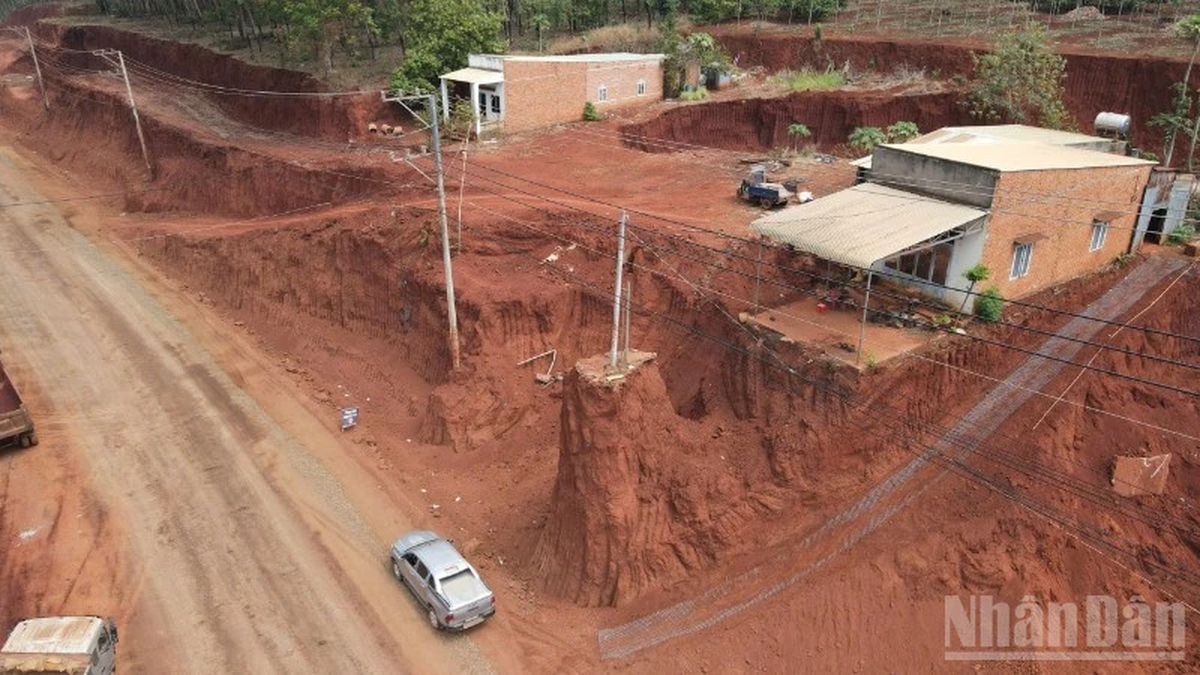
![[Image] Current situation of houses precariously balanced due to road leveling in Dong Nai.](https://vphoto.vietnam.vn/thumb/1200x675/vietnam/resource/IMAGE/2026/03/02/1772455749144_ndo_br_z7579763955585-6e80a60471e75768fa835d035eba45ea-6979-jpg.webp)





![[Podcast] Tran Temple Festival – A journey to discover the legacy of the heroic spirit of Dong A](https://vphoto.vietnam.vn/thumb/402x226/vietnam/resource/IMAGE/2026/03/03/1772500160354_720-jpg.webp)


![[Q&A] How is the number of electoral districts and the list of electoral districts determined?](https://vphoto.vietnam.vn/thumb/402x226/vietnam/resource/IMAGE/2026/02/25/1772009285637_bau-cu-212-jpg.webp)

























Comment (0)