Following the North-South Expressway towards the legendary Route 9 Khe Sanh, after an hour of customs procedures, we entered Laos in the late afternoon.
Nostalgic city
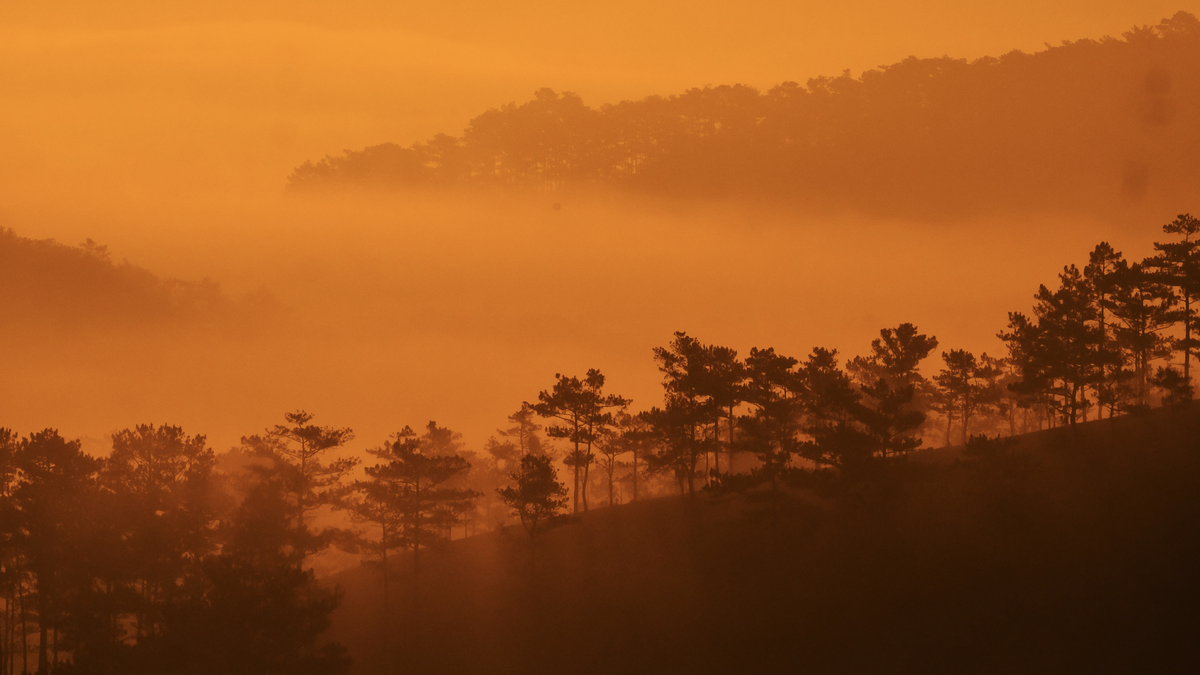
The sunlight spreads like a carpet of silvery mist, illuminating the villages and vast fields of trees and grass. Highway 9 Khe Sanh, a legendary and tragic place in the war, is now a bustling town. Cross-border trade is quite lively. Every day, hundreds of container trucks and passenger buses pass through the border crossing, bringing life to this remote border region.
The town of Khe Sanh borders Savannakhet (Laos). The history of these two regions is particularly intertwined. During the resistance war, it was an inseparable strategic location within the Ho Chi Minh Trail system. Today, as if by historical coincidence, these two places lie together on the East-West Economic Corridor, opening a major route to prosperity and well-being.
Late at night, we arrived in Sa Van. The city was unusually quiet. It seemed the locals usually went to bed early. Only a few shops were still lit up. We stopped at a late-night eatery. The food selection wasn't extensive, mostly local dishes that we'd never heard of before, except for the famous Lao beer.
Before being named after the first President of Laos, Kaysone Phomvihane, who was also a native of the region, in 2005, Sa Van was originally a cluster of small villages nestled around ancient temples. Thanks to its advantageous trading location on the Mekong River and its proximity to the sea through central Vietnam, the French chose it as the administrative center of the province when establishing their protectorate in Laos.
Therefore, Savannakhet bears the imprint of Western urban planning with wide, tree-lined grid streets running along the riverbank; and Indochinese architecture with a style that blends French nostalgia with East Asian identity. It should be added that, to operate the administrative apparatus and develop the economy in Laos, the French brought a large number of Vietnamese civil servants, craftsmen, and road workers to Savannakhet.
This has created an interesting blend of Vietnamese, Lao, and French cultures. Today, in Kaysone Phomvihane, you can easily find French-style sandwiches (Khao Jee) with pâté and Vietnamese sausage that are very similar to Vietnamese sandwiches, or popular breakfast dishes like pork offal porridge, pho, and rice rolls.
Speaking of the old Sa Van, or Kaysone Phomvihane today, is speaking of a town with a nostalgic and peaceful beauty, a blend of French architecture and ancient temples.
Learn Vietnamese in Savanakhet
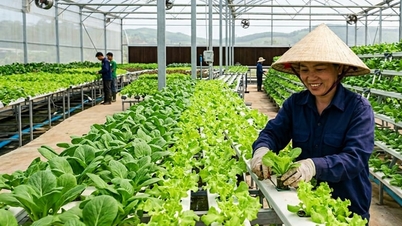
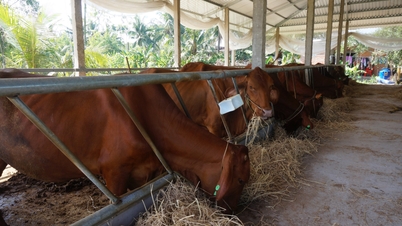
Savanakhet is the largest province, covering nearly 22,000 square kilometers, where the Mekong River flows, creating fertile fields. No wonder, from Lao Bao to Sa Van, we drove endlessly along winding roads amidst vast rice paddies. This is the rice-growing homeland of Laos, especially for its famous sticky rice and fragrant rice; the land of various fruits; and, in the future, vast cattle farms, bringing prosperity to the local people.



Interestingly, this route is also part of the East-West Economic Corridor, with Da Nang Port as its endpoint. Savanakhet is also a gateway for land trade connecting with Mukdahan province (Thailand) via the Thai-Lao Friendship Bridge; and with the Central Vietnam economic region and the Mekong sub-region countries. This is a vital link for Savanakhet in particular, and the South Central provinces of Laos in general, to reach out to the world .
In recent years, Savanakhet province has opened its doors to attract many investors. A notable example is the Savan-Seno Special Economic Zone, Laos' first special economic zone, established in 2003 as part of an effort to attract foreign investment and restructure the country's economy.
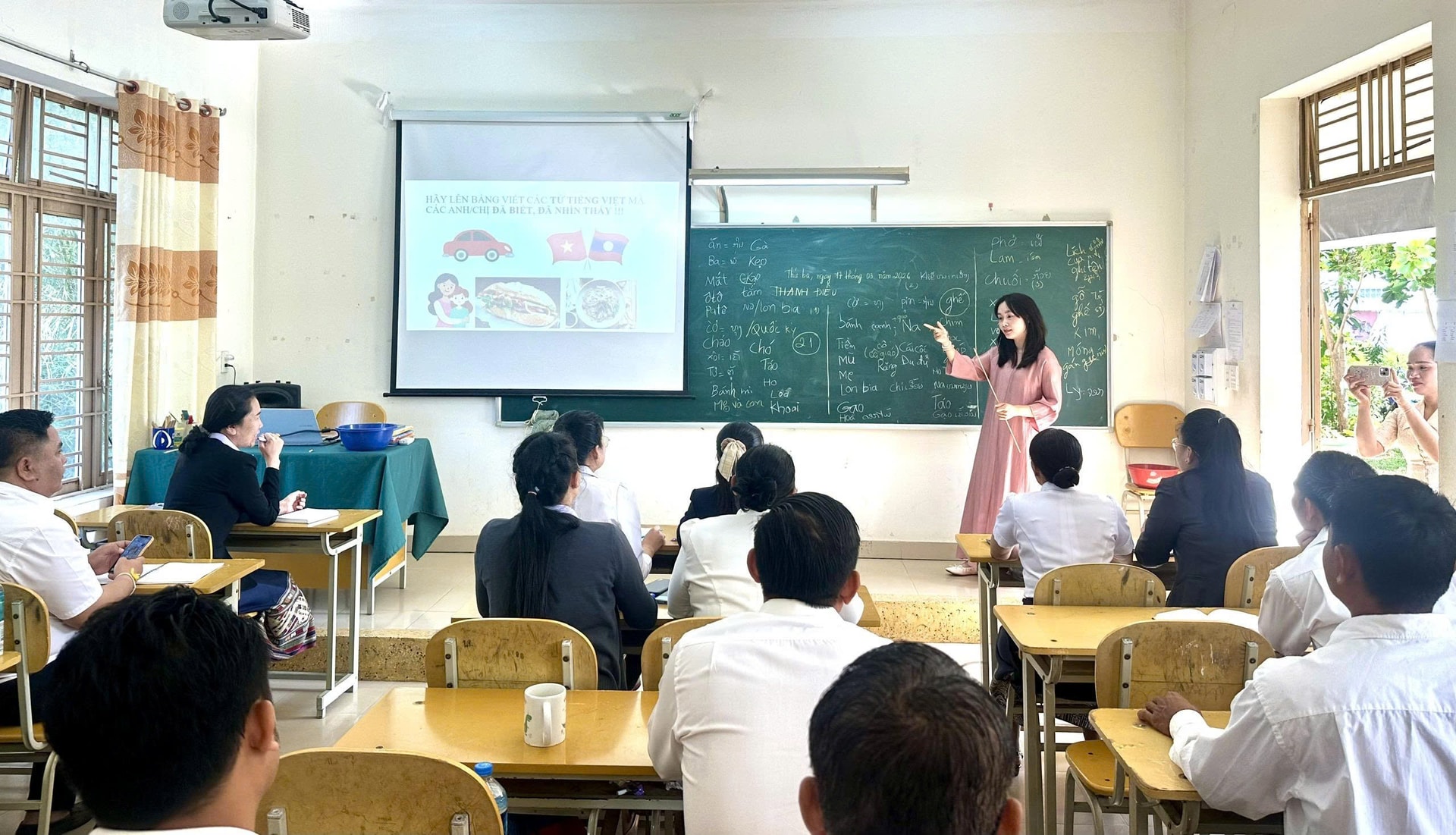
A testament to the special friendship between Da Nang city and Savanakhet province is the Savanakhet Vietnamese Language Training Center. Established in 2010, it serves as a Vietnamese language training center for students, officials, and foreigners living, studying, and working in Laos.
According to the center's director, Ms. Phouvilay Phimvongsa, the center currently has five classes, each with approximately 30 students. After each course, students are sent to Vietnam for internships. Da Nang City provides the teaching staff and fully funds the internship program.
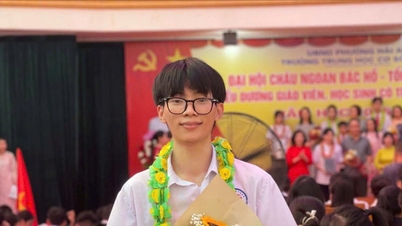
After graduating from Da Nang University of Education, Doan Thi Bao An volunteered to work as a Vietnamese language teacher here. Having been here for over a year, Bao An has integrated quite well into this peaceful land. Among the more than 120,000 residents of Kaysone Phomvihane city, the Vietnamese and Chinese communities are quite large, creating a diverse cultural landscape.
Savannakhet is known to have a complete higher education system, serving as a training center for the entire southern Lao provinces. Every year, a large number of Savannakhet students study in Vietnam on government scholarships, and vice versa.
The beauty of Pakse
Leaving Savanakhet, we arrived in Champasak. Unlike the peaceful Kaysone Phomvihane, Pakse welcomed us with the bustling atmosphere of a commercial city, its beauty shimmering when the city lights up at night.
Pakse is the capital of Champasak province. The history of this small city is closely linked to the Champasak lineage – one of the oldest centers of power in the region. Since 1975, Pakse has become the most bustling economic center in southern Laos thanks to its location connecting with Vietnam and Thailand.
Pakse in particular, and Champasak in general, is known as a charming land with a blend of the ancient charm of Indochinese architecture, the serene atmosphere of old temples and towers, and the expansive beauty of the majestic plateau.
The Bolaven Plateau is considered the "muse" of Southern Laos, encompassing many values in terms of nature, geology, economy, and culture. In the Lao language, Bolaven means "Land of the Laven people," one of the oldest ethnic minority groups to settle here.
With an average altitude of 1,000m to 1,350m, the Bolaven Plateau sits atop an ancient, extinct volcano crater spanning millions of years; it stretches from Champasak and Salavan to Sekong; boasting fertile red basalt soil and a cool climate year-round. This is also the origin of famous agricultural products, especially renowned coffee varieties such as Arabica and Robusta.
This area also boasts famous landmarks in Laos, such as the magnificent Tad Fane Twin Falls. Located amidst the pristine forest of the Dong Hua Sao National Park, the falls are situated where the Champi and Pak Koot streams cascade down into a deep gorge, creating a magical and breathtaking scene. Every year, this location attracts thousands of visitors from near and far who come to admire the scenery and experience the thrill of zip-lining.

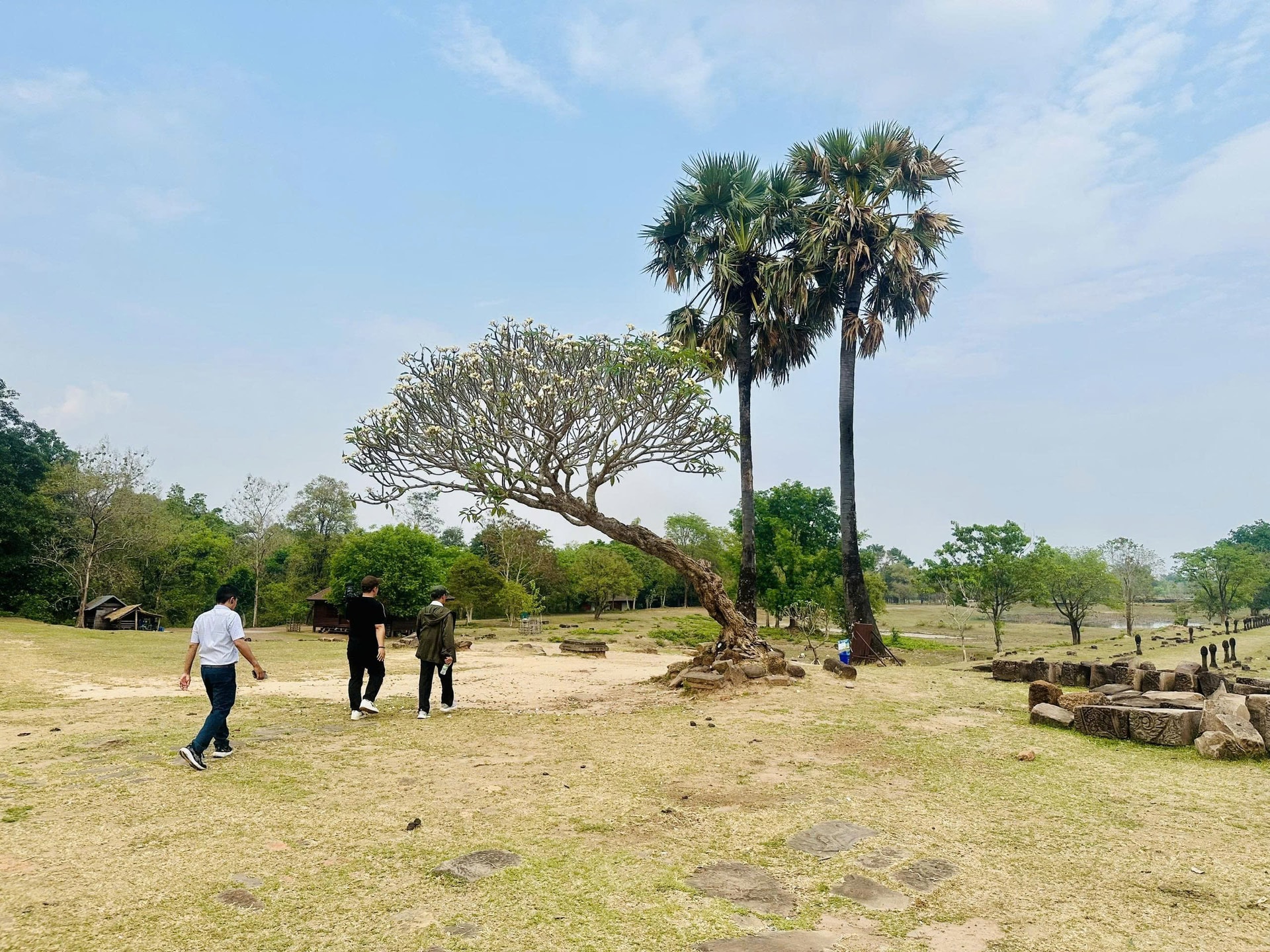
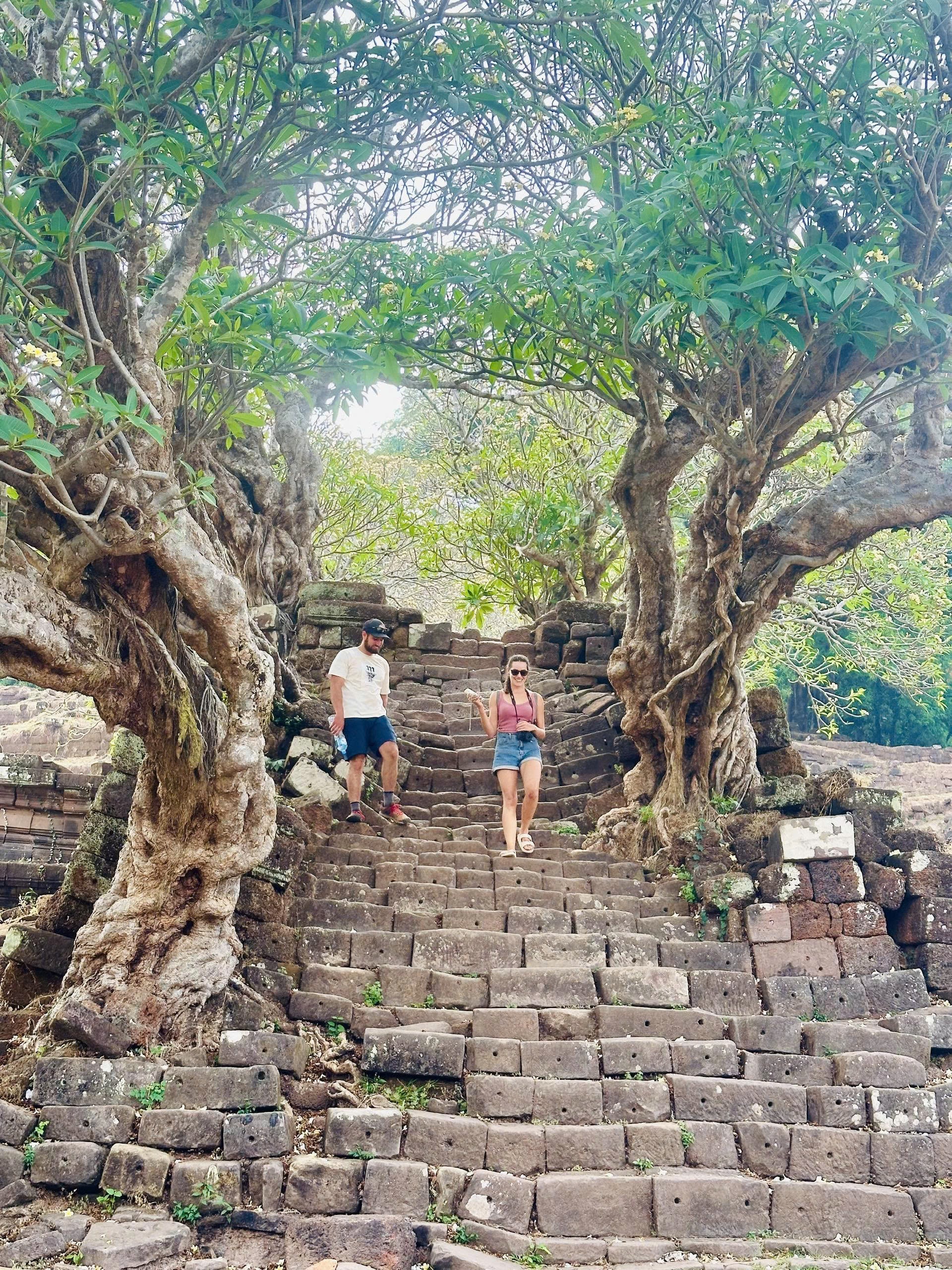
When visiting Champasak, you cannot miss the sacred and ancient Wat Phou temple complex. The ancient Wat Phou temple is the ultimate historical and spiritual symbol, the cradle of Khmer civilization, and is recognized by UNESCO as a World Cultural Heritage site.
Considered a major commercial center in South Central Laos, Champasak attracts a large and long-established Vietnamese and Chinese community. One can easily find Vietnamese signs, pho and beef noodle soup restaurants, and Vietnamese vendors in the markets. Beyond commerce and services, Champasak also actively promotes investment.
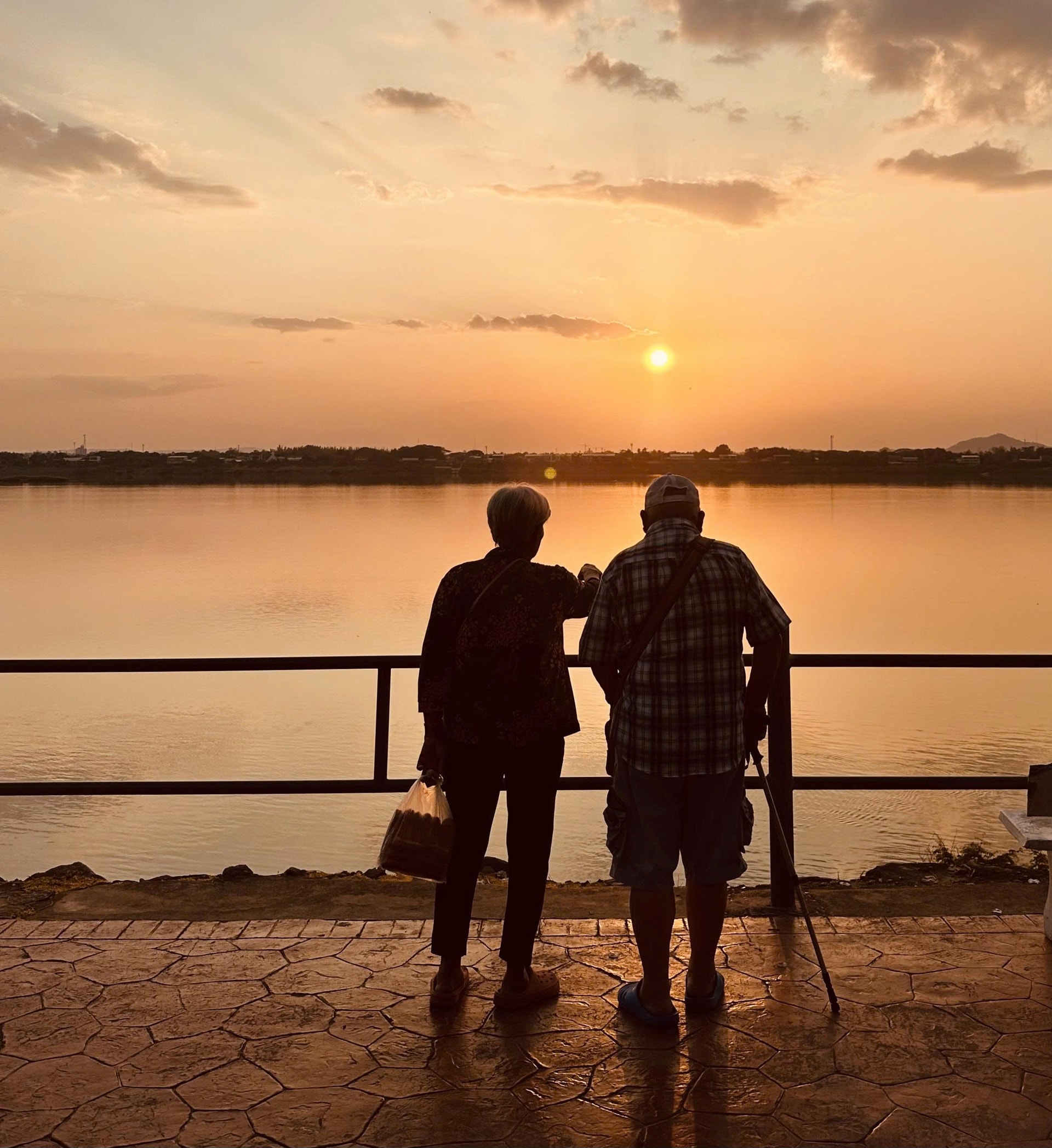
After a week of work, we left Champasak and Savanakhet, carrying with us a touch of nostalgia for the ancient temples; the moss-covered tiled roofs, the gentle smiles, and the aspirations shining on each face, like the Mekong River flowing endlessly.
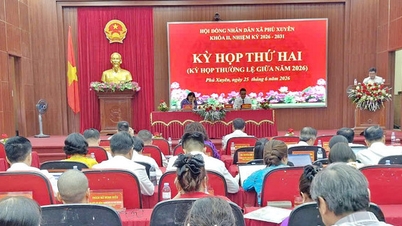
In early April 2026, in Pakse city, the "Forum on Investment, Trade and Tourism Cooperation to Promote Connectivity of the East-West Economic Corridor (EWEC) 2026," organized by the Da Nang City People's Committee in coordination with the Vietnamese Consulate General in Pakse and the Champasak Provincial Government Committee, attracted over 500 delegates; 20 memoranda of understanding were signed.
This event demonstrates that the special relationship between Da Nang and Champasak (Pakse) province is strongly shifting from friendly exchanges to substantive economic cooperation.
Source: https://baodanang.vn/nhu-dong-song-cuon-chay-3341112.html





























![[Image] Ho Chi Minh City: Ma Lang area, Chicken-Rice Market about to change its appearance](https://vphoto.vietnam.vn/thumb/1200x675/vietnam/resource/IMAGE/2026/06/25/1782377698627_ndo_br_m1-jpg.webp)