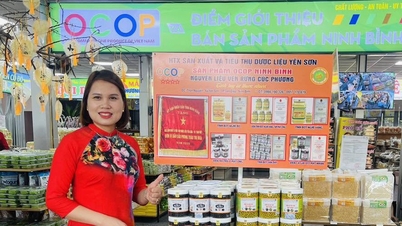
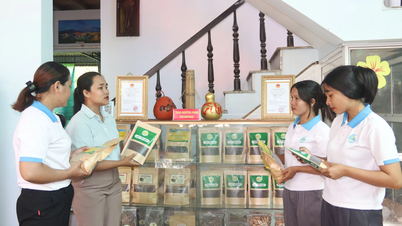
No wonder every time I go to a Mexican market, I see shelves full of boxes of moringa leaf extract. In the summer, they even sell small potted moringa plants for a few dozen dollars, which Mexican women buy to grow during the short summer months.
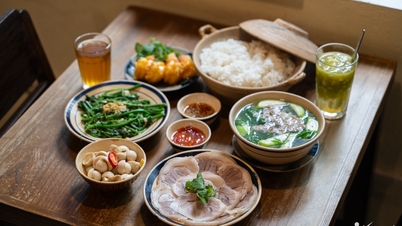
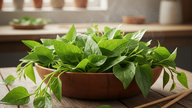
Back in the day, when I lived in the countryside, there was a thriving moringa tree in front of my house. But we didn't dare climb it because the branches were brittle and easily broken. My mother said moringa leaves could be used to make soup, but nobody cooked them alone because of their slightly pungent smell, bitter taste, and unpleasant sensation on the tongue. Aunt Six would occasionally come over to pick some and sell them at the market to the vegetable vendors, who would mix them with other vegetables to make a kind of mixed vegetable stew. It was a combination of all sorts of fresh, cool vegetables in no particular order or rule, from spinach, red amaranth, white amaranth, to water spinach, moringa, sweet potato leaves, centella, purslane… They would wander around, picking whatever edible vegetables they could find and mixing them all together to create the legendary mixed vegetable stew. Moringa soup with minced pork or crushed dried shrimp was incredibly delicious. Even without a little MSG and salt, it was still a refreshing bowl of soup. And the best part was that no two meals were ever the same. Growing up, I learned that these young leaves naturally cool the body in a strangely wonderful way during the summer. They are packed with vitamins and fiber. Each vegetable provides a different set of micronutrients, making for a highly nutritious bowl of soup.


My friend from Nghe An came to Khanh Hoa to teach. After a few years, she became fascinated with the way the local vegetables and herbs cook soup. She told me that one time, her younger sister from her hometown came to visit, and she prepared a pot of sour fish soup with young tamarind leaves and water spinach. Her sister, seeing this, expressed sympathy, saying, "Why is your family so poor? I'll go to the market and buy some more vegetables to make the soup even better." My friend laughed loudly, saying, "No need, just wait and see." When the steaming hot sour soup was served, her sister, initially hesitant, kept scooping it up and pouring it over rice. She kept savoring it, saying, "I've never eaten such a delicious bowl of sour soup before." She couldn't understand why, with only young tamarind leaves, water spinach, a few green chilies, and some fresh fish, the soup was so unique and delicious.
In faraway America, the markets mostly only sell spinach and amaranth, occasionally sweet potato leaves, but mixing them together to make soup still isn't quite a diverse culinary experience. So, I buy some chopped loofah or gourd to mix in for a change of taste. As for young tamarind leaves, nobody sells them in my area. If I crave them, I buy jars of pickled tamarind leaves for export, even though the soup lacks the delicate sourness of fresh leaves. Eating a bowl of soup in a foreign land, I suddenly remember the seemingly unrelated vegetables back home, each with its own distinct flavor, aroma, and color, yet when cooked together, they blend perfectly, creating simple, rustic soups that are both fragrant, refreshing, and subtly alluring and intensely flavorful.



Source: https://thanhnien.vn/nhung-chiec-la-non-185260613172926651.htm
![[Photo] Opening Ceremony of the 13th National Congress of the Ho Chi Minh Communist Youth Union](https://vphoto.vietnam.vn/thumb/1200x675/vietnam/resource/IMAGE/2026/06/24/1782286753905_ndo_br_1-8510-jpg.webp)
![[Photo] General Secretary and President To Lam attends the Central Public Security Party Committee Conference](https://vphoto.vietnam.vn/thumb/1200x675/vietnam/resource/IMAGE/2026/06/24/1782302063612_a1-bnd-9302-9166-jpg.webp)


![[Photo] The 13th National Congress of the Youth Union conducts personnel work.](https://vphoto.vietnam.vn/thumb/1200x675/vietnam/resource/IMAGE/2026/06/24/1782299943080_ndo_br_1-6868-jpg.webp)