.png)
Robots serve on trains.
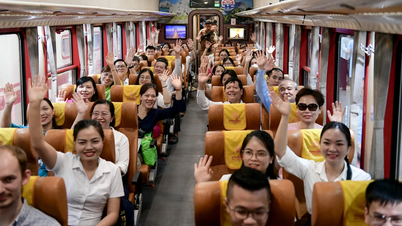
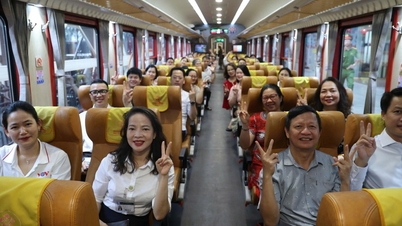
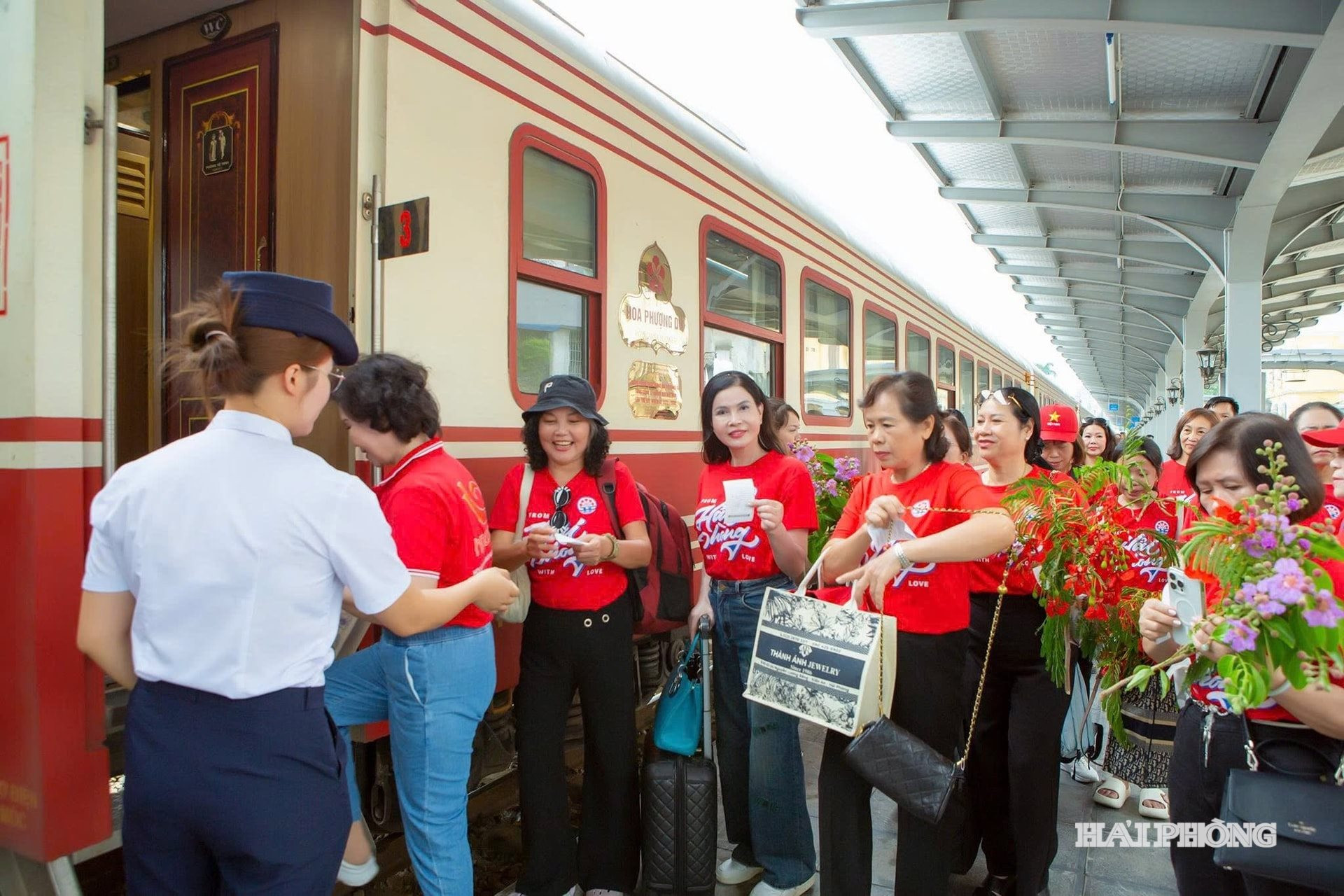
In early June 2026, many passengers on the Hoa Phuong Do train route from Hai Phong to Hanoi were delighted to experience a robot service in the VIP carriage for the first time. The device, integrated with AI technology and a sensor system to detect obstacles, can guide passengers to their seats, introduce services, provide journey information, and serve food and drinks directly to their tables. Although it's just a small convenience, the appearance of robots on trains demonstrates the railway industry's efforts to innovate and apply technology to improve service quality.
Ms. Nguyen Thi Lan Phuong, a passenger on the Hoa Phuong Do train from Hanoi to Hai Phong for tourism, commented: “The introduction of robots to serve on the train creates a more modern and professional feel. It's not just a new convenience; it's also a sign that the railway industry is changing to better meet the needs of passengers in the digital age.”
Not only on the Hoa Phuong Do train, but the railway industry has also continuously introduced many new digital amenities on the Hanoi - Hai Phong train route recently. From mid-May 2026, passengers can change tickets online through the electronic ticketing system without having to go to the station to complete the procedure as before. All transactions are authenticated with an OTP code, ensuring safety and convenience.
Subsequently, at the end of May, two new features, including automatic seat assignment and ordering regional specialties via QR code, were also introduced on train routes. With the automatic seat assignment feature, the system will prioritize seating members of the same booking together, reducing the need for manual seat selection.
Passengers on some train routes can scan QR codes at their seats or berths to select and order local specialties. From April 2026, the railway industry will implement a "Flexible Fare" program using AI on some trains.



The system will automatically analyze ticket sales data, assess the occupancy rate of each seat on the train, and determine appropriate pricing for short, empty routes. This approach optimizes carriage utilization while providing passengers with access to more favorable prices. This also demonstrates the increasing importance of data and technology in the transportation business.
Mr. Nguyen Van Hung, a frequent traveler between Hai Phong and Hanoi, said: “Previously, changing tickets required going to the station, sometimes taking a whole morning. Now, it only takes a few minutes on my phone to complete. When traveling with family, the automatic seating arrangement is also very convenient.”
Technology paves the way for development.
In the trend of developing smart transportation, data is becoming a crucial resource for the railway industry. Through electronic ticketing systems, passenger data, operational data, and exploitation data are continuously updated, helping businesses make faster and more accurate decisions. Many processes that were previously performed manually are gradually being digitized, contributing to cost savings and improved management efficiency.
Digital transformation not only serves current transportation operations but is also considered a crucial foundation for the future modernization of the railway industry. Recently, the Government has continuously directed the acceleration of large-scale railway projects, while also requiring the railway industry to proactively acquire and master technology, gradually building a modern, self-reliant, and sustainable railway ecosystem.
Mr. Tran Van Hanh, Director of the Hai Phong Railway Transport Branch, stated: “In the context of fierce competition among various modes of transport, technology is the key to enhancing the railway's competitiveness. Digital transformation helps reduce transaction time, improve service quality, and create many new experiences for customers.”


For Hai Phong city, the digital transformation of the railway sector is even more significant as the city plays a crucial role as a transportation hub in the northern coastal region. Besides the existing Hanoi-Hai Phong line, many new railway projects are being studied and implemented to enhance connectivity with the seaport system and industrial zones.
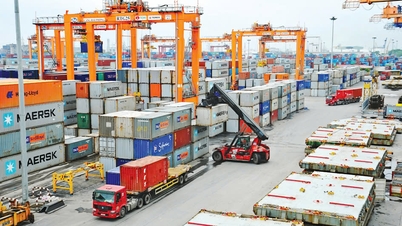
According to the transportation development plan, the city will have more national and urban railway lines in the future. With modern infrastructure combined with digital technology, the railway sector is expected to better fulfill its role in transporting large volumes of goods, reducing pressure on road transport and enhancing the competitiveness of the logistics system.
HAI MINHSource: https://baohaiphong.vn/nhung-chuyen-tau-thong-minh-545731.html