

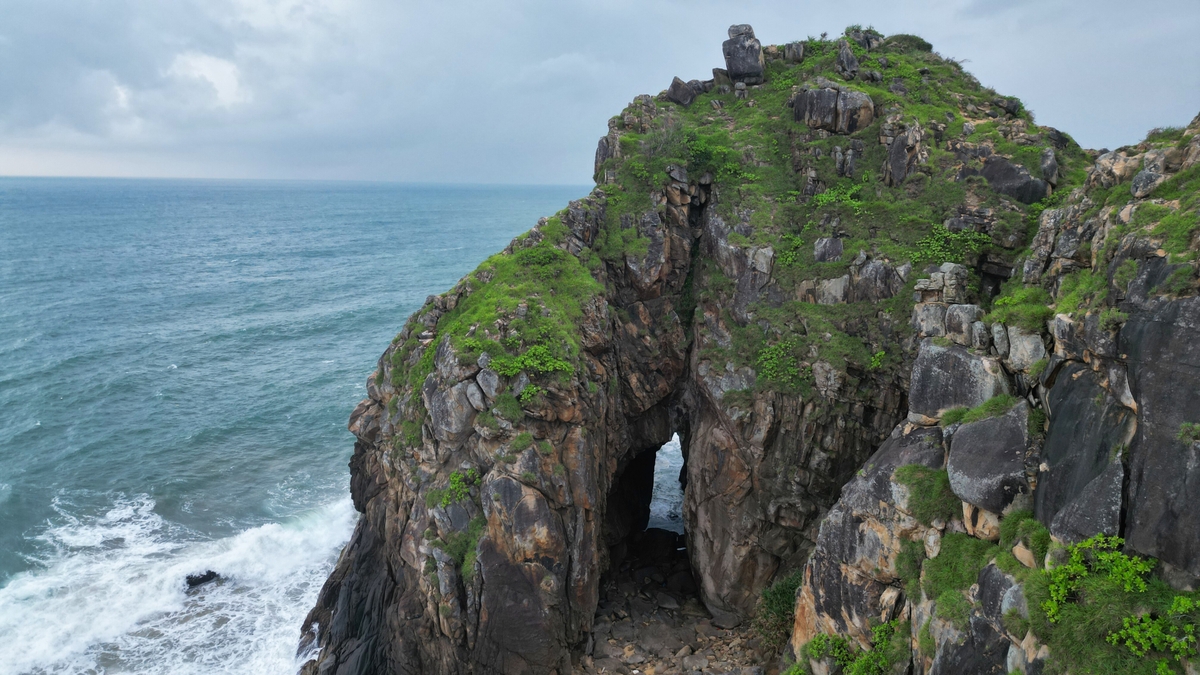
The DT702 coastal road hugs Vinh Hy Bay, gliding past Nui Chua National Park. The blue sea unfolds in stretches, the gray mountain rocks lie exposed to the sun, and there are sections of road that make you stop, not because of fatigue, but because of the scenery. Lately, near Phan Rang, rows of yellow cassia trees have been added to both sides of the road. In bloom, their vibrant yellow color stands out against the harsh sun, as if to soften the familiar dryness of this land. Occasionally, cacti and mahogany trees appear.
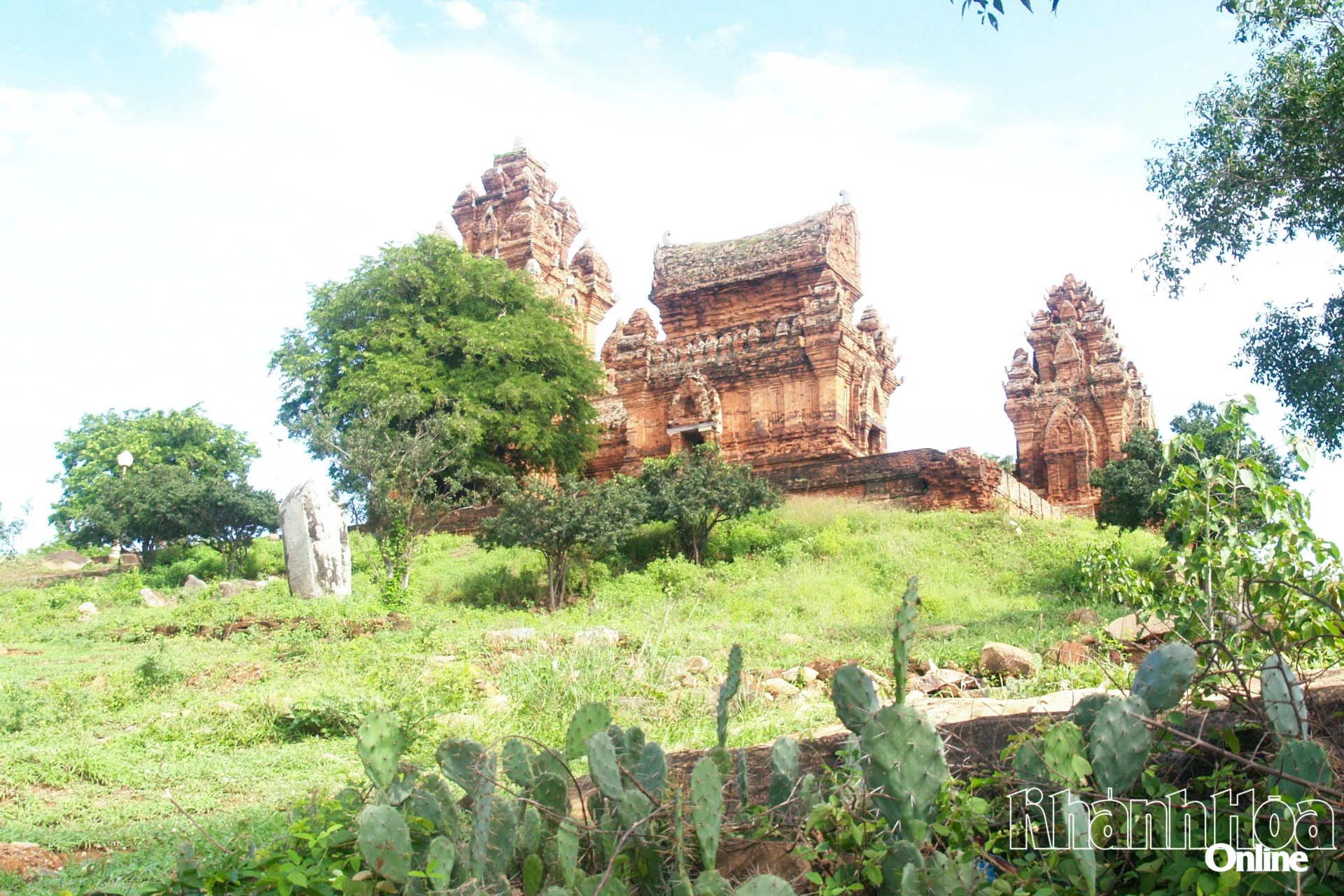 |
| Cacti thrive in sunny areas. |
Phan Rang is a land of abundant sunshine and wind, with little rainfall. The average rainfall here is among the lowest in the country. The dry season lasts from December of the previous year until August or September of the following year. The soil lacks water, making it difficult for plants to survive. Therefore, garlic, shallots, and other drought-resistant spices have become common sources of livelihood. Visiting Cham villages during the dry season, one can witness scenes of canals drying up, with weak currents, and people silently and patiently waiting their turn to fetch water.
It is in these harsh conditions that cacti and mahogany trees become the "reigning" species, choosing to stay and thrive in the sun. Cacti grow everywhere, needing no care: on abandoned fields, on vast sand dunes, along deserted riverbanks, or beside the paths leading to villages. In August, in a land where "sunshine abounds, rain never comes," cacti still bloom. Cactus flowers are not vibrant, but possess a resilient beauty, as if they bloom simply to prove that they are still alive.
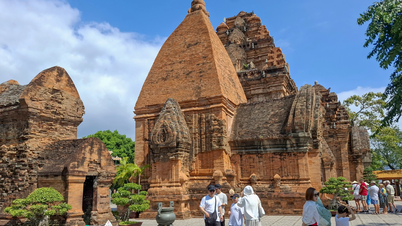
Around the same time, the crape myrtle trees quietly covered Phan Rang in green. Where other trees struggled to survive, the crape myrtle thrived, its green foliage enduring the sun as if born to live there. Along the roads to the Cham villages, the road to the Po Klong Garai Tower, the road to Ca Na, the wind farm project area, and many other roads here, crape myrtle trees provided shade. On both sides of major roads, national highways, provincial roads, and even small paths, rows of upright crape myrtle trees grew. Initially, there were only a few trees, but more and more over time. People planted crape myrtle not just for shade or ornamental purposes; they planted it to prevent soil erosion, to create long stretches of shade on dusty roads, so that every time they climbed a hill or turned a corner, seeing the tree was like hearing the local climate speaking to them. In the dry season, under the blazing sun, the green of the crape myrtle leaves became a strange, shimmering color. Sunlight filtered through the leaves, casting a light that wasn't hot but wasn't gentle either. The wind sometimes rustles, like the crape myrtle trees murmuring something about the sun and wind that have accompanied them as they grew day by day.
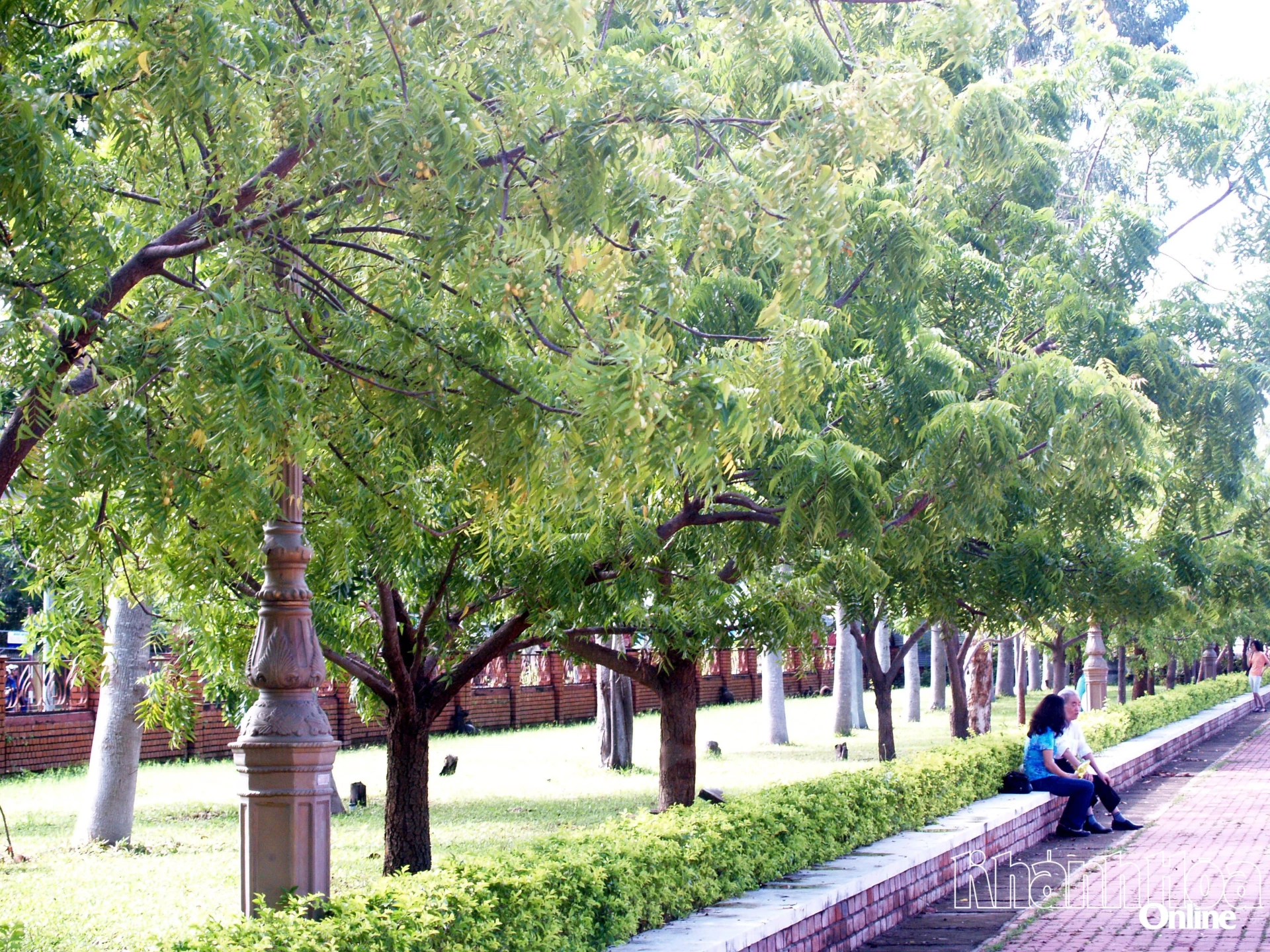 |
| The row of crape myrtle trees at the foot of the Po Klong Garai tower. |
The roads lined with crape myrtle trees are not straight. They wind along the terrain, following the curves of Phan Rang's landscape. Some roads cut through sandy fields, where sunlight dances on the furrows; others run along the banks of dry canals, where crape myrtle trees stand silently as if waiting for the water to return. On these roads, cars glide slowly by, pedestrians occasionally look up at the canopy, seeking shade or simply listening to the wind tell stories. The shadows of the trees intertwine with the shadows of people, interwoven with the falling leaves, creating a peaceful scene.
Someone once said that land has a soul if trees grow amidst the sun and wind. The roads lined with acacia trees in Phan Rang are not just pathways, but also streams of memories in leaves and sunlight, recording the rhythm of time in a dry land that knows how to live. Looking at the rows of acacia trees darkened by the sun, and the cacti blooming on that sun-drenched land, gives everyone a feeling of peace. The trees endure the sun, the land endures the sun, and the people also learn to endure the sun, thus forming a quiet, austere, yet strangely enduring identity.
KHUE VIET TRUONG
Source: https://baokhanhhoa.vn/van-hoa/nhung-goc-pho-nhung-con-duong/202604/nhung-con-duong-menh-mangnang-bf01994/


























































Comment (0)