

 |
Infrastructure guides the flow of capital.
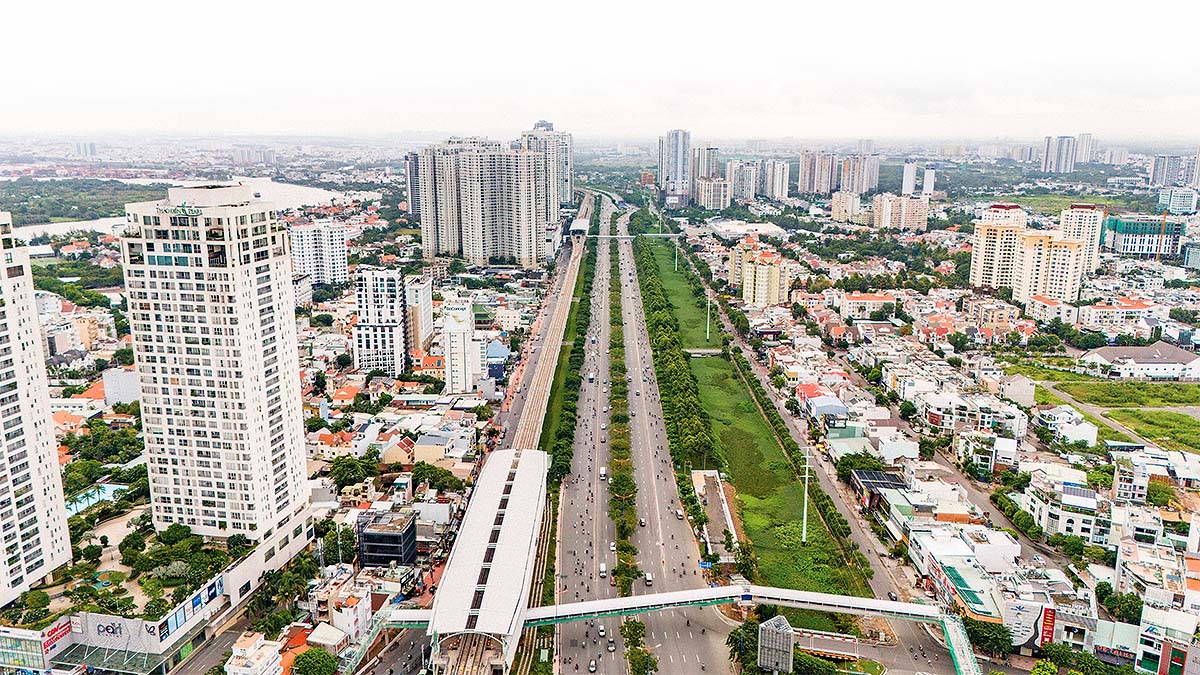
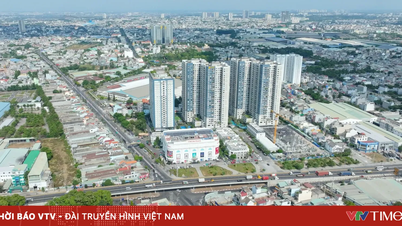
“Back then, if you drove passengers from Go Vap to Thu Duc during rush hour, you could be sure you’d be late,” said Nguyen Van Tai, a ride-hailing driver with over 5 years of experience in Ho Chi Minh City, as he sped along Pham Van Dong Street. His car glided along the 12-lane road at a nearly uninterrupted speed. On either side, rows of houses, shops, and restaurants lined the street, creating a scene very different from his memories of the narrow, perpetually congested roads of the past.
According to Mr. Tai, people in Ho Chi Minh City are no longer overly focused on living in the city center. Instead, they are moving to suburban areas like Go Vap and Binh Thanh, because from there, via Pham Van Dong road, they can easily travel to the city center for work, to the airport, or for shopping along this route.
From an economic perspective, as soon as the Pham Van Dong road gradually took shape, many real estate businesses quickly "jumped ahead" to capitalize on the opportunity. In reality, a series of mid- to high-end apartment projects have already been developed along this road, creating a new "urban corridor." Names like Dat Xanh Group with projects such as ST Moritz, Opal Garden, and Opal Riverside; and Nam Long Group with the Flora Novia project have early on "anticipated" the infrastructure wave, shaping the high-quality apartment segment along the route.
The arrival of major developers has quickly transformed this area from a suburban region into one of the most vibrant real estate markets in Ho Chi Minh City. According to market observations, land prices along Pham Van Dong Street have increased from 20-40 million VND/m2 to 80-150 million VND/m2 after the road was completed.
If the East is a story of rapid growth, then the South is a prime example of an urban "awakening." After the reunification of the country, the southern area of Saigon (stretching from District 7, Nha Be to the former Binh Chanh) was nothing but low-lying, waterlogged fields and swamps, sparsely populated, and poorly accessible. However, when the road named after the late General Secretary Nguyen Van Linh was approved and put into operation, it opened up a journey to "break free from the swamps" for the area.
Specifically, in 1996, the first meters of the road were paved. In 2007, after nearly a decade, Nguyen Van Linh Boulevard was completed, becoming the most modern urban road in the city at that time. Along with the boulevard came the emergence of the Phu My Hung model residential area – the first joint venture to develop a model urban area in Vietnam. The project covers 433 hectares, with billions of USD in investment, and is meticulously planned according to international standards.
Mr. Nguyen Van Tan, currently residing in The Grande - Midtown apartment complex, is one of the first residents of the Phu My Hung urban area. He recalls his decision to buy a house more than 25 years ago: "Back then, everyone said I was crazy, buying a house in the middle of nowhere, surrounded by reeds and water. But I believed in my vision, and I believed in how people were doing things."
Once infrastructure is established, not only the real estate market, but also the supply chain, trade, and services will develop. A prime example is the Binh Dien wholesale market – the largest food logistics center in Ho Chi Minh City, managed by SATRA. Every night, tens of thousands of tons of goods are traded here, supplying the entire city and surrounding provinces.
Not limited to major avenues like Pham Van Dong or Nguyen Van Linh, in recent years, Ho Chi Minh City has continued to be "reshaped" by a series of large-scale infrastructure projects. From the nearly 20-kilometer-long Ben Thanh - Suoi Tien Metro line, with a total investment of over 43,700 billion VND, to the Ba Son Bridge - an iconic cable-stayed bridge connecting the city center with Thu Thiem… all are contributing to restructuring the urban space towards a modern and multi-centered direction.
The common thread among these projects is that they not only address transportation or infrastructure needs, but also play a role in reshaping the city's development structure – from a model focused on a central core to a network of growth poles linked by a modern infrastructure system.
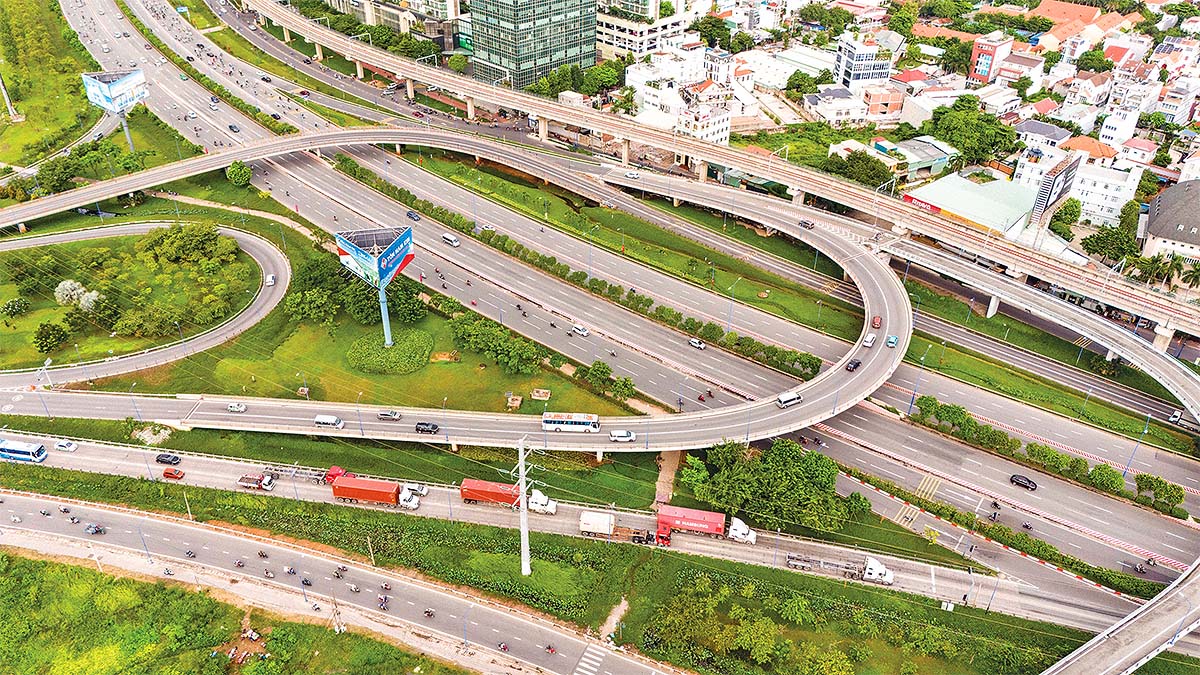 |
| The newly invested transportation routes are reshaping the development landscape of Ho Chi Minh City. |
Accelerate investment to elevate the "megacity" to a higher level.
As land along major transportation routes becomes increasingly scarce, the city faces the need to restructure its development space at a higher level – where infrastructure not only serves connectivity but also reshapes economic, population, and urban flows.
In its development plan for the 2025-2030 period, Ho Chi Minh City identifies infrastructure as one of its three strategic breakthroughs, aiming to form a "3 regions - 3 corridors - 5 driving forces" structure, moving towards a multi-polar, multi-centered megacity model. This means the city will enter a new cycle of large-scale investment with deeper regional connectivity.
From 2026 onwards, Ho Chi Minh City's infrastructure landscape is predicted to change rapidly as a series of large-scale projects are simultaneously implemented. From the Ring Roads 2, 3, and 4; inter-regional expressways connecting to Chơn Thành, Long Thành, and Mộc Bài; to the coastal road connecting Ho Chi Minh City - Cần Giờ - Vũng Tàu; and the sea-crossing route connecting Cần Giờ with Vũng Tàu… all are gradually taking shape on the planning map and entering the implementation phase.
On the ground, the atmosphere of a "massive construction site" has begun to spread. Projects such as the Ho Chi Minh City - Moc Bai expressway, the remaining sections of Ring Road 2, and metro lines connecting the city center with satellite cities are being accelerated. In 2026, the city will continue to allocate significant resources to key projects such as the Can Gio bridge, metro line 2 (Ben Thanh - Tham Luong), and Ring Road 4, with a total investment reaching hundreds of thousands of billions of VND.
The simultaneous commencement of large-scale projects demonstrates the city government's strong determination to prioritize resources for infrastructure investment to open up the development space for a "super" city as outlined in the Ho Chi Minh City Party Committee's Resolution for the 2025-2030 term. However, Ho Chi Minh City is not only focusing on transportation infrastructure but also placing its hopes on groundbreaking projects to create momentum for growth. Among these, the Can Gio international transshipment port and free trade zones are considered "strategic pieces" with the potential to change the city's position in the global supply chain.
Based on practical experience in transporting goods through the Tay Ninh area, Mr. Nguyen Thi Nhan, Business Director of the Ho Chi Minh City branch of SME Worldwide Logistics Joint Stock Company, stated that for many years, transportation has consistently accounted for approximately 70% of the company's logistics service package. Therefore, the early commissioning of the Ho Chi Minh City - Moc Bai expressway will help shorten transportation time, thereby significantly reducing logistics costs and improving the competitiveness of businesses.
From a maritime transport perspective, Mr. Huynh Van Cuong, Chairman of the Board of Directors of Saigon Port Joint Stock Company, hopes that the Can Gio international transshipment port project will be invested in soon. When that happens, the shipping time for goods by sea from Vietnam to Europe and America will be shortened because there will be no need for transshipment through Singapore.
In addition, the business community also expects the planned free trade zones such as Cai Mep Ha, Can Gio, Bau Bang, and An Binh to be implemented soon. These are considered important links in optimizing the logistics chain, especially when located near seaports and airports.
Mr. Thai Van Chuyen, General Director of Thanh Thanh Cong - Bien Hoa Joint Stock Company, expressed his wish for the city to soon build free trade zones to help businesses save costs, as free trade zones built near seaports and airports help shorten not only travel time but also reduce transportation costs.
"With the establishment of free trade zones, goods can circulate more quickly, giving Vietnamese businesses more opportunities to participate in global supply chains," Mr. Chuyen commented.
The synergy of these factors is gradually enhancing the city's standing in the eyes of investors, both domestic and international. As a series of key infrastructure projects, including seaports and urban railways, are put into operation in the next few years, Ho Chi Minh City will enter a new phase of development. At that time, the city will not only continue to maintain its role as the economic engine and financial-industrial center of the country, but will also more clearly define its image as a modern, highly competitive metropolis in the region, and an attractive destination for living, working, and long-term investment.
Source: https://baodautu.vn/nhung-dai-lo-mo-huong-cho-do-thi-da-cuc-d578823.html

























































![[INFOGRAPHICS] Strengthening the strategy for ethnic affairs work until 2030, with a vision to 2045](https://vphoto.vietnam.vn/thumb/402x226/vietnam/resource/IMAGE/2026/05/23/1779540129141_1779539919.webp)










Comment (0)