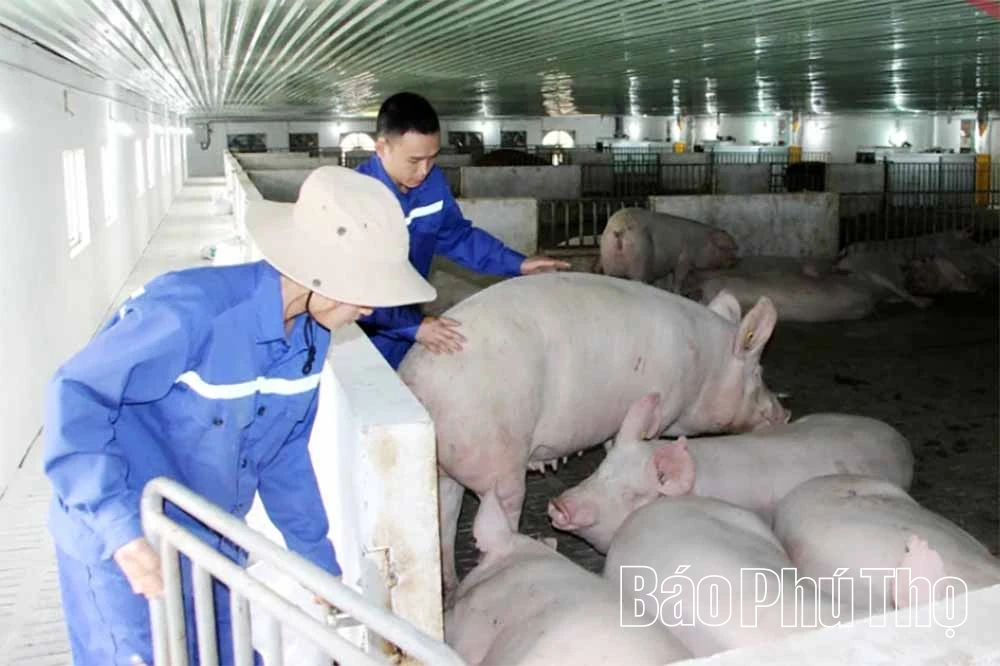
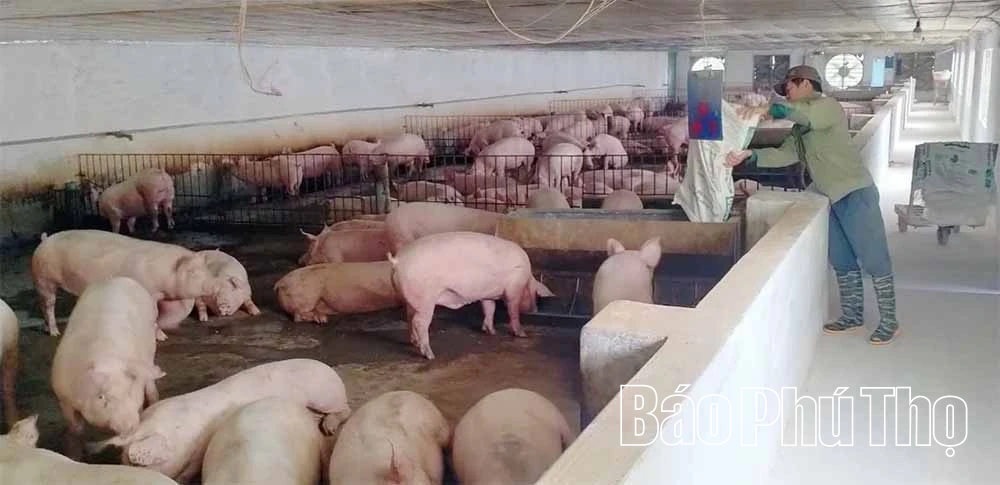
Farm workers at Mr. Ha Quyet Thang's farm in Dong Co area, Thanh Son commune, are taking care of pigs in preparation for sale at the end of the year.
In the early days of December, the farm of Mr. Ha Quyet Thang's family in Dong Co area, Thanh Son commune, had over 500 pigs ready for sale. Upon notification, several traders quickly contacted them to place orders, so the family didn't have to worry about sales like in previous years. The joy was further amplified by the fact that the price of live pigs at this time was arguably the highest in the last 4-5 years. With approximately 500 pigs, of which about 300 were sold, Mr. Thang's family earned nearly 2 billion VND, and after deducting expenses, they made a profit of over 700 million VND.
Mr. Thang shared: "From the beginning of the year until now, the price of live pigs has always remained high, from 64,000 VND/kg upwards, especially from the beginning of December 2025 until now. The price of live pigs at large farms like ours is currently 74,000-76,000 VND/kg; while at small-scale farms, the price fluctuates from 69,000-71,000 VND/kg depending on the farming method and pig breed. In addition, since the beginning of the year, the price of animal feed and vaccines has been relatively stable, which has helped farmers like us reduce costs and increase profits."
Pig farming is carried out using a closed-loop biosecurity model in Son Luong commune.
In late June and early July 2025, an outbreak of African Swine Fever in the province caused significant damage to the livestock industry. The province recorded 127 outbreaks in 122 communes and wards, resulting in the forced culling of nearly 134,000 pigs weighing almost 7,660 tons, causing losses of hundreds of billions of dong. By the end of 2025, the province had approximately 161,800 buffaloes, over 247,300 cattle; nearly 1.82 million pigs, and over 37.5 million poultry.


Total output of various types of meat reached approximately 471,000 tons, poultry eggs reached approximately 1.65 billion eggs, and fresh milk reached approximately 62.3 million liters. Currently, the province has 113 cooperatives; 710 farms; and 46 large enterprises investing in and operating in the livestock sector, with pig herds accounting for about 30% of the province's total herd and chicken herds accounting for 20% of the province's total herd.
Simultaneously, 80 integrated supply chains have been established, linking the production, processing, distribution, and consumption of animals and animal products to almost all provinces and cities nationwide. The livestock sector continues to be restructured, shifting towards reducing the proportion of small-scale farming and increasing the scale of concentrated farming.
Promote the implementation of biosecurity and disease control measures in livestock farming, organic farming, and proper waste management; promote the application of technical advancements and information technology in controlling livestock operations; attract businesses to invest in large-scale, high-tech livestock farming, with pigs accounting for approximately 30% of the province's total herd and chickens accounting for 20% of the province's total herd.
The increase in live pig prices has also led to a slight increase in pork prices at local markets compared to the end of October 2025.
According to experts from sectors such as Industry and Trade, Agriculture , and Environment, the price of live pigs is likely to remain high until the end of the first quarter of 2026. However, the pork market for the Lunar New Year throughout the country remains abundant, so consumers can rest assured.
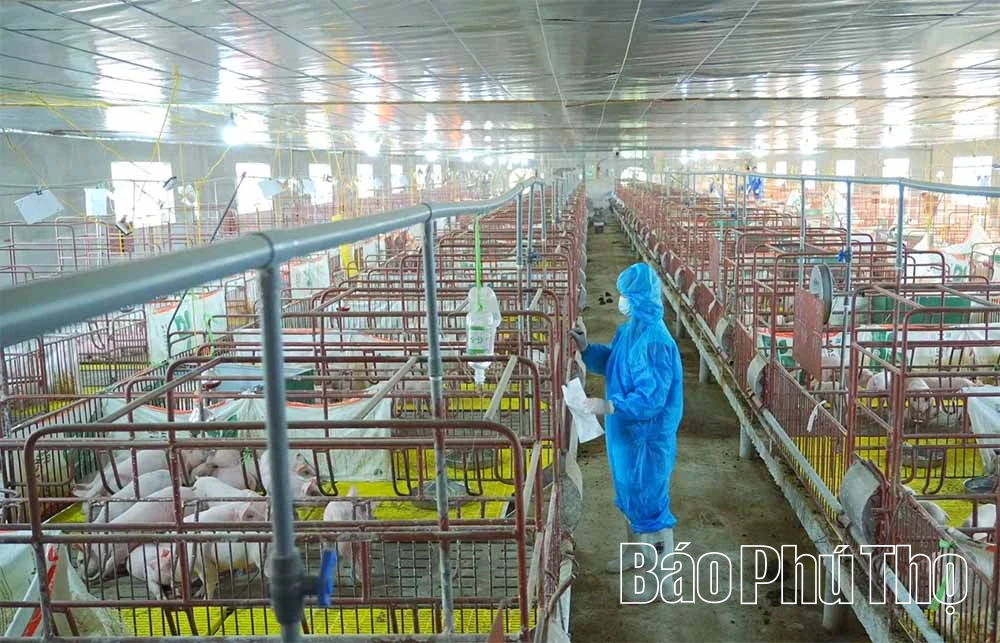
The biosecurity and disease-safe livestock farming model of Dabaco Group Joint Stock Company.
Comrade Hoang Manh Thong - Head of the Department of Livestock, Veterinary and Fisheries, said: Although the price of live pigs has increased recently, farmers should not rush to restock or expand their herds. To ensure production efficiency, farmers need to closely monitor market demand. At the same time, when restocking, they should choose to buy breeding stock from reputable and licensed establishments.


Livestock farmers also need to proactively vaccinate their animals in general, and pigs in particular; supplement with vitamins to boost the immunity of livestock and poultry during the cold season; promptly notify relevant authorities when signs of disease are detected; and avoid concealing outbreaks or selling sick animals to ensure safety in the livestock sector.
Quan Lam
Source: https://baophutho.vn/niem-vui-cuoi-nam-246204.htm