

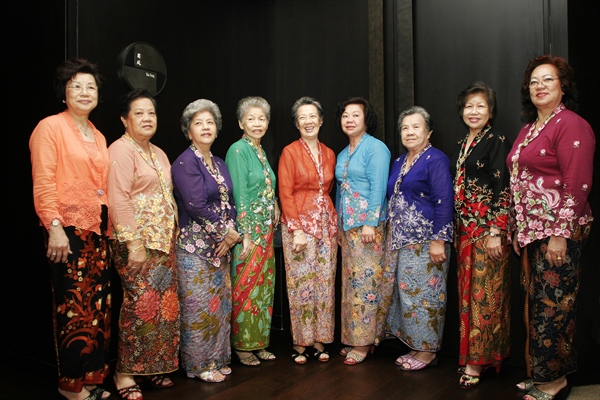
The Kebaya garment dossier is an intangible cultural heritage that has been submitted to UNESCO by five Southeast Asian countries.
When mentioning Indonesian women's clothing, the Kebaya immediately comes to mind. This outfit consists of a long, form-fitting blouse with a wide, open neckline and long sleeves, made of lightweight materials like silk or cotton, worn with a batik skirt featuring distinctive patterns that wraps from the waist down to the ankles. Around the 15th and 16th centuries, the Kebaya was considered a prestigious garment, reserved only for royalty, nobility, or the upper class. Gradually, it became more popular and was recognized as the national dress for Indonesian women. However, it is typically only worn on major holidays and celebratory occasions.
To honor the traditional attire and introduce this cultural beauty to the world , the Indonesian women's association launched a movement encouraging women to wear the Indonesian Kebaya in their daily lives. Specifically, the movement calls on women to wear the Kebaya every Tuesday in all activities, including going to the market, working, or socializing with friends. This movement has been widely supported by activists, with some even reporting using the Kebaya for mountain climbing and surfing. The Indonesian Women's Association has also proposed to the government to designate a day as National Kebaya Day.
Novie Hilmanita, a kebaya seller in Indonesia, said: “Previously, only royal families wore kebayas, and they used materials like velvet or brocade. But today, kebayas are made of silk or cotton, making them comfortable to wear, even for children.” Rahmi, President of the Indonesian Kebaya Movement, said: “We want kebayas to be recognized by UNESCO as a cultural heritage, just like batik. I see that Indonesian women everywhere love kebayas. The Indonesian Kebaya Movement was launched not only to introduce them to the world, but more importantly, to educate the younger generation about a part of Indonesian history and culture.”
In Malaysia, in fashion boutiques, tailors meticulously embroider vibrant flowers to enhance the beauty of the Kebaya. Malaysian Kebayas are typically made from lightweight, breathable materials like silk or cotton. They are tailored to fit snugly, with an open neckline and long sleeves, perfectly suited to the tropical climate of Southeast Asia. The price of a Kebaya can range from US$7 to US$1,200 (approximately 165,000 to 28,000,000 VND) depending on whether it is machine-made, hand-stitched, or hand-embroidered. Malaysian Kebaya seller, Lim Yu Lin, shared: “Nominating the Kebaya to UNESCO’s list of intangible cultural heritage will help people learn more about this garment, not only in our country but also throughout the region.”
For Singaporeans, the traditional attire for women is called Nonya Kebaya. Nonya kebaya is an elegant garment considered a strong symbol of identity for the Peranakan community in Singapore and Southeast Asia. According to Yeo Kirk Siang of the Singapore National Heritage Board: “Kebaya is a traditional women's garment that became popular in Southeast Asia in the 19th and 20th centuries due to trade and travel between countries. It is a garment that blends different cultures in the region, but each country's kebaya has its own unique identity.”
The dossier for the recognition of the Kebaya robe as an intangible cultural heritage has been submitted to UNESCO by five Southeast Asian countries, and the results are expected to be announced at the end of 2024.
THUC LINH
Source












































![[Video] Sunset at Lap An Lagoon – Where the sun sets over the fishing nets](https://vphoto.vietnam.vn/thumb/1200x675/vietnam/resource/IMAGE/2026/05/31/1780192137701_beach-landscape-sea-water-nature-grass-745871-pxhere-com.jpeg)

























Comment (0)