


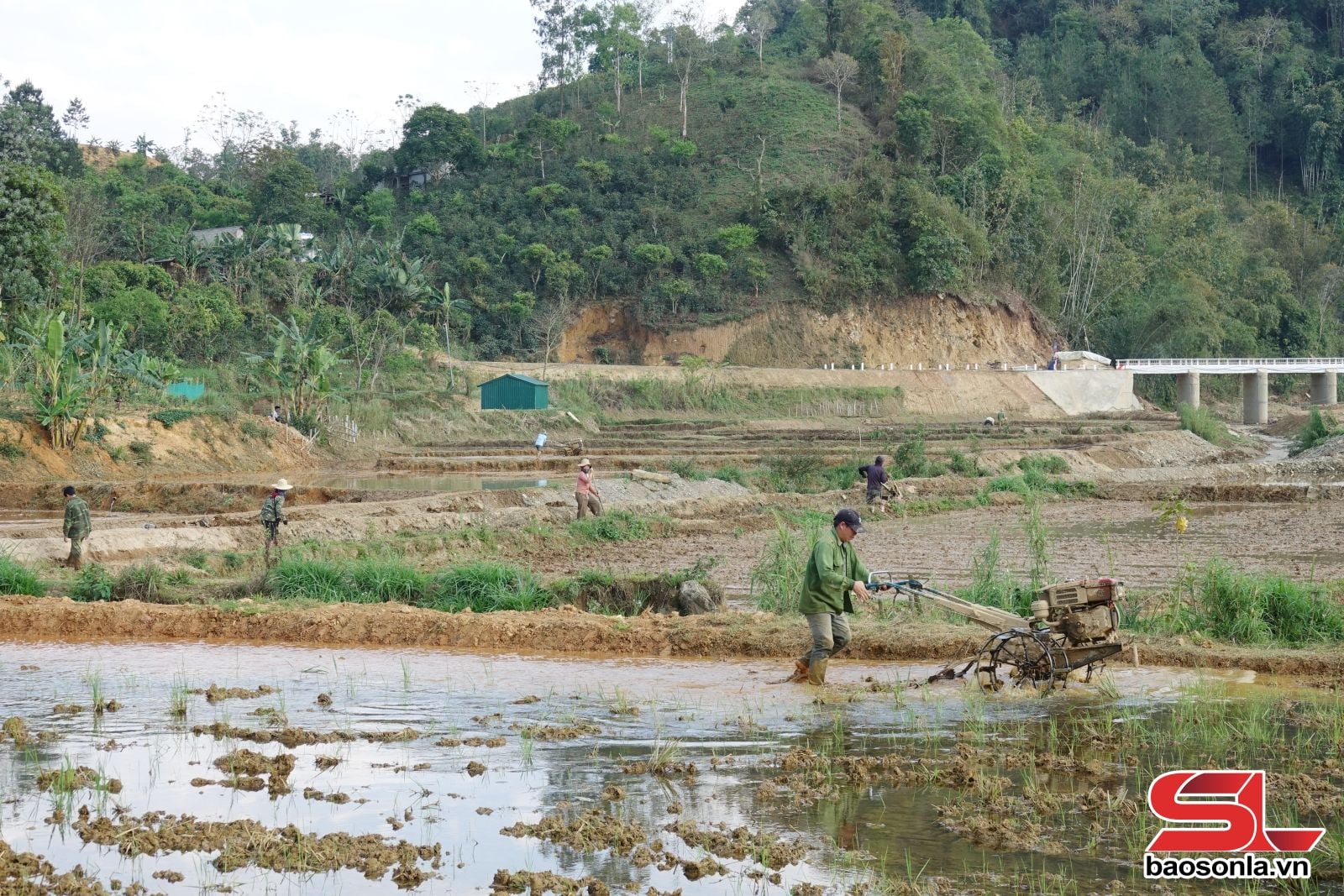
From the beginning of the season, the Department of Agriculture and Environment proactively developed production plans, issued seasonal schedules, and specified crop varieties for each ecological zone, in accordance with actual conditions. Localities based their detailed production plans on the general plan; proactively prepared agricultural supplies, seeds, fertilizers, and pesticides; and mobilized manpower and mechanized equipment for land preparation and rice planting. Repair and dredging of irrigation canals and waterways were implemented from the end of 2025, ensuring a ready water supply for the entire production area.
In Muong Chanh commune, farmers are planting rice simultaneously as the weather warms up. This year, the improved SRI (System of Rice Intensification) method continues to be applied by farmers. The main principles include transplanting young seedlings (10-15 days old), planting sparsely (1 seedling/clump), ensuring sufficient water, applying plenty of organic fertilizer, and weeding and stirring the mud, which are widely applied by the farmers. In the Den village rice field, Mr. Lo Van Tiep took advantage of the opportunity to hire 6 additional workers to plant 2,000 m² of rice to meet the deadline. Mr. Tiep shared: "My family prepared the seedlings before Tet. When the weather is favorable, we go to the field immediately. Hiring extra workers helps to finish early, avoiding cold or drought at the end of the season. Finishing planting early also allows us to focus on caring for the crop."

Meanwhile, in Thay Lom village, Chieng Mai commune, Mr. Cam Van Toan's family also proactively prepared for the spring crop very early. Mr. Toan said: "My family prepared the land carefully, drying it before plowing and soaking, so the fields are loose and porous, limiting pests and diseases right from the start of the season. This year, we chose the glutinous rice variety 86, which has a suitable growth period and good resistance to pests and diseases. Most importantly, we sowed and planted according to schedule. After planting, we will regularly monitor the fields and apply balanced fertilizer to ensure the rice plants tiller strongly, creating a foundation for high yields."
Along with the proactive efforts of farmers, ensuring irrigation water supply has received special attention from relevant agencies. Since the end of 2025, the Irrigation Works Management and Exploitation Company Limited has issued a plan for exploiting and utilizing water resources and developed a plan to respond to the risk of localized water shortages in some areas. For reservoirs, ponds, and dams, the company conducts inspections and assessments of the water source status, specifically determining the water supply capacity for production; and strictly manages water regulation and distribution according to operating procedures, ensuring efficiency and preventing loss and waste.
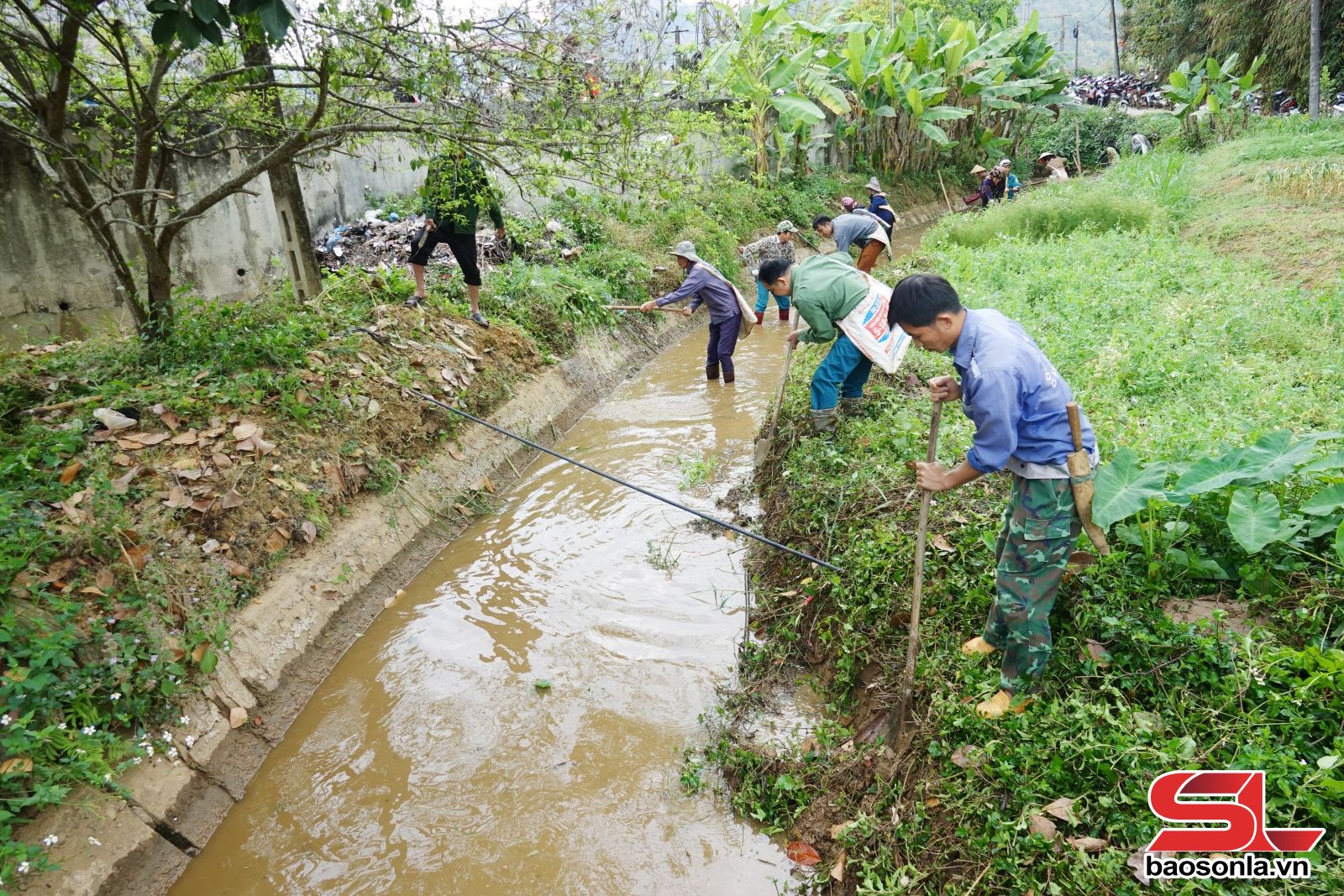
Entrusted with ensuring water supply for agricultural production in 8 communes in the Mai Son area, the Branch of the Irrigation Works Management and Exploitation Company No. 4 has coordinated with local authorities to directly guide farmers on water-saving irrigation techniques and preventing water loss; instructing them on pumping water and building additional water wheels for fields higher than the irrigation canals. At the same time, they have directed local irrigation teams to operate the works rationally, regulate water according to each area; clear irrigation canals and water intake points; and strengthen inspections and handle cases of encroachment and illegal construction within the protected area of irrigation works.
Mr. Nguyen The Thanh, Branch Manager, stated: The unit is currently managing 204 irrigation reservoirs and dams; 236 km of irrigation canals, providing water for agricultural production on over 16,600 hectares of rice, corn, fruit trees, vegetables, and aquaculture. At this time, water resources are basically sufficient for the entire spring crop production area. However, according to the annual pattern, the peak of the hot season will occur from the end of March to the beginning of April, and the risk of drought may occur in some highland areas and areas at the end of the water supply lines. The unit has proactively inspected the condition of the structures, assessed water supply capacity; guided local irrigation teams to repair and clear silted sections of canals; and implemented rotational irrigation in drought-prone areas, prioritizing areas further away first, then closer areas, to ensure fairness and efficiency.
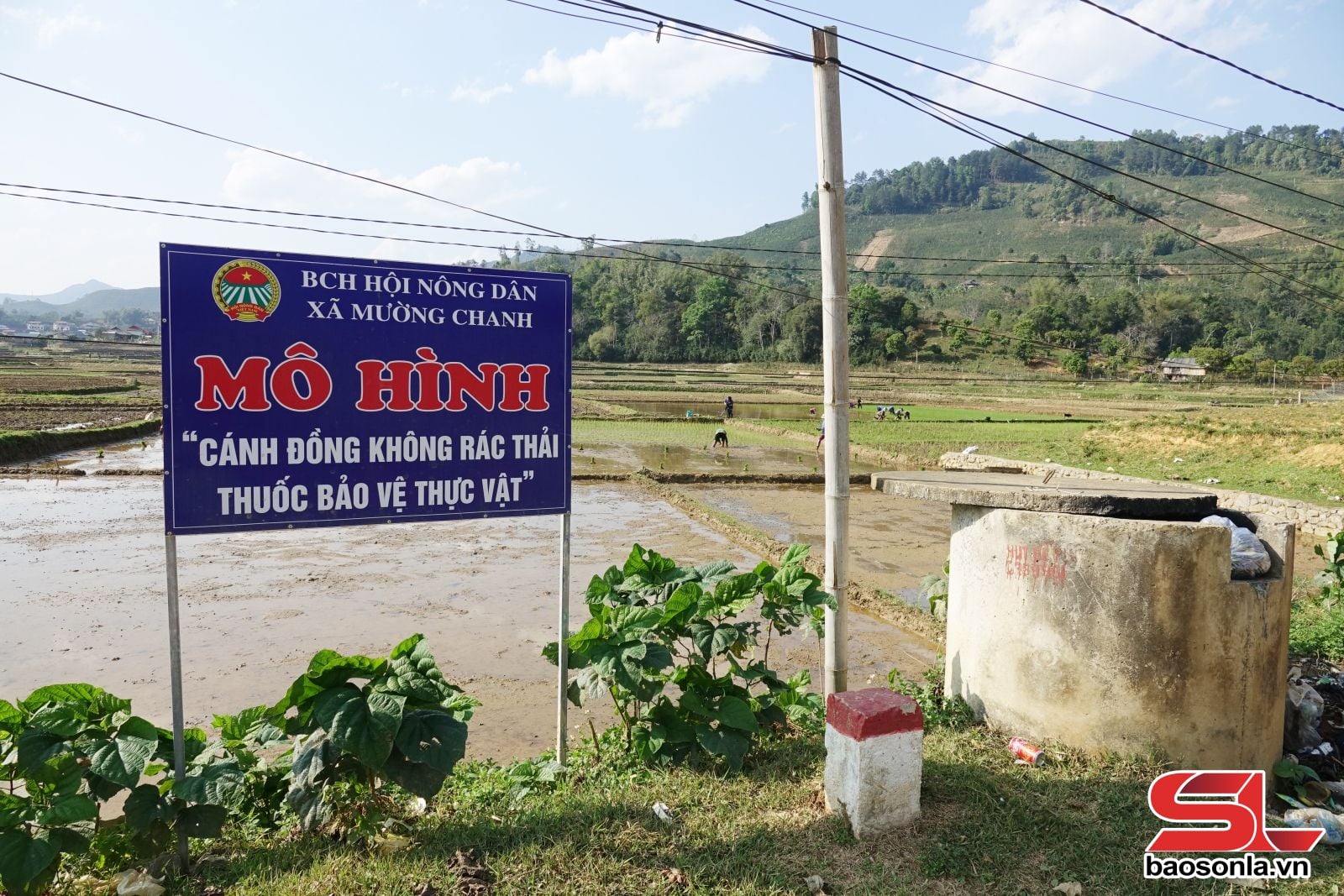
Rice pest and disease control is also a priority for the agricultural sector. Mr. Vu Tien Dinh, Deputy Director of the Department of Agriculture and Environment, emphasized: The sector has developed a specific planting schedule for each region, striving to complete it in March. Local authorities need to closely monitor the fields, closely track weather developments, and promptly guide farmers on proper care and balanced fertilization according to technical procedures. At the same time, they should proactively prepare short-growing rice varieties to compensate for areas of rice and seedlings damaged by cold weather or pests and diseases.
To date, farmers in various localities have planted approximately 2,000 hectares. Progress in most areas is generally on schedule, with many places implementing planting simultaneously, adhering to the correct crop varieties and planting schedule. To protect the spring rice crop, localities have directed increased investigation, estimation, and forecasting of pest and disease situations; advising farmers to regularly inspect their fields and detect early signs of pests such as golden apple snails, rats, small leaf-rolling caterpillars, brown planthoppers, and blast disease… in order to take timely measures and prevent widespread outbreaks. The use of pesticides is guided by the "four correct principles," ensuring safety for producers and the ecological environment.
The spring crop is a crucial production season. With thorough preparation from land preparation, seeds, irrigation to care and pest control, along with the enthusiastic mobilization across the fields, the 2026 spring crop is expected to achieve many successes, contributing to ensuring food security and increasing income for farmers in the province.
Source: https://baosonla.vn/nong-nghiep/nong-dan-xuong-dong-cay-lua-xuan-aL0gCjOvg.html

![[Photo] General Secretary To Lam presides over a meeting with the Editorial Teams to summarize 100 years of the Party's leadership of the Vietnamese revolution and 40 years of implementing the National Construction Program.](https://vphoto.vietnam.vn/thumb/1200x675/vietnam/resource/IMAGE/2026/03/04/1772601288977_a1-bnd-8134-7576-jpg.webp)


































































Comment (0)