"Sitting on a sea of water but lacking water"
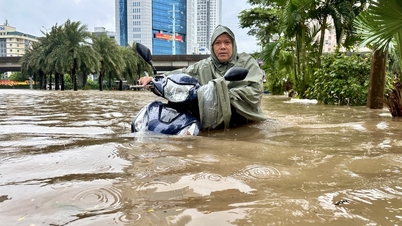
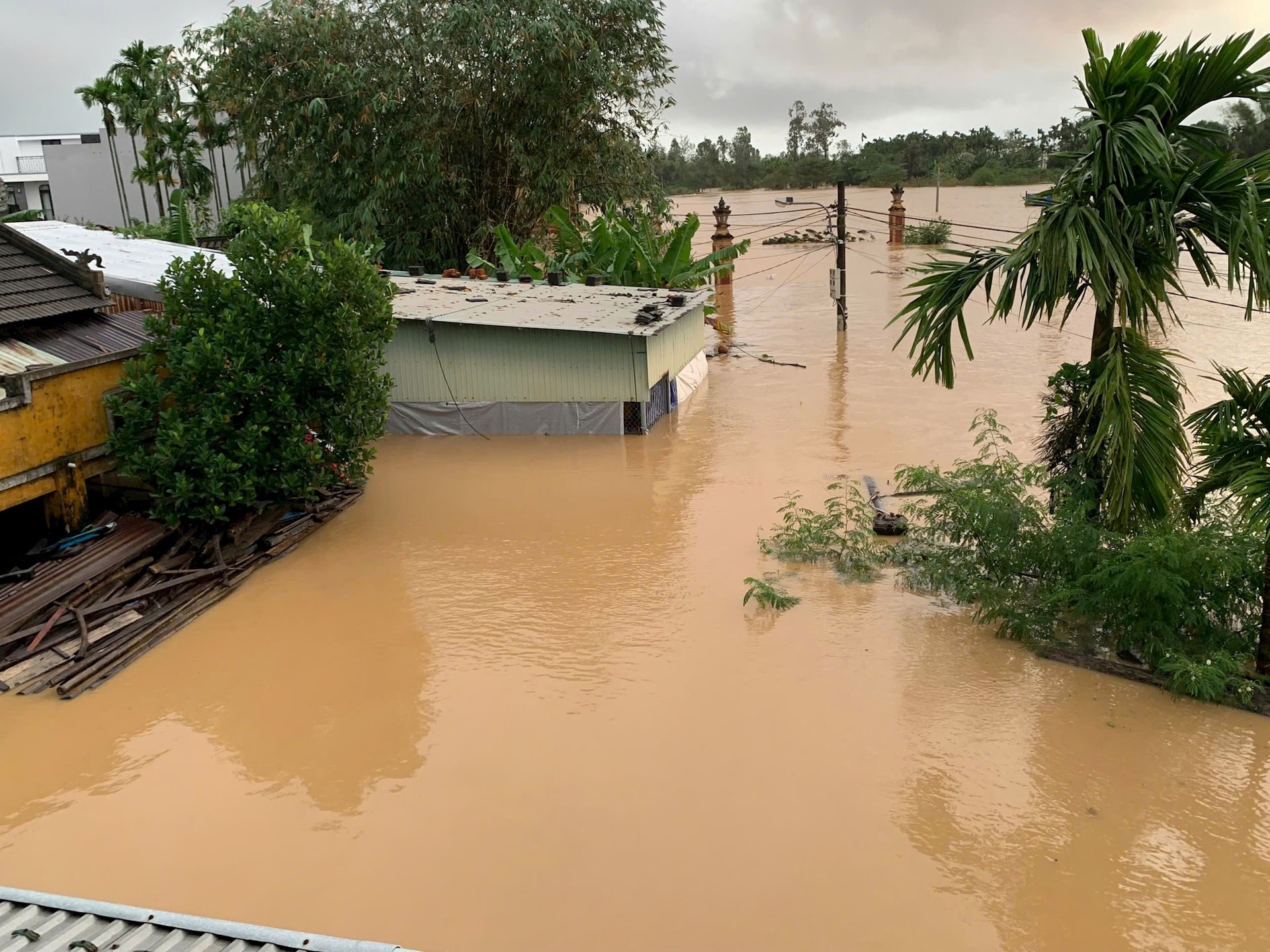
Monitoring data from the Central Vietnam Hydrological Station indicates that water levels on the Vu Gia - Thu Bon river system at the end of October 2025 exceeded the peak flood level of 1964, with many areas exceeding alarm level 3 by 1-3m.
When floodwaters surpass historical peaks, they also exceed human expectations; precautionary measures such as raising furniture to 1-2 meters higher become meaningless, as the water level rises even higher. During the flood, there is the constant fear of the water continuing to rise, while after the flood, there is the prolonged shortage of clean water, affecting daily life.
“Those days, we were sitting on a sea of water but lacked water,” recalled Ms. Truong Thi My Duyen, a resident of Phuoc Trung village (Hoi An ward), remembering the difficult period in late October 2025, when the historic flood engulfed Cam Kim and surrounding areas. As the water rose, her family was isolated in the floodwaters.
Concerned about the muddy, silt-laden floodwaters and the potential health risks, Duyen's family only dared to collect rainwater for cooking and bought 20-liter bottles of water while waiting for the authorities to restore clean water supply.
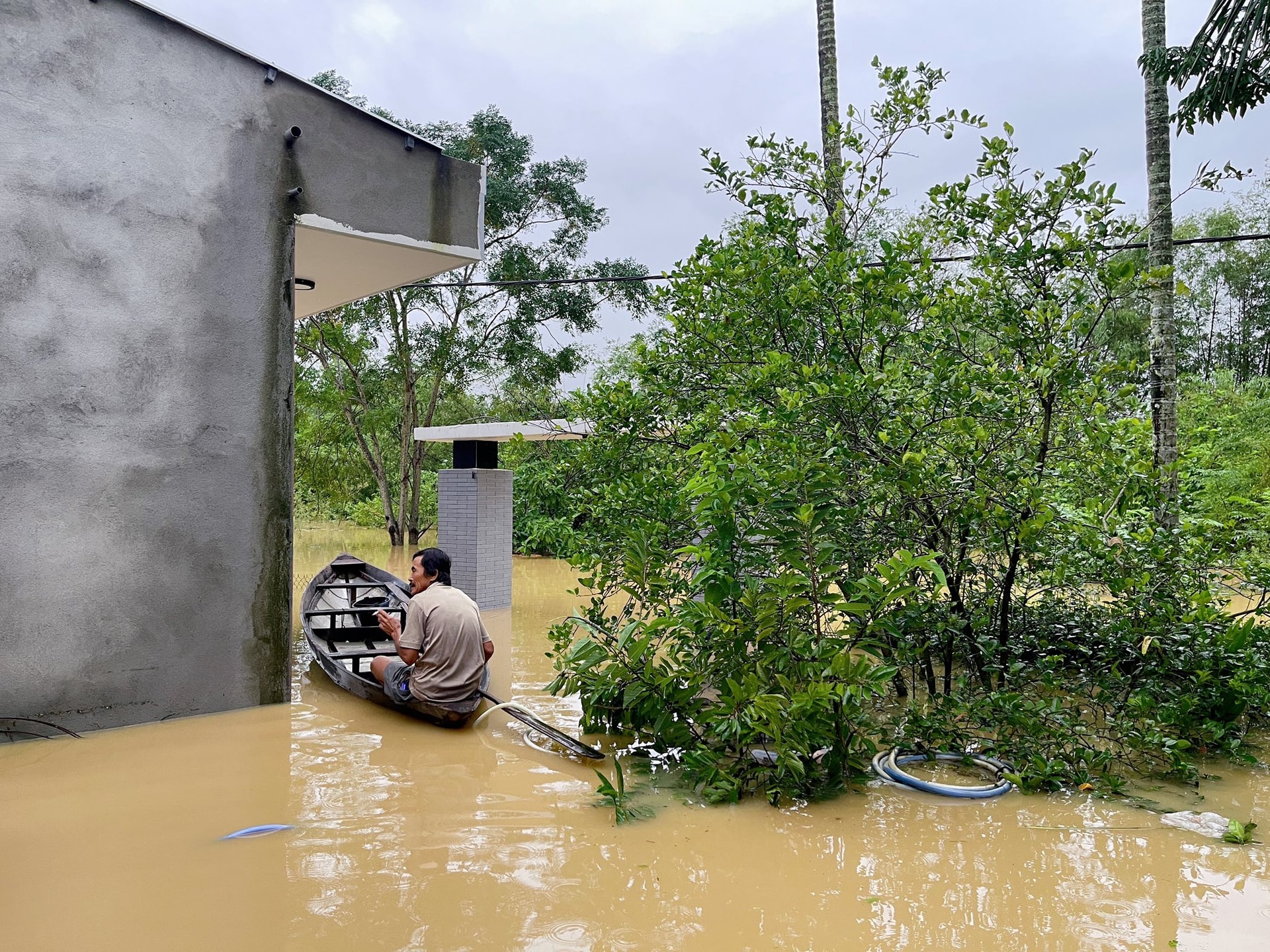
Accustomed to the ebb and flow of floodwaters, Nguyen Hoang Trung's family (Dien Ban Dong ward) still struggled during the historic flood. With power outages, even their wells, which provided water for daily use, became useless during the storm. After the flood, water from drilled and dug wells couldn't be used immediately; it had to be pumped out and carefully treated with chloramine B, alum, or activated carbon before it could be used. Clean water became a luxury during that period.



"Fortunately, my family received support from the government, relevant agencies, and charitable organizations to access clean water. However, complex natural disasters are not something that happens overnight, and the lack of clean water in particular, and weather-related difficulties in general, must be thoroughly addressed," Trung said.
Similarly, in some localities such as Tien Phuoc, Nam Tra My, Que Son, Dai Loc, Hiep Duc, Hoa Tien, etc., there is also a shortage of clean water after the natural disaster and floods at the end of October. According to the Da Nang City Department of Construction, the reason is that some water treatment plants, water supply stations, and booster pump stations were flooded and unable to operate.
For example, in Hoa Tien and Hoa Vang communes, the Phu Son water supply station and the Hoa Tien booster pump station, located in the flooded area along the Yen River, were submerged. The flooding also damaged machinery and equipment at some rural water supply stations and booster pump stations; causing unstable operation, resulting in localized shortages of flow and pressure, and some areas experiencing weak water pressure after the disaster.
The clean water supply system in rural areas needs to be upgraded.
According to the Department of Construction, after the pumping stations were flooded, the department requested relevant agencies and units to urgently develop plans to supply clean water to the people as soon as possible. In Hoa Tien and Hoa Vang communes, from October 31st to November 1st, Da Nang Water Supply Joint Stock Company (Dawaco), in coordination with Da Nang Green Parks Company, mobilized 6 water tankers and 10 workers, deploying dozens of tanker trips to collect clean water from several water treatment plants to supply people in many villages of Hoa Tien and Hoa Vang communes, promptly meeting the minimum water needs for daily life of households, schools, and medical facilities. It is estimated that nearly 200 cubic meters of clean water have reached the people.
Dawaco is urgently cleaning the pumping stations to restore water supply to the areas. The Hoa Tien booster pump station started operating on the morning of October 31st, and the Phu Son station started operating from noon on November 1st to supply water to residents of Hoa Tien, Hoa Vang, and Ba Na communes. The company is operating the water treatment plants at maximum capacity to meet the water needs of the people. The total daily water production reaches over 320,000 m³…
In many affected communes in the former Quang Nam province, local authorities and the Quang Nam Water Supply and Drainage Joint Stock Company implemented temporary water supply measures for individual households within the unit's water supply service area, according to plans and methods suitable to specific conditions.
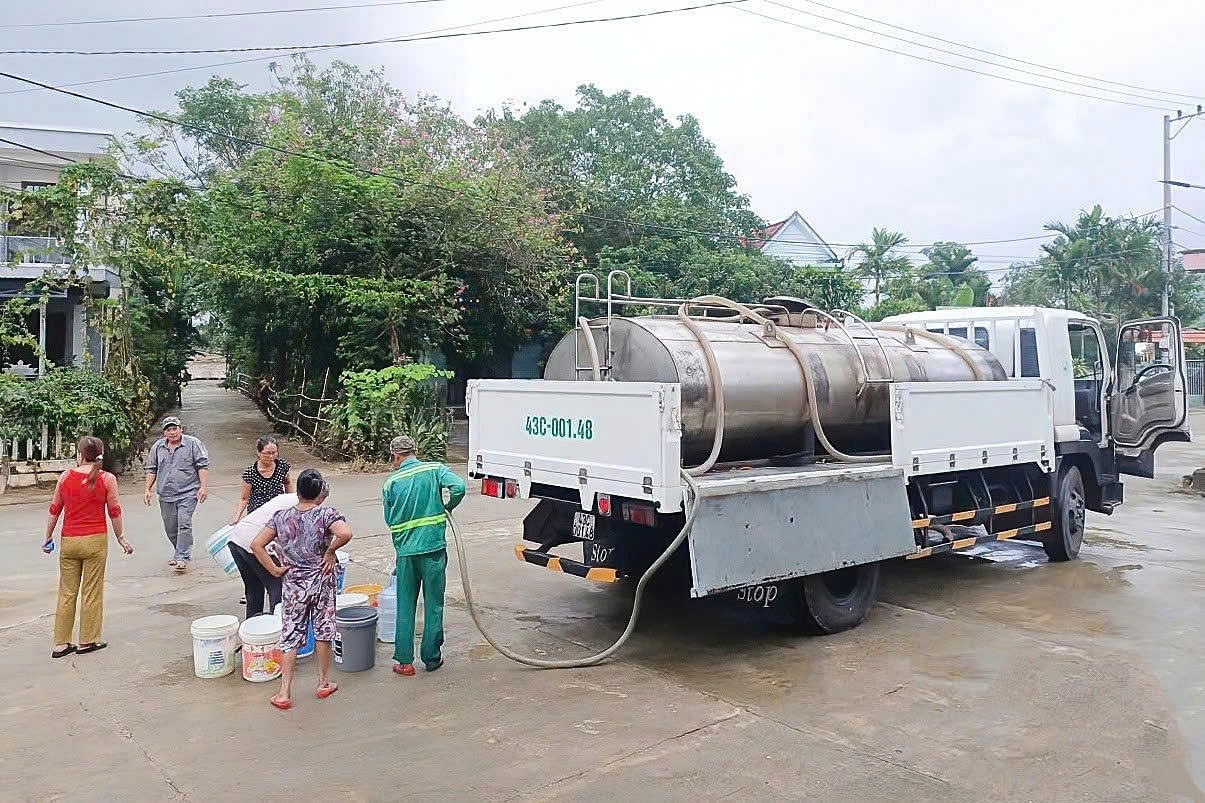


At the same time, commune leaders called for and mobilized water tankers from the police, military, and businesses to provide clean water to the people. However, with the enormous demand for water after the natural disaster for cooking, cleaning houses, daily activities, bathing, etc., the water tanker solution is only sufficient for temporary supply.
Recalling the flooding of the Phu Son water supply station, Mr. Ho Minh Nam, General Director of Dawaco, acknowledged that the most crucial time to provide clean water to the people in a timely manner is after the flood recedes, when people's water demand increases and diseases are more likely to spread if there is a lack of clean water.
Therefore, from the perspective of the water supply unit, Mr. Nam proposed: "If the pumping station is submerged, people cannot get water, and there is no electricity to pump water during the flood. Therefore, the city authorities should review, study, and invest in upgrading the Phu Son pumping station in particular and the clean water supply system in rural areas in general. The pumping stations need to have their foundations raised higher than the historical flood level and be equipped with backup power generation systems to avoid a similar situation as the recent flood."
Source: https://baodanang.vn/nuoc-sach-sau-lu-3314838.html
![[Photo] General Secretary and President To Lam working with the Technical and Professional Center, Ministry of Public Security](https://vphoto.vietnam.vn/thumb/1200x675/vietnam/resource/IMAGE/2026/07/06/1783318005842_a1-bnd-1129-2263-jpg.webp)