


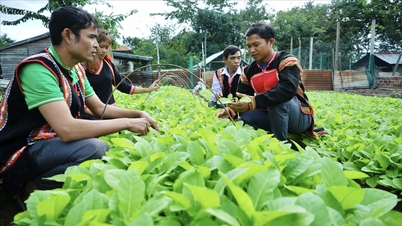
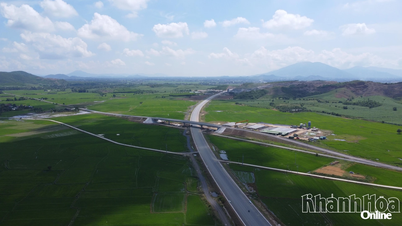
Visiting Dak Toi commune in the border district of Nam Giang (Quang Nam province) without tasting this "heavenly water" would be a real waste. Throughout the Truong Son mountain range, the lush green forests of the Ta Rieng people contain a milky white, subtly fragrant, and intensely flavorful liquid that has become a local specialty of Nam Giang. Here, it's called Ta Vat wine. A homecoming can be the beginning of many good things. A homecoming can inspire endless efforts to overcome difficulties and strive for a better life. Returning home is about repaying one's debt to the homeland, showing gratitude to one's village… The young people we met along the borderlands of Nghe An province, who left their villages and crossed mountains to pursue education and become doctors, are proof of all that. On the afternoon of February 9th, Prime Minister Pham Minh Chinh and the working group met with the Standing Committee of the Quang Ngai Provincial Party Committee to discuss the socio -economic situation in 2024, the direction and tasks for 2025, and to address the province's proposals and recommendations, resolving difficulties and obstacles. Visiting Dac Toi commune, Nam Giang district (Quang Nam province) without experiencing the "heavenly water" would be a real waste. Throughout the Truong Son mountain range, the lush green forests of the Dok tree contain a milky white, fragrant, and pungent water that has been closely associated with the Ta Rieng people (a local group belonging to the Gie-Trieng ethnic group) and has become a local specialty of Nam Giang. This place is called Ta Vat wine. Focusing on investing in and developing tourism infrastructure in the ginseng growing region and promoting the distinctive cultural values of the Xo Dang ethnic group, creating a highlight for the tourism landscape of Nam Tra My, is the direction that the local government has been and is pursuing. On February 9th, at Dong Dinh village, Phong Du commune, Tien Yen district (Quang Ninh), the opening ceremony of the Dong Dinh Temple Festival and the Tay ethnic group's Culture and Sports Festival of Tien Yen district in 2025 was held. The festival attracted a large number of people and tourists to participate. On February 8th, in Vinh Son commune (Vinh Thanh district, Binh Dinh), the Peach Blossom Festival took place with the theme "Spring Colors of Peach Blossoms - Connecting Cultures". The festival, held over two days (February 8-9), provided an opportunity to connect, exchange, share, and promote traditional cultural values to tourists from within and outside the province, contributing to the development of tourism and the local economy. As part of the series of events of the Bac Giang Province Culture and Tourism Week 2025, on the morning of February 8th, at the Tay Yen Tu Spiritual and Ecological Tourism Area, the Department of Culture, Sports and Tourism of Bac Giang province organized the opening of a thematic exhibition entitled “The Path of Buddhist Propagation by the Patriarchs of Truc Lam Yen Tu Buddhism”. The summary news of the Ethnic and Development Newspaper, morning news of February 8th, 2025, included the following noteworthy information: Flower Boat Festival and Boat Race on the Dinh River; Fishing Festival in An Phu commune; The tradition of pounding sticky rice cakes in Truc Phe village. Along with other current news from ethnic minority and mountainous regions: Thanh Hoa Provincial Police have arrested Trinh Phuong Mai in Thanh Hoa for defrauding a woman in Bac Ninh of over 1 billion VND through online fortune-telling and bad luck-exorcism. On the evening of February 7, 2025, the opening ceremony of the Quynh Nhai District Culture, Sports and Tourism Week 2025 took place at the Quynh Nhai District Communication and Culture Center, Son La Province, with many lively activities attracting a large number of people and tourists. Prime Minister Pham Minh Chinh has just signed and issued Official Dispatch No. 13/CD-TTg on urgently reviewing and fully reporting on investment projects with difficulties, obstacles, and long-standing backlogs to promptly resolve and implement the projects. The Official Dispatch was sent to Ministers, Heads of ministerial-level agencies, and agencies under the Government; Chairpersons of People's Committees of provinces and centrally-administered cities. On the morning of February 9th, during his working visit to Quang Ngai, Prime Minister Pham Minh Chinh and his delegation visited the family of Mr. Tran Trung Kien in Duc Chanh commune, Mo Duc district, to inspect the implementation of the program to eliminate temporary and dilapidated houses in Quang Ngai province. Also on the morning of February 9th, during his working visit to Quang Ngai, Prime Minister Pham Minh Chinh and his delegation surveyed two important road projects in the area: the Dung Quat - Sa Huynh coastal road and the Quang Ngai - Hoai Nhon expressway, encouraging the construction forces and continuing to resolve difficulties and obstacles to promote the projects.
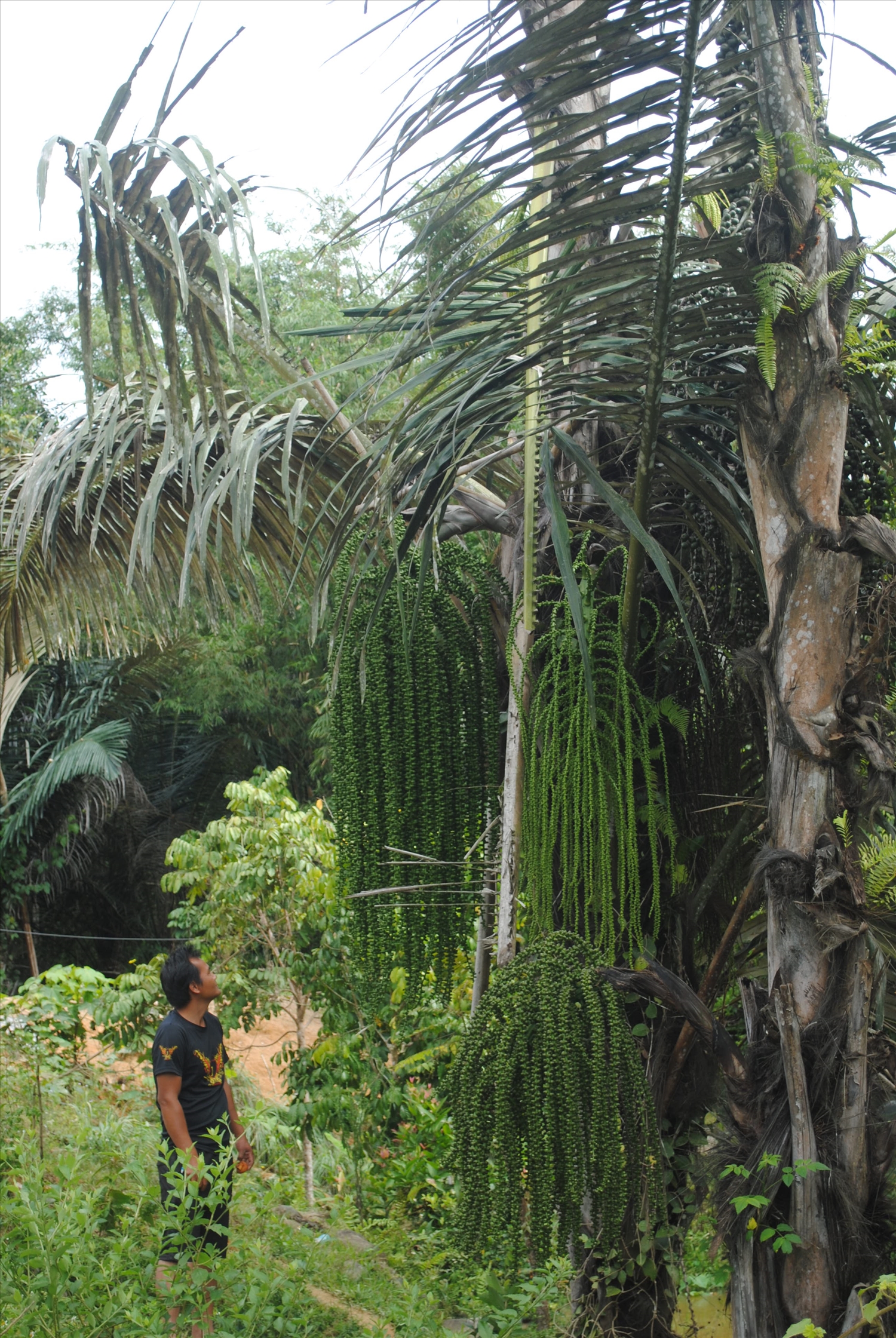
We followed Mr. To Ngol Nhun (71 years old), from Dac Ta Vang village, Dac Toi commune, Nam Giang district, who has years of experience in harvesting ta vat wine. Crossing the Dac Ry stream, Mr. Nhun swiftly cleared away the branches obstructing the path. When our legs were tired, the ta vat tree appeared before us. The ta vat tree has a straight trunk, similar to a coconut tree, with fruit clusters like the banyan tree, and it usually grows in areas along streams in the forest. And we were fortunate to experience how the Ta Rieng people in the Truong Son region harvest ta vat wine from the trunk of this ta vat tree.
According to Mr. Tơ Ngôl Nhứn, every year, during the season when the forest birds sing the song "Catch the girl and tie her up," from around February to March, the palm tree produces abundant, sweet-tasting sap. At this time, the people of Tà Riềng are busy harvesting the sap from the palm tree to make tà vạt wine to quench their thirst.
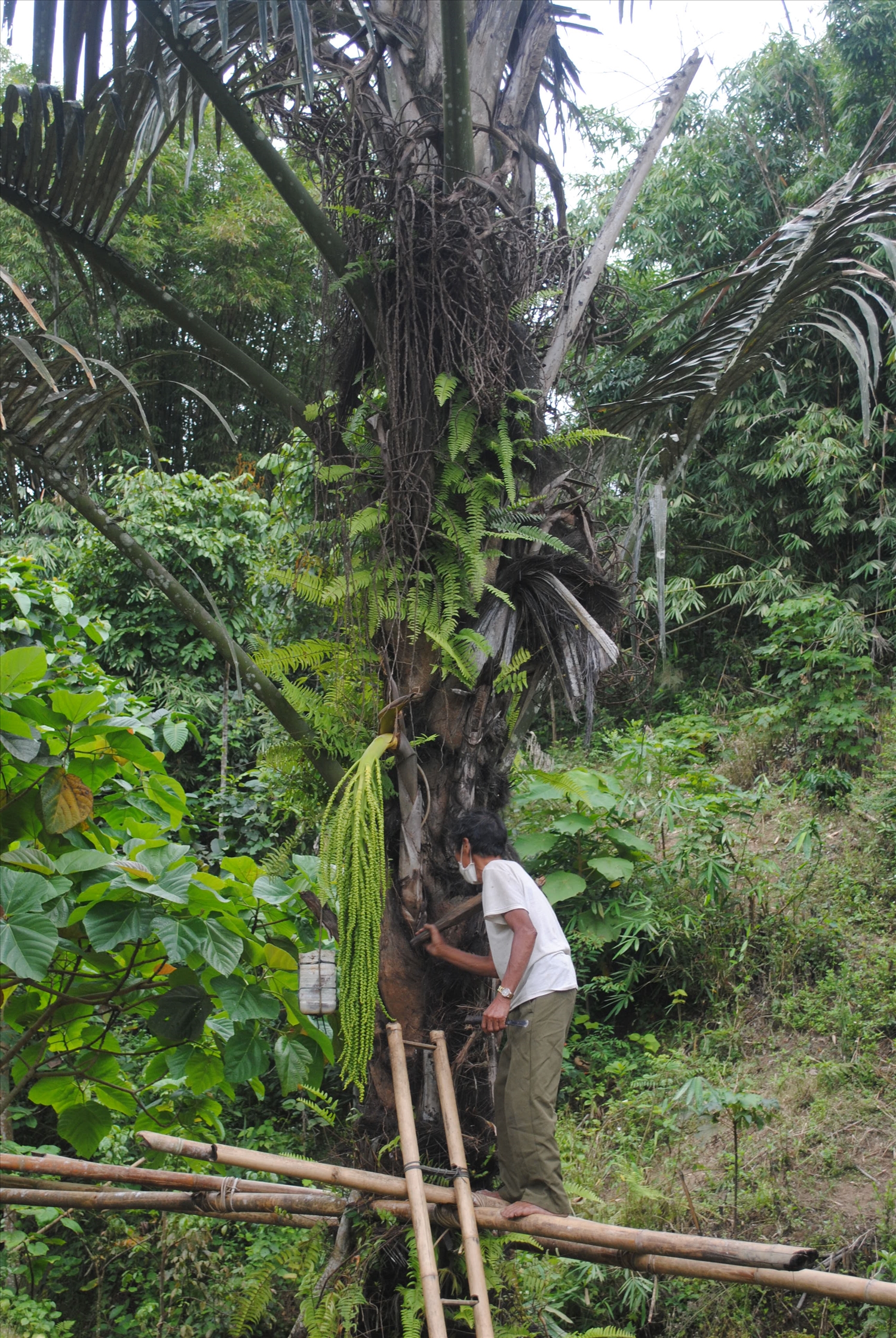
The process of extracting sap from the palm tree is elaborate and time-consuming. To climb a mature palm tree, which is over 10 meters tall, Mr. Nhứn has to build a ladder. Then, he selects the largest clusters of palm fruit, cuts off the stem, and places a funnel made of leaves to collect the sap flowing out into a plastic container tied below. At the same time, Mr. Nhứn takes a few strands of dried palm bark from his shirt pocket and puts them into the plastic container, then uses a thin layer of palm bark called "bùi nhùi" and a mesh cloth to seal it and preserve the sap.
According to Mr. Nhứn, a single palm tree can yield sap for making tà vạt wine year-round, but it's best to harvest it during the flowering and fruiting season, from March to July. If a small tree is used, the wine will not taste good and will not develop properly.
The first harvest of the palm tree yields 12 to 15 liters of sap per day. The larger the tree, the less sap it produces. Palm sap is milky white with a delicate aroma. After harvesting, leaves or mesh cloth must be tied around the trunk to prevent insects from attaching to it, thus preserving it for subsequent harvests. It takes about half a day for the tree to release all its sap. At this point, simply climb a ladder and bring down a plastic container. To collect more sap, use a machete or knife to cut a thin piece from the trunk and collect it in another plastic container for the next day.
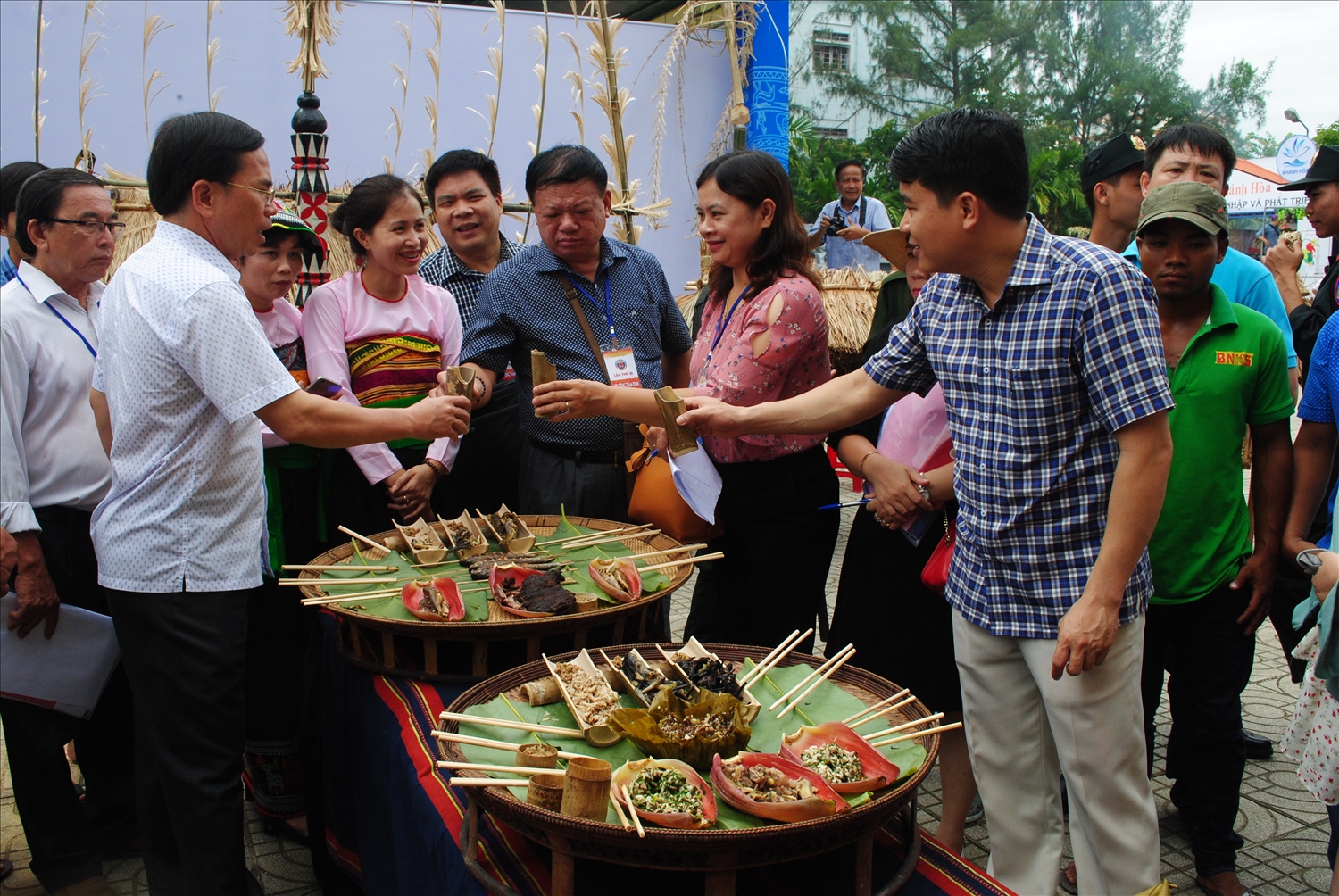
The Ta Rieng people add the bark of the "chuon" tree to the water of the "doak" tree, which ferments to create a drink with a sweet, bitter, and slightly tingling taste. The amount of "chuon" bark added depends on personal preference. Because forest plants contain no preservatives, the "ta vat" wine made from the "doak" tree can only be consumed within one day. It's very fragrant and delicious, and doesn't cause headaches. Importantly, it's also a valuable medicinal herb for the Ta Rieng people.
"When the Ta Rieng people extract a lot of sap from the palm tree, they boil it down to a paste, dry it, and store it in sealed bamboo tubes. When women lack breast milk after childbirth, the elderly, or children with rickets, they add a few pieces of the dried sap to rice or porridge to nourish their health," Mr. Nhun further shared.
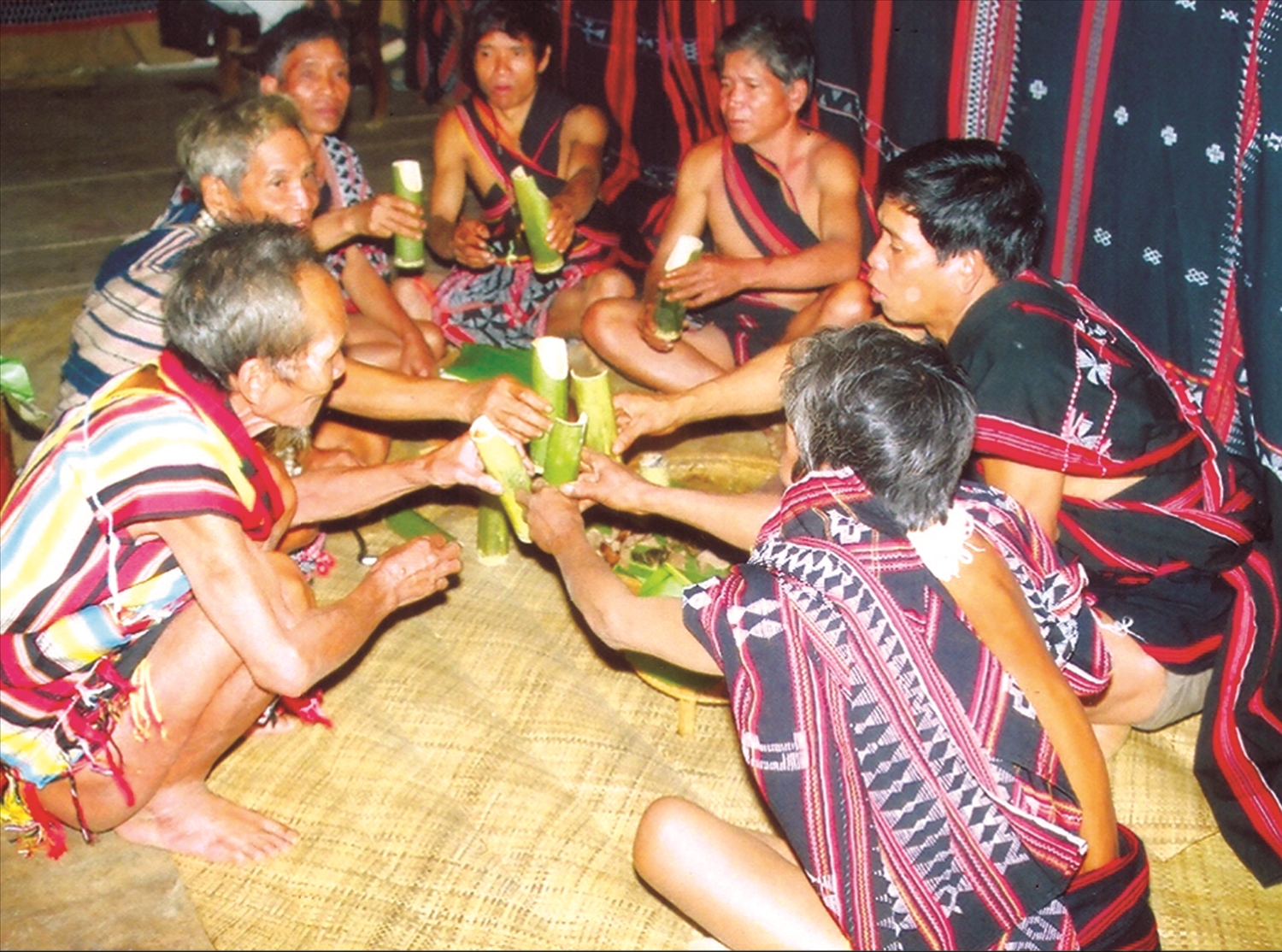
In the past, Ta Rieng families who owned many palm trees in the forest were considered to have received a gift from the spirits. Now, in addition to the wild palm trees in the forest, the Ta Rieng people also cultivate palm trees in their gardens for easier harvesting. This is an absolutely pure "heavenly water," containing the very soul of the mountains, forests, and the people of this region. Ta Rieng rice wine is used in festivals and to welcome honored guests. Anyone who has ever visited Nam Giang will be deeply moved by this heavenly gift, imbued with the warm hospitality of the local people.
Source: https://baodantoc.vn/nuoc-troi-cua-nguoi-ta-rieng-1737213963805.htm

![[Photo] Thousands of tourists visit the Quang Trung Emperor Temple in Nghe An during the early spring season.](https://vphoto.vietnam.vn/thumb/1200x675/vietnam/resource/IMAGE/2026/02/26/1772095410680_img-9305-3882-jpg.webp)
![[Photo] National Assembly Chairman Tran Thanh Man working with the Hai Phong City Election Committee](https://vphoto.vietnam.vn/thumb/1200x675/vietnam/resource/IMAGE/2026/02/26/1772103806795_ndo_br_bnd-8224-jpg.webp)

![[Photo] National Assembly Chairman Tran Thanh Man inspects election preparations in Hai Phong city.](https://vphoto.vietnam.vn/thumb/1200x675/vietnam/resource/IMAGE/2026/02/26/1772095420401_ndo_br_bnd-8016-jpg.webp)
































































Comment (0)