However, behind that silence is often not distance or antagonism, but rather subtle communication barriers forming between the two generations.
Accepting differences helps children open up.
Connecting with teenage children has never been easy. In a rapidly changing society, the generation gap seems to be growing ever more pronounced. The way young people today think, communicate, receive information, and perceive the world differs significantly from how their parents did when they were the same age.
These differences sometimes create invisible gaps within families. Many parents feel their children are becoming increasingly withdrawn and less communicative, while children feel their parents don't truly understand what they're going through.
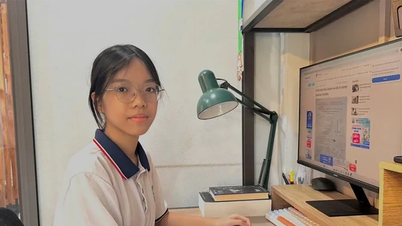
Sharing her experience, Alexia Lewis, a 21-year-old political science student at Hampton University (USA), said she often chose not to turn to her parents when facing difficulties during her high school years. “I often thought that the way my friends and I communicated, the way we received and transmitted information, the way we perceived the world, and envisioned what life could and should be like, was very different from how my parents felt when they were my age.”
That's why there were definitely times throughout high school when I didn't turn to my parents for advice, or tell them what I was going through at school or with my friends. I assumed they wouldn't understand or be able to help. So I didn't want to start a conversation,” Alexia Lewis shared.
In fact, many parents have wondered why their children only respond with a few short words when asked about their day at school, or why they immediately go to their rooms as soon as they get home. These behaviors are often interpreted as indifference or defiance. However, in many cases, the cause stems from communication barriers that parents don't recognize. To bridge the gap with teenagers, it's crucial for parents to understand the thoughts that lie behind that silence.
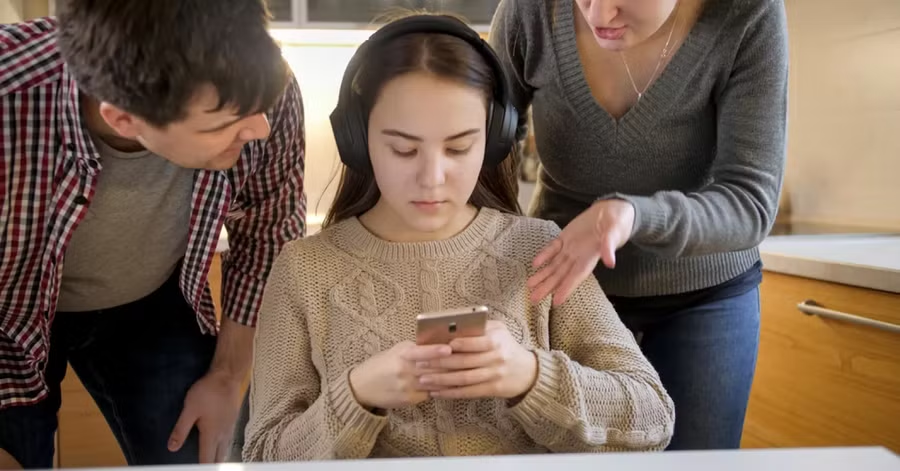
Listen to stay connected.



Many teenagers believe their parents are very busy with work and life. In their eyes, parents are both loving and protective, but also potentially the ones who offer the harshest judgments and criticisms. Therefore, many young people unconsciously set a certain "communication threshold" with their parents.
Everyday stories, minor difficulties at school, conflicts with friends, or pressure on a sports team are often kept to themselves. Only when the problem becomes truly serious do children think about seeking support from their families.
The reasons for this choice vary widely. Some children feel their parents won't care about their concerns. Others think their parents don't have time to listen.
Some children also worry that their problems will be seen as childish or insignificant. This shows that, often, a child's silence isn't due to a lack of trust in their parents, but rather because they haven't yet realized that even the small things in their lives are valued by their parents.
Therefore, what parents need to do is show their children that they genuinely care about their daily stories. This could be a disappointing sports game, a conflict with a best friend, a test that's making them anxious, or simply a small joy in their day.
When parents take the time to listen to these seemingly small things, children understand that their feelings and experiences are respected. These small daily conversations lay the foundation for lasting trust. When faced with bigger problems, children will find it easier to turn to their parents.
Every parent has certain expectations for their children. That's perfectly natural. However, sometimes those expectations unintentionally create pressure and make children hesitant to share. Adolescence is a period when each person begins to explore themselves, build their own personality, and shape their life values.
This process unfolds day by day, month by month, and doesn't wait until they turn 18 to begin. Many young people find it difficult to open up to their parents, fearing that their thoughts, interests, or choices will not be accepted. They are afraid of being judged, compared, or forced to become the version their parents want them to be. Meanwhile, what teenagers need most is to feel accepted for who they truly are.
If children know that their parents still love and respect them even if they differ from initial expectations, they will feel safer sharing their deepest thoughts. This support can be shown through very simple actions: showing interest in their hobbies, learning about what they enjoy, listening to their perspective on life, or respecting their personal choices.
When parents are willing to accompany their children on their journey of self-discovery instead of trying to control it, the relationship between the two becomes more open and close. The important thing is not for parents to agree with everything their children think, but to show them that they always have the right to be heard and respected.



Instead of simply asking their children, "How was your day?" and quickly moving on, parents need to truly listen to their answers. Genuine concern isn't about the number of questions asked, but about the level of parental presence in the conversation.
Children need to know that what they say matters to their parents. They need to feel that their parents want to be a part of their lives, not just when problems arise, but also in the most ordinary moments.
That's also how strong family relationships are nurtured. When children feel heard, accepted, and loved unconditionally, the generational gap will gradually narrow. And then, a closed bedroom door will no longer be a symbol of distance, but simply a private space within a family that maintains its connection.
Source: https://giaoducthoidai.vn/pha-bo-rao-can-vo-hinh-voi-con-post781983.html





![[Photo] "Hanoi Lotus Festival" honors the lotus flower that has been associated with Vietnam for thousands of years.](https://vphoto.vietnam.vn/thumb/1200x675/vietnam/resource/IMAGE/2026/06/27/1782516943048_sen-ha-noi-2026-minh-duy-1-jpg.webp)