

For a long time, pomelo trees have been considered a crop with high economic value, helping many households in the province escape poverty and become wealthy. However, in recent years, the production and consumption of pomelos have faced many difficulties, and prices have decreased compared to the period before 2020. Therefore, focusing on deep processing and diversifying pomelo products is an effective solution to enhance economic value, which the agricultural sector is currently focusing on.
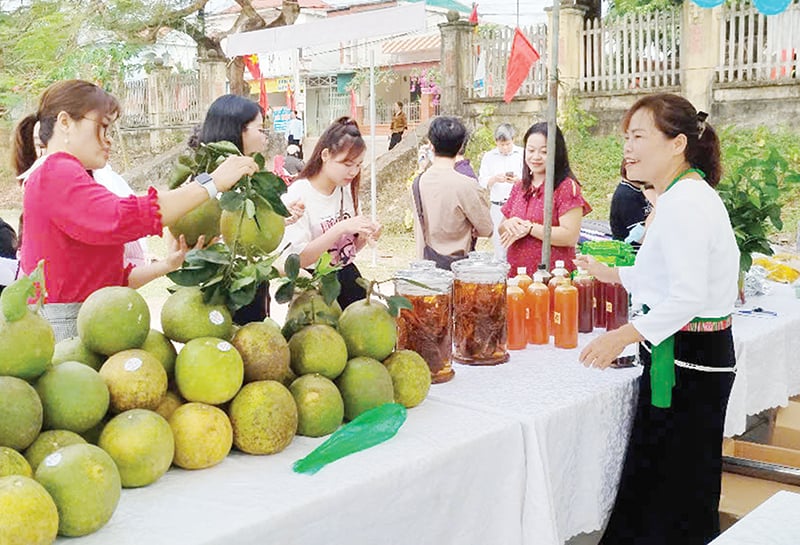
Pomelo products have contributed to increasing income and improving the lives of many households in Minh Dai commune, Tan Son district.
Establishing concentrated pomelo growing areas.
By the end of 2023, the total area of pomelo cultivation in the province reached approximately 5,600 hectares, an increase of 140% compared to 2015, with an average annual production of about 18,000 tons. The province has established 161 concentrated pomelo growing areas with a total area of 2,650 hectares; 162 establishments with a total area of 1,742 hectares have been granted growing area codes, of which 144 codes serve domestic consumption and 18 codes serve export. The area of pomelo production following safe farming practices reached over 3,100 hectares, with nearly 1,000 hectares achieving VietGAP certification...
To date, Phu Tho province has 10 cooperatives and pomelo production facilities recognized as OCOP-certified, including 2 entities achieving 4-star rating and 8 entities achieving 3-star rating, with a registered production volume of approximately 10,000 tons per year. The economic value generated by pomelo cultivation averages over 800 billion VND per year.
In order to diversify pomelo products in the province, besides the specialty Đoan Hùng pomelo variety, the Department of Agriculture and many households have researched and introduced many other pomelo varieties to Phu Tho such as Diễn yellow-fleshed pomelo, Diễn green-fleshed pomelo, Xuân Vân, Soi Hà pomelo, green-skinned pomelo, Tam Vân pomelo (wrinkled leaf), Tân Lạc pomelo, etc.
In reality, due to its high economic efficiency, people in many localities are actively expanding the area planted with pomelos, leading to a sharp increase in the total pomelo acreage. In addition, neighboring provinces such as Yen Bai, Tuyen Quang, Hoa Binh, and Son La also have policies to strongly develop citrus fruits, including pomelos, further increasing pressure on consumption. The current pomelo variety structure is also unbalanced; besides the two specialty varieties, Bang Luan and Suu pomelos, Dien pomelos account for over 70% of the remaining varieties. During peak harvest season, this leads to a situation where supply far exceeds demand, causing difficulties in product consumption.
The practice of grafting new pomelo varieties in an uncontrolled manner is becoming increasingly common, while pomelo trees are perennial plants that require a long time to achieve high yield and quality. New varieties such as the wrinkled-leaf pomelo and Cat Que pomelo are attracting attention from farmers recently; however, with the current uncontrolled grafting practices, within the next 3-5 years, when the grafted trees enter their harvesting period, it is very likely that a mass harvest will occur at the same time, similar to the current situation with the Dien pomelo variety.
Mr. Nguyen Song Toan, Head of the Agriculture and Rural Development Department of Doan Hung district, said: "The economic efficiency of pomelo trees is very high, making it convenient for widespread cultivation. However, for a long time, people have only focused on consumption and have not paid attention to deep processing and product diversification, so the selling price remains low. To maintain the pomelo cultivation area and maximize efficiency, specific solutions are needed to increase the value of pomelo trees, create confidence for pomelo growers to invest in intensive farming, and improve quality and productivity."
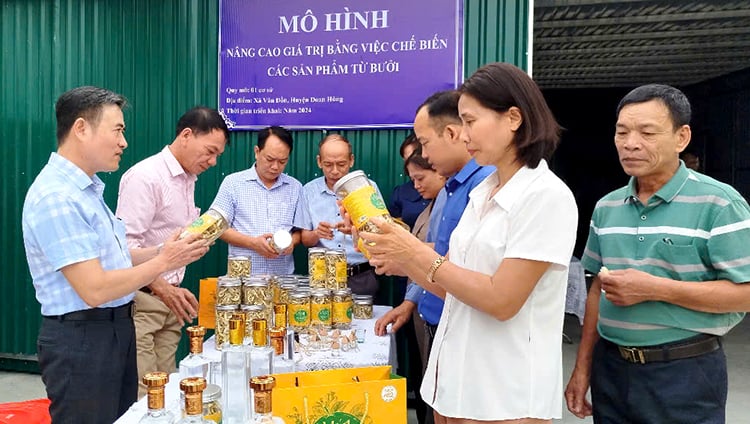
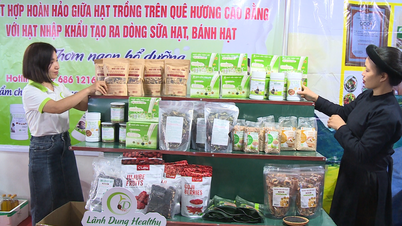
Several products processed from pomelo by the Van Don Pomelo and Agricultural Services Cooperative have been brought to market, contributing to increasing the value of the pomelo tree.
Improve quality, boost processing and consumption.
Over the years, the Provincial People's Committee has directed the Department of Agriculture and Rural Development to review and identify key areas in each locality, thereby concentrating resources and personnel to disseminate technical knowledge, market trends, and guidance to help people confidently develop production, gradually building high-quality raw material areas to serve domestic consumption and export.
The establishment of model grapefruit orchards applying advanced scientific and technical methods in production over the past period has confirmed that intensive cultivation significantly improves the quality of grapefruit. Technical measures such as pruning, which helps to improve orchard ventilation and reduce pests and diseases; supplementary pollination, which increases the rate of flower and fruit setting; and increased use of organic fertilizers and micronutrient fertilizers according to a balanced fertilization process, contribute to improved plant health, sweetness, and aroma, thereby enhancing the quality of grapefruit.
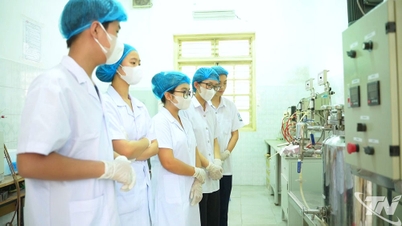
Recently, in addition to the main product, grapefruit, other products derived from grapefruit such as peel, pulp, seeds, or even low-quality, unripe grapefruit from orchards can be processed to create by-products such as grapefruit essential oil, grapefruit jam, grapefruit tea, grapefruit wine, etc. Some individuals and cooperatives in the province have researched and put these into production as a solution to increase income from grapefruit cultivation. This is a new approach in the province with great potential for widespread adoption because processing facilities do not need to be located in grapefruit-growing areas but can be expanded to districts, cities, and towns, near areas with consumer demand, making them easily accessible to consumers.
Mr. Dao Manh Dat, Director of Van Don Pomelo and General Services Cooperative in Van Don commune, Doan Hung district – one of the pioneering units in processing pomelo products, especially utilizing discarded and unripe pomelos – said: “As a pomelo grower, I see a lot of discarded pomelos each year, which I find very wasteful. Knowing that some places have successfully researched and processed pomelo jam, pomelo essential oil, pomelo wine, etc., I sought to learn from them and apply their methods at the cooperative with the hope of reducing the waste of discarded pomelos, diversifying products, and increasing the economic value of pomelo trees.”
According to Mr. Nguyen Thanh Tung, Director of the Provincial Agricultural Extension Center, in the coming period, the annual pomelo production will continuously increase due to the expansion of newly planted areas reaching the harvesting stage. Besides promoting intensive farming and brand building, the consumption linkage also needs to be given attention. At the same time, the agricultural sector will coordinate with localities to attract businesses to invest in processing pomelo products, especially deep processing, to increase consumption and enhance the value of pomelo products.
Currently, to help farmers expand their markets and increase the promotion and introduction of agricultural products, including pomelos, in addition to traditional consumption channels and e-commerce channels, the Department of Agriculture has been building a digital agricultural map of the province. Through this, consumers can learn about the province's key agricultural production areas, characteristic products, prices, and traceability of origin... aiming towards building a sustainable, green, organic, and environmentally friendly agriculture in the ancestral land.
Phan Cuong
Source: https://baophutho.vn/phat-trien-cay-buoi-ben-vung-223973.htm



![[Photo] National Assembly Chairman Tran Thanh Man working with the Standing Committee of the National Assembly's Ethnic Council](https://vphoto.vietnam.vn/thumb/1200x675/vietnam/resource/IMAGE/2026/05/21/1779337435930_ndo_br_1-jpg.webp)















![[Image] "Journey of Hope" promotes the organ and tissue donation movement in Vietnam.](https://vphoto.vietnam.vn/thumb/1200x675/vietnam/resource/IMAGE/2026/05/20/1779294400833_1-8910-jpg.webp)
















































Comment (0)