

 |
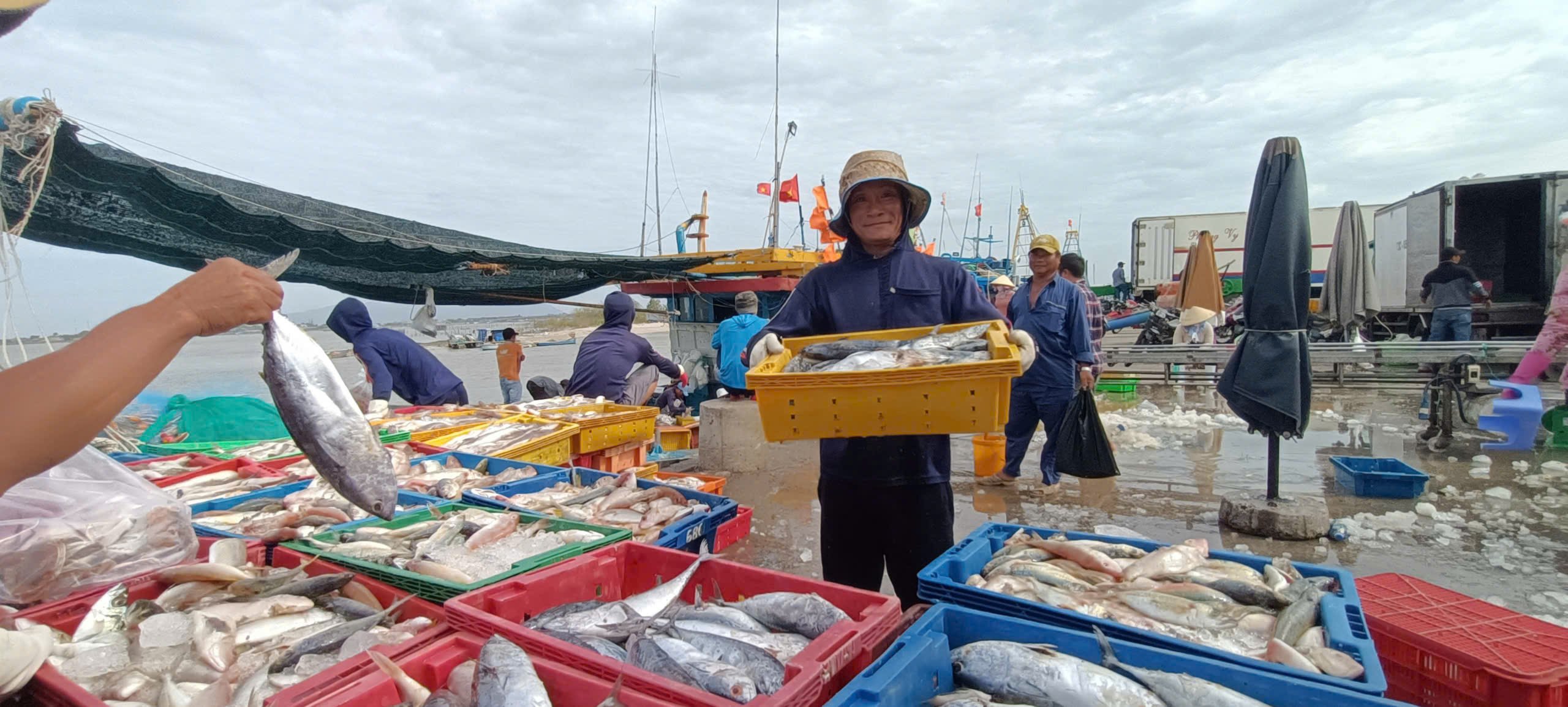
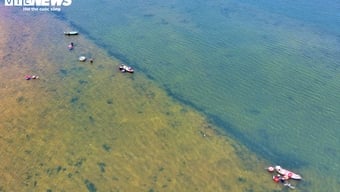
| Seafood has just arrived at Tan Phuoc port (Long Dat district). |
Protecting aquatic resources
Mr. Nguyen An Huu (Phuoc Hoi commune, Long Dat district) owned an 18-meter-long fishing boat that had been engaged in the practice of trawling for over a decade. Recognizing the dwindling fishing grounds, and after receiving guidance and encouragement from the local authorities, in 2024 he sold his boat and bought a smaller vessel to fish for crabs using nets.
“Converting the 18-meter boat from a trap-based fishing vessel to a gillnet fishing vessel would be very expensive, around 1-1.5 billion VND, which my family doesn't have enough money for. After consulting with friends, I decided to sell the boat and buy a smaller one, worth 450 million VND, to fish for crabs in the offshore waters,” Mr. Huu shared.
Currently, each fishing trip, lasting about 1-2 days, yields Mr. Huu's boat approximately 40kg of crabs and various types of fish, selling for 3-4 million VND. After deducting expenses for fuel, food, and crew, he earns a profit of 2-2.5 million VND per trip.
Although his income is not as high as his previous job of setting traps, Mr. Huu is still happy because the career change not only complies with regulations but also protects aquatic resources.
Currently, the province has 5,085 fishing vessels, of which 2,462 operate in offshore areas, with a projected catch of nearly 374,000 tons in 2024. In recent years, the Department of Agriculture and Environment has focused on restructuring and reducing fishing intensity to match resource reserves; encouraging fishermen to switch to and limit trawling, trap fishing, and cage fishing; developing purse seine and longline fishing, stabilizing gillnet fishing, and providing logistics services for fishing.
The Department also reorganized the exploitation of marine resources in offshore and coastal areas, linking it with the development of livelihoods for coastal fishing communities; strengthening the application of advanced and modern technologies in the exploitation and preservation of seafood products after harvesting, aiming to increase added value, minimize losses, and increase the efficiency of fishing trips.
Promoting high-tech farming and aquaculture.
To reduce pressure on marine resource exploitation, in recent years, the agricultural sector has focused on developing high-tech aquaculture.
After nearly 20 years of raising fish in cages in Ben Dam Bay (Con Dao District), Mr. Le Van Quan invested in a system of HDPE plastic cages using Norwegian technology to replace the old farming method, adapting to climate change, increasing productivity, and preventing diseases. According to Mr. Quan, the advantages of cages using this technology are high durability, resistance to strong waves and winds, chemical resistance, and immunity to corrosion and rust from seawater, thus reducing repair and maintenance costs.
| To regenerate, restore, conserve, and develop natural aquatic resources, the agricultural sector annually releases fish and shrimp fry into the sea on April 1st, the traditional day of the fisheries industry. This helps increase the population density of aquatic species that have been overexploited, creating ecological balance, stabilizing populations in natural water bodies and basins, and encouraging organizations and individuals to practice responsible aquaculture, contributing to the sustainable development of the industry. |
Thanks to these characteristics, Mr. Quan placed his cage farming system far offshore, in deep, clean water, minimizing the risk of pollution and disease. Besides grouper, snapper, and sea bass, he boldly added many other economically valuable marine fish species such as eels, red grouper, armored catfish, and abalone… As a result, the efficiency is 20-50% higher than traditional wooden cage farming methods.
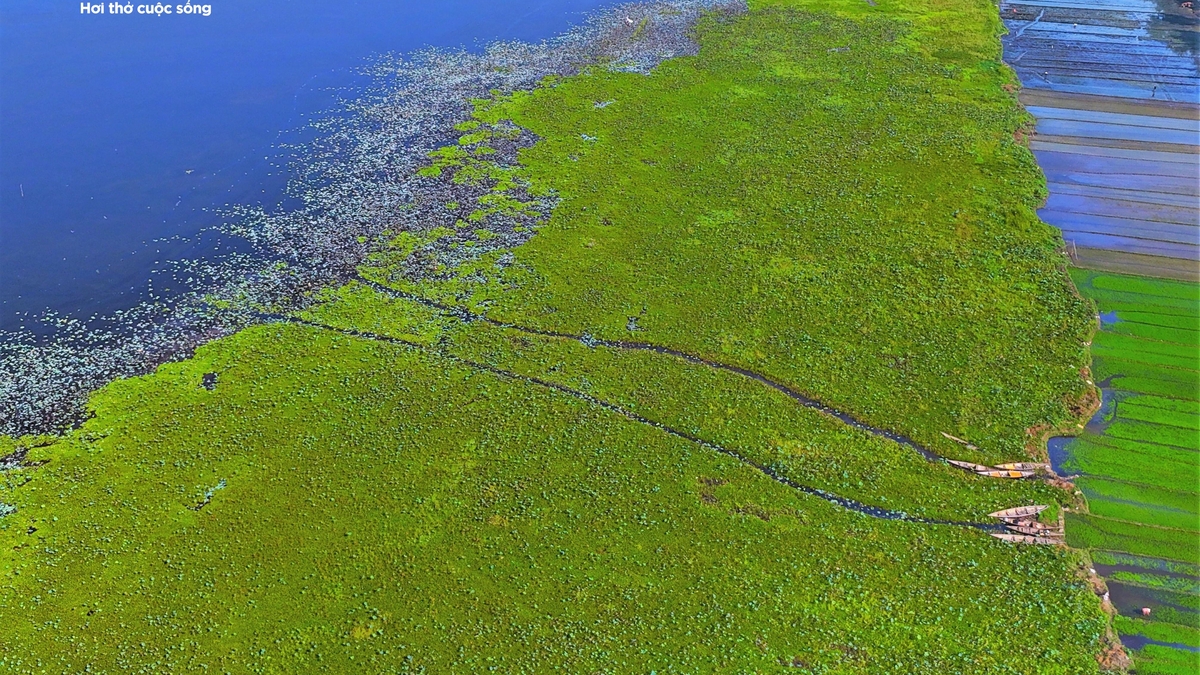
With a farming area of 5,664 hectares and an annual production of over 22,600 tons, the aquaculture industry in the province not only contributes to a stable supply of raw materials for export but also helps reduce pressure on marine resource exploitation, contributing to the sustainable development of the industry.
In particular, the industry has focused on transferring and replicating high-tech aquaculture models. To date, 23 organizations and individuals are engaged in aquaculture and seed production using high technology, covering a total area of over 429 hectares. The proportion of aquaculture products using high technology currently accounts for 46.54% of the total value.
In the coming period, the industry will continue to promote and encourage high-tech shrimp farming models, shift farming methods to intensive and super-intensive farming, and boost the production of high-tech whiteleg shrimp throughout the province.
“The sector is also stepping up the implementation of issuing codes for aquaculture facilities for key species (such as tiger shrimp and whiteleg shrimp) to facilitate traceability; and encouraging businesses and aquaculture facilities with strong economic potential to build close linkages from production to consumption to stabilize the output of aquatic products,” said Mr. Do Minh Tuan, Deputy Director of the Department of Agriculture and Environment.
Text and photos: NGOC MINH
Source: https://baobariavungtau.com.vn/kinh-te/202503/ky-niem-ngay-truyen-thong-nganh-thuy-san-viet-nam-14-phat-trien-nganh-thuy-san-ben-vung-1038448/
![[Photo] General Secretary and President To Lam and his wife begin their state visit to China.](https://vphoto.vietnam.vn/thumb/1200x675/vietnam/resource/IMAGE/2026/04/14/1776133794926_z7723148772587-ffefa3c4b1e54e100de1554593a862c6-jpg.webp)
![[Image] Expediting land clearance at Alley 310 Nghi Tam to facilitate the construction of Tu Lien Bridge](https://vphoto.vietnam.vn/thumb/1200x675/vietnam/resource/IMAGE/2026/04/14/1776160406551_ndo_br_z7724148990408-9e5d4777e3c4504998b4286178b2e66e-jpg.webp)
![[Photo] General Secretary and President To Lam visits and delivers a policy speech at Tsinghua University.](https://vphoto.vietnam.vn/thumb/1200x675/vietnam/resource/IMAGE/2026/04/14/1776164592318_vna-potal-tong-bi-thu-chu-tich-nuoc-tham-va-phat-bieu-chinh-sach-tai-dai-hoc-thanh-hoa-trung-quoc-8700658-5437-jpg.webp)










![[Photo] General Secretary and President To Lam receives Slovak Prime Minister Robert Fico](https://vphoto.vietnam.vn/thumb/1200x675/vietnam/resource/IMAGE/2026/04/13/1776080592076_a1-bnd-8227-6002-jpg.webp)



































Comment (0)