

High-quality human resources are a pressing requirement for the tourism industry in the current era of international integration. The Government's national tourism system plan to 2030, with a vision to 2050, emphasizes that tourism human resources are the most important and core issue. In 2024, Vietnamese tourism recovered and developed strongly. The Prime Minister attended three overseas tourism promotion events to boost tourism, and the quality of tourism human resources was once again emphasized as a vital factor in improving the quality of tourism.
With its immense potential in terms of natural landscapes, culture, and people, Vietnam's tourism industry is increasingly attracting both domestic and international tourists. However, the issue of human resources remains a major challenge. It must be acknowledged that our workforce is lacking in both quantity and quality, failing to adequately meet the increasingly high demands of the tourism industry.
According to statistics from the Vietnam National Tourism Administration, the tourism industry needs 40,000 workers annually, but the actual supply only meets about 20,000. Of these, only approximately 10% have university or postgraduate degrees; over 50% have primary, secondary, or college degrees; and about 40% have qualifications below primary level. Of the total tourism workforce, only 43% have received professional tourism training. This clearly shows that the Vietnamese tourism workforce still has shortcomings that need to be addressed to meet the demands of the current era. The root cause of this situation stems from the training aspect. Tourism training institutions have not met the market's needs and demands in terms of both quantity and quality.
According to statistics from the Ministry of Education and Training and the Ministry of Labour, Invalids and Social Affairs, there are currently 407 training institutions in the tourism sector nationwide, but many shortcomings remain. Meanwhile, nearly 4,000 international travel agencies across the country are constantly facing a shortage of personnel, relying on graduates from training institutions while also having to train their own workforce. The most significant lack of human resources in the tourism sector today is hard skills in professional expertise, computer literacy, foreign languages, communication, and interpersonal skills. Training institutions currently lack standardized procedures, there is a lack of interconnectedness between domestic and international levels, and they remain fragmented, with each institution operating independently. This somewhat reduces the competitiveness of Vietnamese tourism and limits the quality of services.
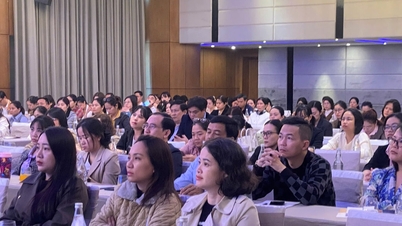
At the workshop "The Role of Stakeholders in Training and Developing Human Resources for Tourism," organized by the Ministry of Culture, Sports and Tourism on November 14th, many solutions related to human resource training and development were proposed. Experts believe that to meet the increasingly high demands of tourism, coordination, connection, and linkage are necessary between state management agencies and relevant ministries and sectors, associations, as well as vocational training organizations and institutions.
One key point emphasized is that training institutions need to "rethink" their methods and approaches to adapt the development and training of human resources for tourism to suit the current context of tourism technology and strong digital transformation.
Specifically, Vietnam needs to grasp and anticipate trends, as well as forecast issues related to tourism workforce training. Continuing with traditional training methods will make it difficult to produce a workforce that meets the stringent demands of the market. Innovation in scale, methods, and content of training is necessary. Digitalization, such as digital curricula and the application of AI in teaching, will be a top priority, helping to ensure a high-quality workforce with strong skills, foreign language proficiency, and technological expertise.
More attention needs to be paid to specialized training models to proactively develop a high-quality core workforce capable of competing with tourism industries in the region and around the world. Diverse training methods such as full-time, part-time, and distance learning are necessary to proactively supply human resources to businesses, reducing the current shortage and imbalance between job sectors in tourism.
Source: https://nhandan.vn/phat-develop-nguon-nhan-luc-du-lich-dap-ung-yeu-cau-hoi-nhap-post846254.html


![[Photo] Prime Minister Pham Minh Chinh presides over the conference announcing the establishment of the International Finance Centre in Vietnam.](/_next/image?url=https%3A%2F%2Fvphoto.vietnam.vn%2Fthumb%2F1200x675%2Fvietnam%2Fresource%2FIMAGE%2F2025%2F12%2F21%2F1766309817714_ndo_br_dsc-3400-jpg.webp&w=3840&q=75)
![[Photo] Prime Minister Pham Minh Chinh presides over a meeting on private sector economic development.](/_next/image?url=https%3A%2F%2Fvphoto.vietnam.vn%2Fthumb%2F1200x675%2Fvietnam%2Fresource%2FIMAGE%2F2025%2F12%2F20%2F1766237501876_thiet-ke-chua-co-ten-40-png.webp&w=3840&q=75)















































































Comment (0)